
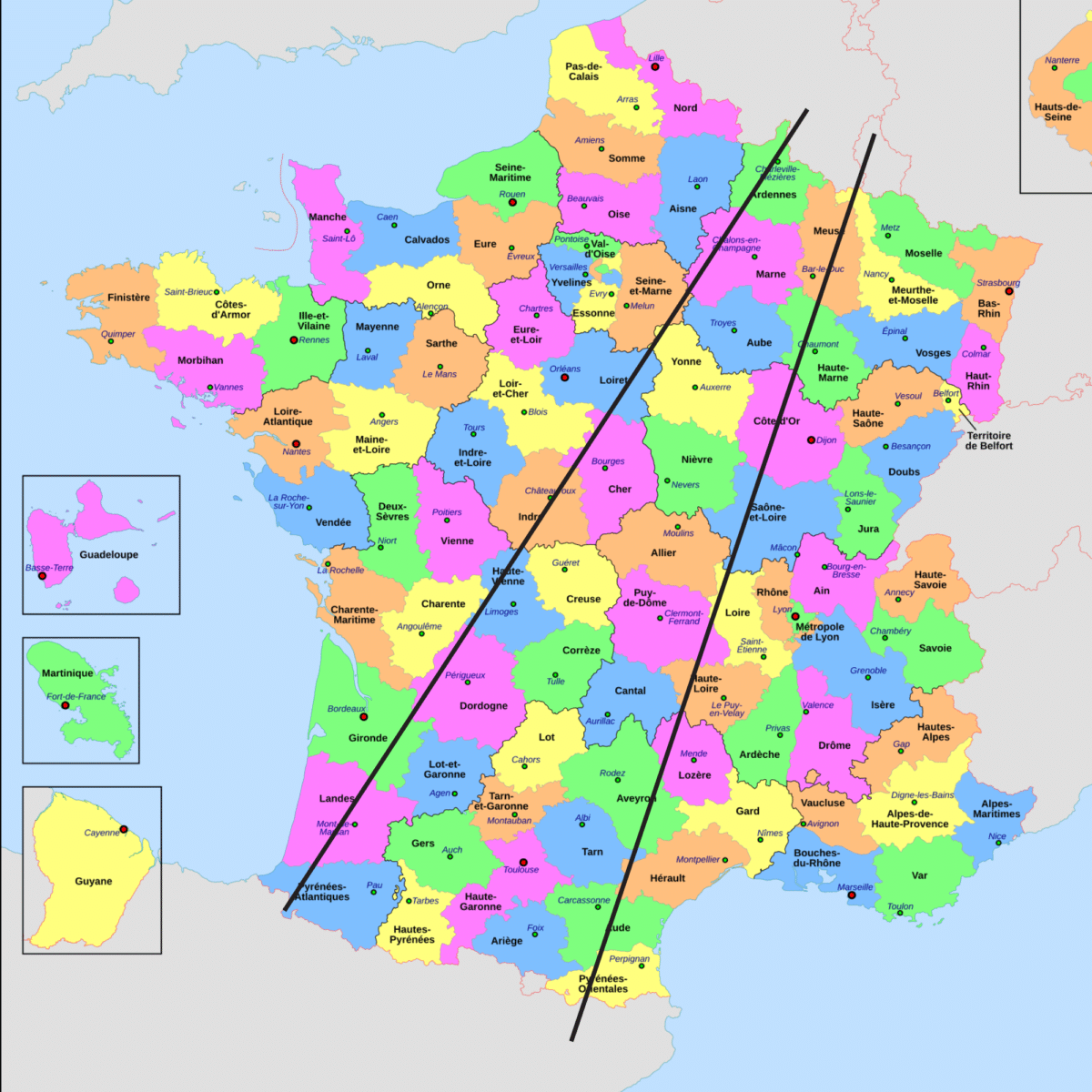
Did you know that there is a swathe of France where the population is so low that they refer to it as the ‘Empty Diagonal’? The Diagonale du Vide has an average of only 30 people per km² (78/mi²). Running from the north-east (Ardennes and Meuse departments), down to the inland areas of the Landes and Haute-Pyrenées departments in the south-west, this area is sparsely populated but incredibly beautiful.
There are lots of reasons why this diagonal of minimal population exists, but efforts to revitalise these areas is underway. Here is my contribution to the cause – a travel guide to those who want to visit some of the lesser known / visited areas of France!
- History of the Diagonale du Vide
- Amazing Places to Visit in the Diagonale du Vide, France
- Grand-Est
- Bourgogne-Franche-Comté
- Centre-Val de Loire
- Auvergne-Rhône-Alpes
- Nouvelle-Aquitaine
- Poitiers, Vienne
- Angles sur l'Anglin
- Guéret, Creuse
- Aubusson, Creuse
- Limoges, Haute-Vienne
- Rochechouart, Haute-Vienne
- Tulle, Corrèze
- Brive-la-Gaillarde, Corrèze
- Brantôme en Périgord, Dordogne
- Périgueux, Dordogne
- Vézère Valley, Dordogne
- Sarlat-la-Canéda, Dordogne
- Valley of the five Châteaux, Dordogne
- Agen, Lot-et-Garonne
- Pau, Pyrénées-Atlantiques
- Petit Train d'Artouste, Pyrénées-Atlantiques
- Occitania
- Exploring the 'Diagonale du Vide' in France
History of the Diagonale du Vide
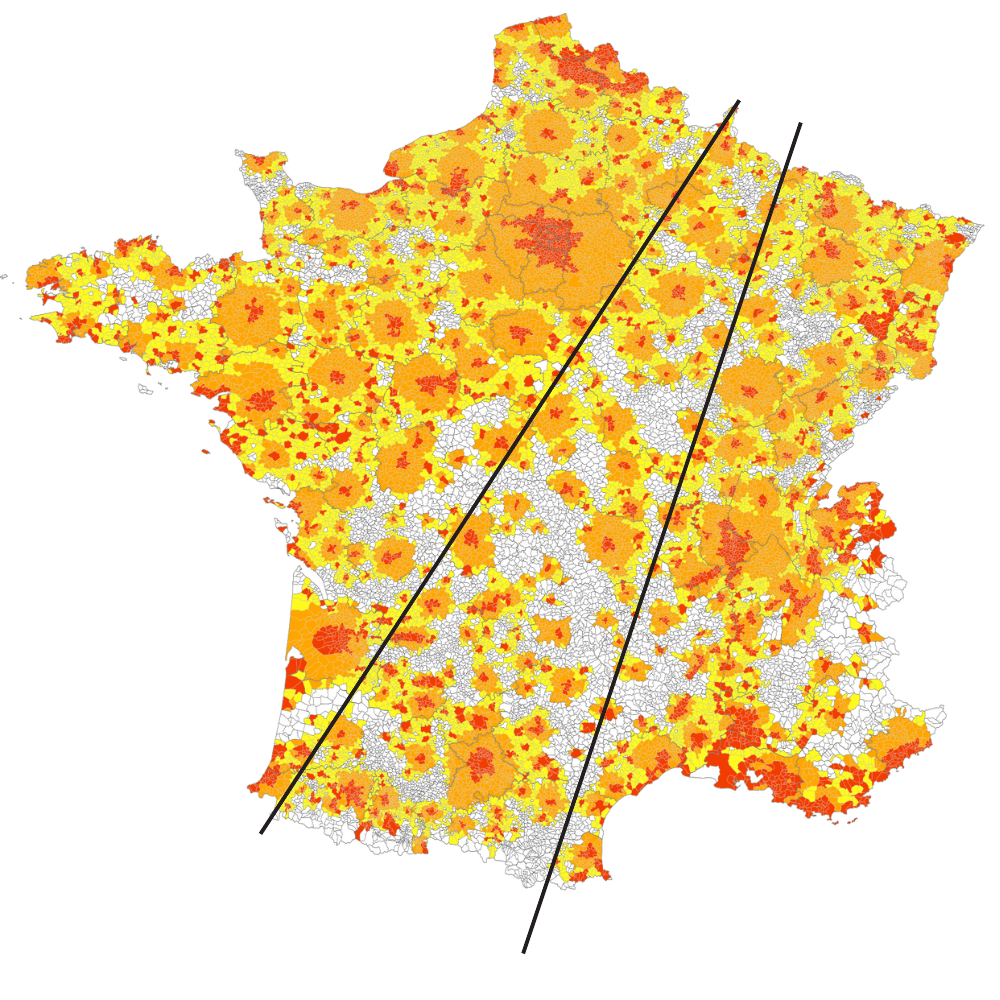
The term ‘Diagonale du Vide’ originated in French geographic discourse in the 1980s. Geographer Roger Béteille is credited with popularising the concept around 1981 in his academic work on rural demographics and spatial planning in France.
Some attribute the term to geographer Jean-François Gravier, who wrote a lot about French spatial imbalances, particularly in his 1947 work ‘Paris et le désert français’ (Paris and the French Desert). Gravier didn’t specifically use the term ‘Diagonale du Vide’ in this work, although he did identify the phenomenon.
While it is an oversimplification of the far more complicated issues of economics, resources and planning, but the term represents an attempt to conceptualise and address significant regional disparities in population density and economic development across France.
Image: By Poulpy – Coordinates are taken from GEOFLA® Communes, a work of Institut géographique national, licensed under the Licence Ouverte. Urban area zoning is taken from INSEE., CC BY-SA 3.0.
Population decline
Populations decline in most places due to a variety of the same factors:
- Industrialisation and urbanisation – As France industrialised, jobs concentrated in urban centres, drawing rural populations away from agricultural areas.
- Agricultural mechanisation – Technological advances reduced the need for farm labour, meaning fewer people could work larger areas of land.
- Economic opportunities – Limited economic diversity in these regions offered fewer job prospects compared to urban areas.
- Centralisation of services – Essential services like healthcare, education, and administration became increasingly concentrated in larger towns and cities.
- Transportation infrastructure – Many of these areas suffered from bad transportation connections, increasing their isolation.
- Demographic factors – Rural exodus created a self-reinforcing cycle: as young people left, birth rates declined and populations aged, making the areas less attractive for remaining residents.
- The rural exodus was particularly pronounced during the post-WWII period of rapid economic transformation in France (1950s-1970s).
Cities of the Empty Diagonal
Here are the largest cities located within the Diagonale du Vide by population:
- Clermont-Ferrand: ~141,000 (metropolitan area ~470,000) *
- Limoges: ~131,000 (metropolitan area ~280,000)
- Poitiers: ~88,000 (metropolitan area ~260,000) *
- Troyes: ~61,000 (metropolitan area ~172,000)
- Aurillac: ~25,000
- Le Puy-en-Velay: ~22,000
- Guéret: ~13,000
- Châteauroux: ~44,000
- Moulins: ~19,000
- Tulle: ~14,000
Image of Administrative map of France by Nilstilar – Own work, CC BY-SA 4.0. Generalised lines to indicate ‘Diagonale du Vide’ added by me.
Exceptions to the Diagonale du Vide
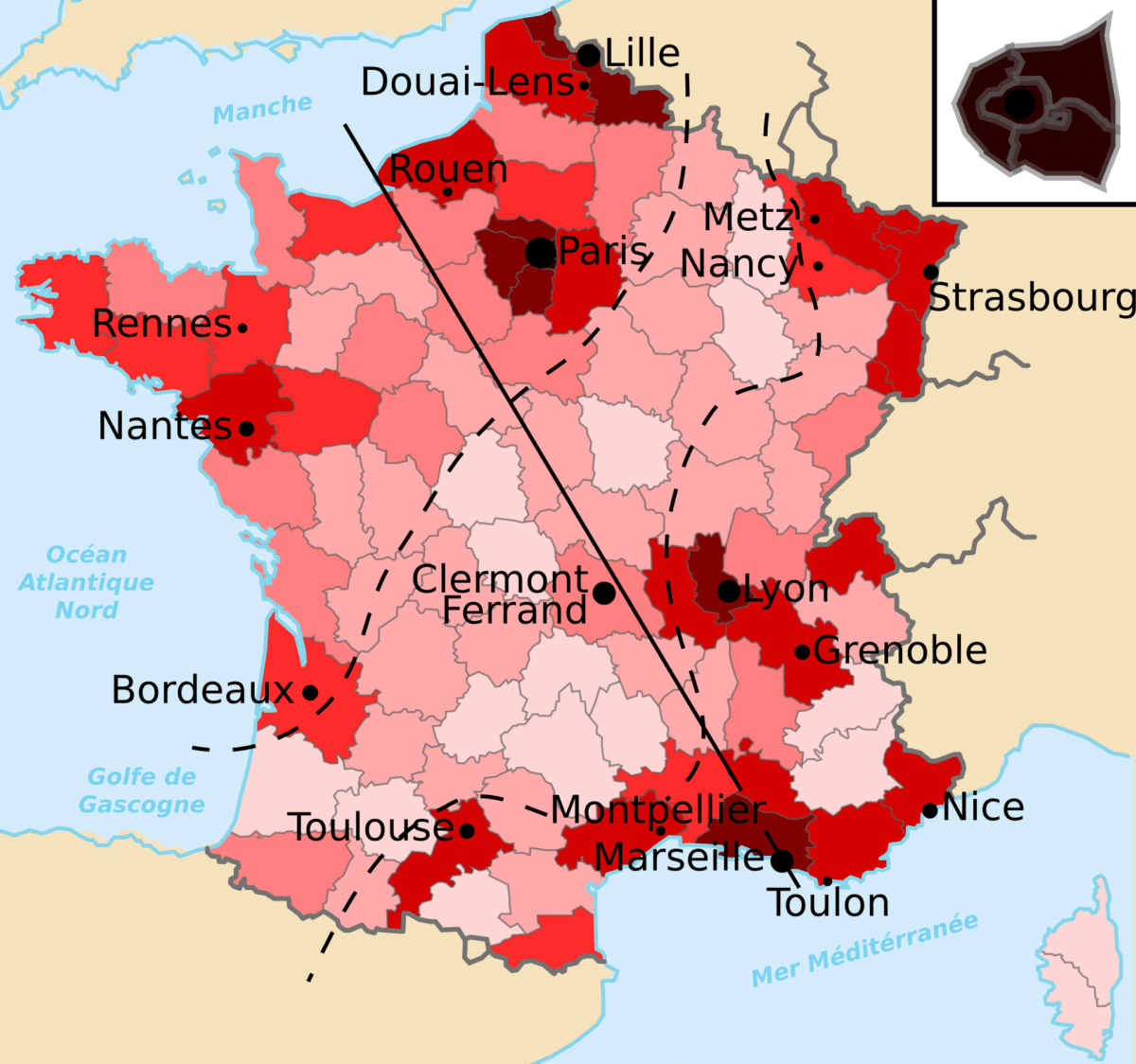
Toulouse is generally considered an exception to the Diagonale du Vide rather than part of it. With a population of approximately 470,000 in the city proper (and around 1.3 million in its metropolitan area). The city is often cited as one of the ‘breakthrough points’ or exceptions that interrupts the Diagonale du Vide.
Clermont-Ferrand, Limoges and Poitiers create other pockets of higher population density within the broader pattern of low population density.
In reality, the Diagonale du Vide has wiggly edges (the dotted line in this map). It also intersects the Le Havre-Marseille Line (the continuous line), which divides France in half on a diagonal. 60% of the French population living on the north-east half.
Image: French population density by department in 2010; the 18 urban areas of more than 400,000 inhabitants are indicated. Image from Départements_de_France.svg: Bayoderivative work: Benjism89 (talk) — Départements_de_France.svg, CC BY-SA 3.0.
Amazing Places to Visit in the Diagonale du Vide, France
I’ve collated some of my favourite places dotted along the Diagonale du Vide. While the name suggests emptiness, there are actually a few big cities, and lots of vibrant villages and places of interest.
Perhaps economics and population decline impact decisions about living in these places, but as a visitor, there is much to explore and enjoy.
I have listed the points of interest from north to south, and have grouped them into regional groups for ease. You’ll note the vast coverage of the south-west, and that’s just because that’s where I live, so know the area intimately!
Grand-Est
Charleville-Mézières, Ardennes
Charleville-Mézières is right near the border of Belgium, and was founded by Charles I Gonzaga, Duke of Mantua in the early 1600s. Charleville and Mézières were once two separate towns on either side of the Meuse River, but now make a delightfully united city.
In the centre of town, the stunning Place Ducale is a well-preserved 17th-century square (sometimes compared to Place des Vosges in Paris). The town is known as the ‘World Capital of Puppetry Arts’, and holds a biennial festival to celebrate.
Charleville is also the birthplace of one of my favourite Belle Époque poets, Arthur Rimbaud. If you are into literary history, there is a Rimbaud museum in the old water mill.
ACCOMMODATION: Chambres du petit bois right off Place Ducale.
Chalons-en-Champagne, Marne
Châlons-en-Champagne has a gorgeous mix of Gothic and Renaissance architecture. Highlights being the Saint-Étienne Cathedral and the Notre-Dame-en-Vaux church, a UNESCO-listed site.
The town is also known for its canals, so taking a scenic boat tour is a popular activity. There are several vineyards nearby, so it is a nice alternative to the busy Champagne towns of Reims and Épernay.
ACCOMMODATION: The Ibis Styles Chalons en Champagne Centre is a very central and affordable option.
Bar-le-Duc, Meuse
Bar-le-Duc is famous for its well-preserved Renaissance quarter, and historic sites like the Church of Saint-Étienne. The town is also known for its unique jelly, a meticulously prepared redcurrant preserve.
The lower town has a more modern feel, while the upper town retains its medieval charm.
ACCOMMODATION: The Chambre d’Hôte, L’Hôte de la Couronne, is central and offers B&B accommodations.

Troyes, Aube
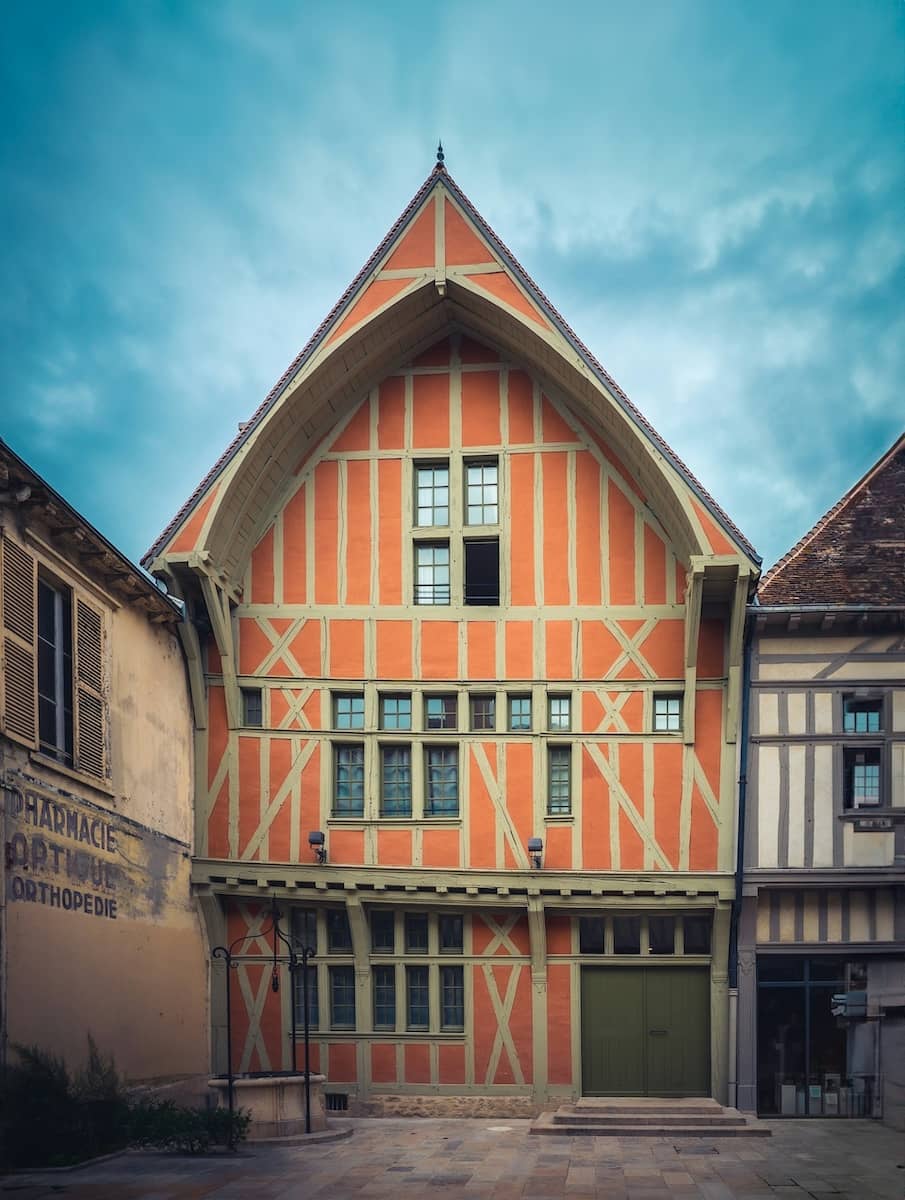
Troyes has well-preserved medieval and Renaissance half-timbered houses, winding streets, and the impressive Troyes Cathedral. Daring foodies can try the regional delicacy, andouillette sausage – a tripe sausage that tastes far better than it smells!
Troyes also has a strong connection to the textile industry and is home to some of France’s largest outlet shopping centres. If shopping isn’t your thing, just wander through the old town and enjoy the cute coloured houses that are all a little wonky!
ACCOMMODATION: If you want something special, the 15th century inn, Le Champ Des Oiseaux Hotel & Spa is gorgeous.
Bar-sur-Aube
Bar-sur-Aube is a small but historically interesting town. With a strong connection to the Champagne industry, it is surrounded by vineyards producing AOC Champagne and offers tasting experiences in traditional cellars. Consider it as an alternative or extra town to visit alongside Reims when in the Champagne region.
The Church of Saint-Pierre and remnants of some medieval fortifications are some other attractions in Bar-sur-Aube.
ACCOMMODATION: The modest but comfortable Logis Hôtel le Saint-Nicolas is ideal for a visit to Bar.
Chaumont, Haute-Marne
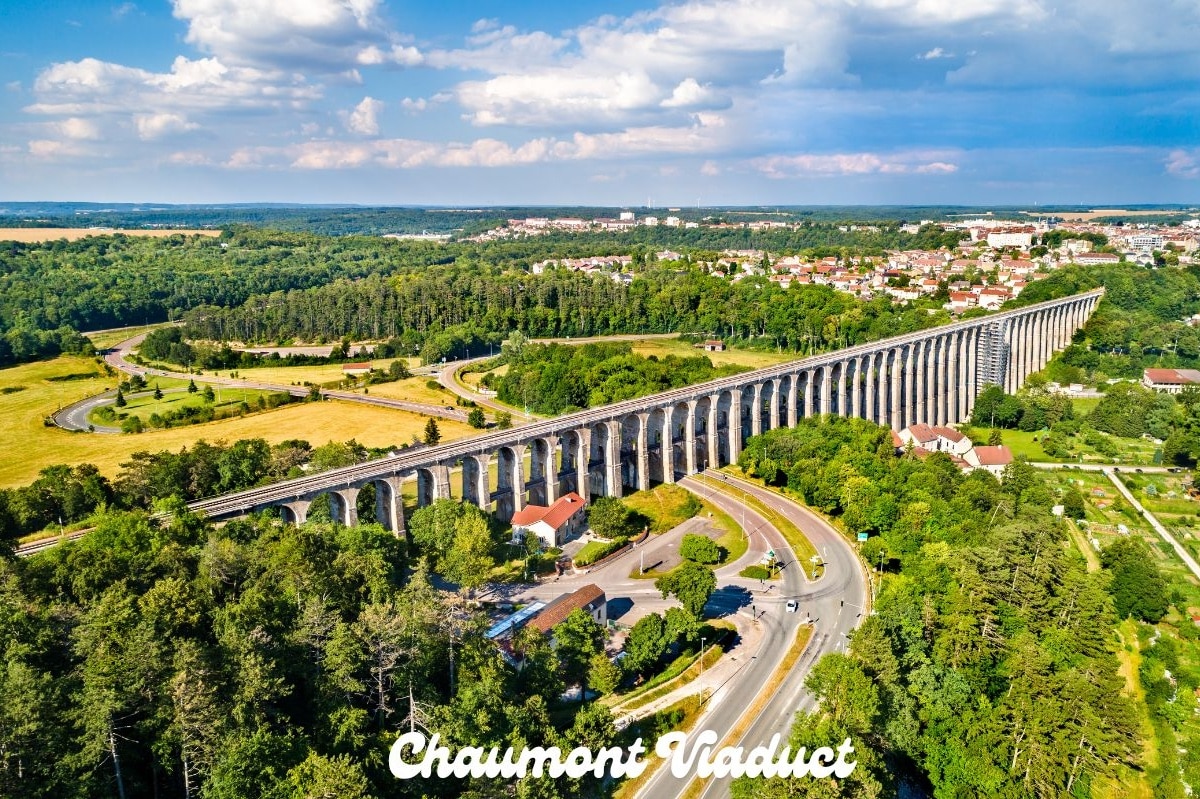
Chaumont is best known for its impressive railway viaduct, which dominates the landscape with its double-layered arches.
The town has a strong cultural scene, hosting the International Poster and Graphic Design Festival. It also has historical sites like the Basilica of Saint-Jean-Baptiste and the remains of a medieval castle to explore.
ACCOMMODATION: The Hôtel Restaurant Des Remparts is a former coaching inn near the train station and town centre. On the edge of town, the Hostellerie Au Rendez-Vous des Amis is a great option for those on a road trip.

Bourgogne-Franche-Comté
Auxerre, Yonne
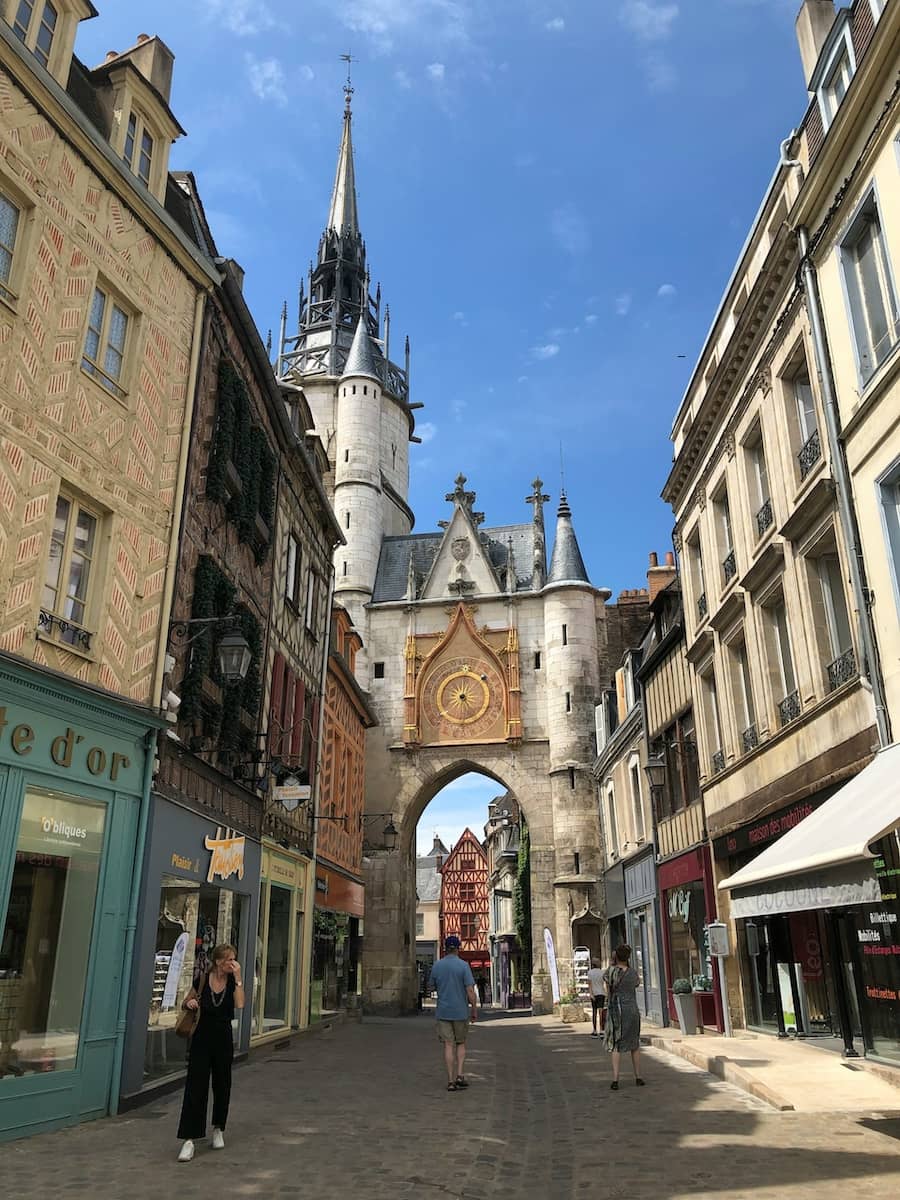
Auxerre sits on the Yonne river, in the Chablis wine area of Burgundy. Sights include the Cathédrale Saint-Étienne, with its impressive Gothic facade and intricate stained-glass windows. The Saint-Germain Abbey is really interesting too, and certainly makes a grand skyline – with crypts and a Romanesque bell tower.
Auxerre has a vibrant cultural scene, with museums, lively markets, and riverside walks that make it a lovely weekend getaway.
ACCOMMODATION: The ibis Auxerre Centre is in a great location between the train station and the old town, and offers great views of the cathedral across the river.
Guédelon, Yonne
Not far from Auxerre and Vézelay, lies Guédelon. One of the most fascinating historical projects in France, Guédelon is a full-scale medieval castle being built using only 13th-century methods, tools, and materials.
Begun in the 1990s, this experimental archaeology project allows you to watch artisans such as stonemasons, carpenters, and blacksmiths at work, creating an authentic medieval construction experience.
It’s not just a tourist attraction but an ongoing research and educational project, looking at medieval engineering and craftsmanship. With guided tours and hands-on activities, Guédelon is a fascinating insight into traditional building techniques.
ACCOMMODATION: Try the nearby town of Saint-Sauveur-en-Puisaye for accommodation – the B&B L’escalier des rêves.
Vézelay, Yonne
Vézelay is best known for the stunning Basilique Sainte-Marie-Madeleine, a UNESCO World Heritage Site and a major pilgrimage destination. This Romanesque masterpiece houses relics of Mary Magdalene and played a role in the Crusades.
Beyond its religious significance, the village itself is beautifully preserved, with narrow streets and artisan shops which create a typically wistful french town atmosphere.
There are lots of vineyards around which produce excellent wines; and the view from the ramparts offer great views across the rolling Morvan countryside.
ACCOMMODATION: The Hôtel de la Poste et du Lion d’Or is only 15 minutes walk from the hilltop abbey.
Montbard, Côte-d’Or
A town of Montbard is deeply connected to the Age of Enlightenment. It was the birthplace of Georges-Louis Leclerc, Comte de Buffon, a renowned naturalist. His former residence, now the Parc Buffon, offers an insight into his scientific contributions and provides panoramic views over the town.
Just a short drive away, the UNESCO-listed Abbaye de Fontenay, a stunning Cistercian monastery founded in 1118, is a Romanesque masterpiece.
Montbard is also a gateway to Burgundy’s canal network, where you can hire canal boats to explore the waterways.
ACCOMMODATION: I recommend the Logis Hôtel Restaurant De L’Ecu, over the river from Parc Buffon.
Semur-en-Auxois, Côte-d’Or
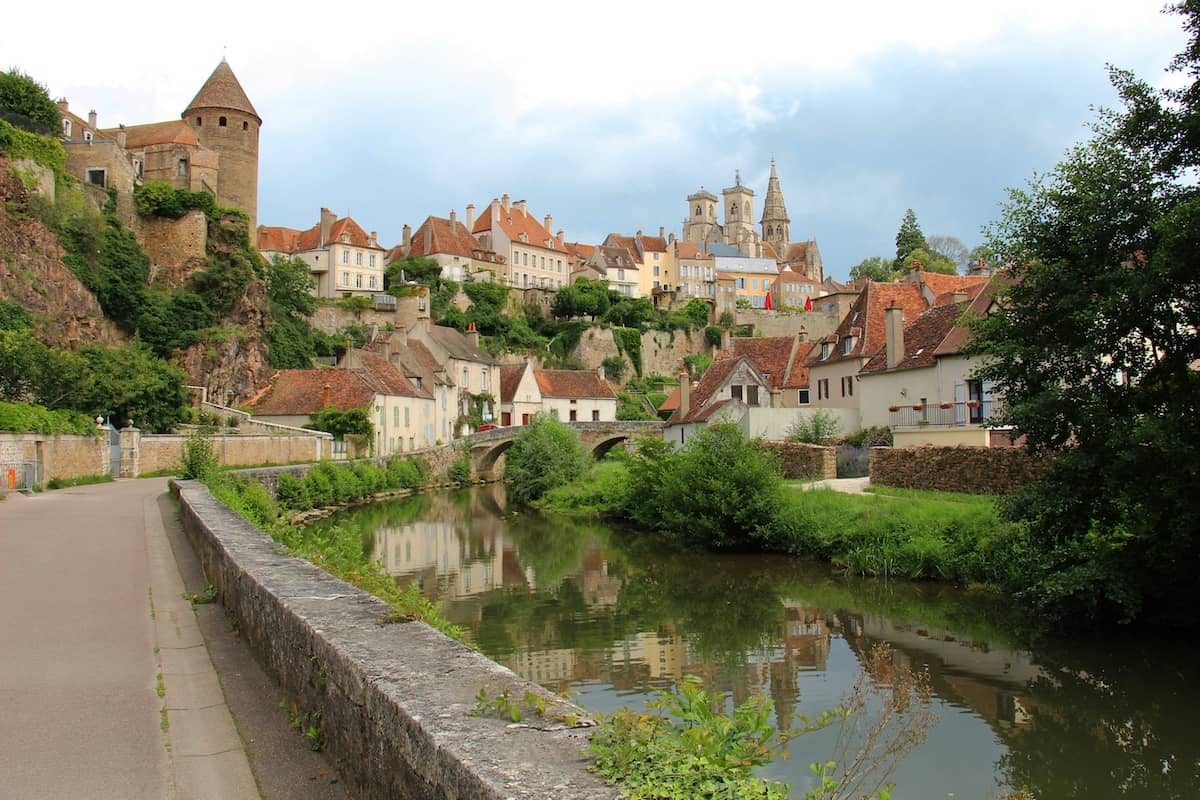
The pink granite ramparts of Semur-en-Auxois make it a fairytale town. Sitting on the Armançon River, Semur has gorgeous medieval bridges and imposing towers, giving a glimpse into its fortified past.
Nowadays, the Gothic Collégiale Notre-Dame and the 15th-century Maison des Maréchaux draw visitors, and the surrounding landscapes, dotted with castles and vineyards are a delight.
ACCOMMODATION: The grand Hôtel Particulier, Maison Jazey is a great option in Semur.
La Charité-sur-Loire, Nièvre
La Charité-sur-Loire is famous for its literary identity, with bookshops, publishers, and annual book fairs earning it the title of ‘City of Books’ (similar to Montmorillon in the Vienne, France).
The UNESCO-listed Priory Church of Notre-Dame is a major stop on the pilgrimage route to Santiago de Compostela. Take a walk along the Loire, explore the charming courtyards, and browse its many bookstores.
La Charité is a destination that appeals to history lovers, spiritual travellers, and literary enthusiasts alike.
ACCOMMODATION: Stay in a La Cour du Château – a B&B near where the ancient hostelleries once accommodated 15th-century travellers!
Centre-Val de Loire
Sancerre, Cher
Sancerre is known for having some of the finest Sauvignon Blanc in the world, with the vineyards stretching across rolling hills along the Loire Valley.
The town itself is a convivial mix of wine cellars, historic buildings, and lively cafés where you can sample local specialities like Crottin de Chavignol, a goat cheese from the region.
A visit to the Maison des Sancerre offers an interactive introduction to the area’s winemaking heritage. With stunning landscapes, fine dining, and relaxed vibe, Sancerre is a must-visit for wine lovers.
ACCOMMODATION: The Hôtel & Restaurant du Rempart is a modest hotel with a traditional restaurant.
Bourges, Cher
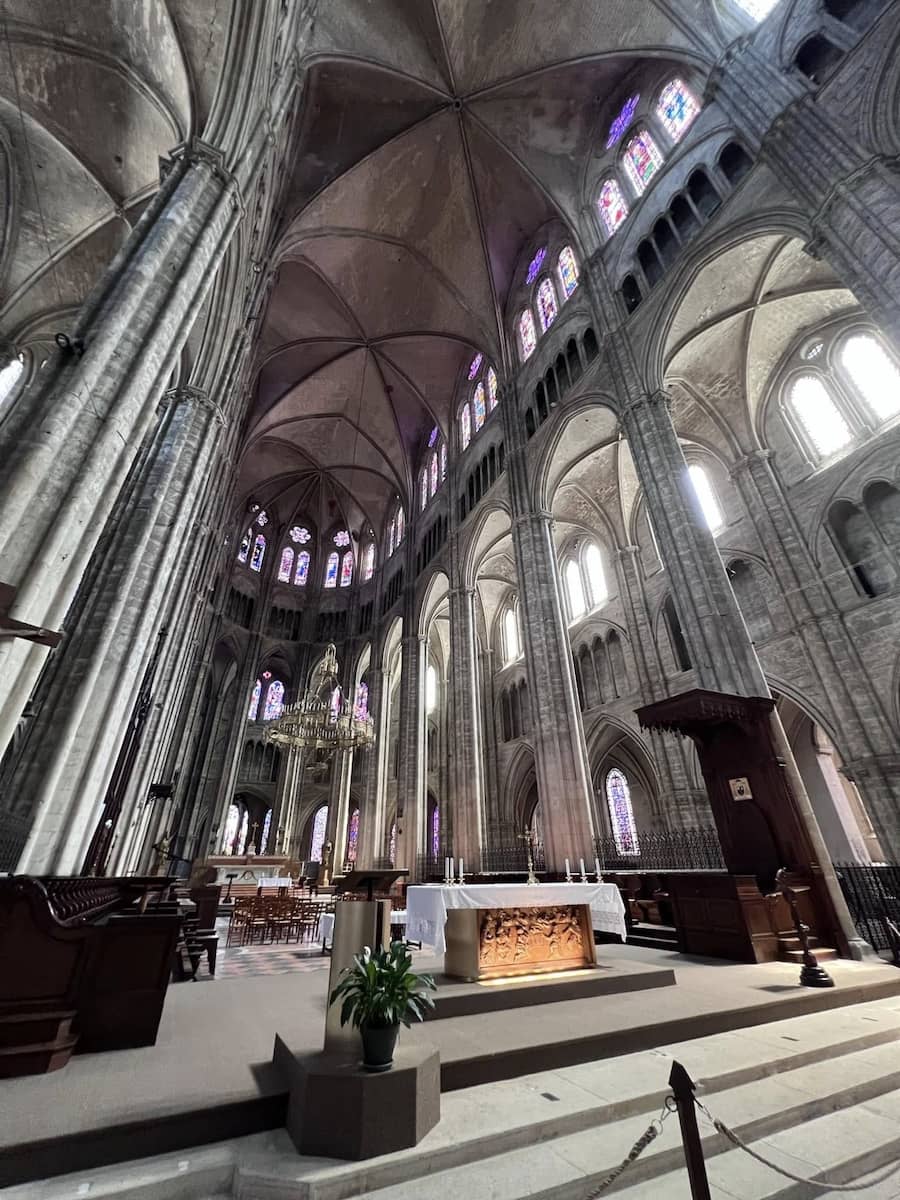
Bourges is a gorgeous town centred around the High Gothic style cathedral. This UNESCO World Heritage site is a similar style to the Chartres Cathedral.
The rest of the town is a mix of half-timbered houses, winding alleyways and lovely green spaces. The gardens behind the cathedral are particularly pleasant on a sunny day.
Bourges holds a music festival over 5 days every spring – the Festival Le Printemps de Bourges attracts musical acts from all over the world, and the places is awash with music all week. With both paid shows, free bar gigs and buskers, it’s a fabulous and lively time to visit Bourges.
ACCOMMODATION: Try the grand Hotel De Bourbon Grand Hotel Mercure Bourges or the very central Best Western Plus Hôtel d’Angleterre.
Saint-Amand-Montrond, Cher
Saint-Amand-Montrond is home to the Cité de l’Or, a museum dedicated to the history and craftsmanship of gold.
Sights include the ruins of Montrond Castle (with fabulous panoramic views). The nearby Canal de Berry has been shut since 1955, but is now a scenic route for cycling and walking. It’s a true gem in central France, waiting for you to explore!
ACCOMMODATION: The Hotel Restaurant l’Amandois is right on the square, near all the restaurants and sights.

Auvergne-Rhône-Alpes
Moulins, Allier
Moulins is one of those towns that you may accidentally stop in, but doesn’t seem to be a destination. Which is a shame, as it has a fascinating history. While it has suffered from economic downturns, and is a little rough around the edges, there are some gems to see here.
Moulins was the historic capital of the House of Bourbon, so there are clues to past wealth and grandeur. The cathedral is a surprise gothic treat, with two towers overlooking a lively square. Don’t miss the Jacquemart Tower – a remarkable clock tower where automatic bell strikers in the shape of a family have been keeping time for over 400 years.
Grab an aperitif at the Grand Cafe, with its Neo-rococo style interior and convivial terrace, you can enjoy watching Moulins going about its unassuming business; and know that you’ve discovered its delights when most have not!
ACCOMMODATION: The gorgeous Mercure Moulins Centre – Hôtel de Paris is my pick for Moulins.
Montluçon, Allier
Montluçon is centred around the Château of the Dukes of Bourbon, a fortress that has watched over the town since the 14th century. It has a heavily industrial past (Dunlop Tyres and coal pits), so these influences can be seen in parts, but only to make the place more interesting.
Montluçon has a strong musical identity, celebrated at the MuPop museum, which explores the evolution of popular music and instruments in France. The town also has lively markets, squares and green spaces along the Cher River.
ACCOMMODATION: The Logis hotel restaurant Des Bourbons is conveniently near the train station, yet within walking distance of the old town.
Vichy, Allier
Famous for its mineral-rich thermal waters, Vichy became a glamorous 19th-century spa destination, attracting European aristocracy who came for its grand thermal baths and elegant promenades. Its Art Deco architecture, particularly the opera house and Belle Époque hotels, gives it that old world charm.
Sadly, Vichy is also known for its darker history as the seat of the collaborationist French government during World War II.
Today, the town balances its heritage with a focus on wellness and renewing that air of grandeur.
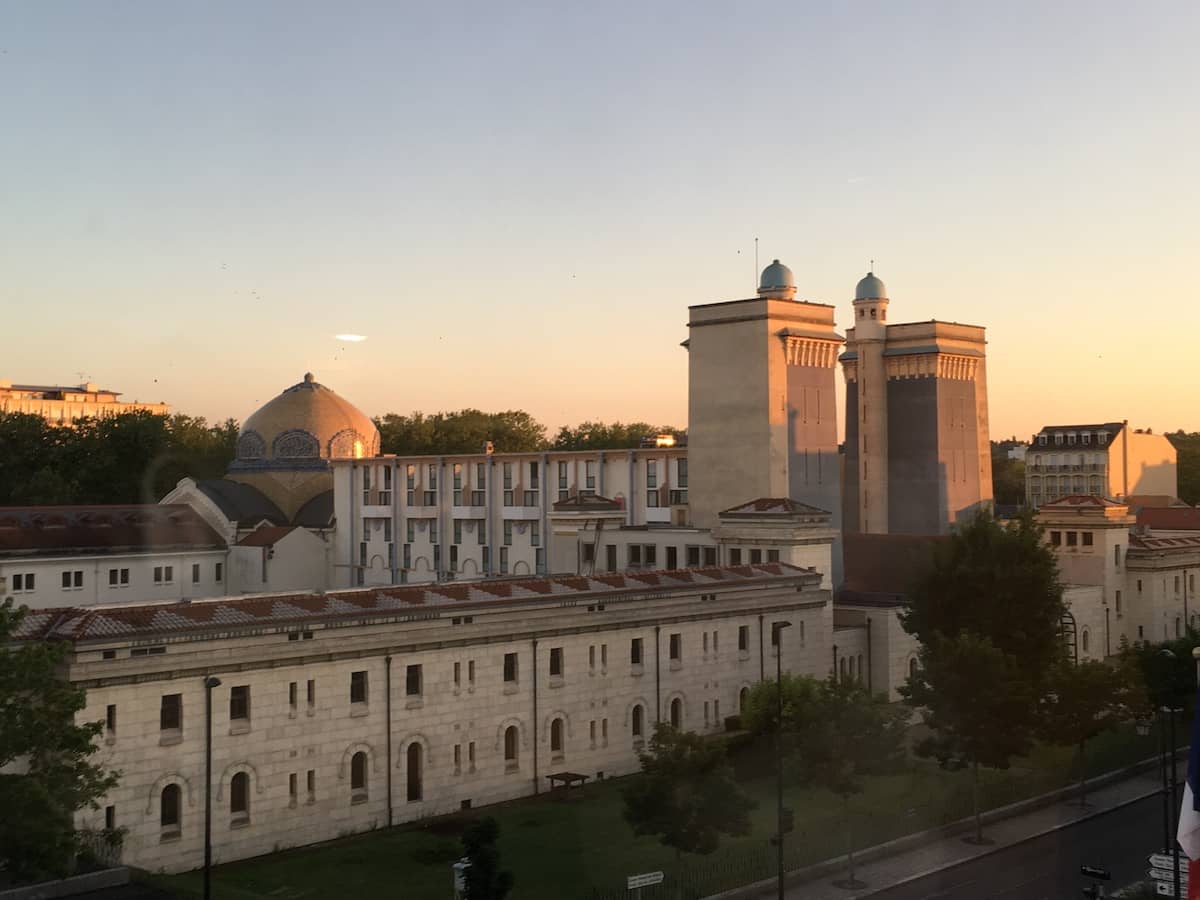
ACCOMMODATION: We always stay at the ibis Vichy, because it a decent price, has a good carpark, allows dogs, and has an amazing view of the thermal baths (from some rooms)!
Aurillac, Cantal
Aurillac is the umbrella capital of France, due to its traditional umbrella manufacturing! The french word for umbrella is ‘parapluie‘, which I think is so beautiful.
The charming old town is centred around the Château Saint-Étienne, which houses the Museum of the Volcanic Lands, exploring the geology of the Auvergne.
Each summer, Aurillac hosts an internationally renowned street theatre festival, transforming its streets into a vibrant cultural stage.
ACCOMMODATION: The Best Western Grand Hotel De Bordeaux is a good central option.


Nouvelle-Aquitaine
Poitiers, Vienne
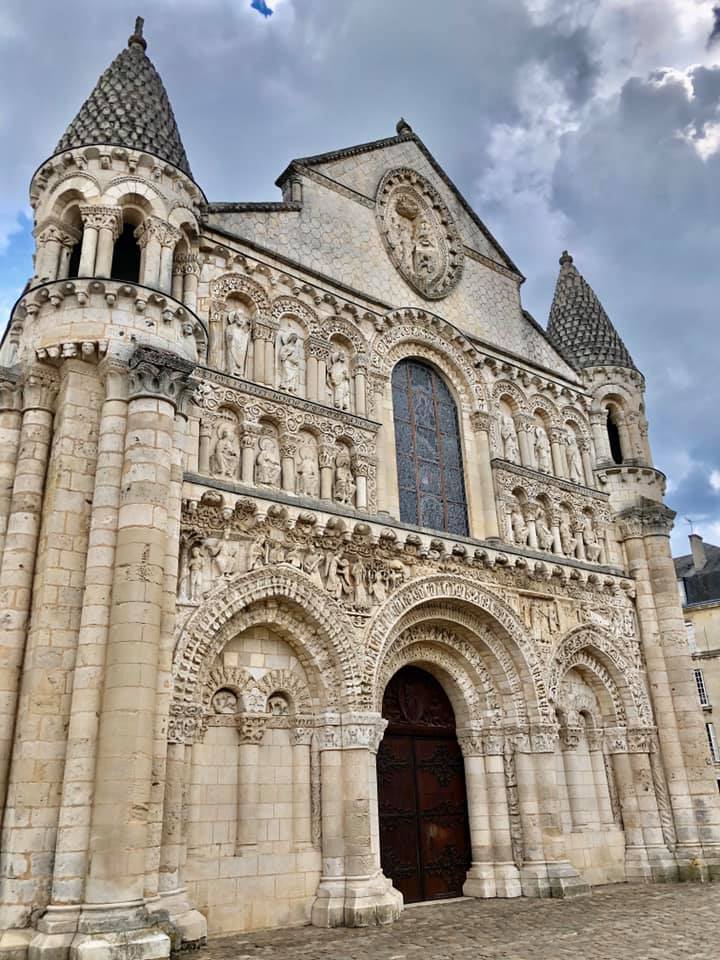
Poitiers is one of my ‘local’ cities (one of three within an hour of us) – where we can get the train to Paris in under 2 hours, and enjoy the bustle of city life when we need a break from the countryside. It’s also where all the big-box stores are, so we often find ourselves there for the more mundane parts of french life.
With a grand square in front of the Hotel de Ville (mayor’s office), and smaller squares in the medieval centre, there are lots of places to enjoy the best things in life in France – lunches out, old churches and aperitifs on lovely squares.
Don’t miss the Church of Notre-Dame la Grande, an eleventh-century Romanesque church with a painted stone interior and colourful stained-glass windows.
ACCOMMODATION: Without a doubt, the Mercure Poitiers Centre is the best spot. Don’t miss a meal at the restaurant, Les Archives – it is a sublime restaurant setting and affordable fine dining food.
Angles sur l’Anglin
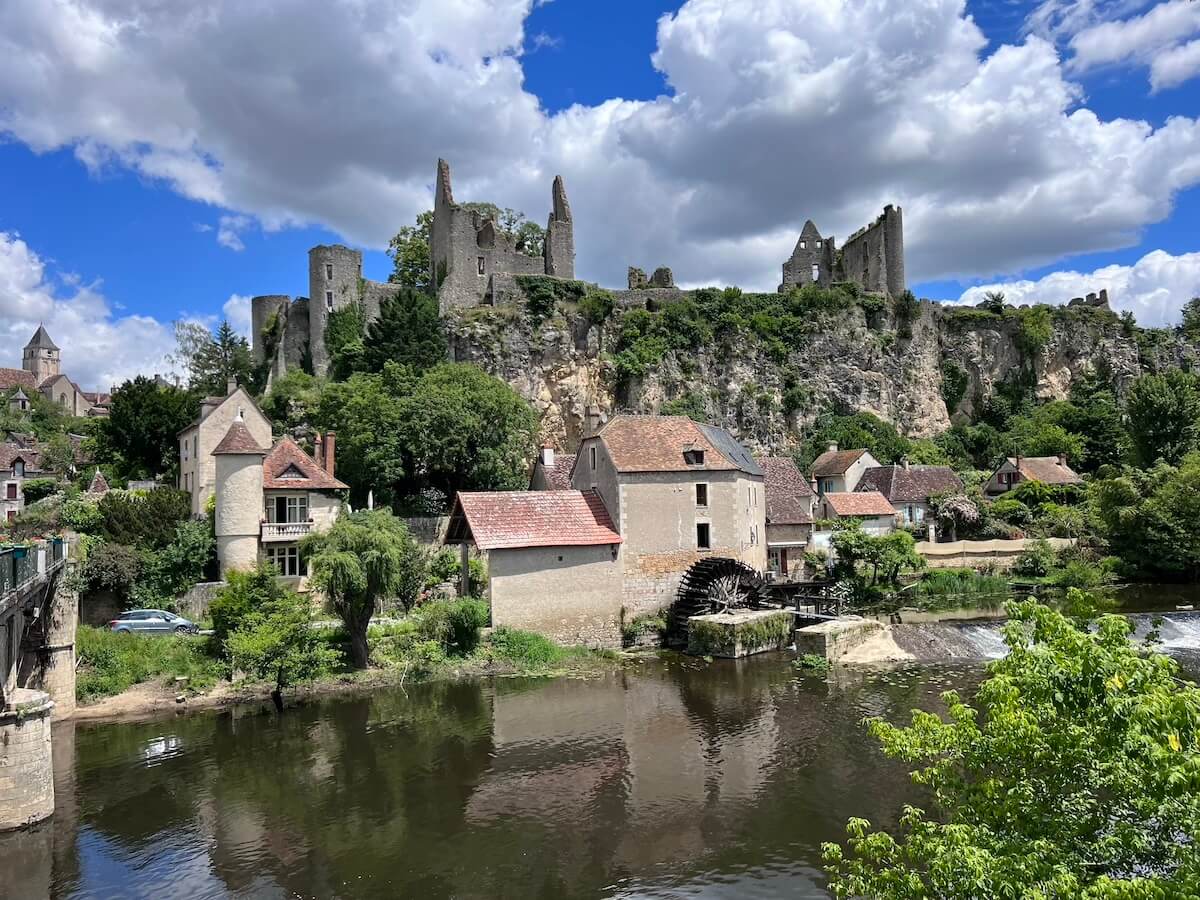
If you want to see one of the most picture-perfect villages in the Vienne department, Angles sur l’Anglin is it!
The ruins of an 11th century castle ruin tower over the river, with an ideal defensive view of the Anglin River. You can visit these ruins, as well as explore the hilltop village, where cobbled alleyways lead you down to the river. The view from across the bridge is perfection!
Read more in the blog linked above.
ACCOMMODATION: This tiny village only has a few accommodation options, but Le Relais du Lyon d’Or is very cute.
Guéret, Creuse
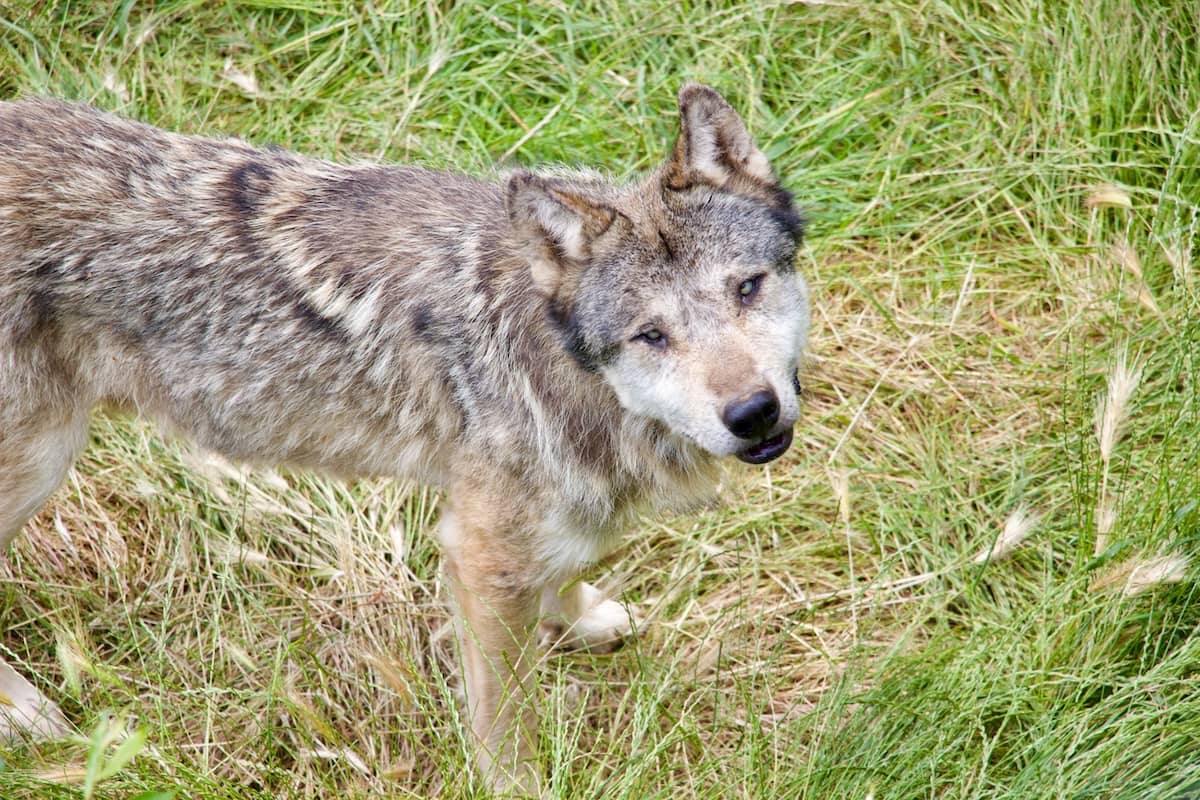
Guéret is one of our favourite stops on the trip across to Annecy, Lyon or Italy. Mostly, because of the Loups de Chabrières (Wolves of Chabrières) sanctuary, where they breed and study different wolf breeds and aid in the study of these beautiful animals. Alongside various other species of wolves, there is a pack of European Grey Wolves that live in a large forest cared for by the centre.
Humans hunted wolves to extinction in the wild in France, but they are back in France after Italian grey wolves spread from their home in the Alps. They have been seen in the wild as far west as where we are in the Vienne!
ACCOMMODATION: The ibis Styles Guéret is a convenient option near the highway.
Aubusson, Creuse
At the heart of tapestry weaving in France for centuries, Aubusson is known for its intricate, handcrafted wall hangings that have decorated palaces and museums worldwide. Its UNESCO-listed craftsmanship can be discovered at the Cité Internationale de la Tapisserie, a museum and workshop space where visitors can watch artisans at work.
The town itself is peaceful, with scenic riverside views and a strong artistic community that keeps its textile traditions alive.
ACCOMMODATION: The Hotel La Beauze is right near the tapestry museum.
Limoges, Haute-Vienne
Limoges is best known for its long-standing porcelain industry, which began in the 18th century and continues today. There are several sites dedicated to this heritage, including the Adrien Dubouché National Museum, which houses one of the most extensive collections of ceramics in France.
Limoges’ historic quarter, known as the ‘Butte,’ features medieval half-timbered houses and cobbled streets around the Saint-Étienne Cathedral. The Bénédictins train station has striking Art Deco architecture, and the city offers a decent selection of cultural venues, from contemporary art spaces to theatres.
I have written more about Limoges here.
ACCOMMODATION: For a countryside chateau experience, try the Chateau les Villettes in Saint Just le Martel outside Limoges. For a central location, the Mercure Limoges Centre is ideal.
Rochechouart, Haute-Vienne
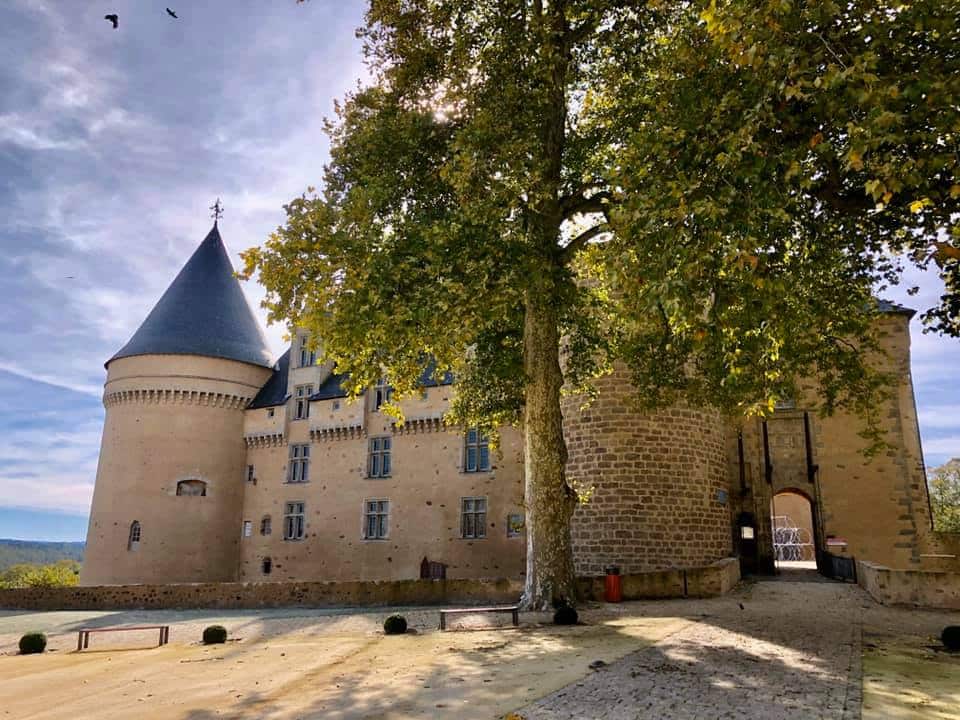
Rochechouart is a small town with a surprising scientific significance—it lies within the boundaries of a 200-million-year-old meteorite impact crater, now eroded but still studied today.
The Château de Rochechouart, sitting above the town, is home to the Departmental Museum of Contemporary Art, which houses a rotating collection of modern works alongside temporary exhibitions.
The town itself has a modest but well-preserved old centre, a couple of good walking trails, and scenic views of the surrounding countryside. The local geology, shaped by the ancient impact, influences both academic study and regional identity.
Rochechouart also has a few small cafes and restaurants, mostly frequented by locals or cyclists passing through on rural routes.
ACCOMMODATION: There aren’t too many accommodation options in Rochechouart, but the Logis Hôtel de France has a restaurant and is only a short stroll to the chateau.
Tulle, Corrèze
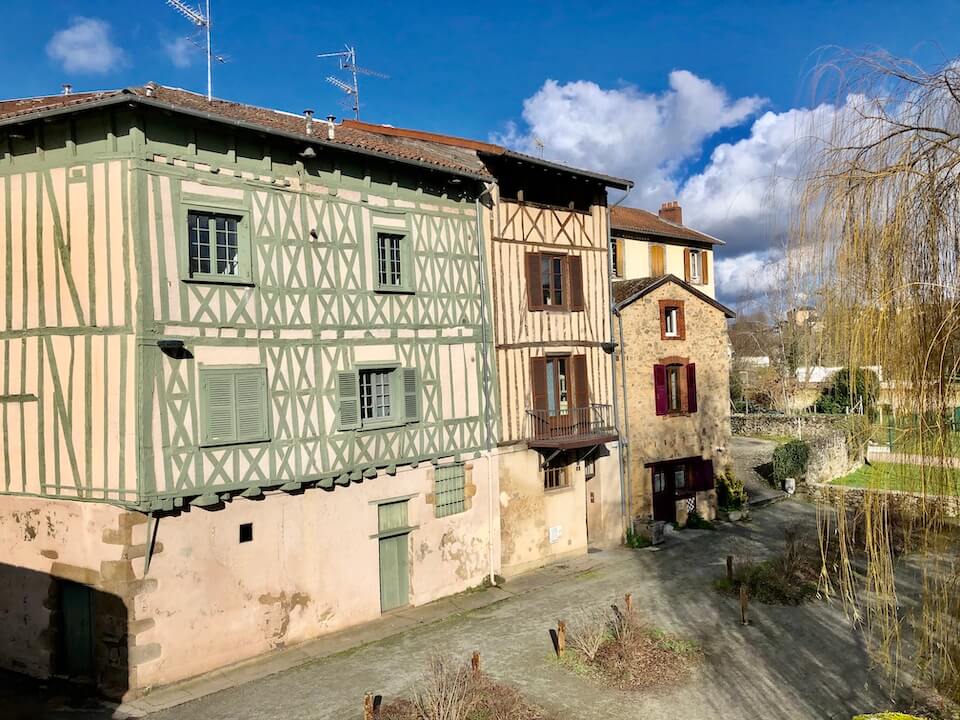
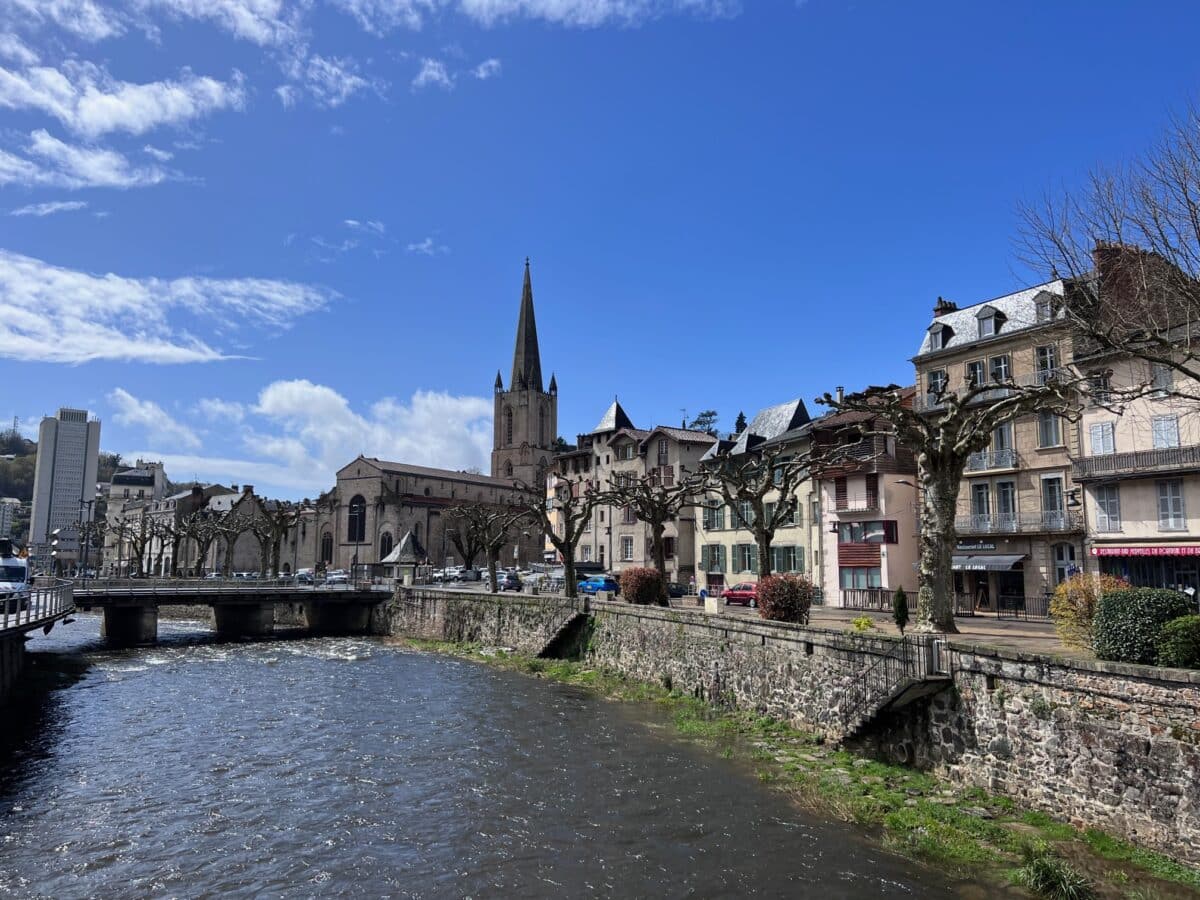
Tulle has a fascinating topography. Set in a steep valley with the Corrèze River running through its centre, Tulle has an interesting mix of modern brutalist architecture and medieval gems. Interestingly, Tulle is famous for its lace-making and accordion production.
Tulle is also famous for the part it played in the French Resistance during World War II. The Tulle massacre occurred in June 1944, shortly after D-Day, when German troops from the 2nd SS Panzer Division retaliated against local Resistance activity. Following attacks by the French Resistance, the SS entered the town of Tulle and detained as many men as they could gather. In total, 213 civilians lost their lives due to the reprisals. The following day, the same division carried out the Oradour-sur-Glane massacre.
Other interesting sights include the Cathédrale Notre-Dame, with its striking bell tower, and the Musée du Cloître.
ACCOMMODATION: The Hotel Limouzi Tulle is right on the river and some rooms have balconies.
Brive-la-Gaillarde, Corrèze
Brive-la-Gaillarde is a paradise for food lovers, with vibrant markets selling truffles, foie gras, and walnuts. The town’s historic centre features well-preserved medieval architecture, charming squares, and a lively café culture.
As a transport hub, Brive also provides easy access to the scenic Dordogne and Vézère Valleys, making it a great base for exploring the wider region.
ACCOMMODATION: The central Hôtel Le Collonges is comfortable and convenient for a stay in Brive.
Brantôme en Périgord, Dordogne
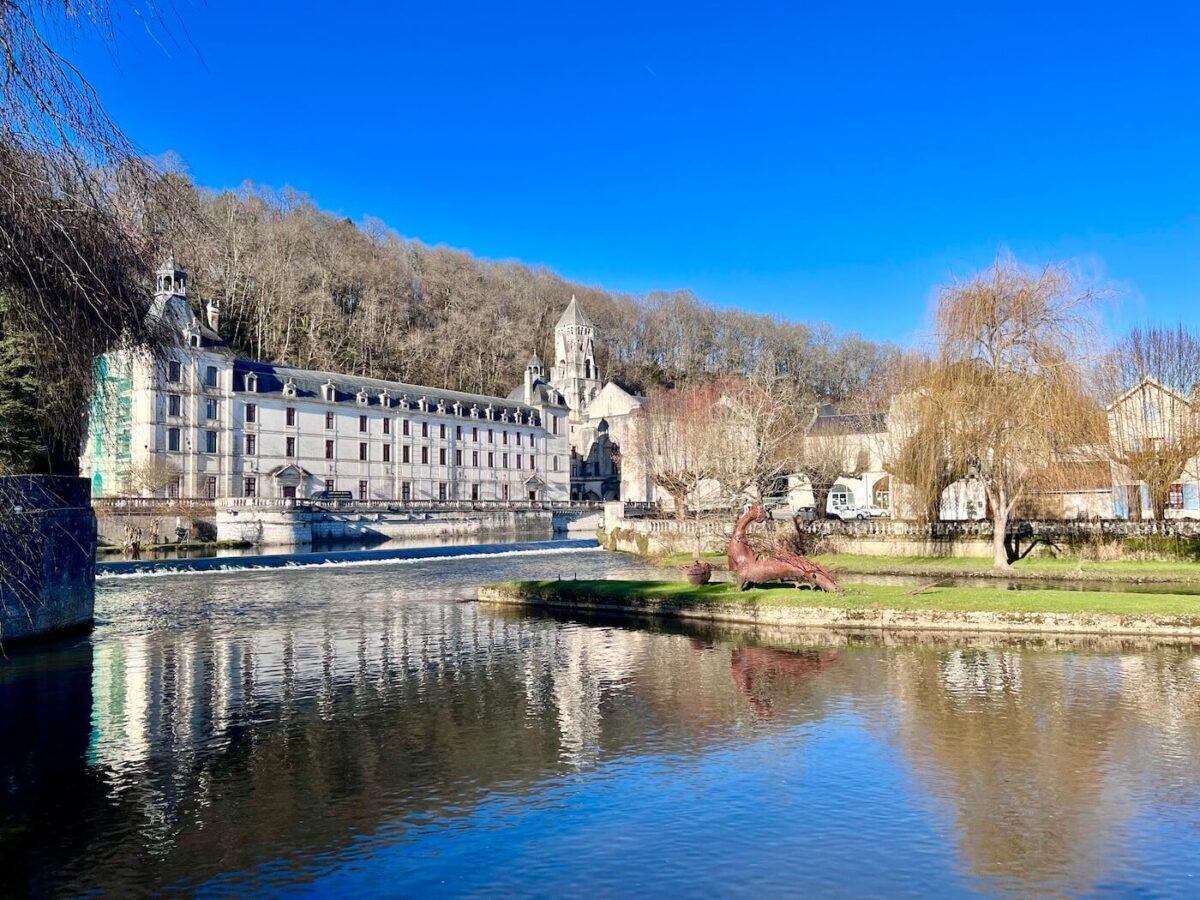
When you see photos of the Dordogne, picturesque Brantôme-en-Périgord is usually featured. Set on a dramatic bend in the Dronne River, Brantôme is both visually stunning and historically fascinating. Often referred to as ‘Venice of the Périgord, you can kayak and take boat trips along the river.
The town’s centrepiece is the historic Benedictine Abbey, founded in 769 by Charlemagne, which features troglodyte caves, including the renowned ‘Cave of the Last Judgment’ adorned with ancient carvings.
ACCOMMODATION: For abbey and river views, the Le Moulin de l’Abbaye is a picture-postcard place. Or at the other end of the village, the Hôtel Charbonnel has a restaurant with a great view of the river.
Périgueux, Dordogne
Périgueux serves as the capital of the Dordogne department, with roots tracing back to Roman times.The town’s Roman heritage is evident in the Vesunna Gallo-Roman Museum, designed by architect Jean Nouvel, which houses archaeological remnants of a Roman villa.
The medieval city centre is based around the impressive Saint-Front Cathedral, a UNESCO World Heritage site with distinctive Byzantine-style domes designed by the same architect as Sacre-Cœur in Paris.
Don’t miss the Eschif de Creyssac – a fascinating building on stilts down by the Isle River. The Eschif was a lookout for a toll bridge, with an oak timber frame, built in 1347.
ACCOMMODATION: We always stay at the ibis Périgueux Centre, you really couldn’t get a better location right on the river. For a special fine dining chateau experience, the Château de Lalande – Teritoria outside Périgueux offers an exquisite tasting menu.
Vézère Valley, Dordogne
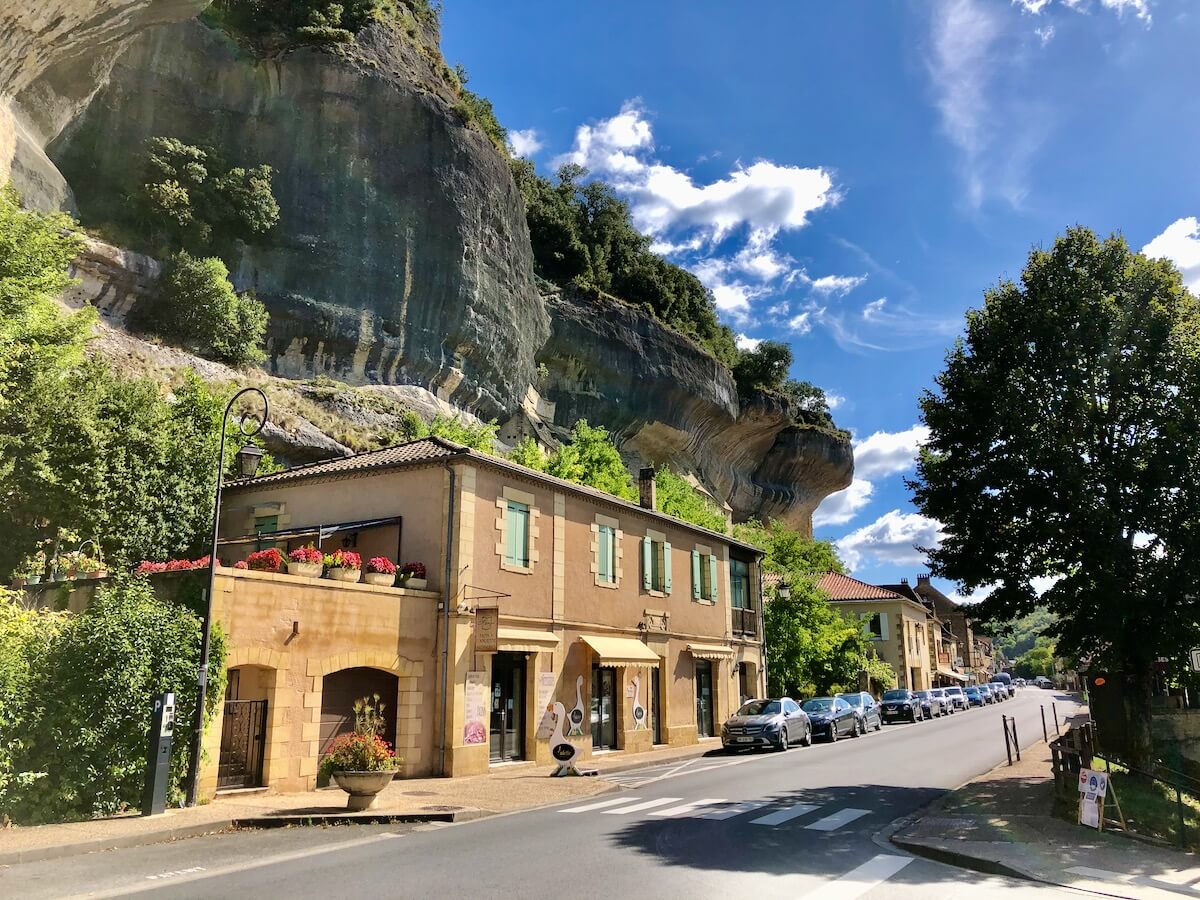
The Vézère Valley is often referred to as the ‘Valley of Mankind,’ because of its concentration of prehistoric sites and caves adorned with ancient art. This valley has gained UNESCO World Heritage status for the remarkably well-preserved sites. Notable locations include the Lascaux Cave, known for its intricate Palaeolithic paintings, and the National Museum of Prehistory in Les Eyzies-de-Tayac, which houses an extensive collection of artefacts.
The valley’s landscape is full of limestone cliffs, forests, and meandering rivers, so it is a great getaway for lovers of hiking, kayaking, and exploring.
Read more about the Vézère Valley here.
ACCOMMODATION: The Hostellerie La Roseraie is a very pretty inn and restaurant in Montignac-Lascaux. The Le Relais de Montignac is another lovely hotel, not too far from the Lascaux museum.
Sarlat-la-Canéda, Dordogne
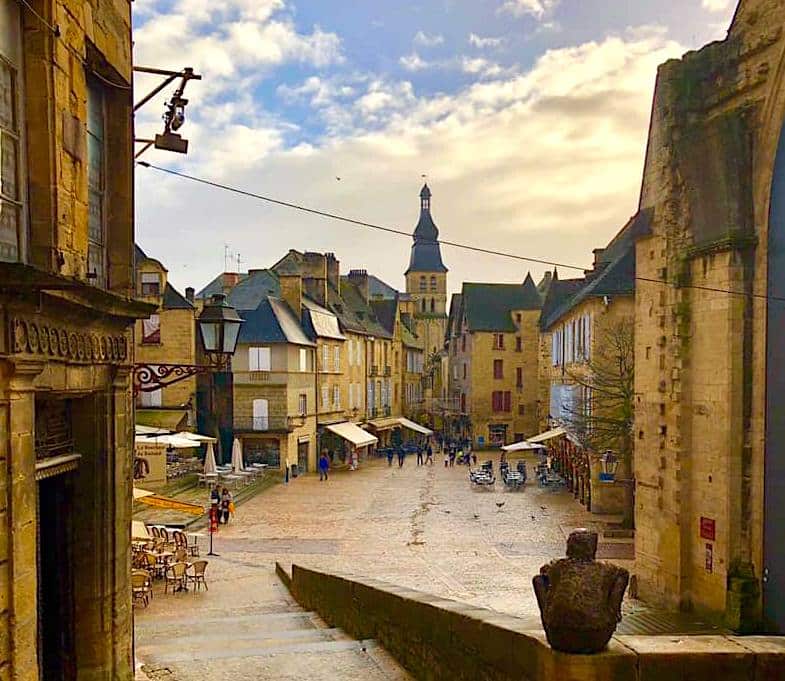
Sarlat is a market town in the heart of the Dordogne. Known for its foie gras, walnuts and duck farming, Sarlat is a perfect mix of medieval charm and food heaven.
Sarlat’s narrow, winding streets are lined with honey-colored stone houses, and picturesque squares such as Place de la Liberté, ideal for an aperitif in the evening. Don’t miss the church of Sainte-Marie, converted to a covered market by Jean Nouvel, with 15-metre high doors and an amazing panoramic glass elevator.
ACCOMMODATION: There are loads of hotels and gîtes in Sarlat, but I recommend staying centrally, so you can enjoy the evening atmosphere. The Petit Manoir is a luxury manor house with a pool right in the town centre.

Valley of the five Châteaux, Dordogne
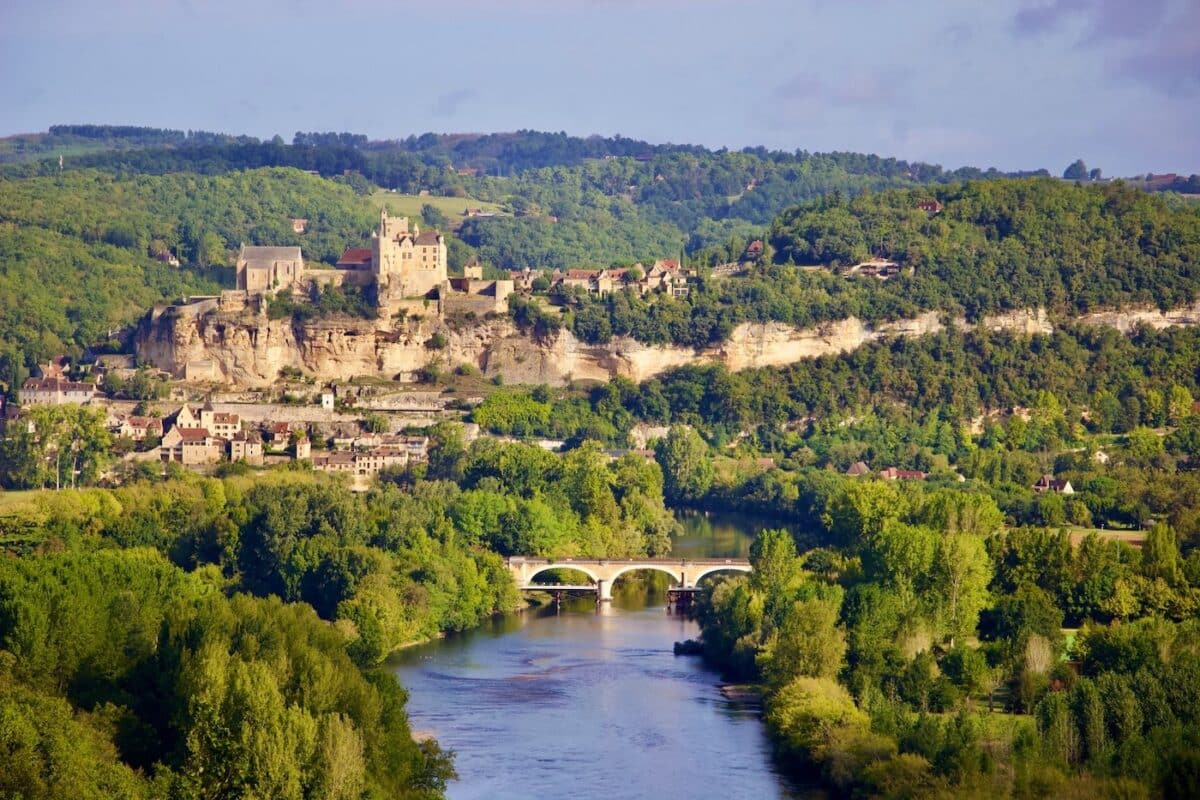
The Valley of the Five Châteaux in the Dordogne region is named for the concentration of five historic castles within close proximity: Châteaux des Castelnaud, Beynac, Fayrac, Malartrie and Milandes.
Each castle offers a unique glimpse into the area’s feudal past. Castelnaud houses a museum dedicated to medieval warfare, and offers panoramic views of the Dordogne River and over to its historic rival, Beynac! If you only visit one castle, this would be my pick.
ACCOMMODATION: The little roadside motel of L’Oustal de Vézac is a clean and well-priced option from which to explore the valley.
Agen, Lot-et-Garonne
Agen is in the Lot-et-Garonne department, and is renowned for its production of prunes. A strange thing to have an annual show about, but Agen has one! The Grand Pruneau Show, a festival featuring music, gastronomy, and cultural events takes over the town every August.
Enjoy the Saint-Caprais Cathedral, with its Romanesque and Gothic architectural elements. The Museum of Fine Arts, housed in four Renaissance mansions, offers collections ranging from prehistoric artifacts to 20th-century art.
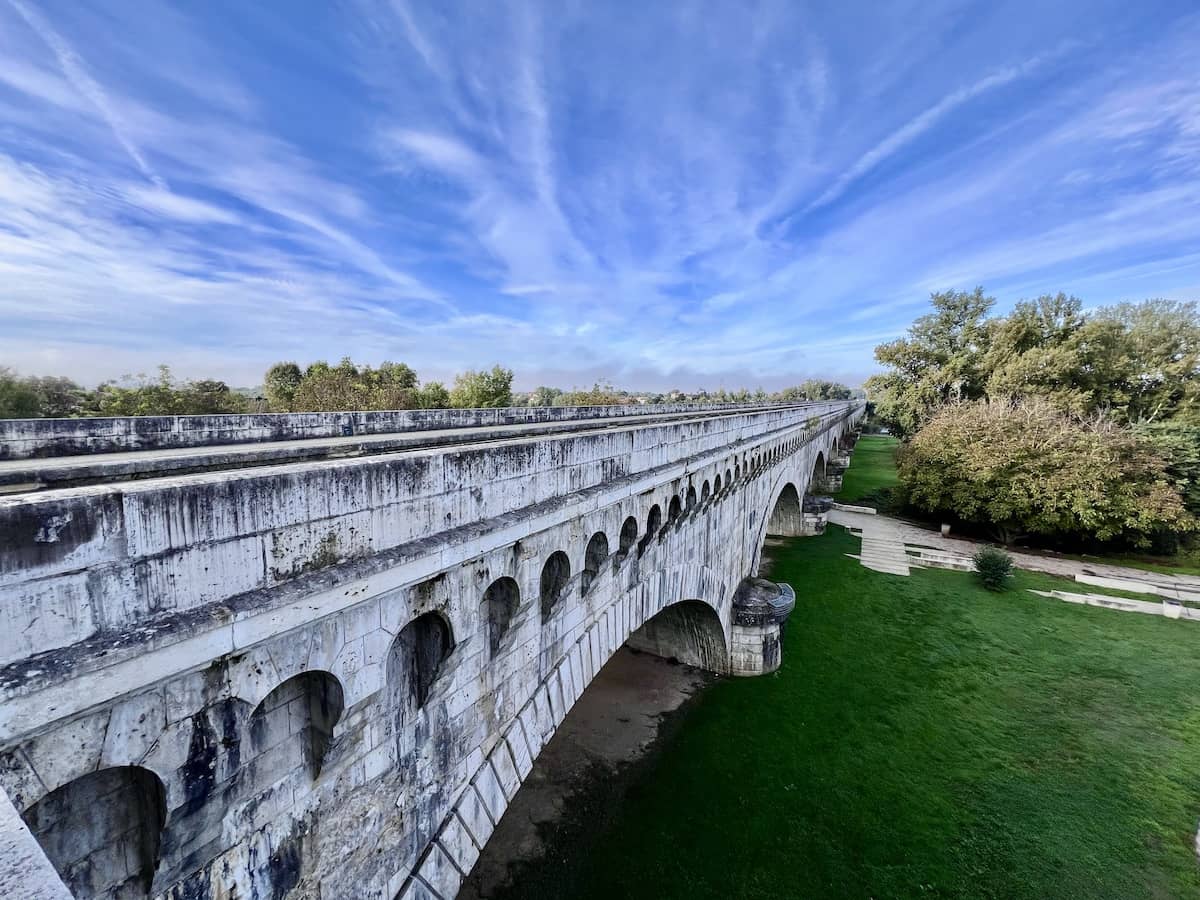
A gem of the area is Agen’s canal bridge, the Pont-canal d’Agen, which allows the Canal de Garonne to cross the Garonne River – a true feat of 19th-century engineering.
The surrounding region offers cycling routes along the canal and vineyards producing Côtes de Brulhois wines.
ACCOMMODATION: We stayed in the Appart’City Confort Agen Centre, which is VERY central and has parking. However, the alleyways to access the accommodation were a tight squeeze! If you’re not driving, then it’s ideal. If you are, then try the Hôtel Château des Jacobins instead.
Pau, Pyrénées-Atlantiques
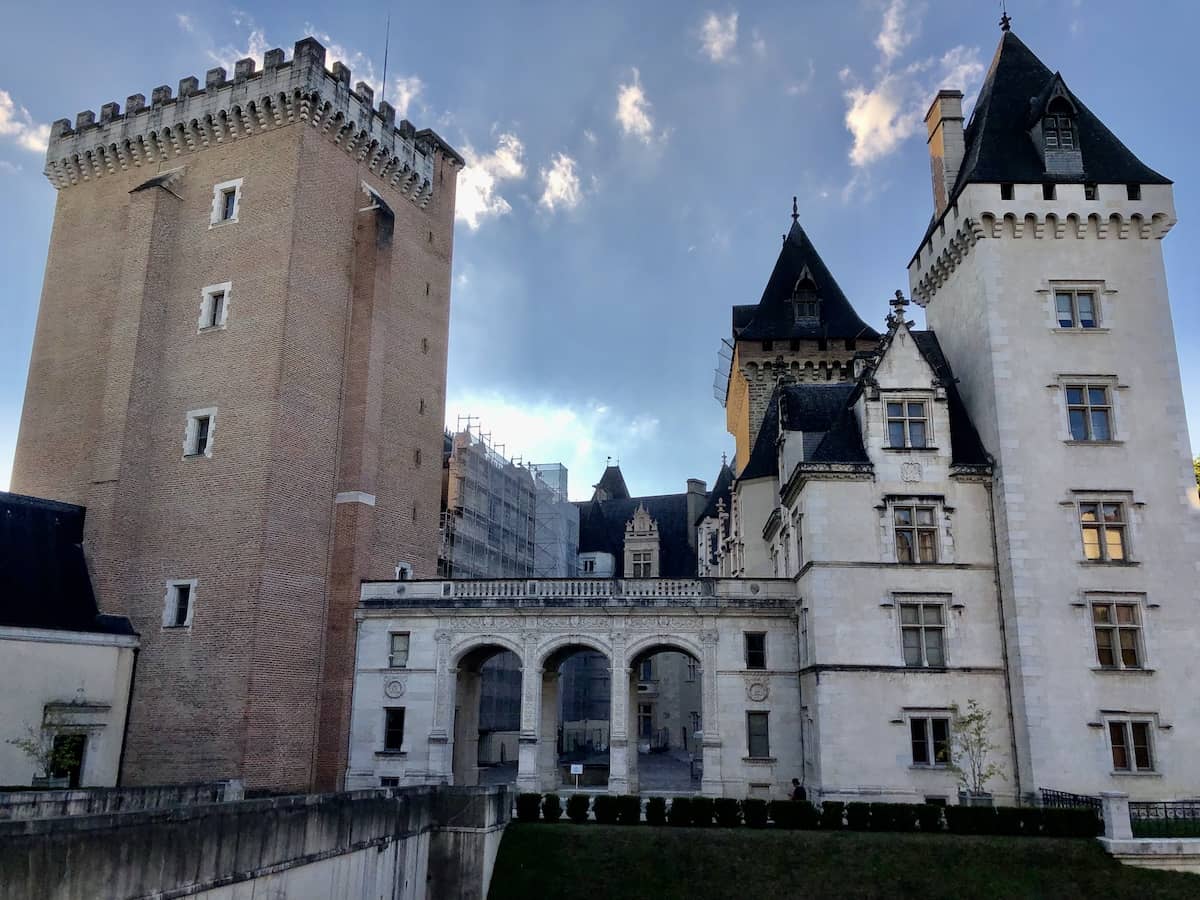
Pau is down near the Pyrenees and the Basque Country in the south-west of France. Like many of the Diagonale du vide cities, it is a little rough around the edges, but dripping in past grandeur and certainly on a good trajectory to renew that.
Straight out of the train station, you will see the 1908 funicular, which leads up to Boulevard des Pyrénées. The Château de Pau, birthplace of King Henry IV, is now a museum with a collection of tapestries and artefacts. The modernised Halles de Pau has a great food market celebrating local products.
During our visit, we were treated to a sensational free concert in the main town square.
ACCOMMODATION: The Hôtel Bristol is a great central spot with parking. Or the Hôtel de Gramont is down near the chateau.
Petit Train d’Artouste, Pyrénées-Atlantiques
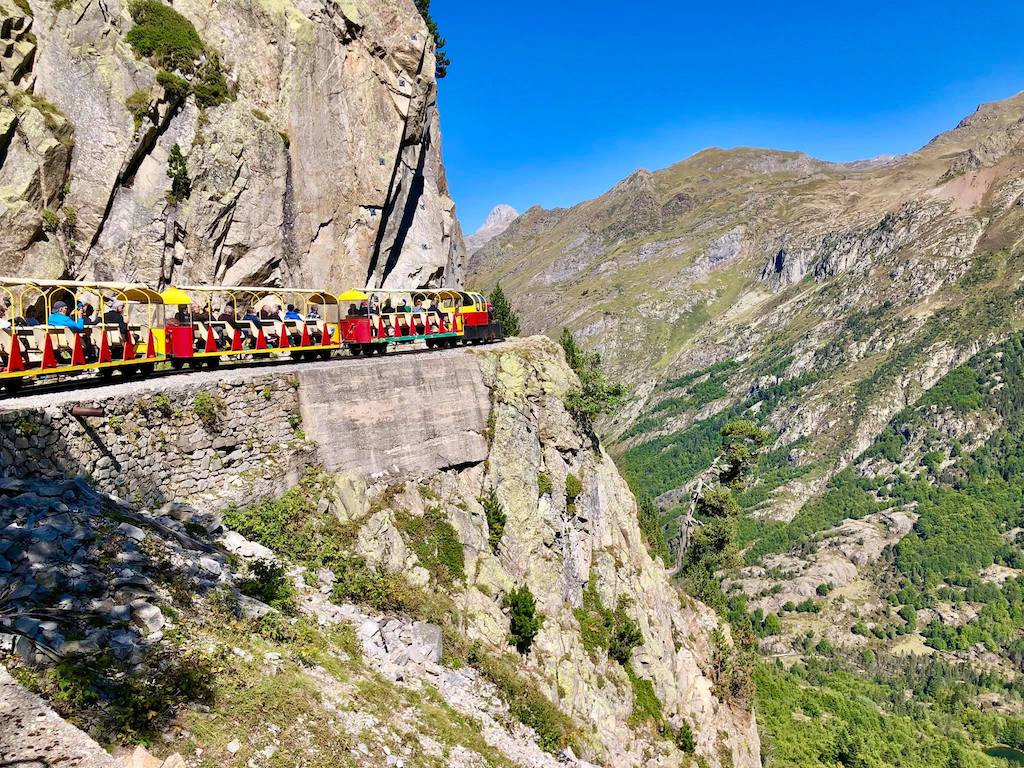
High in the Pyrénées mountains, Fabrèges is a ski town in the Ossau Valley. It is home to the Petit Train d’Artouste, Europe’s highest narrow-gauge railway. Originally constructed in 1924 for dam construction purposes, it now serves as a tourist attraction, offering a 10-kilometre journey through mountainous landscapes to Lake Artouste at over 2,000 meters altitude.
The area is also popular for hiking, with trails leading through the Pyrenees National Park – where you can spot marmots and even bears (if you are exceptionally lucky)!
Note: The train is only open in the non-snowy months, obviously, and must be booked in advance.
ACCOMMODATION: Artouste is easily done as a day trip from Pau or Laruns, but if you wanted to stay in the area, try Auberge La Caverne.
Occitania
Rocamadour, Lot
Rocamadour is one of those seemingly impossible towns built into a rock face. Climb the Grand Escalier to reach the Sanctuary of the Blessed Virgin Mary and the Chapel of Notre Dame, which houses a revered Black Madonna statue. It’s part of the Santiago de Compostela pilgrimage route and remains a popular spiritual destination.
Rocamadour has small museums, shops catering to tourists, and panoramic viewpoints over the Alzou canyon. The lower town is more commercial, while the upper levels retain a medieval atmosphere. Don’t miss the chance to taste the local goat cheese (AOP Rocamadour).
ACCOMMODATION: If you want a hotel on the cliffside and to be in the midst of the action (and see the town get quiet overnight) try the Hôtel Beau Site Notre Dame.
Figeac, Lot
Figeac has an unusual claim to fame, it’s the birthplace of Jean-François Champollion, the man who deciphered the Egyptian hieroglyphs. There is a museum bearing his name, which features artefacts and exhibitions dedicated to ancient languages and scripts.
Figeac was a prosperous market town in medieval times, made easy with its position on the Lot River. There is still a market each Saturday, and the well-preserved old centre has Renaissance houses, arcaded squares, and Gothic façades.
Enjoy one of the walking circuits around the town and along the river. Figeac is a good base for exploring the Lot region.
ACCOMMODATION: The Hôtel Restaurant Le Pont D’Or Best Western has a very pretty view back towards the old town from over the river.
Cahors, Lot
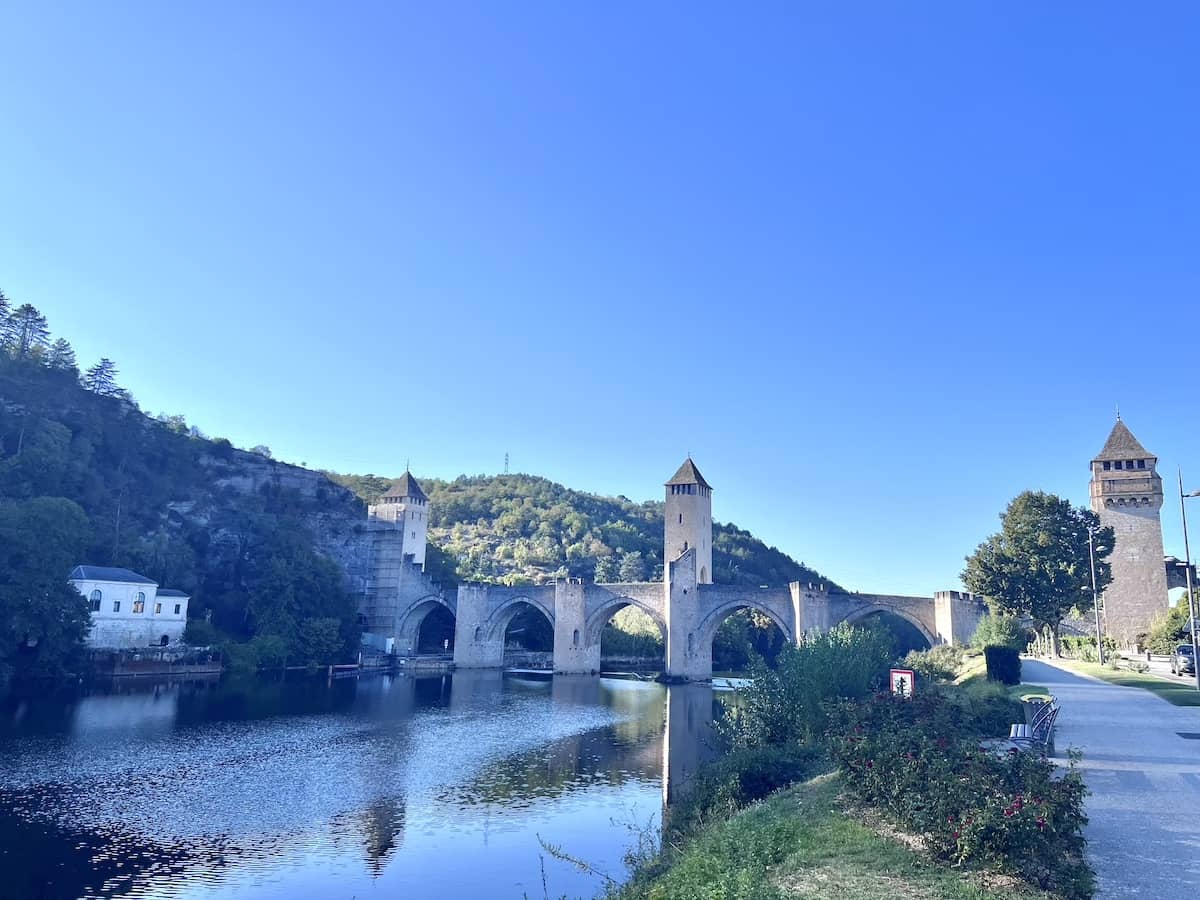
The Pont Valentré in Cahors is one of the most striking bridges I have ever had the pleasure of seeing. Built between 1308 and 1378, it was constructed as part of the town’s medieval defences during the Hundred Years’ War. Consisting of six Gothic arches and three fortified towers, it makes it one of the most iconic examples of medieval military architecture in France. The bridge is a UNESCO-listed waypoint on the pilgrimage route to Santiago de Compostela
There is a local legend that the builder, frustrated with the slow progress of the bridge build, is said to have made a pact with the devil to speed up construction. But when the bridge was nearly finished, he tricked the devil into failure, leading to a mythical curse that the devil would loosen a stone on the central tower each night—something commemorated by a carved imp on the tower!
Don’t skip the Cahors AOC red wine, made from Malbec grapes – there are plenty of squares and restaurant terraces from which to enjoy a glass!
ACCOMMODATION: With a stunning view of the bridge, the Best Western Plus Hôtel Divona Cahors is a winner in Cahors.

Espalion, Aveyron
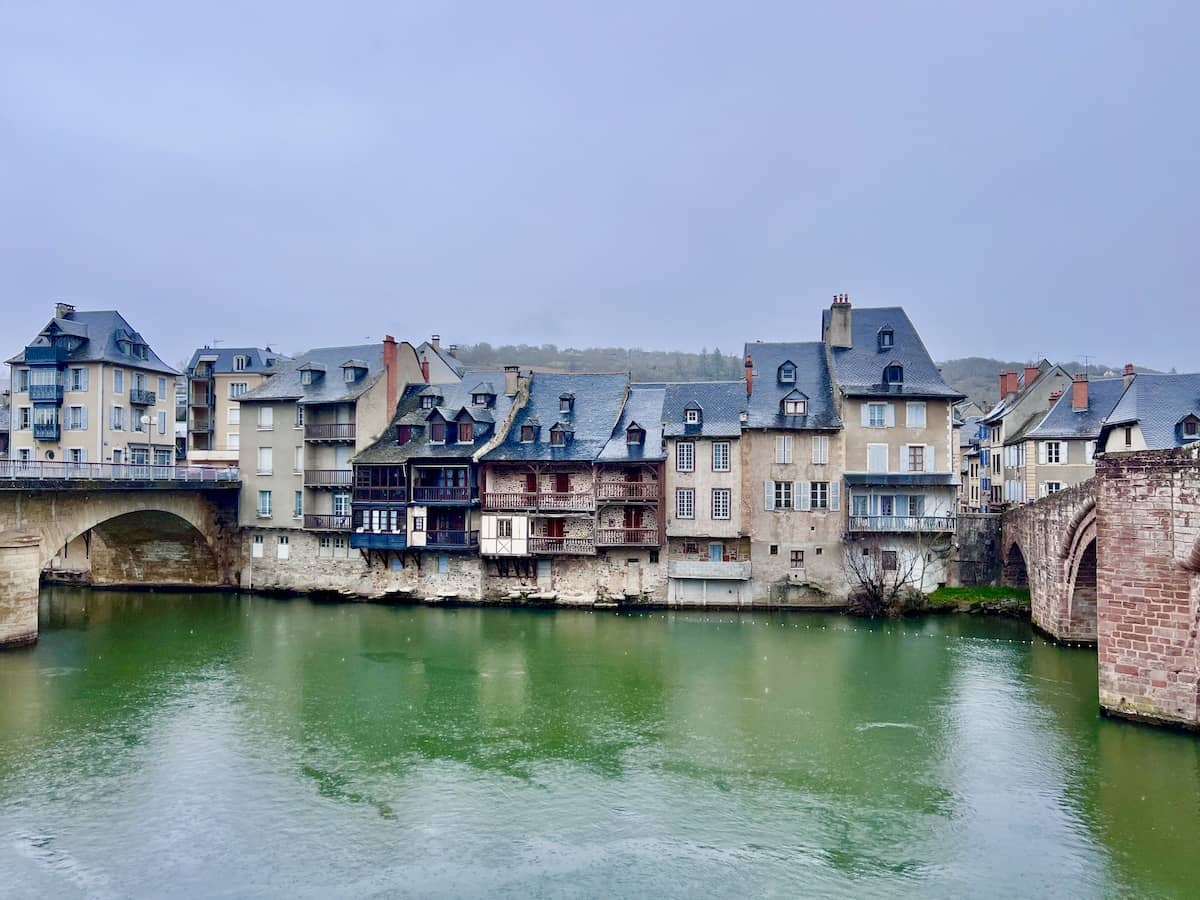
We discovered Espalion by accident as we drove up from Montpellier and via the Millau Viaduct towards our home north-west of Limoges. Its beautiful old bridge, the Pont Vieux, once formed part of the pilgrimage route to Santiago de Compostela. Its Romanesque arches are some of the oldest in France and makes it a very picturesque spot – especially alongside the cute and wonky riverside homes.
We found a tiny hole-in-the-wall Thai restaurant in Espalion for lunch, a cuisine we don’t often have access to in our area, so that was an unexpected treat.
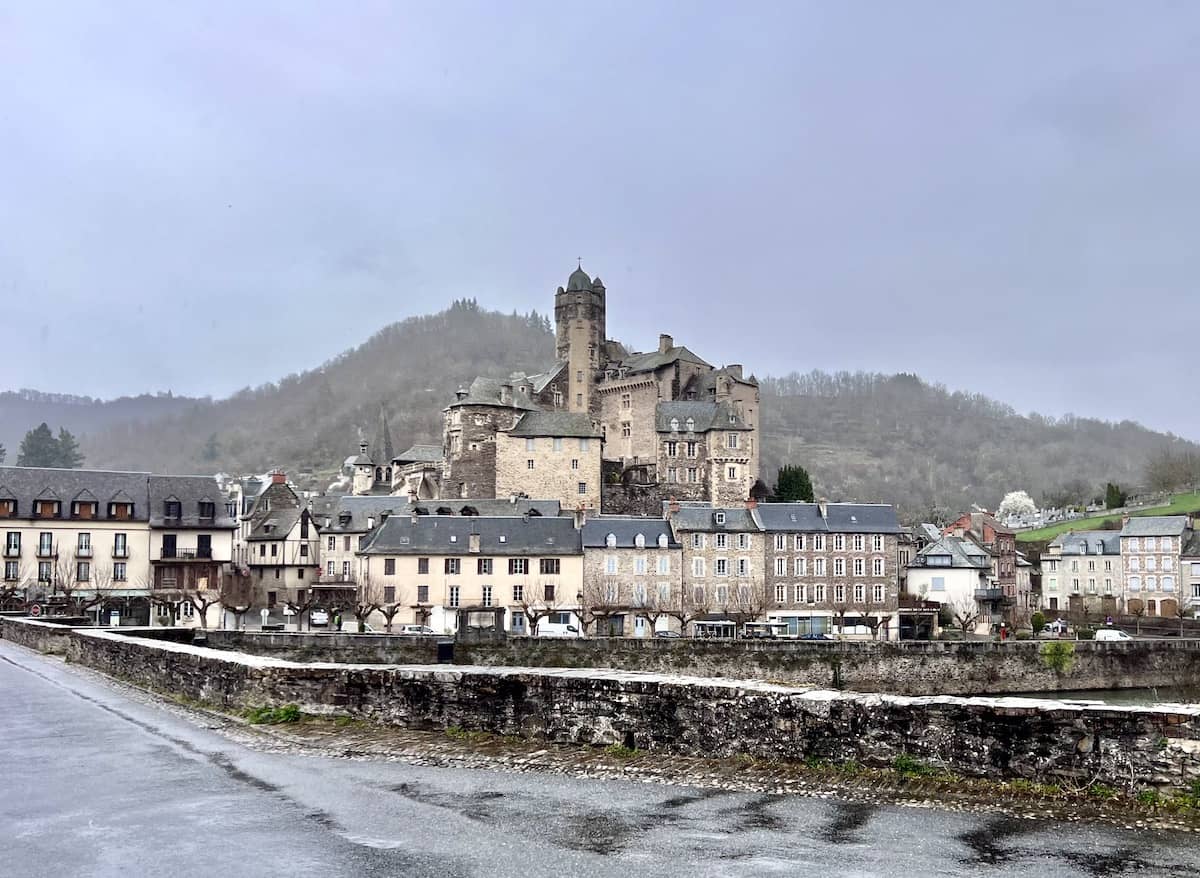
Don’t miss the next town over too, Estaing’s stunning château towers over the town and looked amazing even in the rainstorm of our visit.
ACCOMMODATION: Stay in the old medieval palace on the river, now converted to apartments – Appart’Hôtel – Au Vieux Palais. Or in the Hôtel Restaurant Bar Aux Armes in Estaing.
Rodez, Aveyron
The massive sandstone Cathedral of Notre-Dame in Rodez is a standout centrepiece of this Aveyron city. The reddish hue of the stone, and the position of the cathedral (on top of a hill with a large square out the front), is really striking and impressive.
The town is also home to the Musée Soulages, which houses an impressive collection of works by abstract artist Pierre Soulages, born in Rodez. The museum has helped boost Rodez’s cultural profile in recent years.
Rodez is one of our favourite lunch spots if we are winding our way down to the coast from the south-west. The hilly surrounding landscapes make it a dramatic approach to the city.
ACCOMMODATION: With a view of the cathedral, the Hôtel Mercure Rodez Cathédrale is central and reliable!
Millau Viaduct, Aveyron
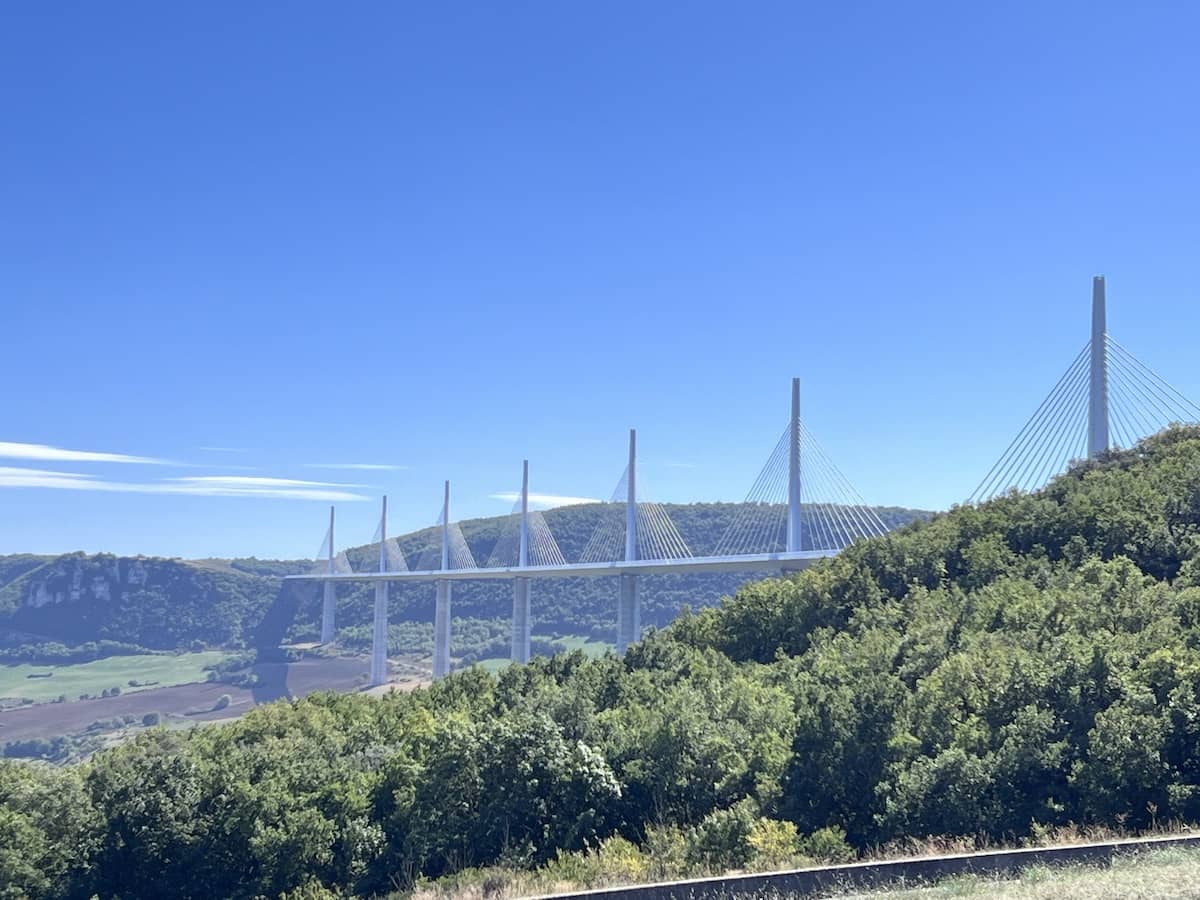
The Millau Viaduct is an engineering landmark—it’s the tallest bridge in the world, with pylons taller than the Eiffel Tower. Opened in 2004, it spans the Tarn Valley and forms a key part of the A75 autoroute. Designed by architect Norman Foster and engineer Michel Virlogeux, the bridge combines concrete and steel in an elegant, cable-stayed design.
While not a town, the viaduct has become a destination in itself, with a visitor centre that explains the construction process and viewing areas that allow for photographs and panoramic views.
Millau town nearby offers accommodation and amenities, and the surrounding area is popular for outdoor activities like paragliding, kayaking, and hiking in the Grands Causses regional park.
ACCOMMODATION: For a chateau stay with views of the viaduct, try Chateau de Creissels!

Moissac, Tarn-et-Garonne
Moissac is another pilgrimage town, situated north of the A62, not too far from Agen. We discovered it quite by accident during a work trip, researching some of the ‘brown signs’ indicating points of interest along highways in France (and now other places in Europe).
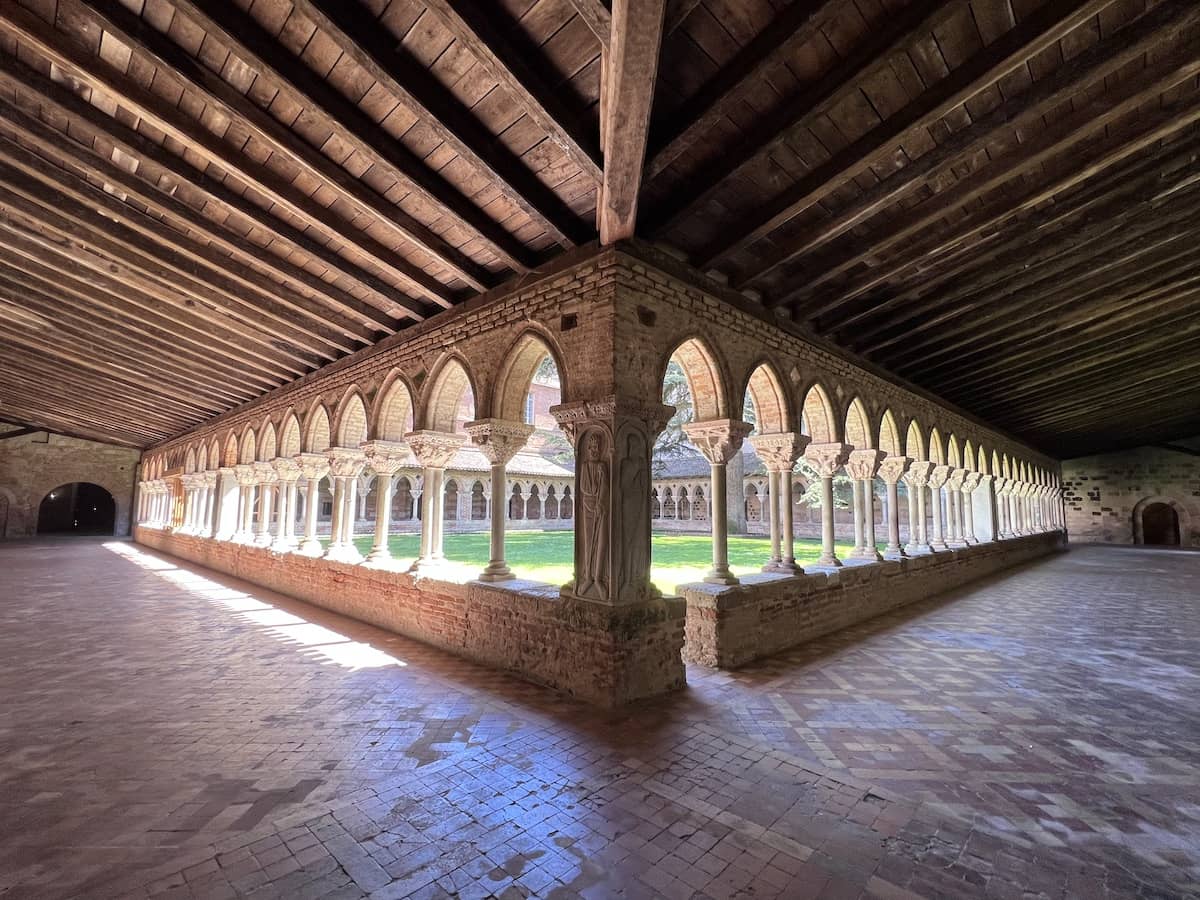
Moissac is primarily known for the Abbey of Saint-Pierre, a UNESCO World Heritage Site on the Santiago de Compostela pilgrimage route. The abbey’s cloister, with its elaborately carved Romanesque capitals, is one of the finest in France. The adjoining church also features a remarkable sculpted tympanum depicting the Apocalypse.
The town has a relaxed atmosphere with quiet streets, a small canal harbour on the Canal de Garonne, and vineyards that produce Chasselas de Moissac, a prized table grape with AOP status. We found a fair amount of renewal here, and ended up staying a few nights because the laid back pace was lovely!
ACCOMMODATION: We loved our stay at the L’Armateur – with parking and a restaurant, plus a lovely back terrace, it is a very comfortable option in central Moissac.
Lourdes, Hautes-Pyrénées
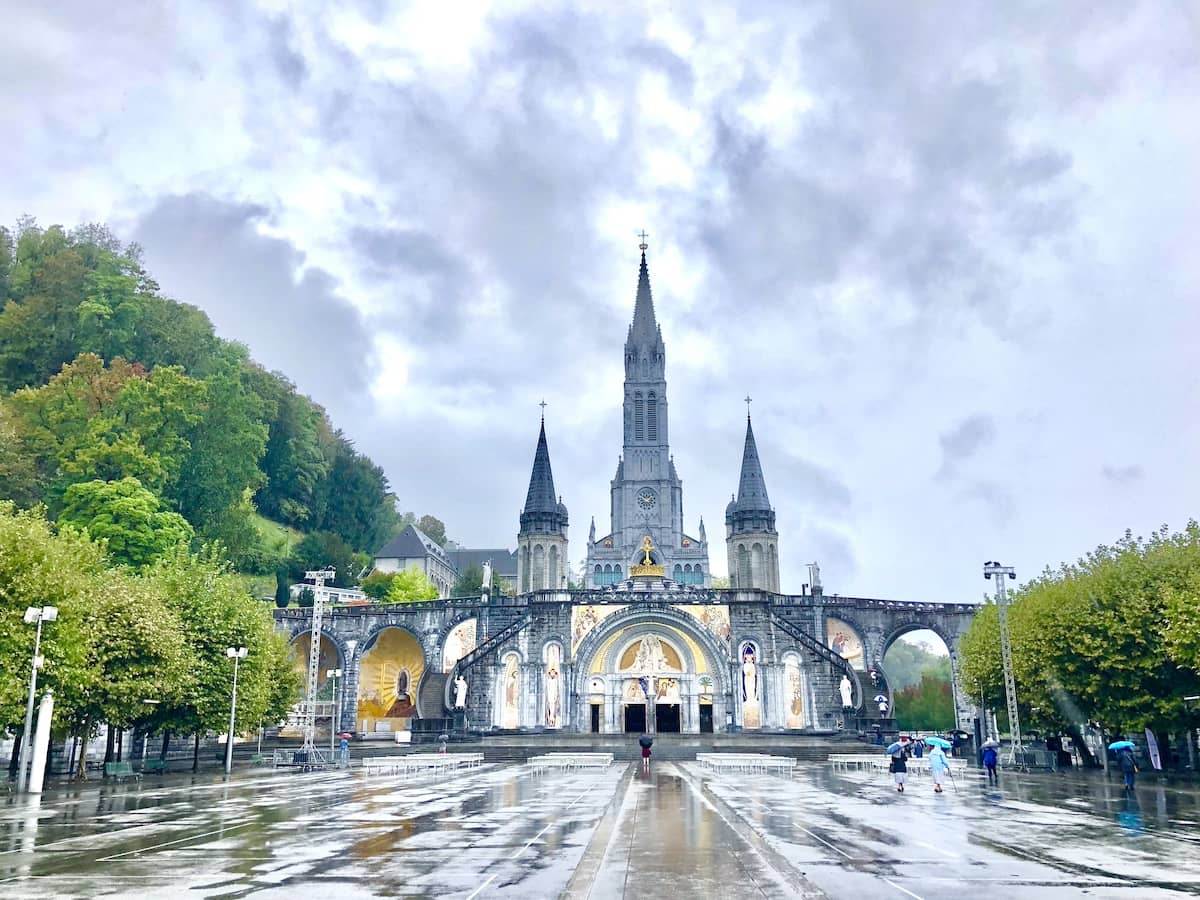
Lourdes is one of the most significant Catholic pilgrimage sites in the world, attracting millions each year to the Sanctuary of Our Lady of Lourdes. Pilgrims come to visit the Grotto of Massabielle, where Bernadette Soubirous reported visions of the Virgin Mary in 1858. The site includes the Basilica of the Immaculate Conception, the Basilica of Our Lady of the Rosary, and the underground Basilica of Saint Pius X, built to accommodate large crowds.
The town is equipped with extensive infrastructure—hotels, tour buses, souvenir shops—largely focused on religious tourism.
We visited Lourdes during a day trip from our trip to nearby Pau. We found it to be a bit of a circus, to be honest. The usual kitsch tourist shops you see everywhere are filled with religious tat instead of touristic tat. There are hundreds of simple high-rise hotels, designed to accommodate the masses. It all feels counter to the usual tranquility and reverence of a religious site.
So, if you are Catholic and want to visit on a pilgrimage, go for it! But expect a little bit of a circus and not much true french village atmosphere. In saying that, the Basilica and the castle (Château Fort) are interesting and offer great views!
ACCOMMODATION: I wouldn’t actually recommend staying in Lourdes, but if you do, try the Hôtel Mercure Lourdes Impérial on the river.
Foix, Ariège
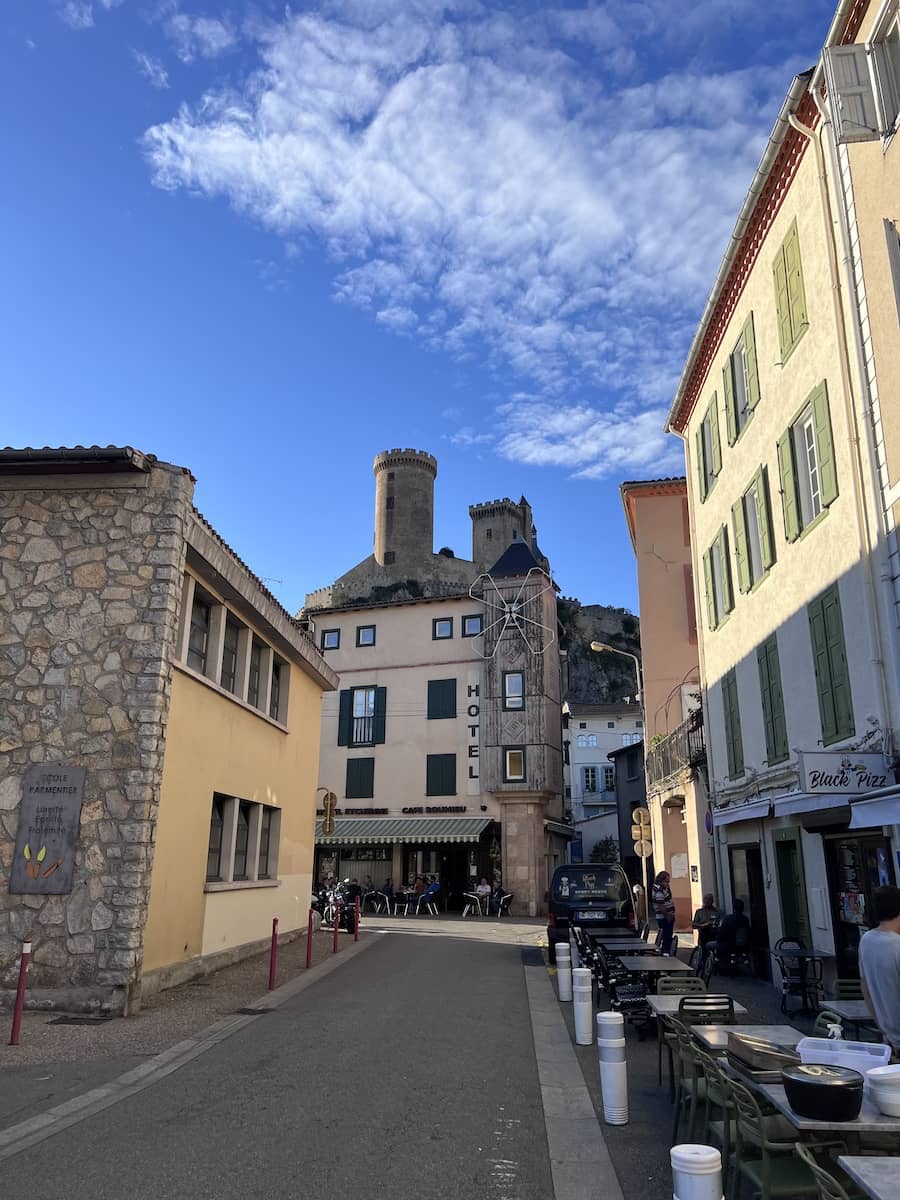
Foix, on the other hand, is an absolute peach of a town in the foothills of the Pyrenées. Château de Foix, a medieval fortress sits on a rocky hill with three towers offering views over the Ariège Valley. The château, once a strategic stronghold of the Counts of Foix, is now a museum detailing the region’s medieval past.
The town itself has a compact centre with narrow streets, small squares, and some lovely wonky timber-framed houses. It’s a good base for exploring the Ariège Pyrenees, with its many hiking and cycling trails.
While not large, Foix offers a good blend of history and access to natural areas, and it’s well-connected by train to Toulouse. It’s our usual stop on the way to Andorra and Spain.
ACCOMMODATION: There aren’t many hotels in Foix, but for a central option, try Hotel Lons. For a roadside place for a road trip, stay at Hôtel Pyrène.
Carcassonne, Aude
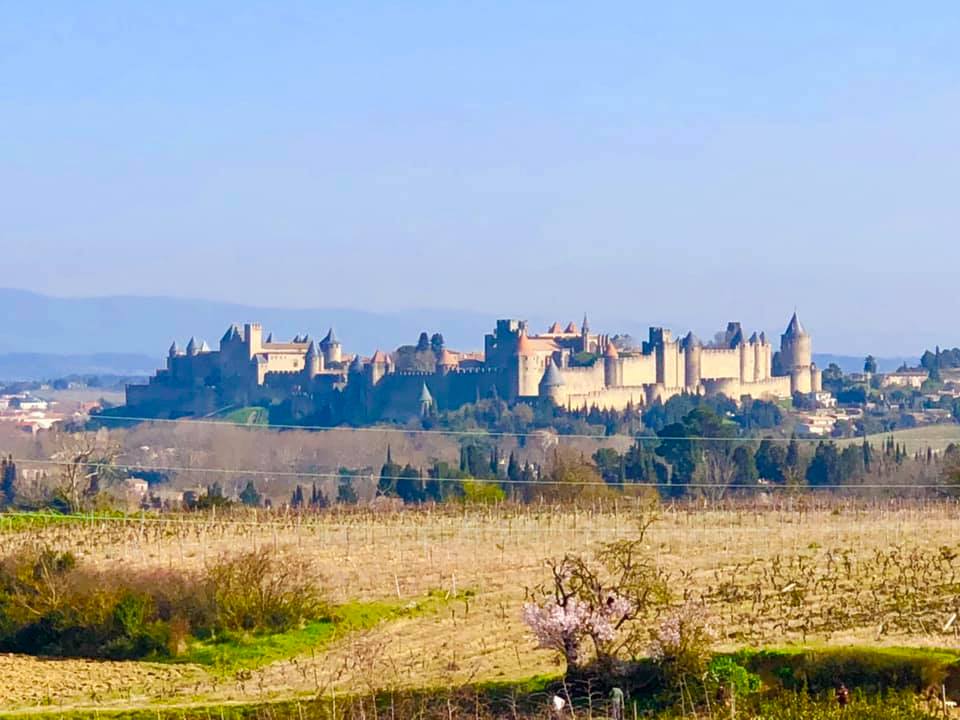
Carcassonne is best known for its medieval fortified city, La Cité, which was extensively restored in the 19th century by architect Viollet-le-Duc. The walled citadel includes double ramparts, 52 towers, and the Château Comtal, along with the Gothic-Romanesque Basilica of Saints Nazarius and Celsus.
The views from the fortifications of the Château are amazing, and the sheer scale of the double ramparts is hard to fathom unless standing on the. And although it can get very crowded in high season, the fortifications are genuinely impressive and are a must-see in my opinion.
ACCOMMODATION: For a great option near the city gates, try the Hôtel du Château & Spa – Teritoria. A little further down the road is the ibis Styles Carcassonne La Cité, or budget option ibis budget Carcassonne La Cité.
Exploring the ‘Diagonale du Vide’ in France
You may’ve noticed that there are some recurring themes in the cities, towns and villages in the Diagonale du Vide, and across France in general. Medieval architecture is prevalent and reflects the thousand years of growth, feudal power dynamics and the more enduring materials used in construction. And the positioning of towns along the many rivers in France made for easy transport and trade.
Thankfully, preservation efforts in the 19th and 20th centuries ensured that, even in lesser populated areas, much of the characterful architecture remains and is now a source of tourism for these areas. While France has a rich architectural heritage that includes Roman, Renaissance, Baroque, and modern styles, medieval buildings remain some of the most iconic and widespread.
As much as I adore Paris, France is so much more than the big cities and mediterranean coastline. Take a train ride or road trip through some of the Diagonal du Vide and enjoy small town life in France.
Love France as much as I do? See more here.
All photos & content © Hannah Henderson and may not be used without permission (sharing this blog post is fine, though!). Images shot with a Canon DSLR T3i Rebel + Canon EF-S 18-135mm f/3.5-5.6 IS STM; and an iPhone.






What a great article Hannah. It’s given me a lot of ideas for places to visit. We shall use this as our reference guide!
Glad there’s lots of inspiration in there for you! If you haven’t been to the Vezere Valley, that’s definitely my favourite!