Mérida sits in the Extremadura region of Spain, north of Seville and south of Salamanca. As we were planning our Spanish road trip, we chose a few spots along the north-south highway E-803 that runs parallel to the Portugal border, and Mérida immediately caught our eye. Roman ruins, Moorish influence, and modern Spanish life mix in a gorgeous way. Here’s my guide to 2 days in Mérida, Spain – including accommodation recommendations.
Founded in 25 BC by the Roman emperor Augustus as Emerita Augusta, Mérida was established as a settlement for retired Roman soldiers and gladiators. Roman monuments are visible in many places throughout the city – including the theatre, amphitheatre, aqueducts, and the Temple of Diana – and it has UNESCO World Heritage status. After the fall of the Roman Empire, Mérida passed through Visigothic and Moorish rule before becoming part of the Christian kingdoms during the Reconquista in the 13th century.
Where to stay in Mérida
If you’re driving, the Alora Hotel & Alora Apartamentos Mérida are a great option – with a secure carpark, these modern rooms and apartments are a short walk from the Roman amphitheatre complex and city centre. This complex was so new [May 2026] that the pool and outdoor landscaping was still being completed.
If you are arriving by train, I recommend the Hotel ILUNION Mérida Palace, right on the main square; or the beautiful Parador de Mérida, set in a former convent.
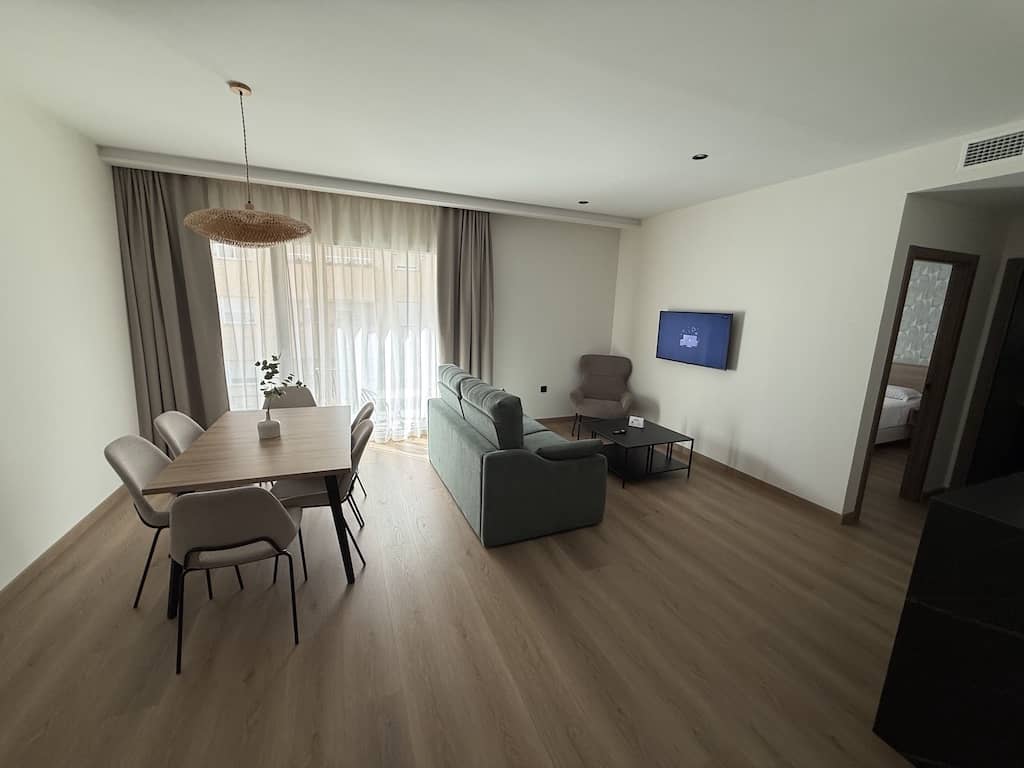
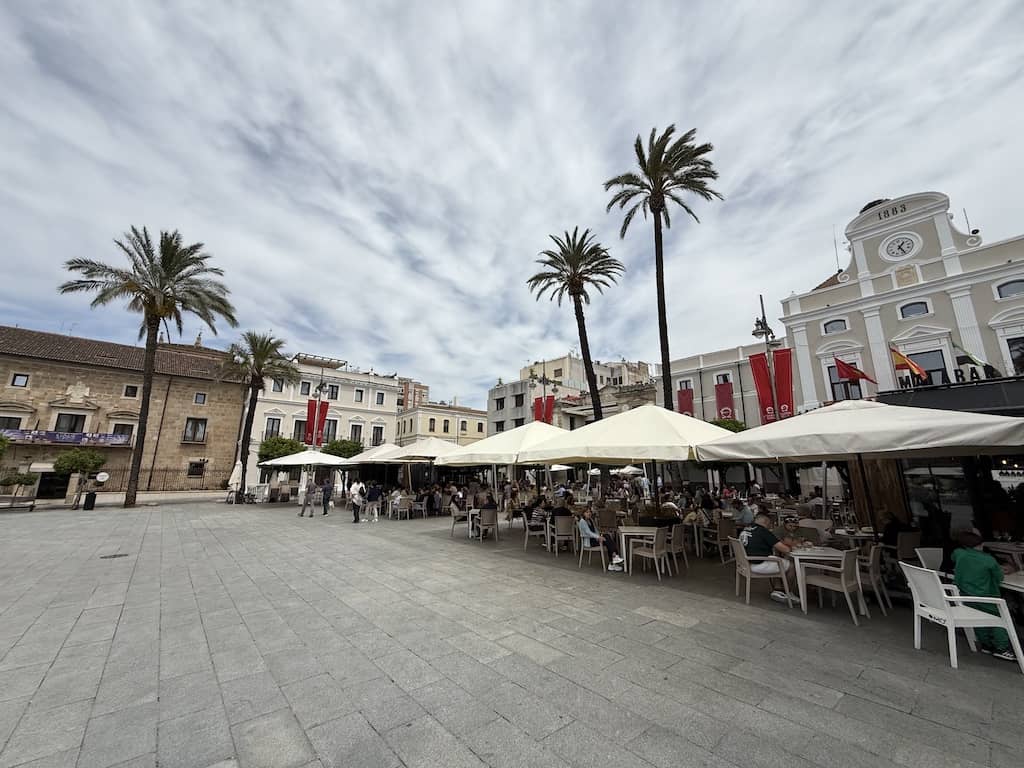
Two days in Mérida, Spain
Two days in Mérida allows you plenty of time to enjoy the Roman ruins at a leisurely pace, and enjoy the buzz of the town. There are some interesting layers to the place – the evolution of architecture, and many squares to enjoy. Outside the centre, there are all the trappings of modern life, so it’s a very balanced city for both tourism and longer stays.
One thing we noted was that there were far fewer English-speaking visitors here in Mérida. There were plenty of tourists, but the only English we heard was from a history tour group from the USA.
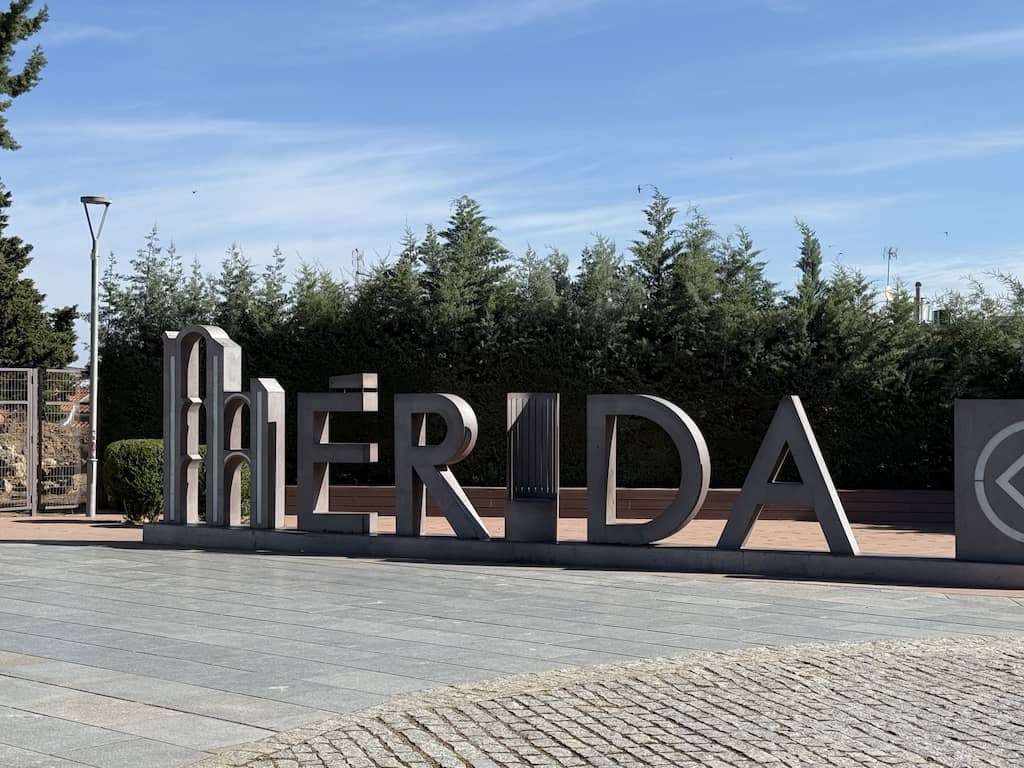

Things to do in Mérida, Spain
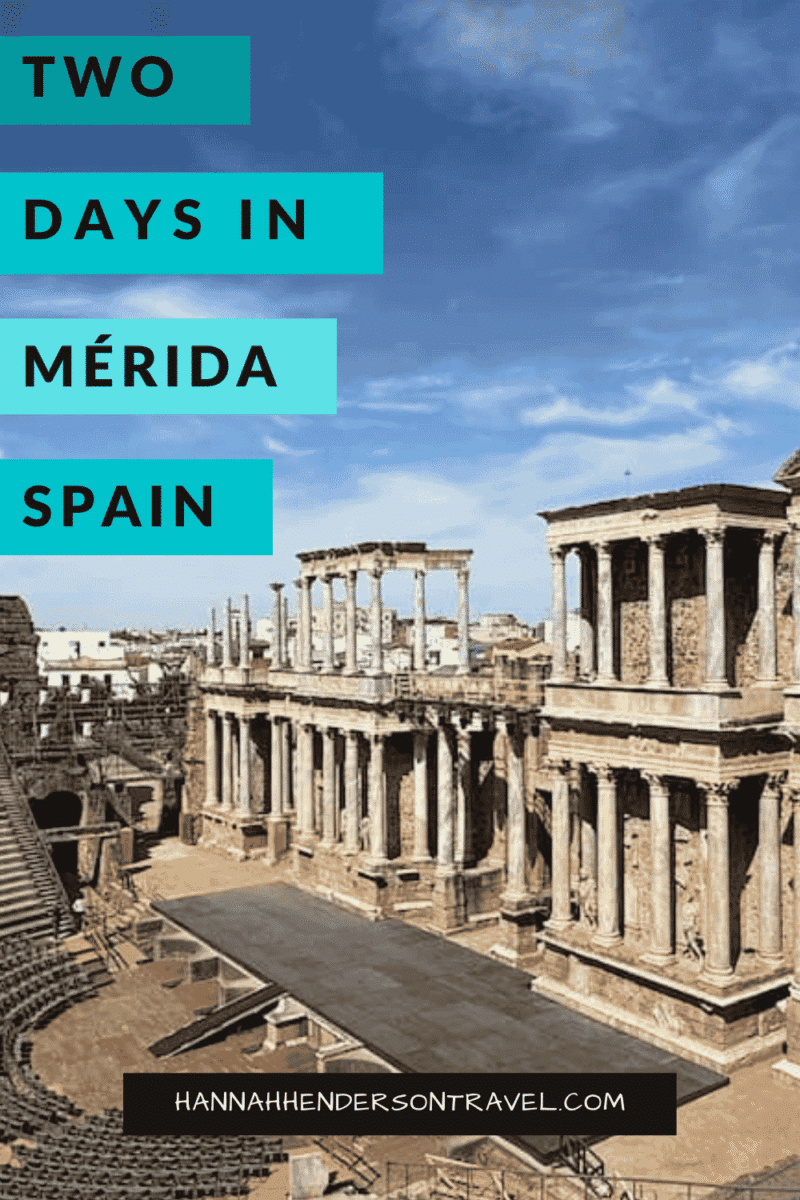
Mérida Theatre and Amphitheatre Complex
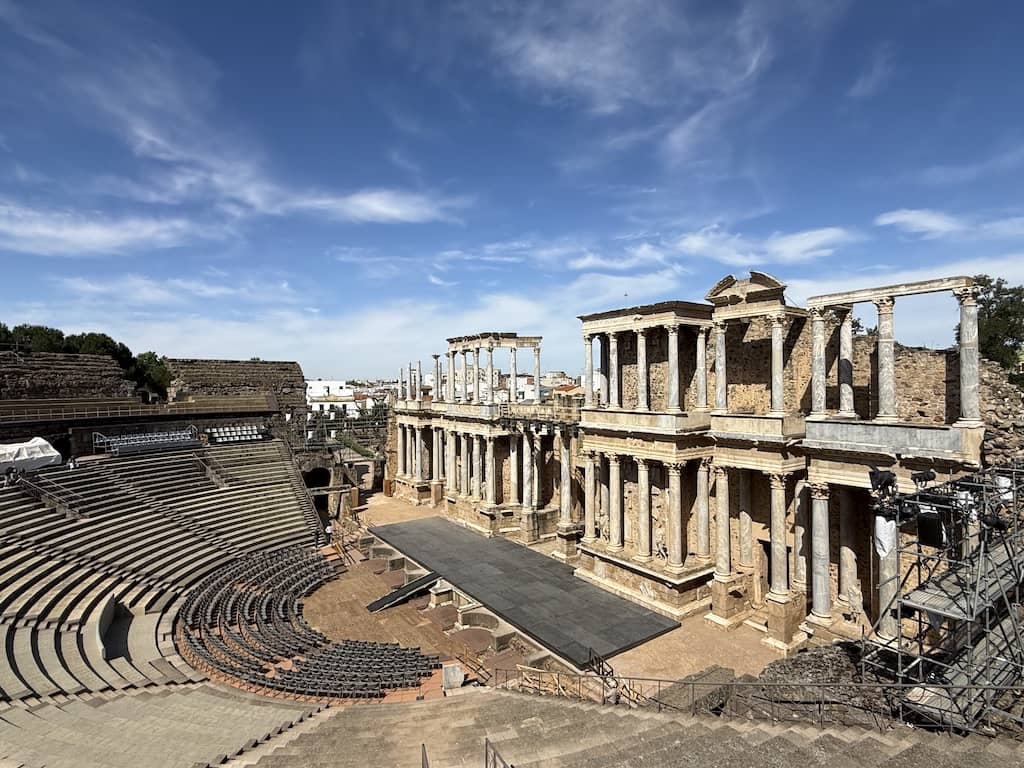
The Mérida theatre complex isn’t as grand as some arenas around Europe, but it is a solid showcase of how Roman society lived and entertained in a regional capital.
The Roman Theatre (semi-circle) was commissioned by Marcus Vipsanius Agrippa, the son-in-law of Emperor Augustus, and was inaugurated around 15–16 BC. Built into a hillside, it could accommodate around 6,000 spectators who gathered to watch dramas, comedies, and other theatrical performances.
Like many Roman buildings, it fell out of use after the empire declined and was gradually buried, which ironically helped preserve its structure. Much of what it looks like today is the result of careful 20th-century reconstruction.
Adjacent to the theatre stands the Roman Amphitheatre (oval-shaped), completed around 8 BC. Unlike the theatre, which was dedicated to dramatic performances, the amphitheatre was designed for spectacles such as gladiatorial contests, wild-animal hunts, and public entertainments. It could hold approximately 15,000 spectators.
What makes these sites compelling isn’t that they rival Rome, but that they show how Roman life functioned far from the capital.
TIP: Get a combo ticket for only 17€ which gives you access to most of the historic sites across Mérida). I recommend getting a ticket with the audio guide too, as it adds a lot more context.


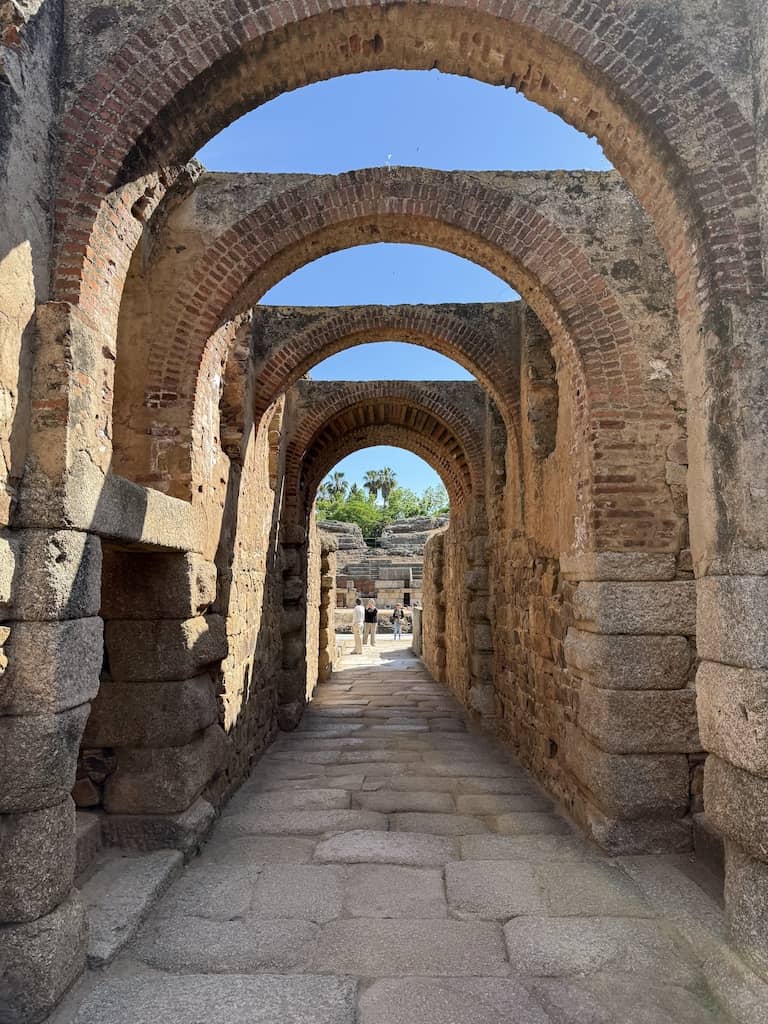
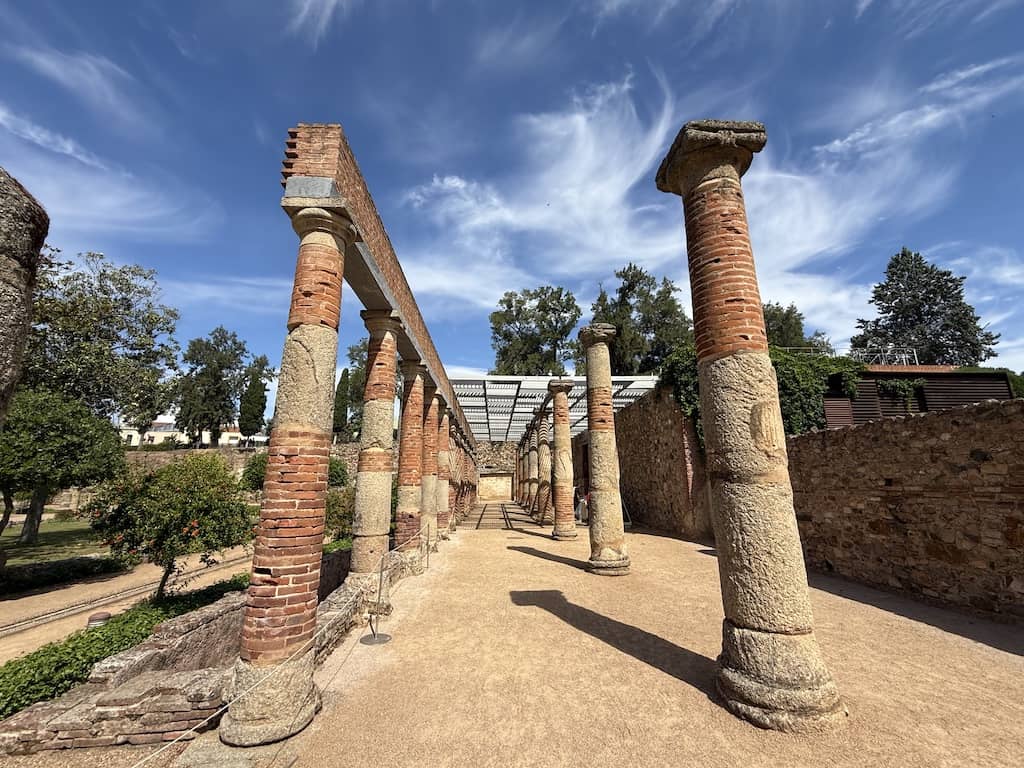
We have also visited the wonderful site of Empúries in the Costa Brava – the only archaeological site on the Iberian Peninsula where the remains of a Greek colony and a Roman city can be seen together co-existing.
National Museum of Roman Art
Next door to the ruins is the National Museum of Roman Art. This isn’t just a bunch of artefacts (it’s that too), but the important role it plays is actually to help you interpret the ruins next door.
The building alone is worth visiting – designed by architect Rafael Moneo, the vaulted space is kind of like a cathedral.
I know museums aren’t for everyone, but with 2 days in Mérida, you’ll have time for a visit; and it does add value and context to what you’ll see around the city.
Pórtico del Foro Municipal de Augusta Emérita
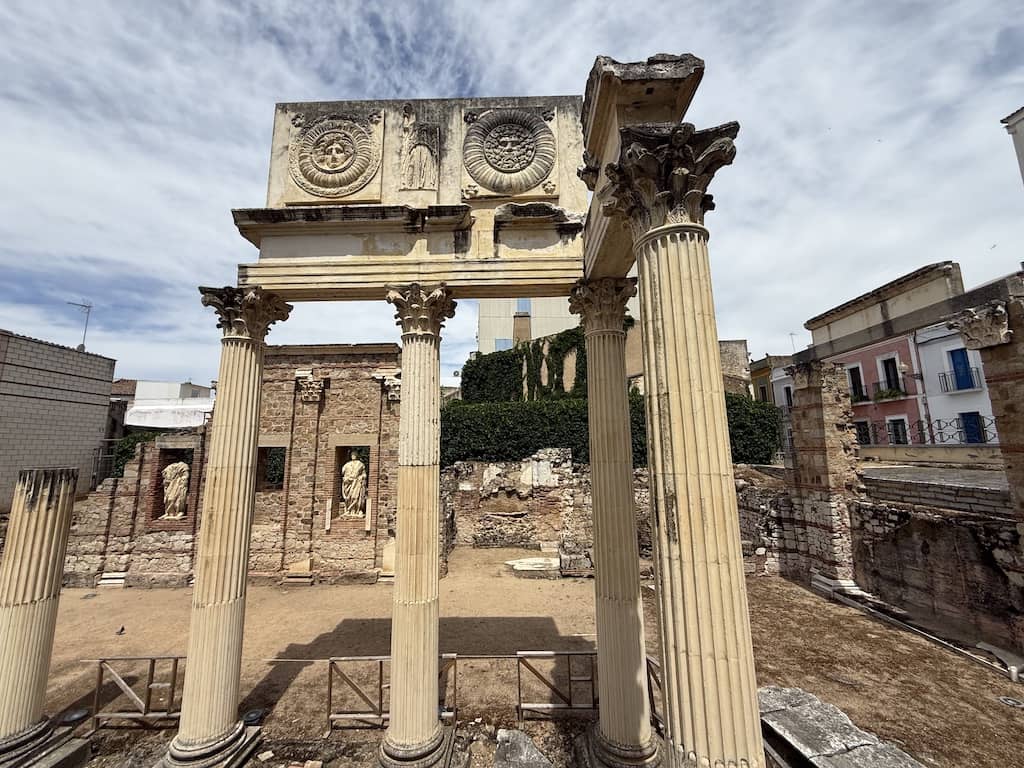
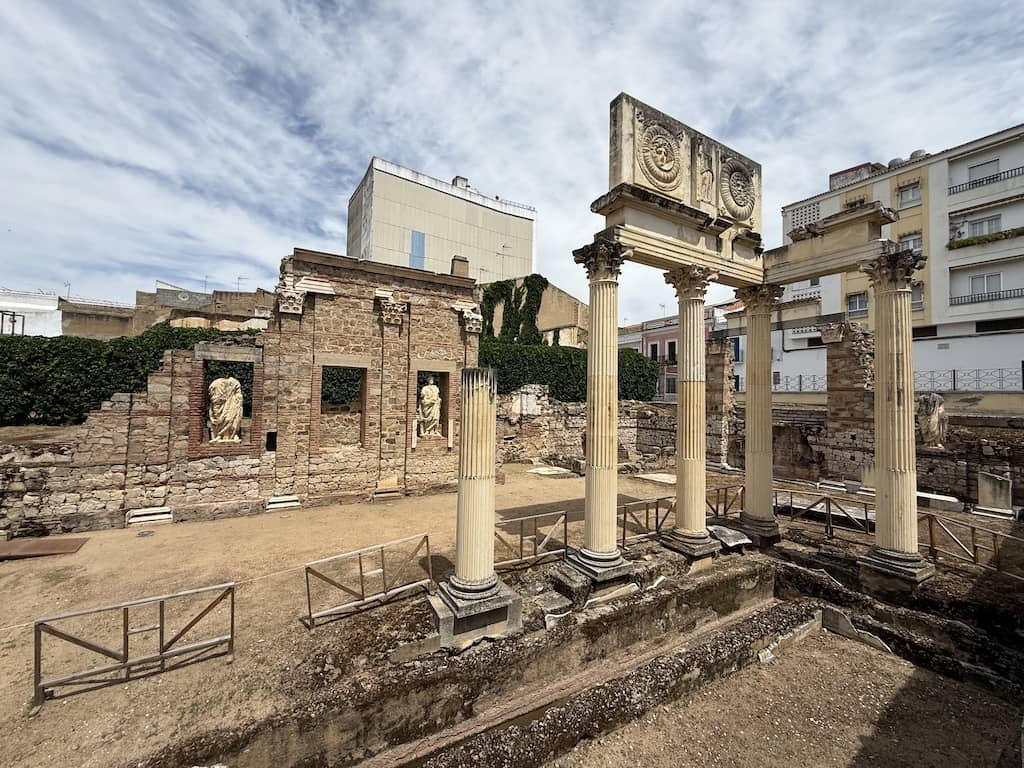
One thing I love about ex-Roman cities, is that you’ll be just walking down a normal street and you’ll come across things like this – the Portico del Foro. Just excavated on a street corner, opposite a tapas bar, and surrounded by apartments.
The portico is the only surviving corner of the monumental portico that surrounded the main civic forum of Augusta Emerita. Mythological figures such as Medusa and Jupiter-Ammon are carved into the stone.
It helps you imagine the scale of the original ‘town square’ just by being able to see this corner of it.
This ‘everyday’ integration of the Roman historic monuments and modern life was striking in Rome, for obvious reasons, but the juxtaposition in Mérida was also fantastic.
Temple of Diana
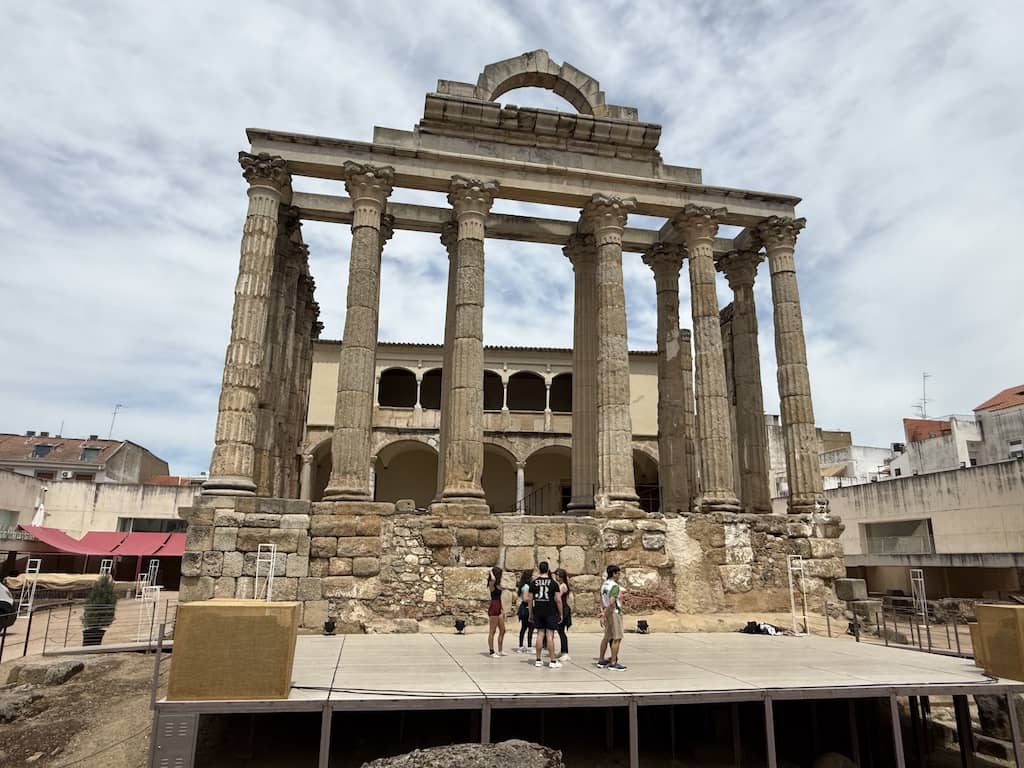
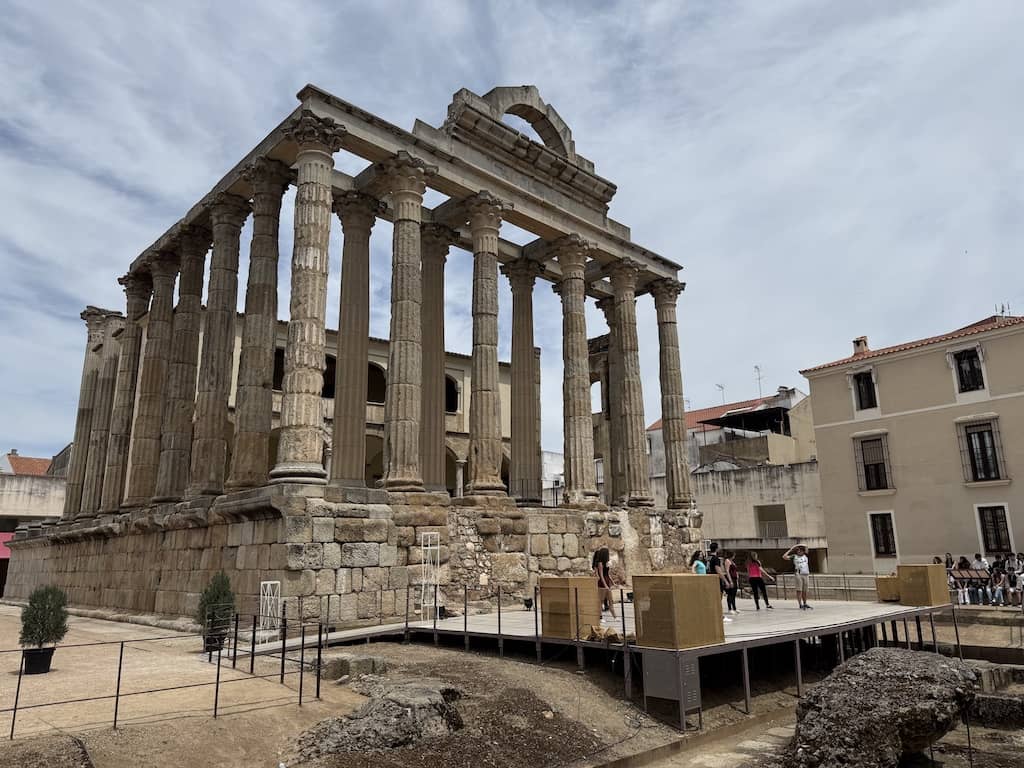
Not far from the Portico, the Temple of Diana was also part of the large central forum.
Amusingly, it was actually a bit of Roman propaganda dedicated to the imperial cult (the Emperors). It reinforced their political and semi-divine authority rather than worshipping a traditional deity like Diana.
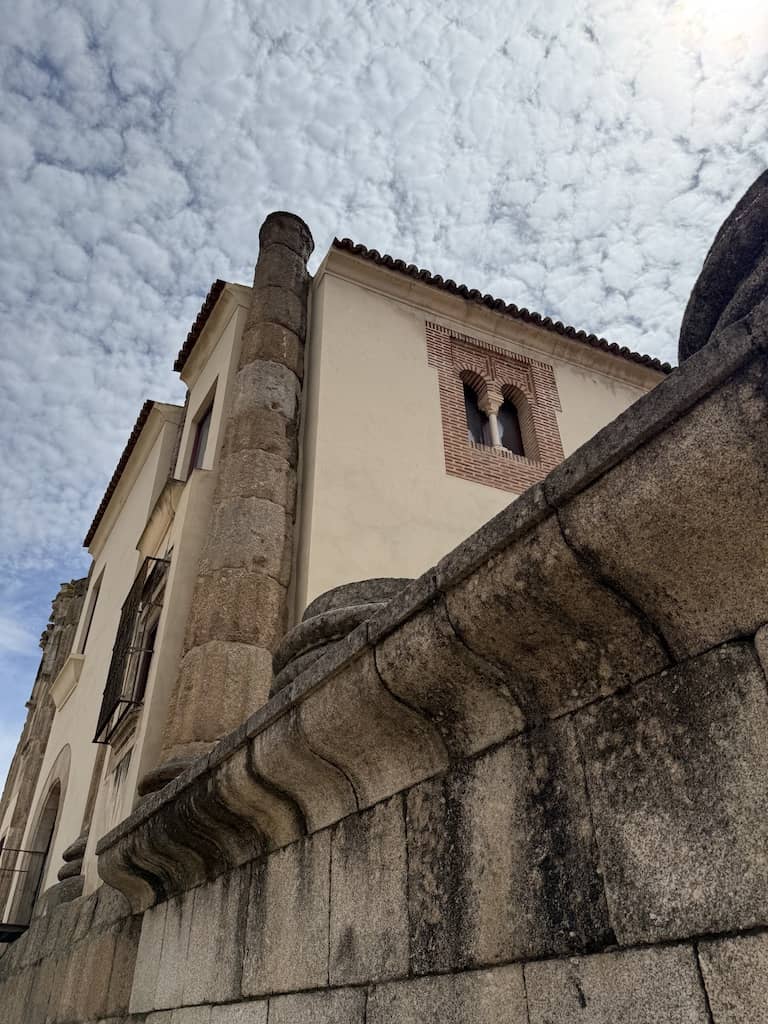
A palace was built on the back of it in the 16th century, which unwittingly preserved the colonnade. It has since been exposed and preserved as archaeology, but it does provide a wonderful backdrop to a modern stage nowadays.
Alcazaba
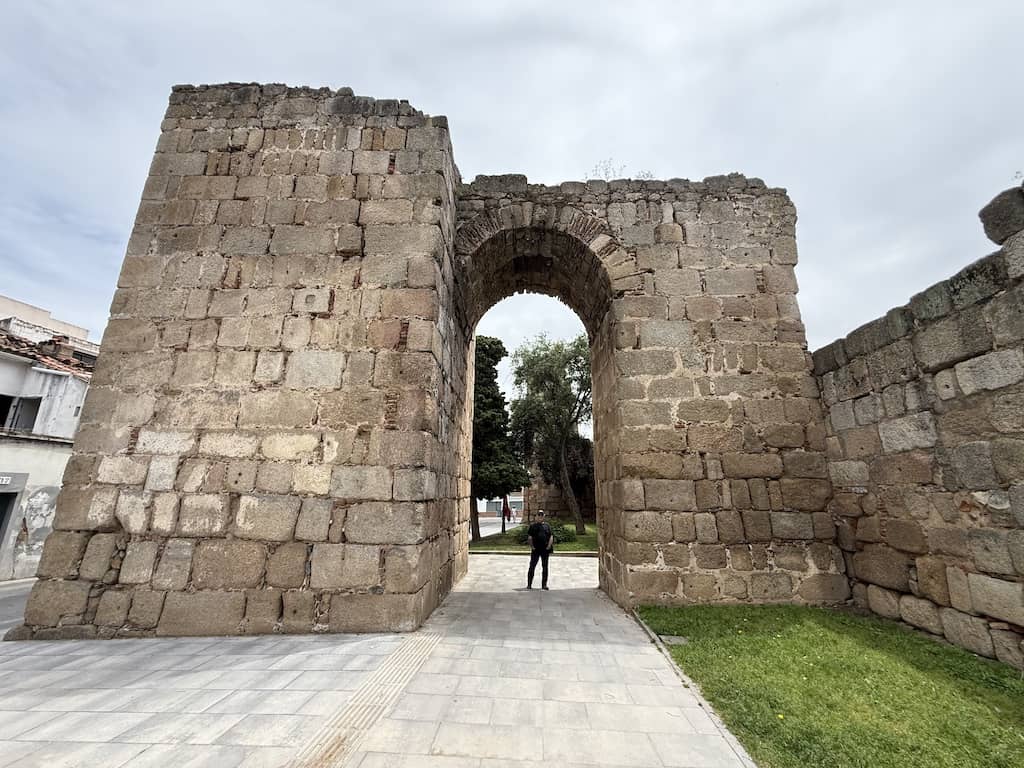
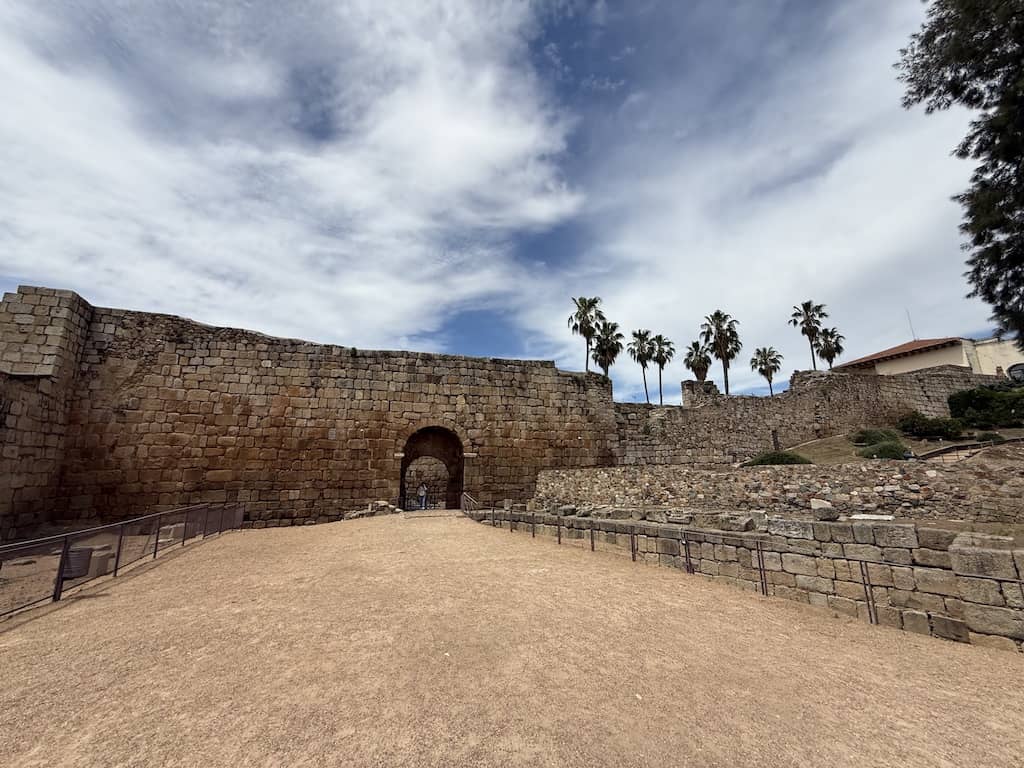
Continue down past the Plaza de España, towards the river, and you’ll reach the Alcazaba. This huge fortification tells the story of the city’s Islamic past.
Built in 835 AD by the Umayyad rulers of Córdoba, it is the oldest surviving Mudéjar fortress in the Iberian Peninsula and was designed to control access across the Roman bridge.
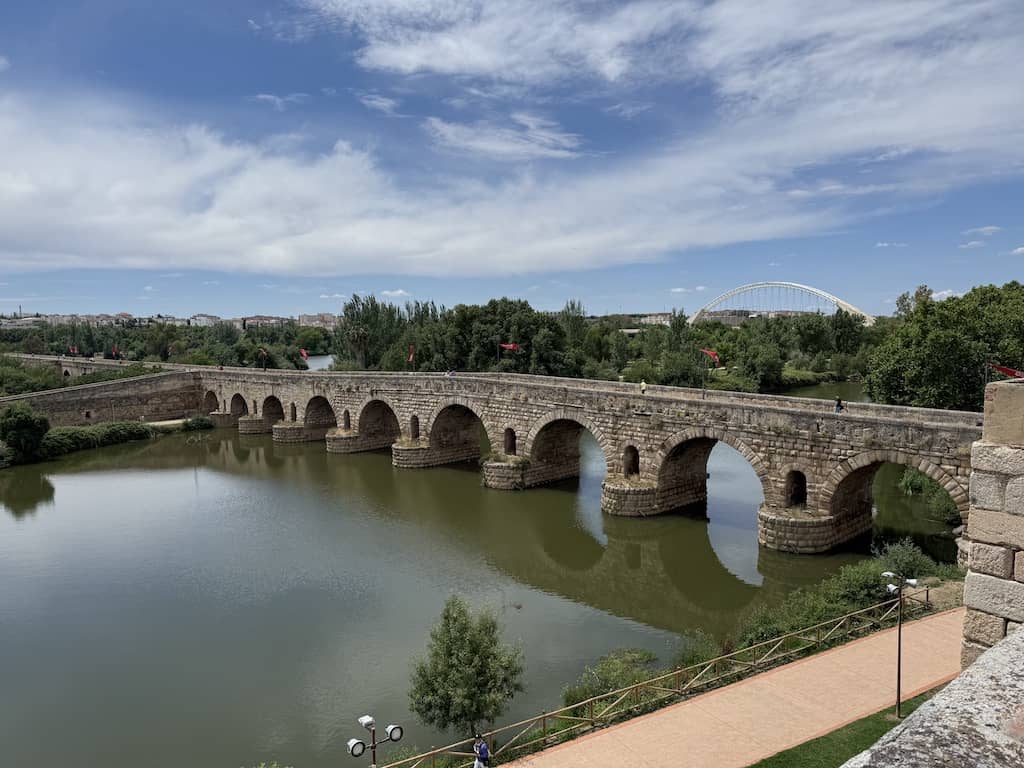
It is included in the combination ticket price, and is an interesting stop to learn about the Mudéjar. The views of the Roman bridge and the river from the Alcazaba walls are also fantastic.
Mérida’s Roman Bridge
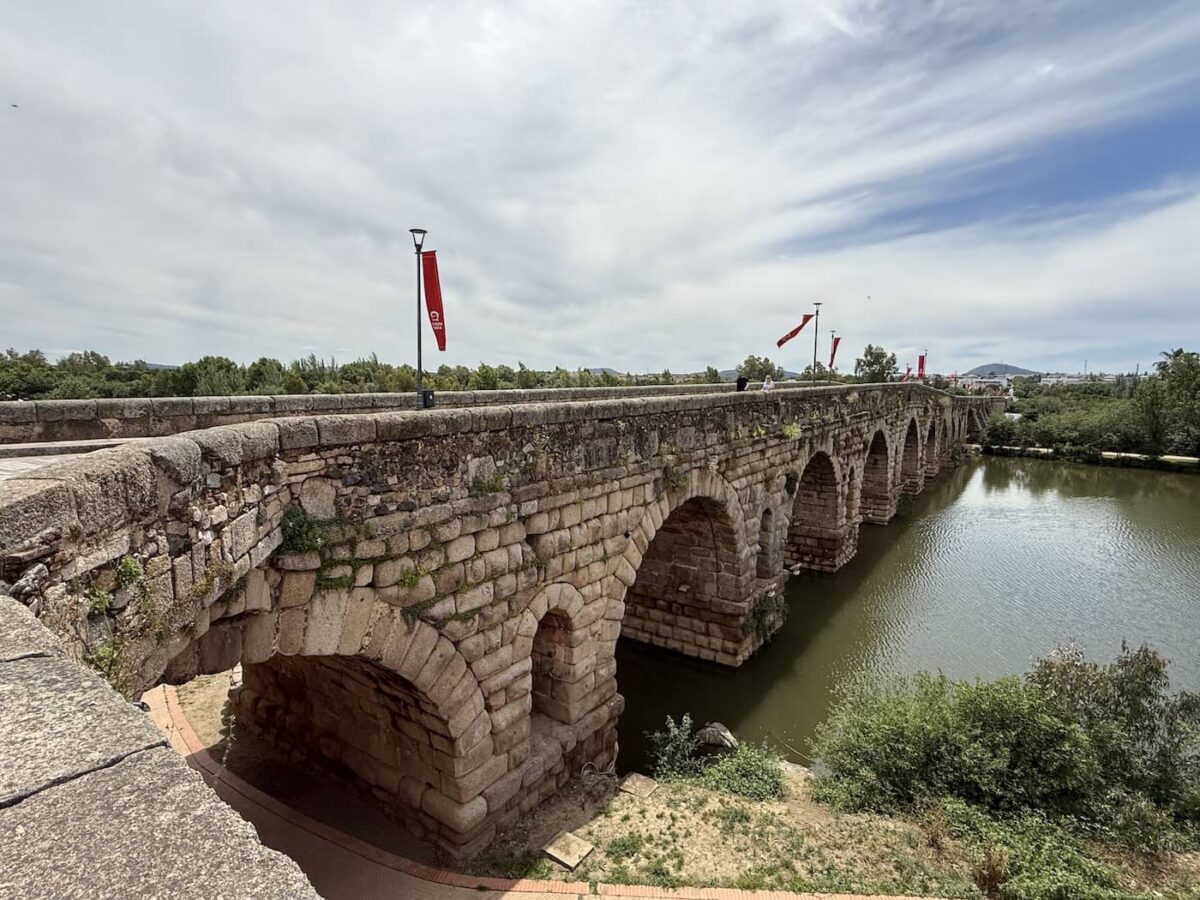
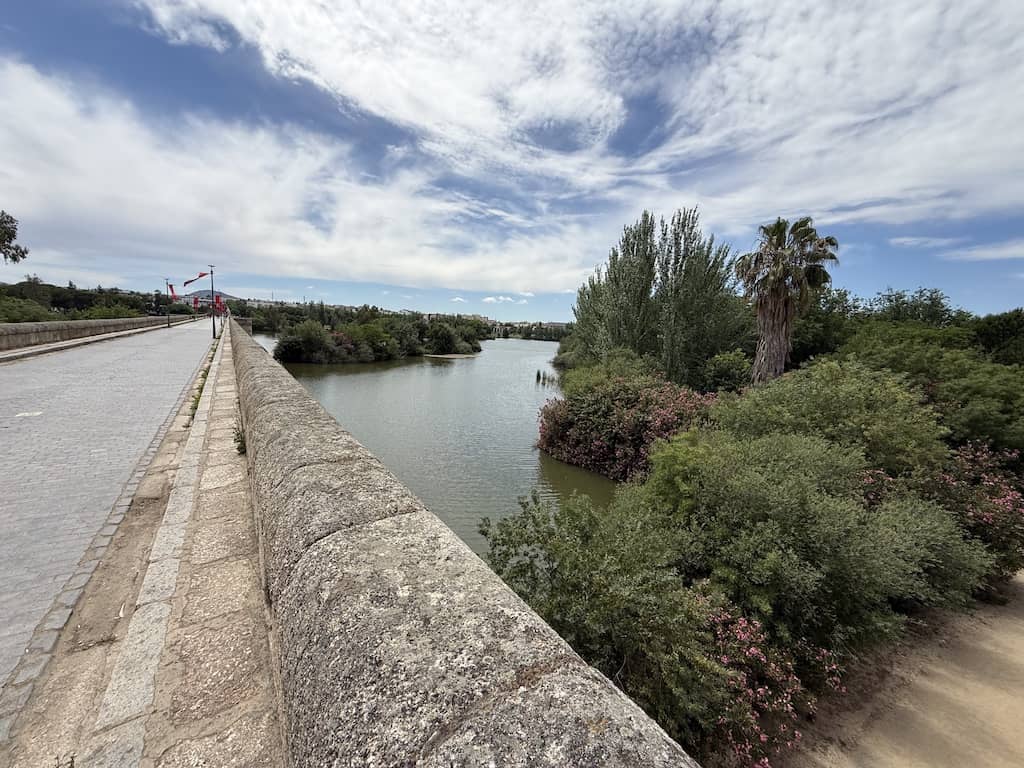
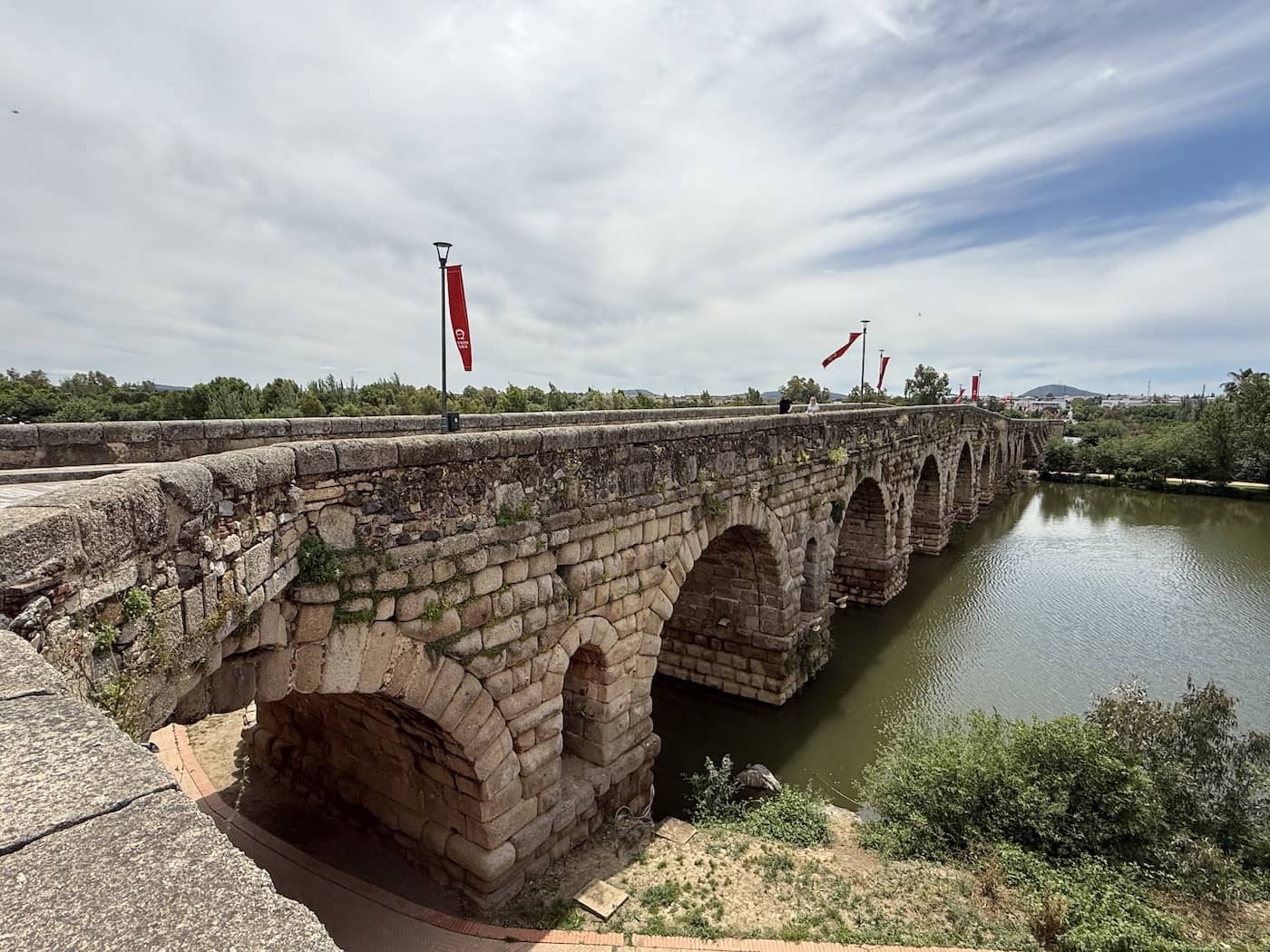
Built around 25 BC, it is approximately 790 metres long with 60 arches, and is regarded as the longest surviving bridge from the ancient Roman world. Although it is technically two bridges, with one span, that meets on an island in the middle of the river.
It was really interesting walking across it and noticing the interlinking capstones – and marvelling at this 2000-year old structure!
Would you believe it was still used as a traffic bridge until 1991?
Roman Circus and Aquaducts
On the outskirts of the city are some more excellent Roman remnants, if you get a chance to explore outside the town centre.
The Roman Circus was the city’s main venue for chariot racing, the most popular mass entertainment in the Roman world. It would have held around ~30,000 spectators. Only the footprint remains, but this is the honest kind of archaeology that survives after 2000 years.
There are two aqueducts too:
- Los Milagros Aqueduct – a dramatic granite + red brick structure which brought water from the Proserpina reservoir into the city
- San Lázaro Aqueduct – only a few pillars remain, but it helps to understand the scale of the Roman settlement here in Mérida
Statues
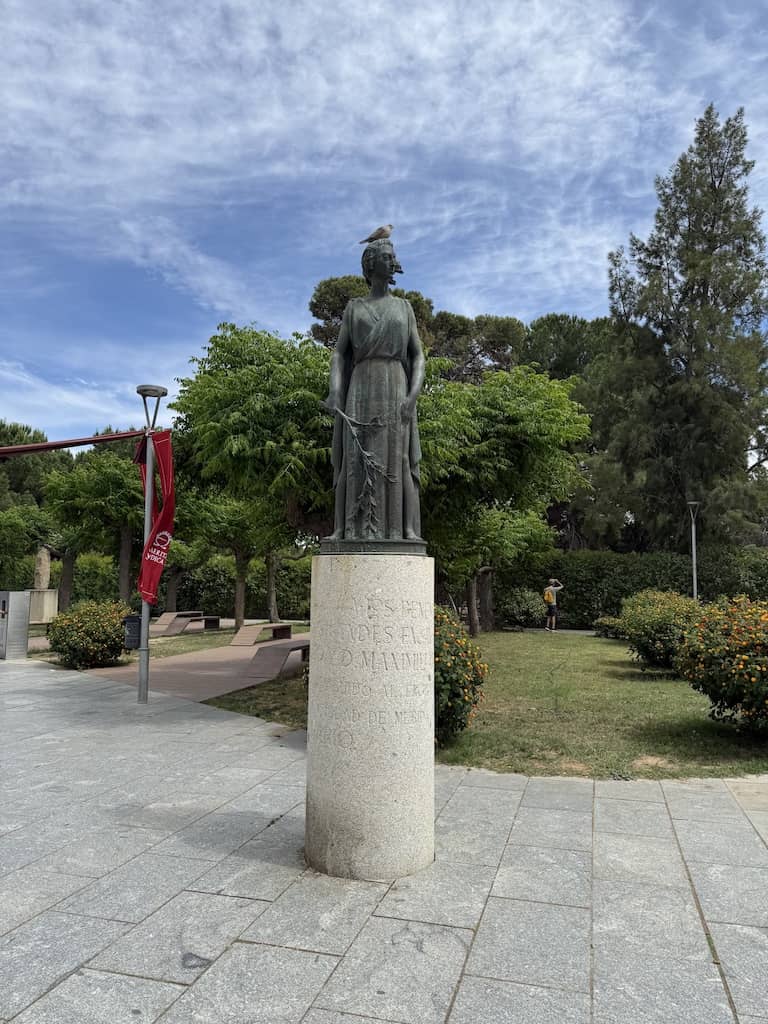
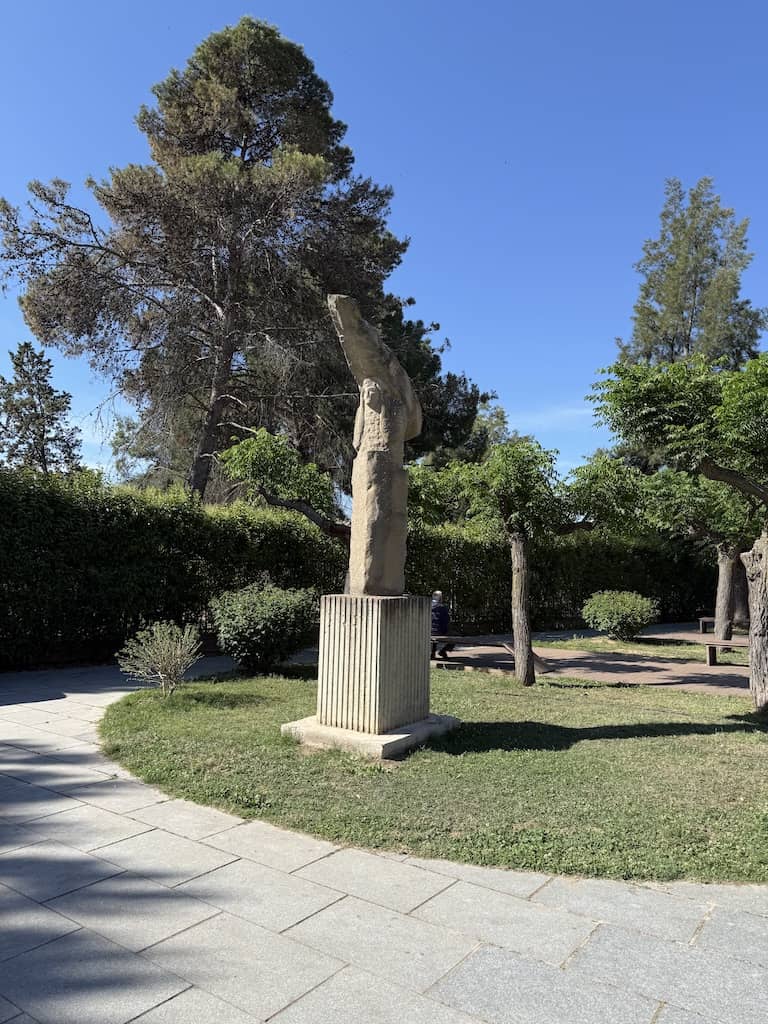
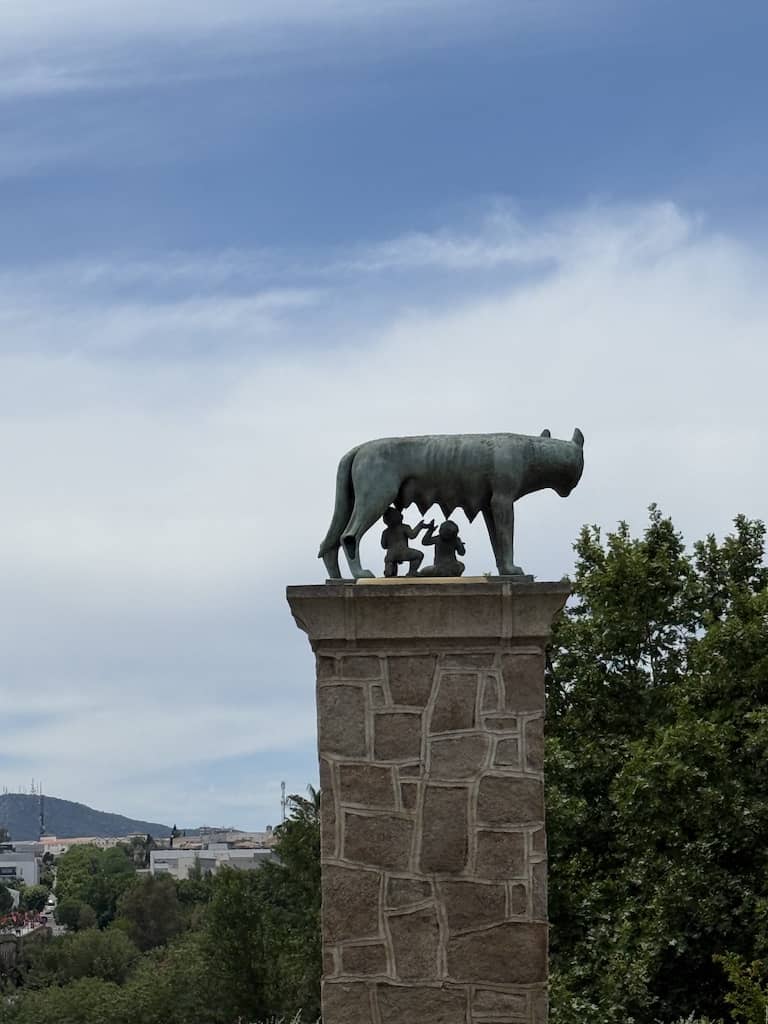
One of the pleasures of walking around Mérida is that Roman history isn’t confined to museums and archaeological sites – it appears throughout the city in the form of statues and sculptures.
Modern nods to the city founders, and tales told – such as the Capitoline Wolf near the Roman Bridge – depicting Romulus and Remus.
Plazas and Street Scenes
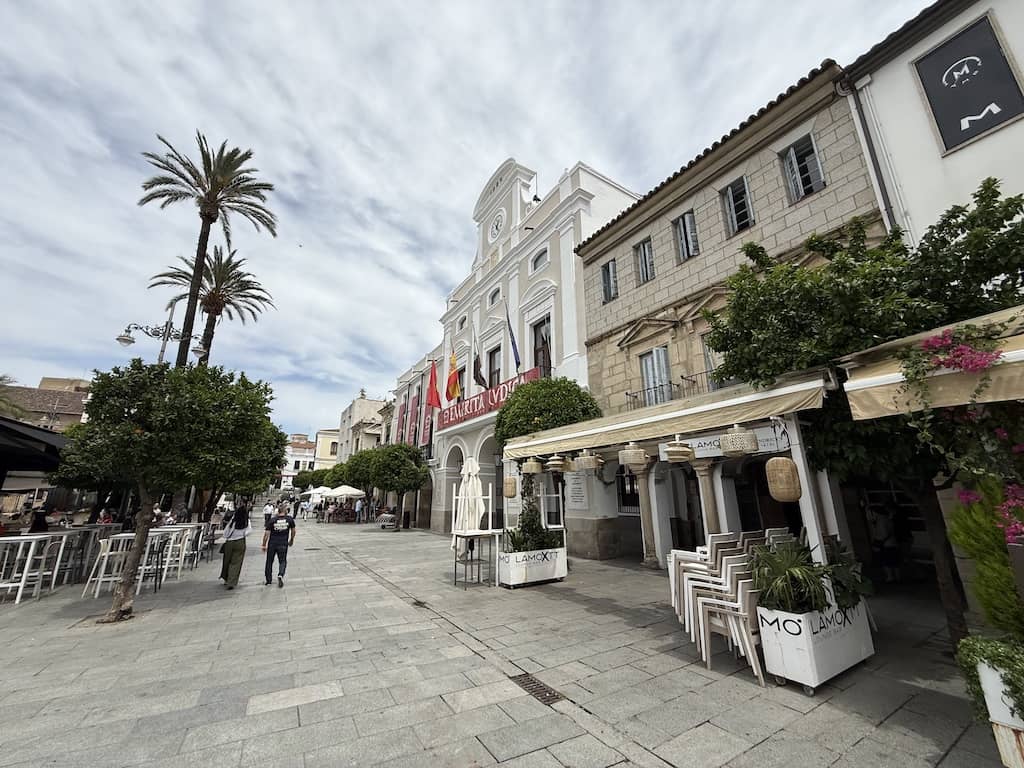
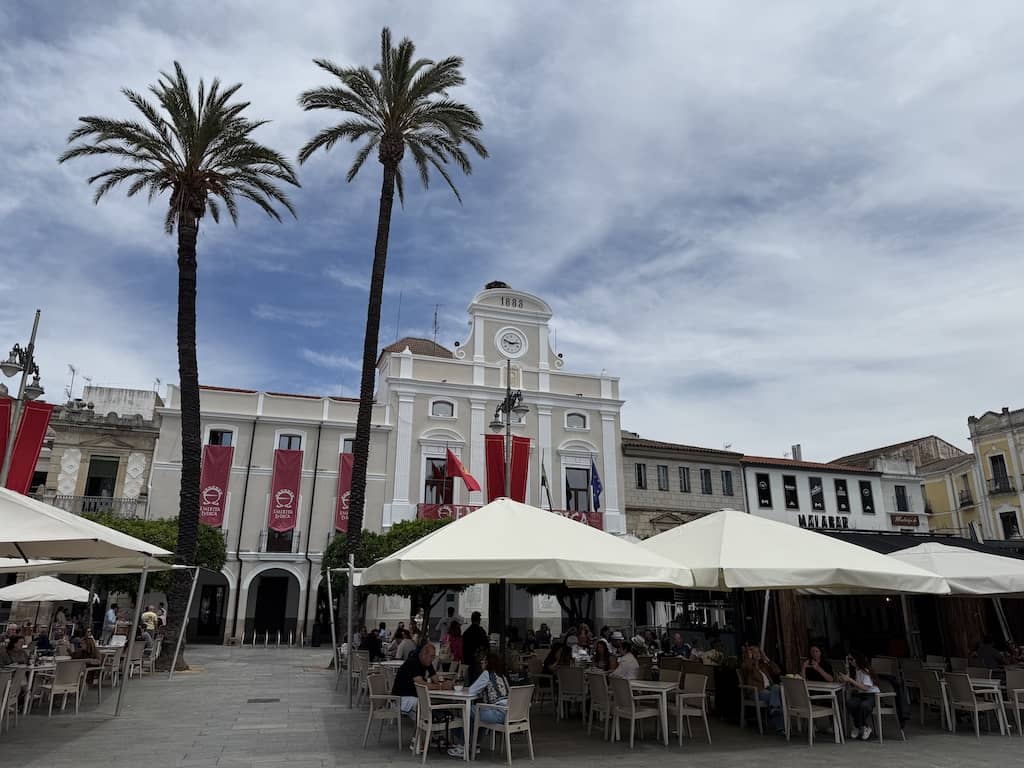
Plaza de España is the city’s main square, dating back to the Catholic Monarchs. Once a market square, it is now bustling with restaurants, and surrounded by arcaded buildings, the Town Hall, and the Co-Cathedral of Santa María. There is also a neo-Baroque fountain, which was added in the late 19th century.
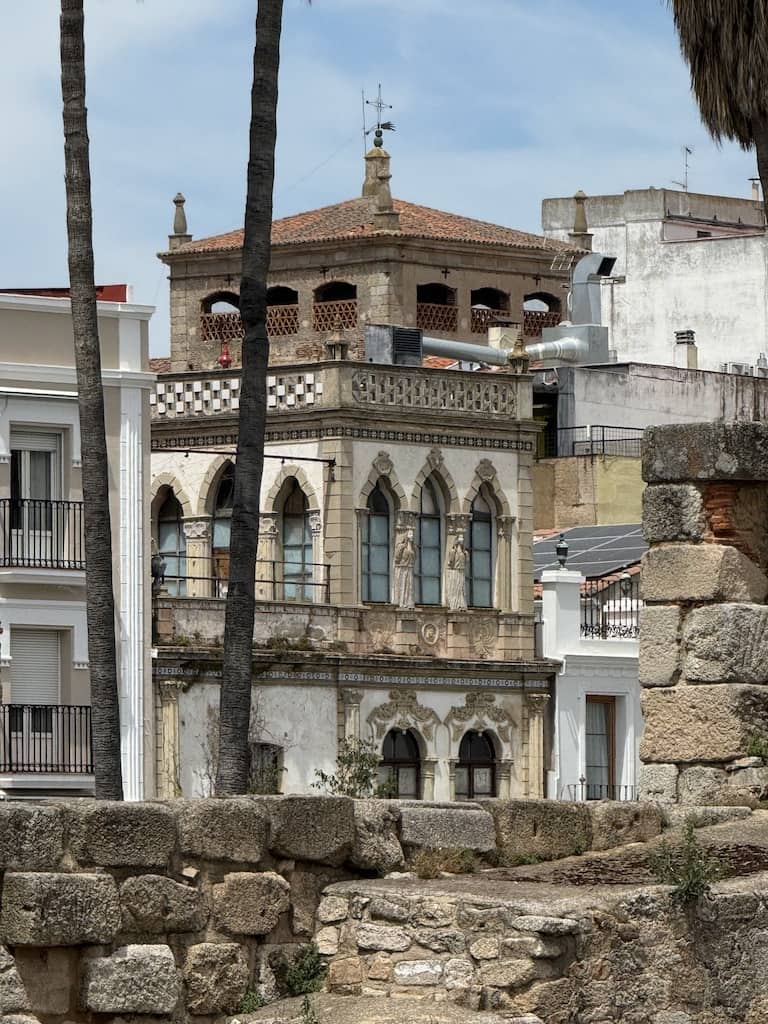
Beyond Plaza de España, smaller squares such as Plaza de Santa María, Plaza del Rastro, and Plaza de la Constitución provide quieter corners where Roman, medieval, Islamic, and modern Mérida overlap.
Where to eat in Mérida
We enjoyed the food from Mesón El Lebrel, Cocina Tradicional Extremeña – with tables in the shadow of the walls of the Alcazaba. We had great croquettes at the Kiosco Malabar on Plaza de España. And drinks at the bars along the covered pedestrian street, José Ramón Mélida, near the theatre complex.

If you have longer in Mérida:
- Trajan Arch
- Casa del Mitreo
- Plaza de Toro (we aren’t supporters of bull fighting, so did not visit this area)
- The Seven Chairs – a sculpture by Rufino Mesa commemorates the seven sections of the upper seating visible above ground before archaeological excavations of Mérida began. Locals believed these stone forms were seven giant chairs where Moorish kings once sat to govern the city

Weekend Guide to Mérida
We loved our laid back weekend in Mérida. 2-3 days is plenty to see the highlights, and to indulge in the many enjoyable food and drink options. We left having really enjoyed the pace of the visit, and with the desire to return to enjoy more time to sit with the vibe of the place. Compared to other places with lots of Roman ruins, this didn’t feel too busy or overly touristy, so definitely add it to your Spain road trip itinerary!
Love Spain? Don’t miss Bilbao!
All photos & content © Hannah Henderson and may not be used without permission (sharing this blog post is fine, though!). Images shot with a Canon DSLR T3i Rebel + Canon EF-S 18-135mm f/3.5-5.6 IS STM; and an iPhone.