
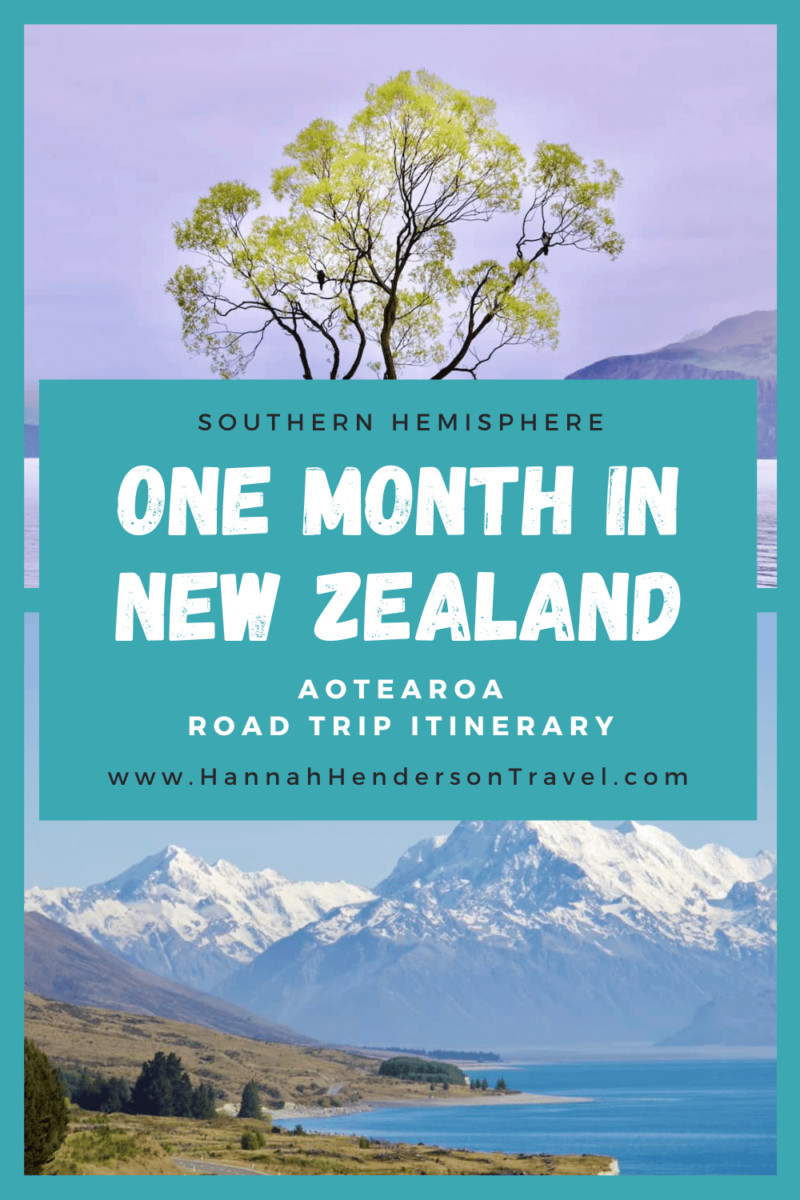
Aotearoa New Zealand, my homeland. I may be biased, but it is one of the most beautiful places in the world. Many don’t ever get the chance to visit this wonderful country, and those who do generally don’t get to spend one month in New Zealand. But on the off chance that you are planning an extended adventure in Aotearoa, here are my top tips for what to see and do.
This 1-month road trip itinerary for New Zealand includes both the North and South Islands, and is designed for you to see as much as possible in that time.
I’m acutely aware that tourism boards around the world offer one kind of view of a country, and in reality it is always far more nuanced than that with regards to politics etc. But I hope to draw your tourist eyes to some of the things that are culturally important and make Aotearoa New Zealand special + maybe teach you a little te reo (Māori language) in the process.
- How long do you need on each island?
- 2 Weeks in the North Island
- Quick View Itinerary for 2 weeks in the North Island, Te Ika a Māui
- Day 1: Auckland
- Day 2: Day trip to Waiheke Island
- Day 3: Coromandel Town
- Day 4: Kuaotunu + Hot Water Beach + Mount Maunganui
- Day 5: Hobbiton + Rotorua
- Day 6: Rotorua – Te Puia or Whakarewarewa + Blue Lake
- Day 7: Rotorua – Polynesian Spa + Rotorua Skyline
- Day 8: Orakei Korako + Lake Taupō
- Day 9: Lake Taupō – Huka Falls + Boat Tour
- Day 10: Central Plateau & Desert Road to Ohakune
- Day 11: Drive to Masterton
- Day 12: Drive via Martinborough wineries to Wellington
- Day 13: Wellington – Te Papa + Mt Victoria Lookout + Oriental Bay
- Day 14: Wellington – Cable Car + Zealandia + Botanic Gardens
- Two weeks in the South Island
- Quick View Itinerary for 2 weeks in the South Island, Te Waipounamu
- Day 1: Christchurch
- Day 2: Day trip to Akaroa + Banks Peninsula
- Day 3: Kaikoura Whale-watching + Hanmer Springs
- Day 4: Lewis Pass + Punakaiki + Hokitika
- Day 5: Fox / Franz Josef Glacier + Haast Pass + Lake Hāwea
- Day 6: Lake Wānaka + Arrowtown + Queenstown
- Day 7: Glenorchy + Lake Whakatipu + Queenstown
- Day 8: Drive to Te Anau / Manapouri
- Day 9: Milford or Doubtful Sound day trip
- Day 10: Drive to Dunedin
- Day 11: Otago Peninsula + Dunedin
- Day 12: Moeraki Boulders + Lake Tekapo
- Day 13: Aoraki Mount Cook National Park + Lake Tekapo
- Day 14: Burke's Pass + Geraldine + Return to Christchurch
- Where to add if you have more than a month in NZ
- New Zealand FAQ
- How to spend a month in Aotearoa New Zealand
How long do you need on each island?
To be equitable, I am suggesting 2 weeks on each island – Te Ika a Māui (North Island) and Te Waipounamu (South Island). On the North Island, Auckland, Rotorua and Wellington lead the pack for visitor numbers. And on the South Island, Queenstown, Christchurch and the West Coast are the most visited. But I am going to pad this out with some of my favourites.
We recently spent 2.5 months back in NZ, including a 3-4-week road trip on each island. I have shortened these itineraries to make them more accessible to annual leave users.
2 Weeks in the North Island
Quick View Itinerary for 2 weeks in the North Island, Te Ika a Māui
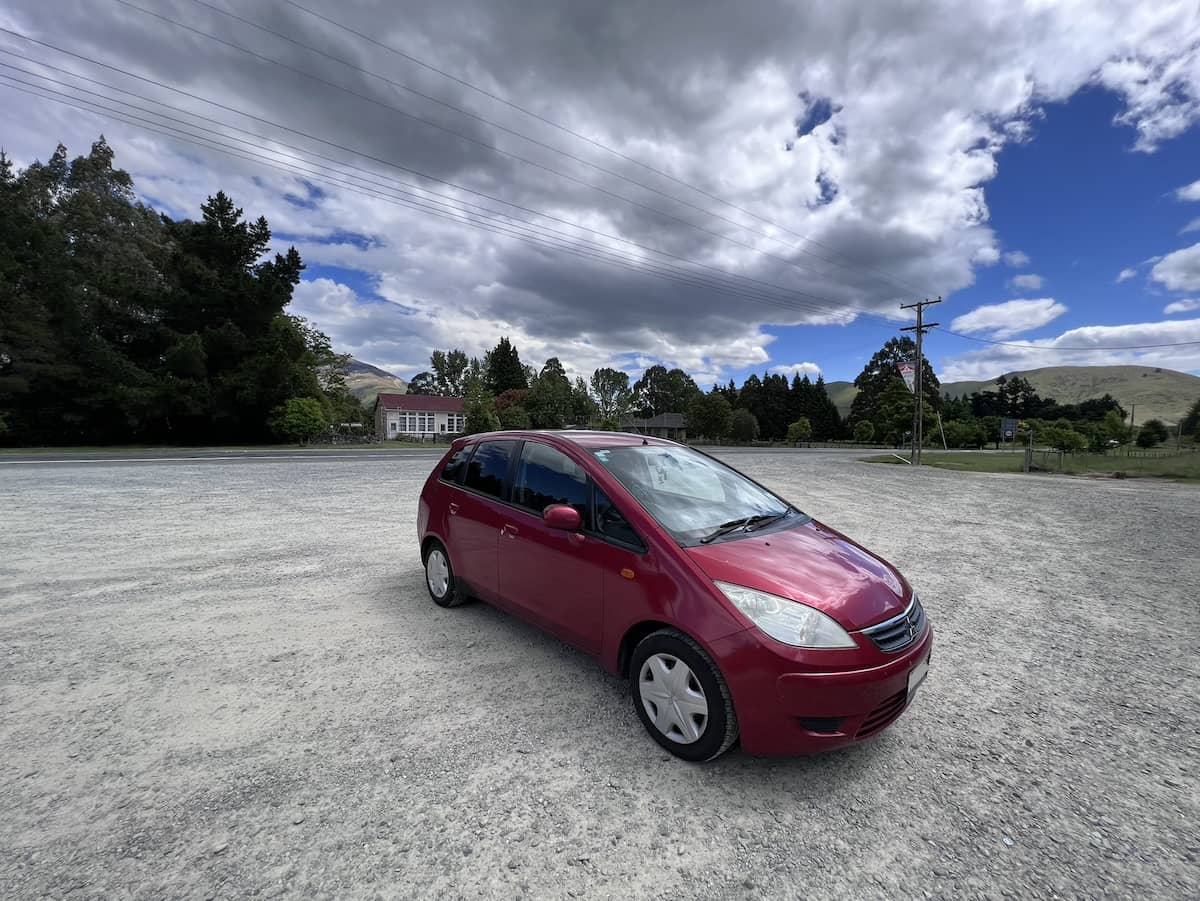
Unlike the South Island itinerary, the North Island itinerary is one-way, from Auckland to Wellington. The two itineraries are designed to run together (North Island first, then South Island itinerary – or you can reverse them). You can either choose to fly from Wellington to Christchurch to connect the two itineraries, or do a one-way hire from Auckland to Christchurch and take the ferry between the two islands.
Day 1: Arrive into Auckland + explore the city
Day 2: Auckland – Day trip to Waiheke Island
Day 3: Drive to Coromandel Town
Day 4: Kuaotunu + Hot Water Beach + Mount Maunganui
Day 5: Hobbiton + Rotorua
Day 6: Rotorua – Te Puia or Whakarewarewa + Blue Lake
Day 7: Rotorua – Polynesian Spa + Rotorua Skyline
Day 8: Orakei Korako + Lake Taupō
Day 9: Lake Taupō – Huka Falls + Boat Tour
Day 10: Central Plateau to Ohakune
Day 11: Drive to Masterton
Day 12: Drive via Martinborough wineries to Wellington
Day 13: Wellington
Day 14: Wellington
Day 1: Auckland
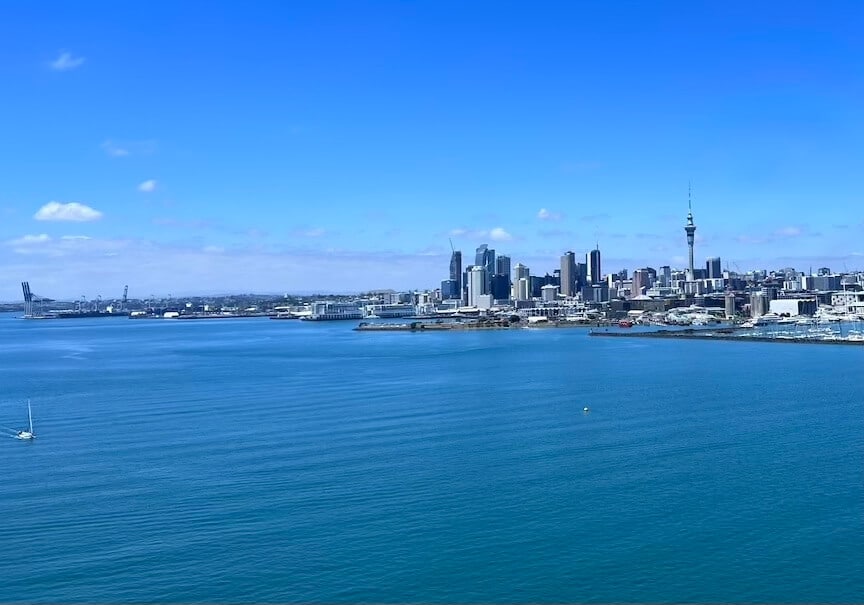
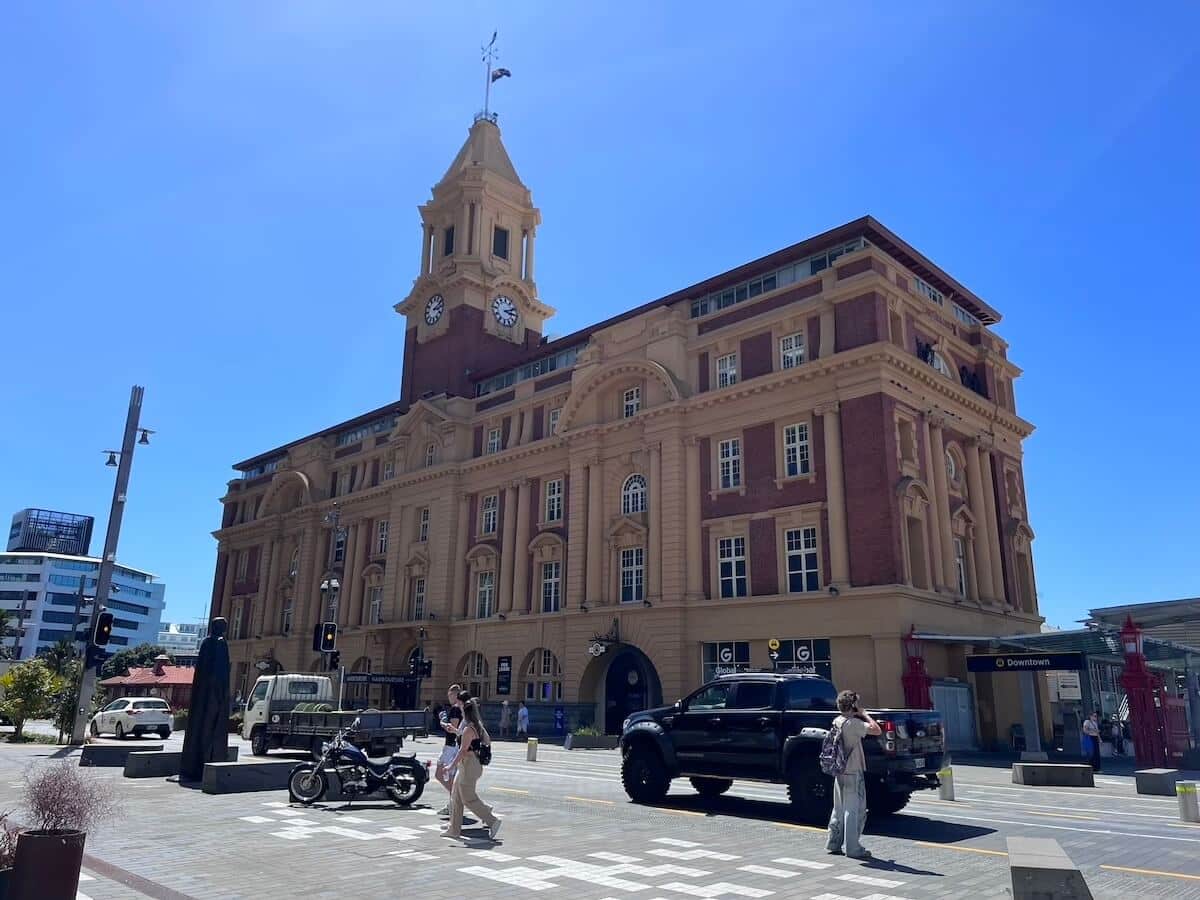
Arrive into Auckland and enjoy downtown. The main shopping street is Queen Street, and the Sky Tower is a couple of blocks over on the corner of Federal and Victoria Street West. The centre of Auckland is compact enough to walk around, although it is quite hilly. There are good bus routes all the way around the city.
I’ll be honest, Auckland is not on my favourite city list for NZ – it is sprawling and the traffic is terrible. But it does have some redeeming features: brunch in Ponsonby, live music on Karangahape Road (K’Road), wandering Victoria Park Market or an art gallery, taking ferries across the harbour. On a good day, it is a peach of a city. See my article on how to spend 24 hours in Auckland – perfect for a short visit!
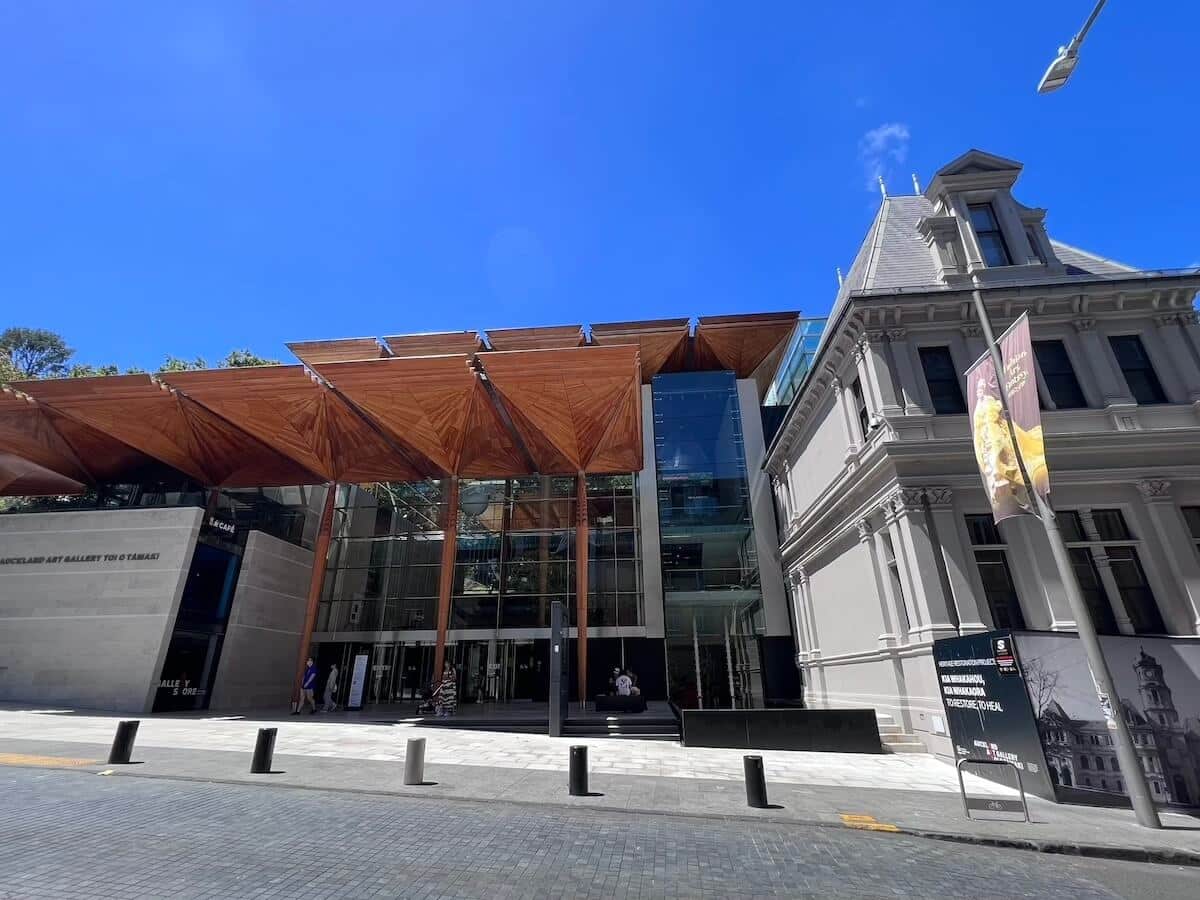
Interesting spots: Auckland Art Gallery, Auckland War Memorial Museum, and Sky Tower observation deck.
Food recs: Sumthin Dumplin Lorne (cheap eats), Le Garde-Manger (mid-range), Ahi. (fine dining)
Hotel recommendations in Auckland
We enjoyed the Four Points by Sheraton on Queen Street. Other downtown options include Sky City Casino, Crowne Plaza and M Social on the waterfront.
Day 2: Day trip to Waiheke Island
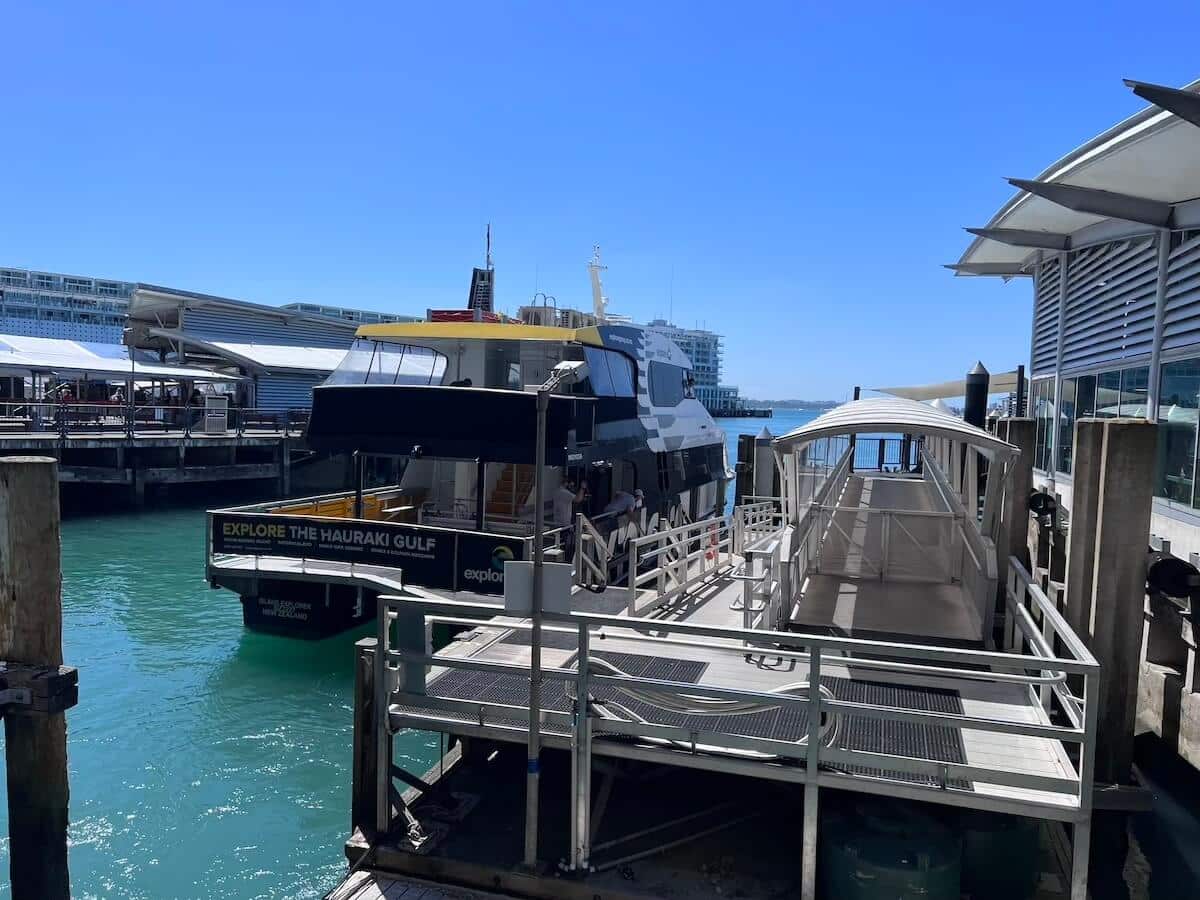
Auckland sits on the Hauraki Gulf (Tīkapa Moana). There are many islands found in this stretch of water between Auckland and the Coromandel Peninsula and Great Barrier Island, many of which are nature preserves. Waiheke Island is an inhabited island and a wine-lovers paradise, with around 30 boutique wineries on the island.
Easily reached by ferry from downtown Auckland, there are a few companies that run services out to Waiheke – Fullers (tourist-oriented), SeaLink and Island Direct. There are only a few dollars difference between regular walk-up fares, so it doesn’t really matter which one you choose. Although the guaranteed seat Fullers fare is the most expensive (potentially a good option on busy weekend days).
There is a hop-on-hop-off bus service to take you to the wineries, island museum, galleries, hiking trails and beaches. There are also local bus routes you can use if you want to save a bit of money (although they don’t go to all the wineries). I would recommend choosing and booking a vineyard restaurant for lunch in advance – I recommend Batch Winery.
Note: Tastings range from guided experiences to, especially on busy days, choosing your wines and being left to enjoy them.
A day trip to Waiheke is great for families too, as it’s a beautiful island to explore. For an alternative day out that is all about hiking and nature, I’d recommend a day trip and summit hike on Rangitoto Island instead.

Day 3: Coromandel Town
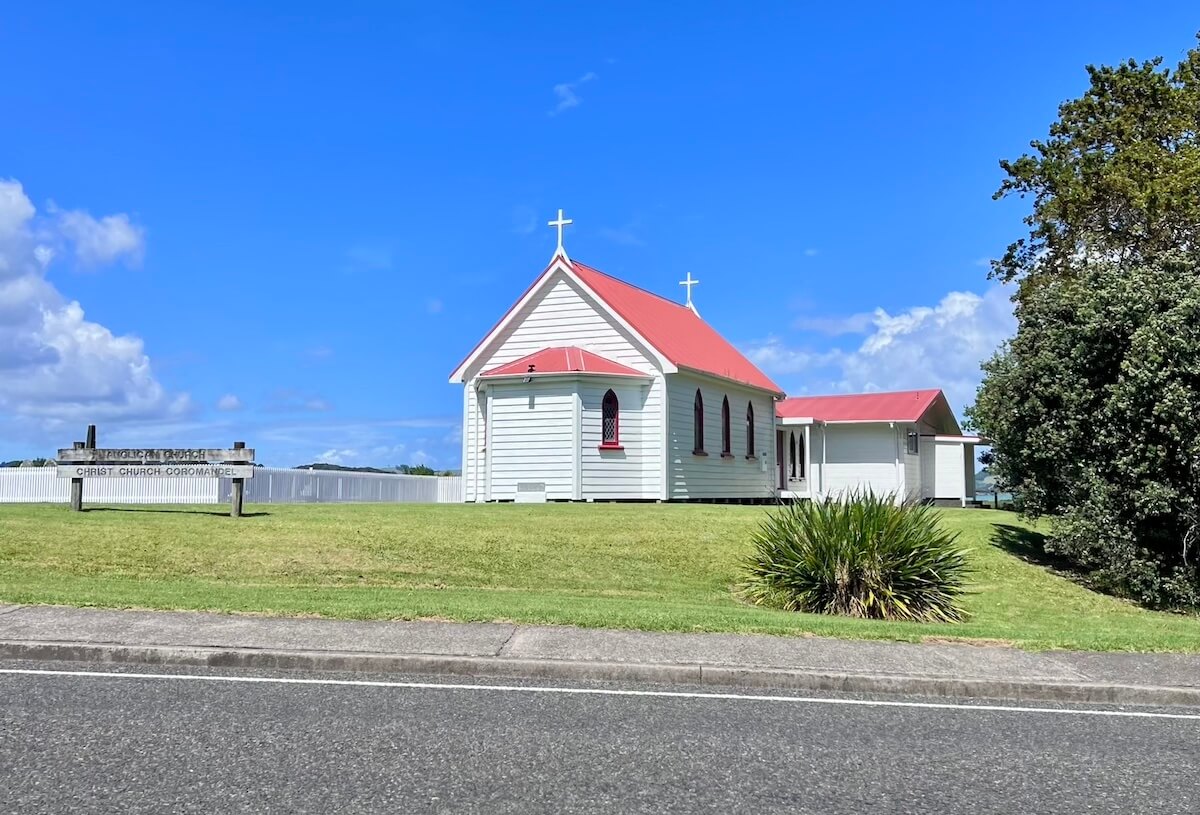
The Coromandel Peninsula is a favourite area for NZ tourists, where bach culture is alive and well (a bach is a Kiwi seaside holiday home, usually humble in appearance and facilities). And while it has become a little gentrified and far busier than my childhood days of gravel roads and rickety rainwater tanks, it is still an exceptionally gorgeous vacation spot.
Ideally, I would recommend 3-weeks on the North Island, so you can include a week in the far north too. But the Coromandel is a great way to see some amazing beaches, remote towns and crazy landscapes within a 2-week road trip.
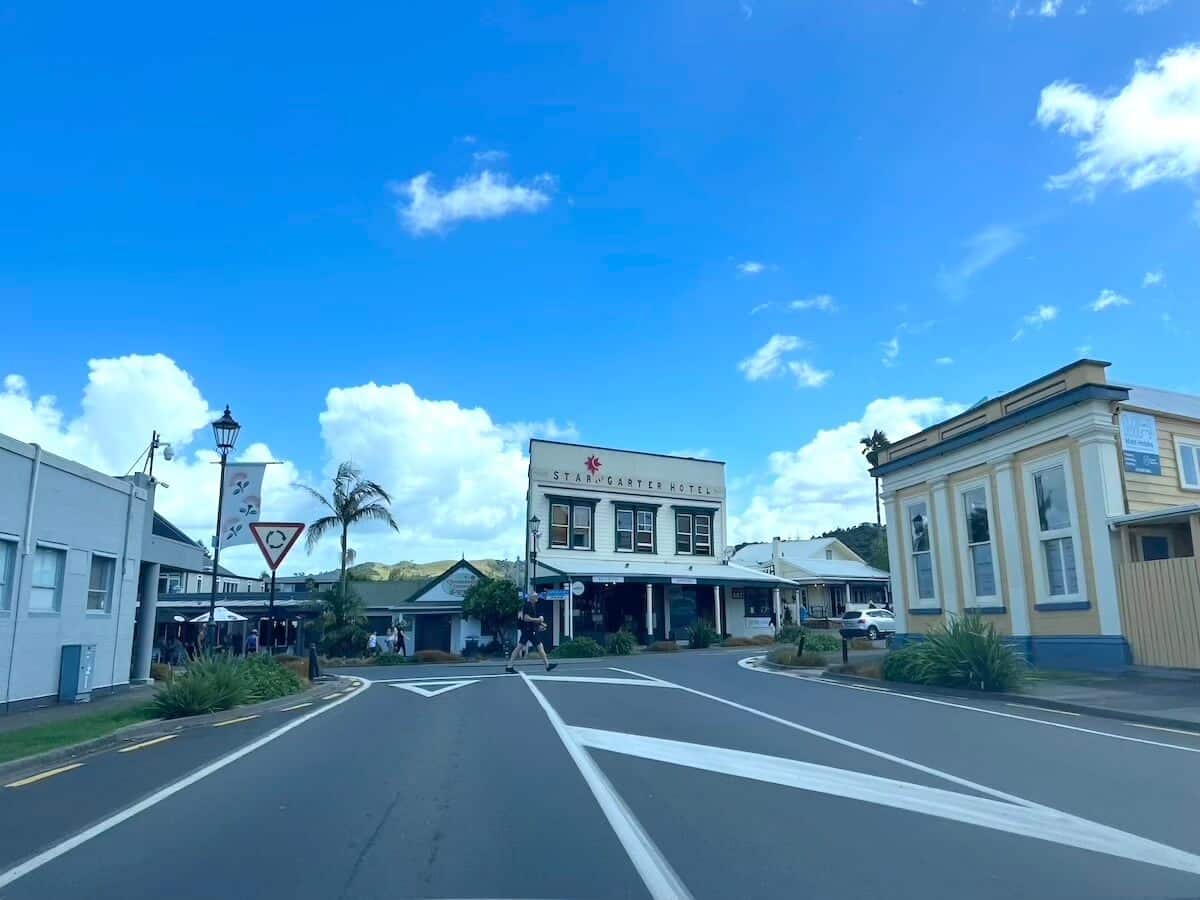
Once a gold rush boom town, Coromandel Town is a cute cluster of Victorian buildings and motels, punctuated by pie shops, galleries and cafes.
Interesting spots: Spend your afternoon at Driving Creek. What started as a pottery studio for the late Barry Brickell, is now a wonderful not-for-profit tourist destination with a narrow-gauge railway, pottery workshops, zip-lines, and miles of native bush.
Stop in Thames on your way up the peninsula to learn more about the gold rush at the Gold Mining Experience.
Hotel recommendations in Coromandel town
The Anchor Lodge Motel is a nice option in the township, or Tidewater Motel offers decent budget accommodation.
Day 4: Kuaotunu + Hot Water Beach + Mount Maunganui
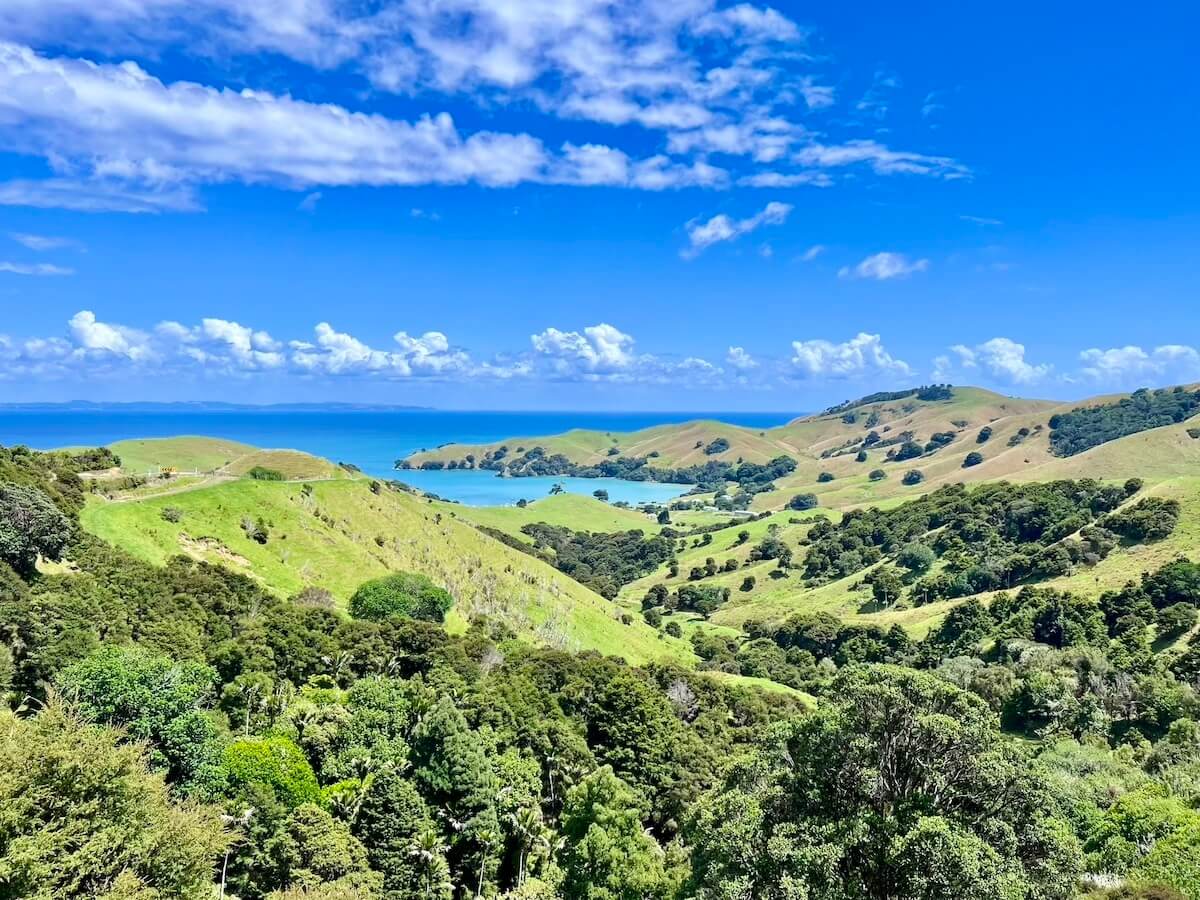
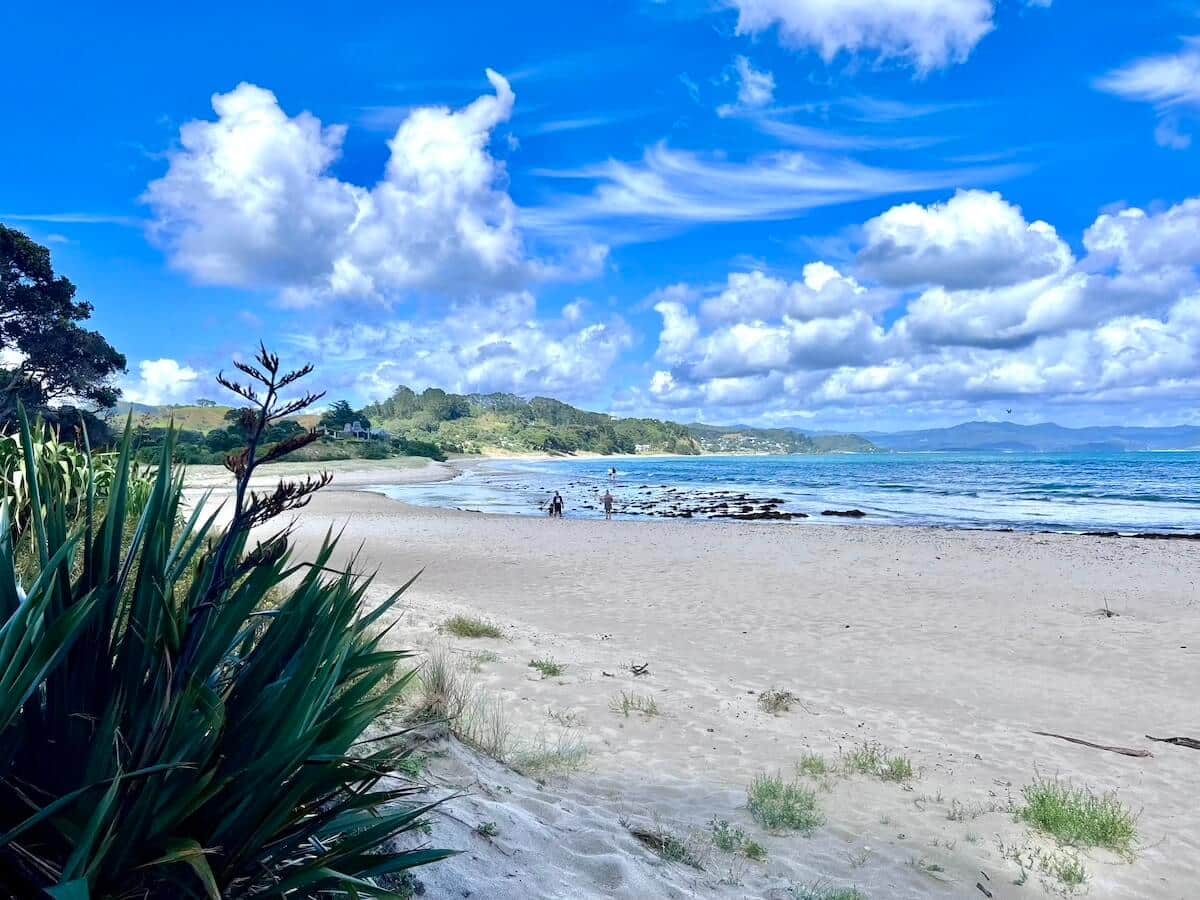
Start your day by heading over Whangapoua Road (the Pacific Coast Highway) to Kuaotunu. Stop at the Kaipawa Trig Track for a glorious view down over the peninsula. In Kuaotunu, you’ll find the most stunning white sand beach that sweeps in a half-moon – with plenty of swimming spots or fishing if you’d prefer.
You’ll also find Luke’s Kitchen, a rustic cafe and pizza joint – perfect for a post-swim meal or drink.
Check out my NZ Food Guide for more yummy tips!
Your next stop is Hot Water Beach, although this is dependant on tides (between two hours before or after low tide). If Cathedral Cove is on your radar, then shorten your time in Kuaotunu, skip Hot Water Beach, and take a 2 hour boat ride and visit to Cathedral Cove from Whitianga.
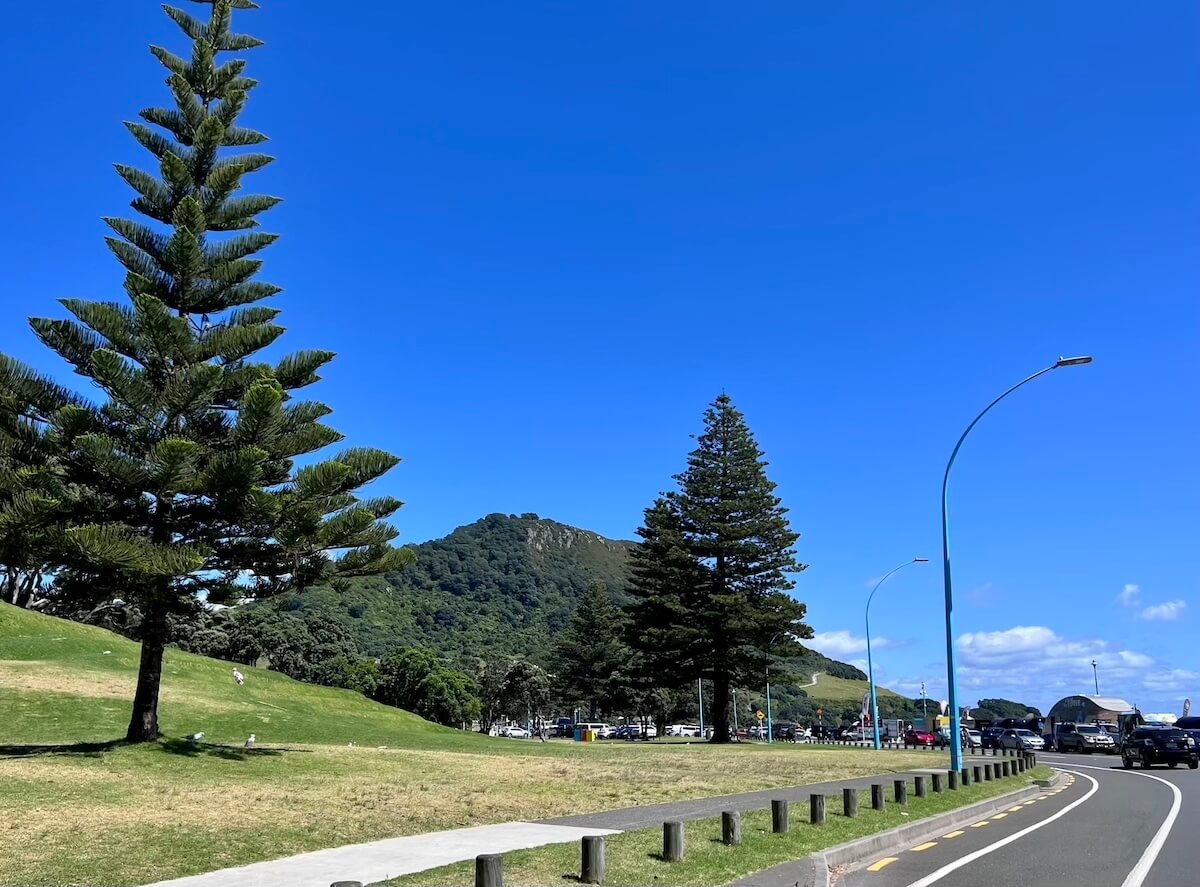
Drive the last 2.5 hours to Mount Maunganui and take in sunset from the Mount! If you’re feeling energetic, you can climb this impressive peak at the end of the sand spit at the mouth of Tauranga Harbour to watch the sunset or sunrise.
Mauao is the Māori name for Mount Maunganui, and legend has it that Mauao was spurned in love by Pūwhenua. He begged some woodland fairies to take him to the water to end his misery and as the sun came up, the fairies disappeared and he was fixed in this spot forever.
Hotel recommendations for Mount Maunganui
Oceanside Resort & Twin Towers offers amazing view of Mount Mauao, as do the Pavilion Beachfront Apartments.
OPTIONAL: The drive from Coromandel to Mount Maunganui is 2.5-3 hours, so if you want to spend more time in the Coromandel, you can choose to skip Tauranga / Mount Maunganui and drive the 2 hours to Matamata to stay overnight instead.

Day 5: Hobbiton + Rotorua
Love the Lord of the Rings and Hobbit movies? Then the darling Hobbiton movie set is a must. Located 1 hour from Mount Maunganui (or 15 minutes from Matamata), a guided walk through this movie-set-turned-tourist-hotspot will make you feel like you are one of the hobbits.
You absolutely MUST book this ahead of time, as it is only available by tour. It is a large site, with lots of Hobbit hides to see, so give yourself 2-4 hours to enjoy the gardens too.
An hour from Hobbiton is the stinky city of Rotorua. Yes, you notice the smell of sulphur from all the geothermal activity in the area. But don’t let it deter you, Rotorua is a melting pot of a city and has so many opportunities for cultural enrichment and learning, and fab touristic activities too.
Interesting spots: Aside from the sights I talk about below, here are some cool spots in Rotorua. Kuirau Park is a free city park in the centre of town, with lots of geothermal mud pools, and free thermal hot pools for your feet!
Don’t miss a walk through the Rotorua Redwoods too. Originally planted as an imported source of lumber, they thrived here and are now huge!
Food recs: The Ngapuna bakery has a mince, cheese and jalapeño pie, which is an absolute winner! Fat Dog Cafe & Bar is great for burgers. And the Bibimbap from Mok Ja is excellent.
Hotel recommendations for Rotorua
We stayed at the Wai Ora Lakeside Spa Resort, which provided a chilled out hotel away from downtown. For hotels in the city, try the Pullman or Novotel Rotorua Lakeside.


Day 6: Rotorua – Te Puia or Whakarewarewa + Blue Lake
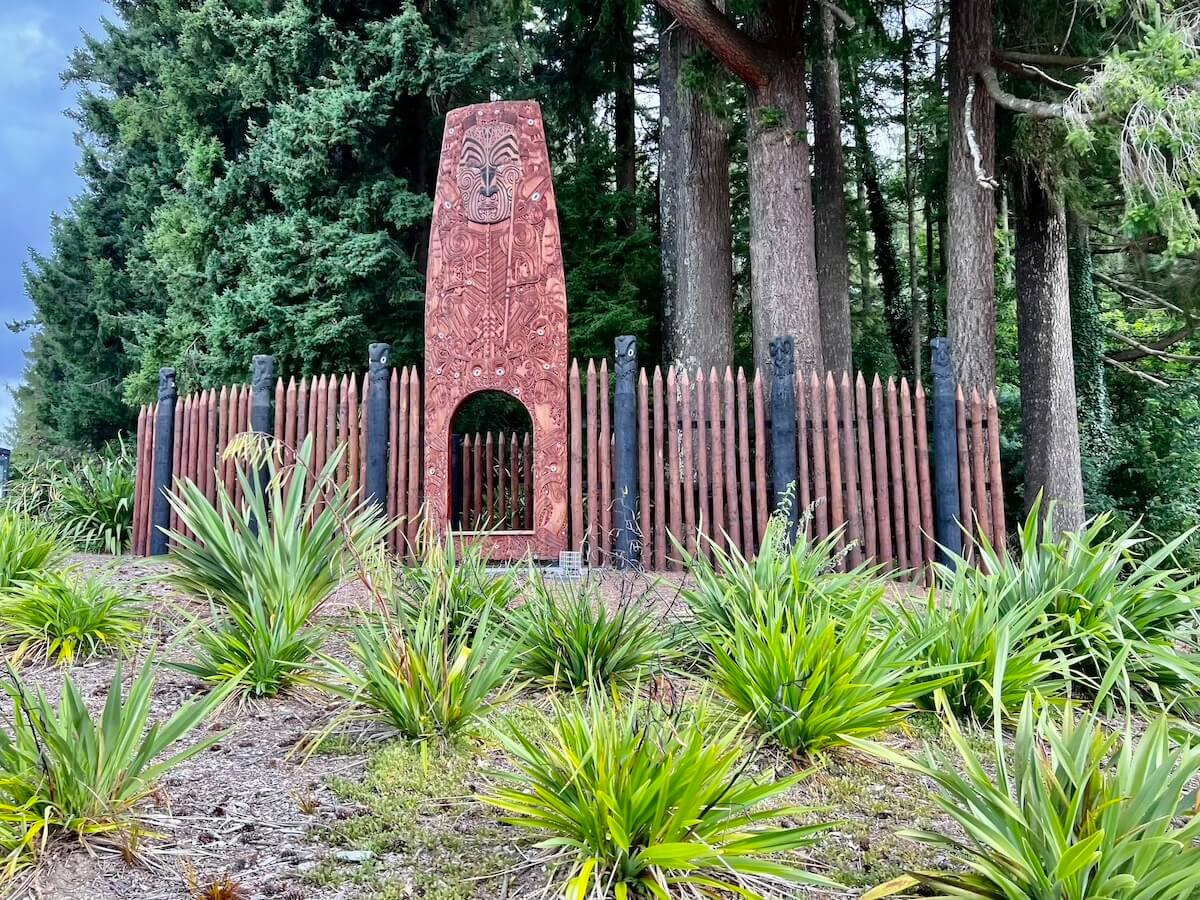
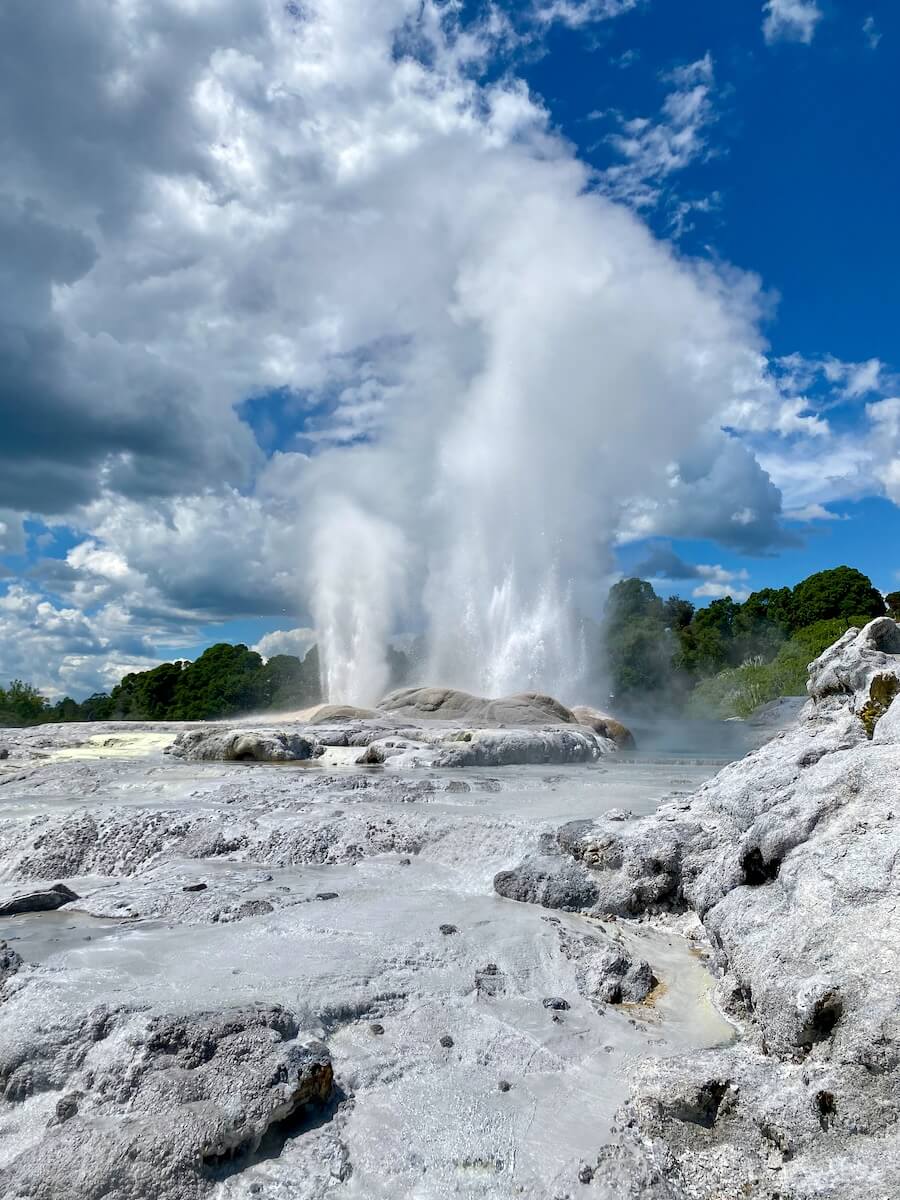
It’s time to discover some of the geothermal activity in the area, as well as take an opportunity to learn about the indigenous Māori art, heritage and culture of Rotorua. There are two adjoining sites , Te Puia and Whakarewarewa Living Village, and they both offer views of Pōhutu Geyser – the largest and most active geyser in the Southern Hemisphere.
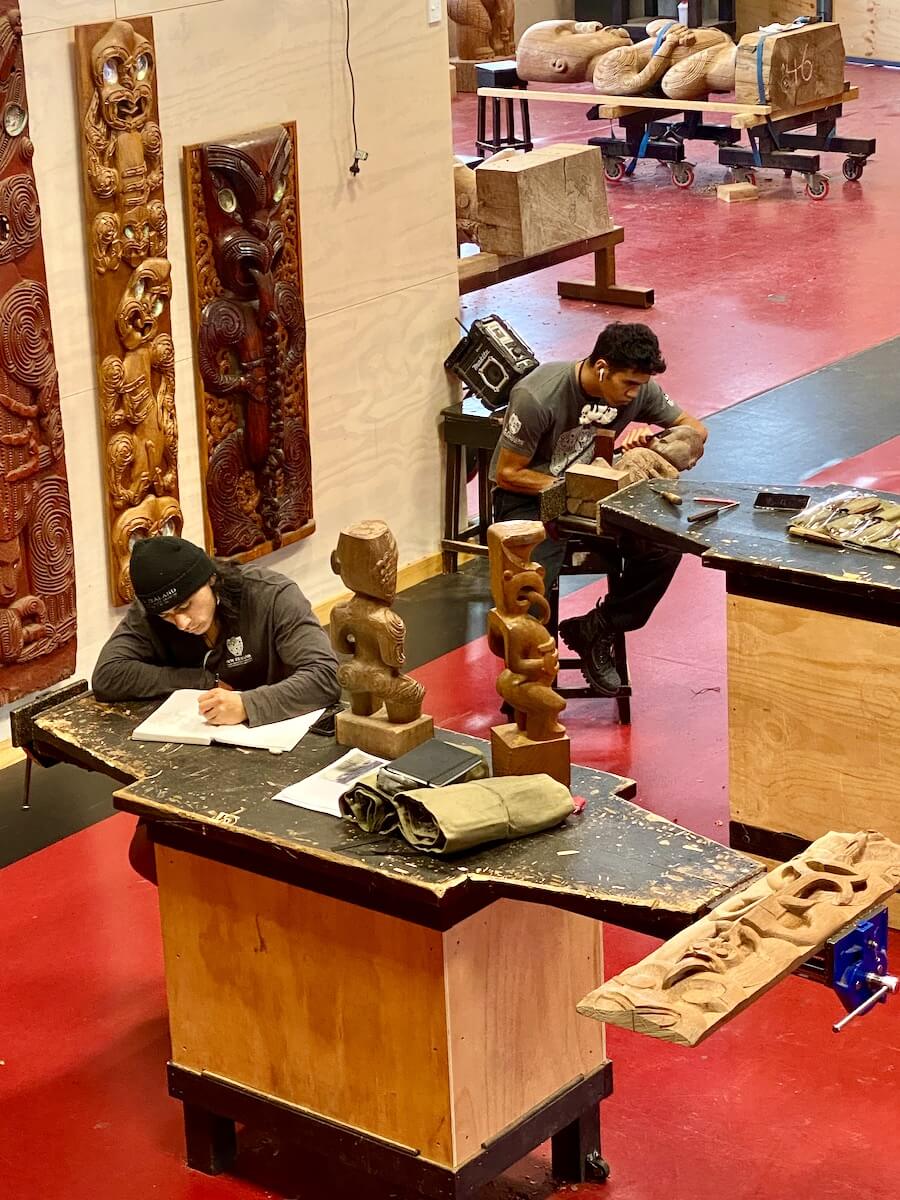
Te Puia has the New Zealand Māori Arts and Crafts Institute, and the Kiwi Conservation Centre too, so it represents good value if you want to see a lot in one site. Book your tickets in advance, or consider a night tour for something a bit different!
Whakarewarewa is next door, and offers a glimpse into the culture and legacy of the Tūhourangi Ngāti Wāhiao people. This is a chance to try hangi food (earth steamed cooking), see a cultural performance, and understand why this whenua / land is so important. Sharing these traditions and stories is important because the voices of the indigenous Māori have historically been superseded by the settler narrative.
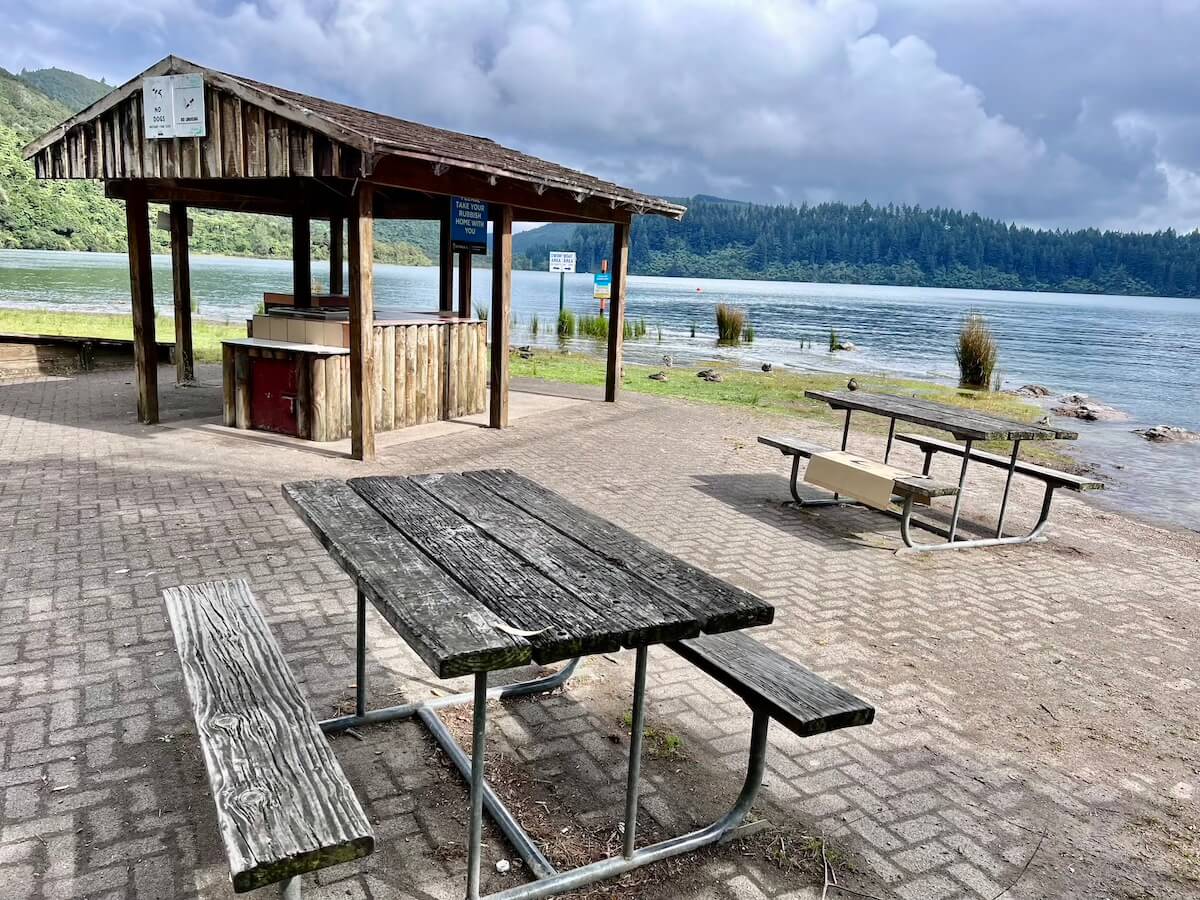
In the afternoon, take a drive out to Lake Tikitapu (Blue Lake) for a swim or kayak. Take some provisions for a picnic or barbecue (there are grill stations around the lakeside, so you just need charcoal! There is a coffee truck too. It’s one of those gorgeous spots where families gather and play, and where the water is perfect for swimming.

Day 7: Rotorua – Polynesian Spa + Rotorua Skyline
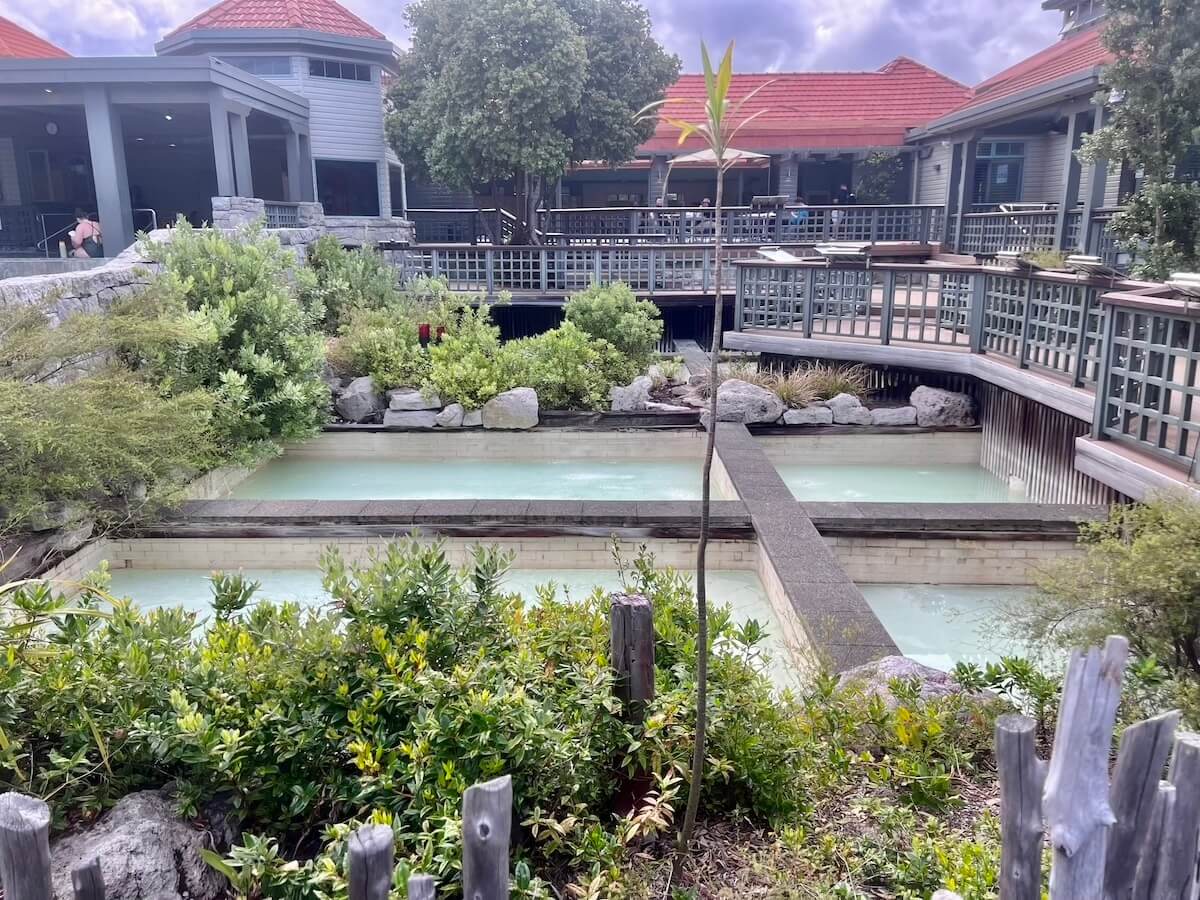
Start your second day in Rotorua at the Polynesian Spa. We got a deal on the discount site BookMe for this activity, but ticket prices are pretty good for the general Pavilion Pools direct too. These public baths are a mix of alkaline and acidic thermal pools, and varying temperatures (but all are pretty hot). There are quiet pools too, and enough different areas to always find a spot to sit and relax. You can also hire private hot pools with a lake view.
Don’t forget to take your jewellery off first, the thermal waters will tarnish the metal.
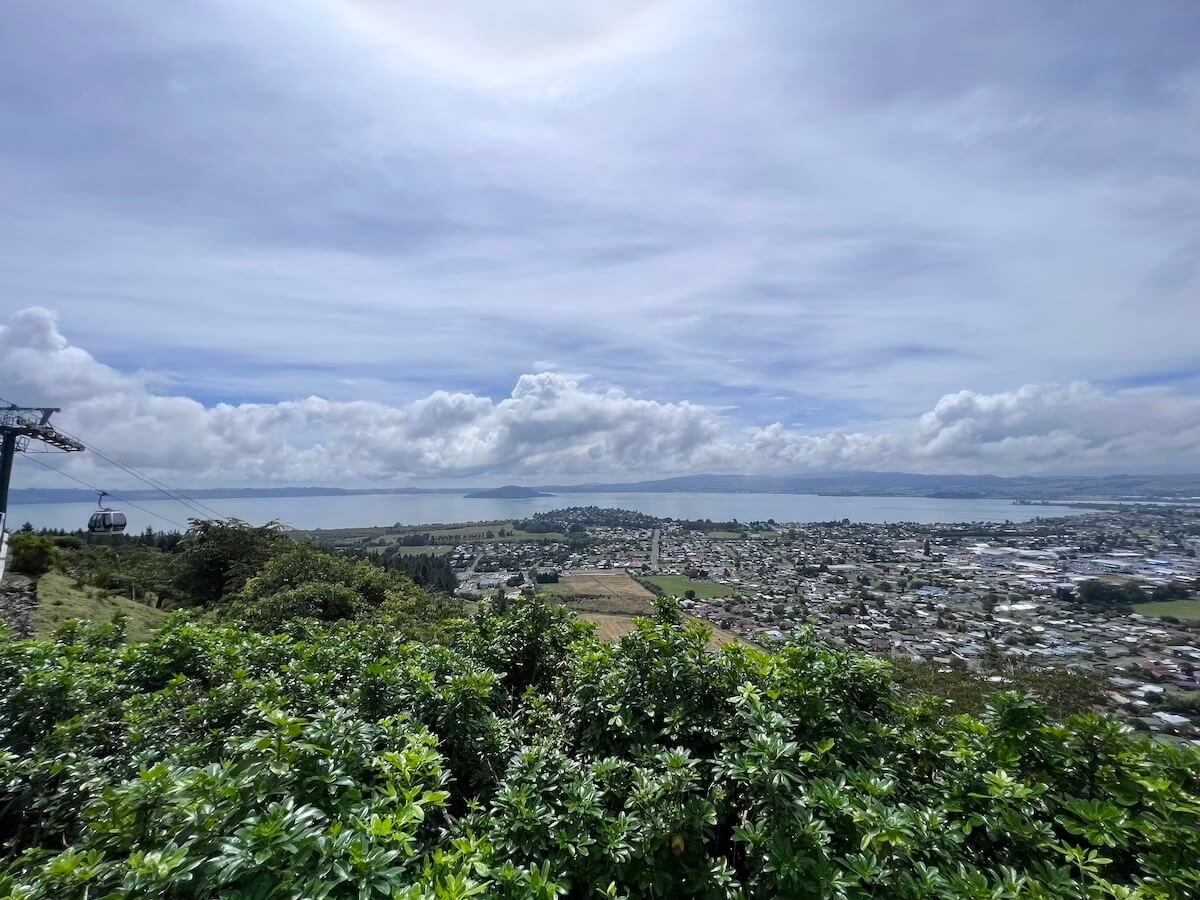
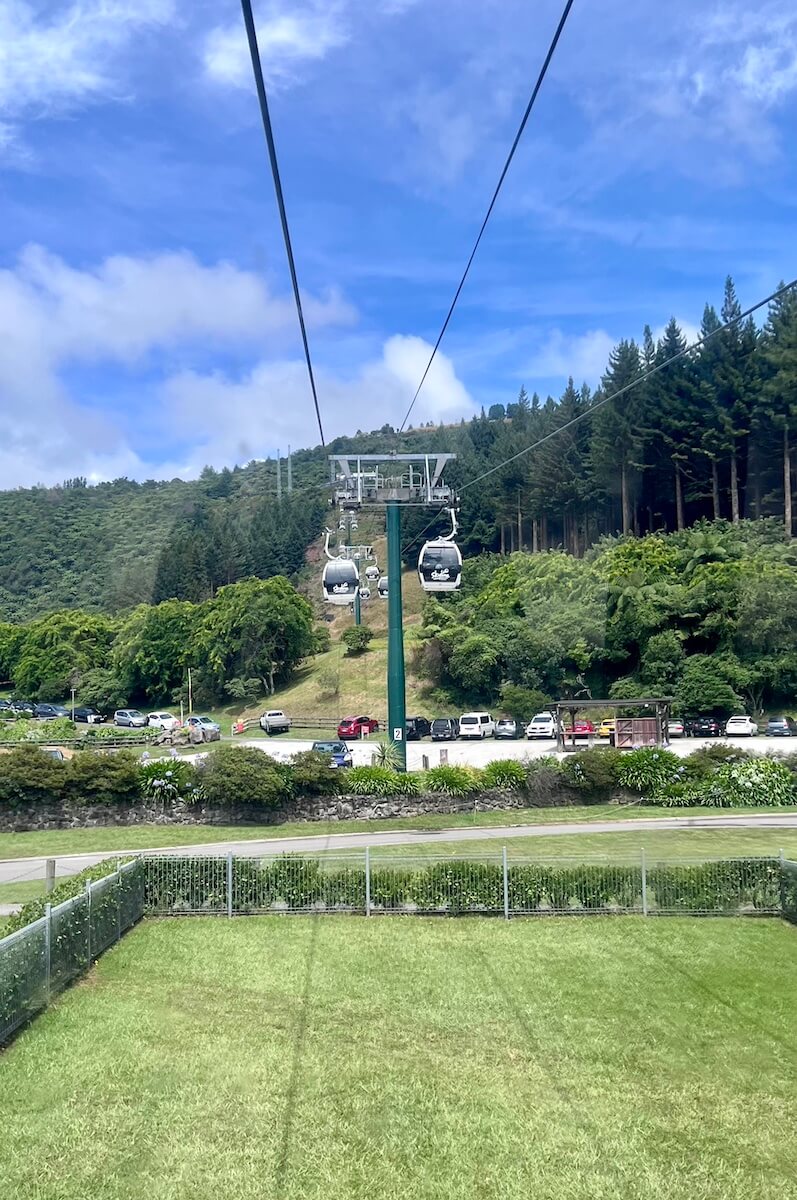
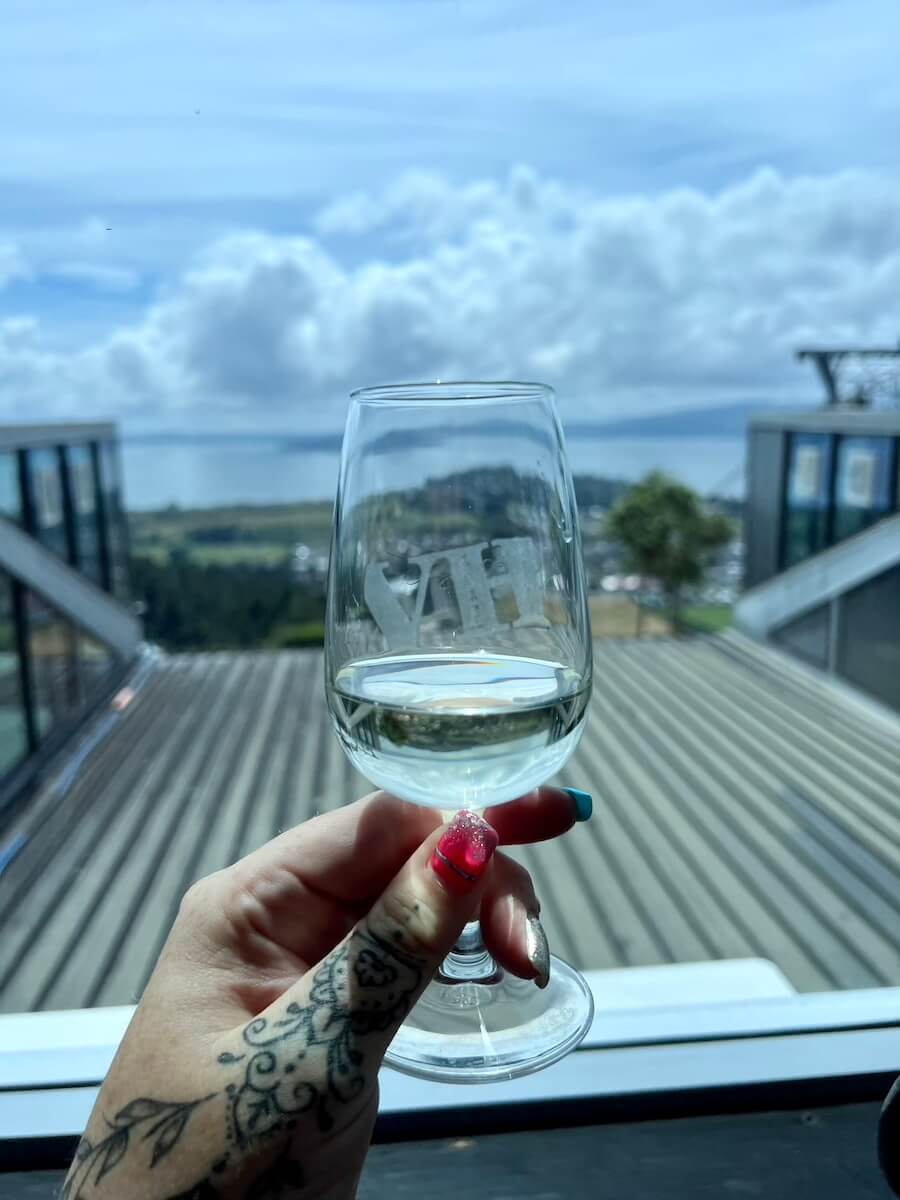
Next on the agenda is the Skyline Rotorua. A ride up Mount Ngongotahā on the gondola offers great views out over Rotorua. At the top there are a variety of adventure activities, from mountain bike trails, to the luge, a skyswing ride, and zip-line. But the reason we went up the gondola was to have a wine tasting at Volcanic Hills tasting room! We enjoyed a variety of wines with a window-side table and animated tasting notes from the friendly staff.


Day 8: Orakei Korako + Lake Taupō
Head south from Rotorua towards Lake Taupō. My pick for this section of the Thermal Explorer Highway is Orokei Korako Cave and Geothermal Park. This hidden valley is an absolute gem of a place. You’ll take a ferry over from the visitor centre to the geothermal island, where you can walk leisurely around the geothermal sites and cave. It’s all accessed by relatively easy boardwalks, and even your dog can come too!
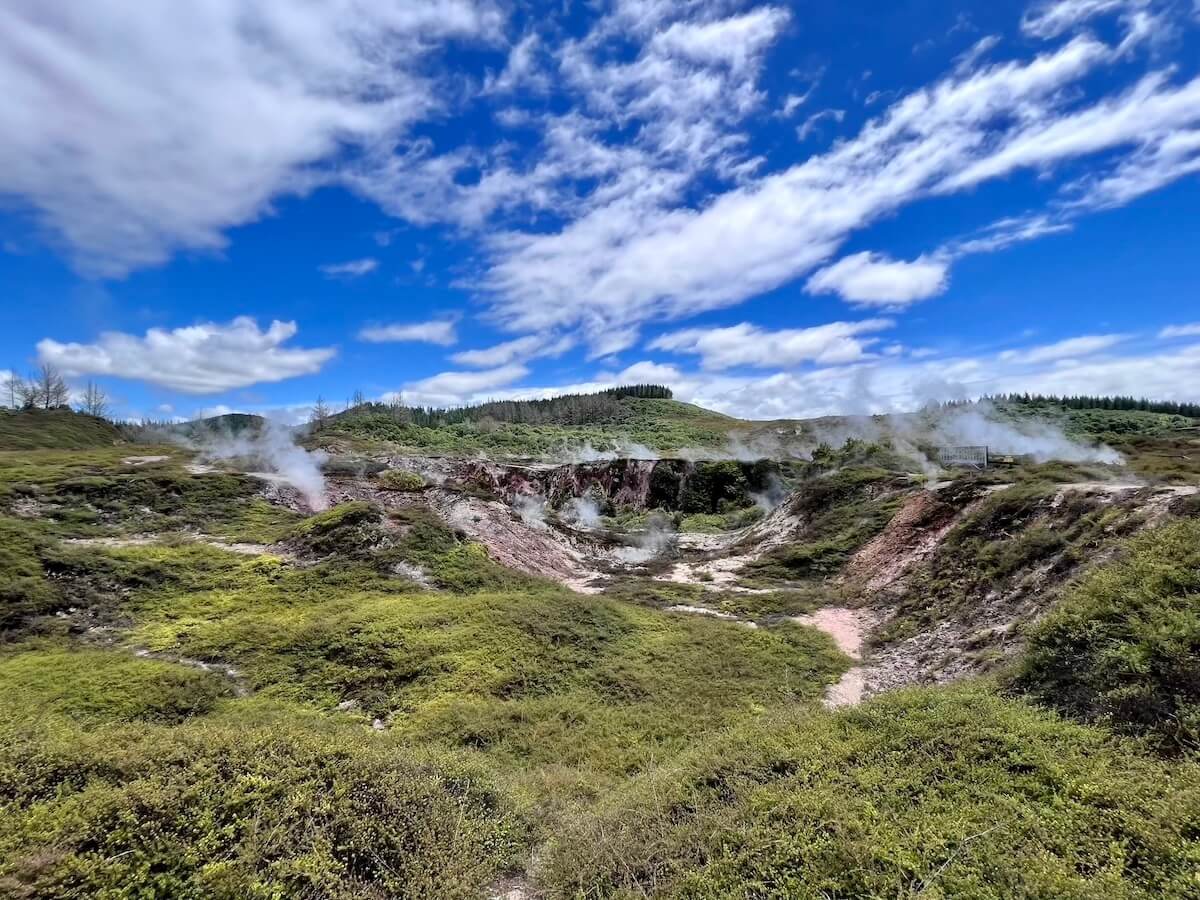
It takes 2-3 hours to visit Orakei Korako, so if you don’t have that amount of time, pay a visit to Craters of the Moon. This affordable geothermal area is about a 45 minute boardwalk jaunt, and while it isn’t as impressive geothermically, it is still very interesting!
End your evening down on Roberts Street in downtown Taupō, where bars and restaurants spill out onto the street, and where music concerts and events happen often.
Hotel recommendations for Taupō
We stayed at the Lake Breeze Motel while in Taupo and it provided good sized rooms with kitchen at a good price. Other options include Acacia Lake View Motel, which is walkable into town; or the Hilton Lake Taupo, which sits above the town with great views of the lake.
Day 9: Lake Taupō – Huka Falls + Boat Tour
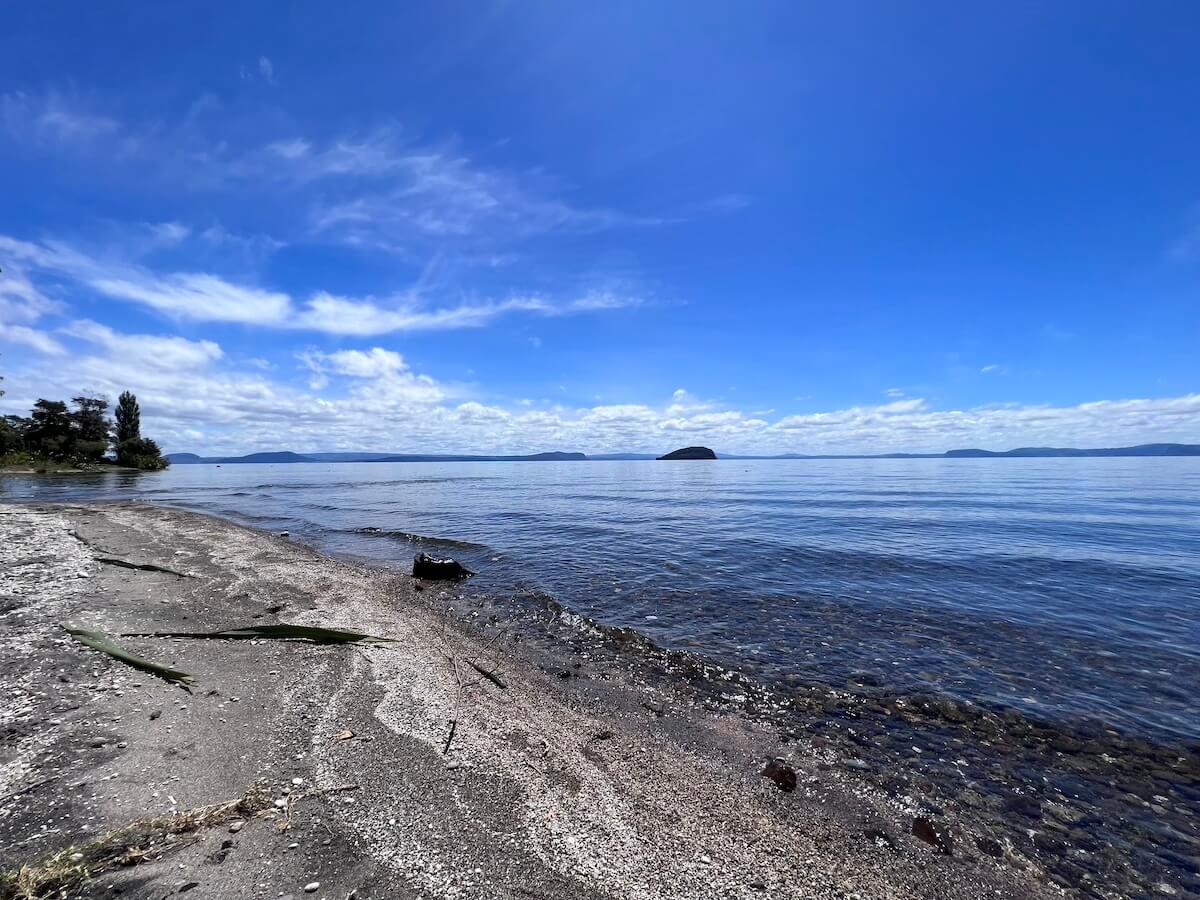
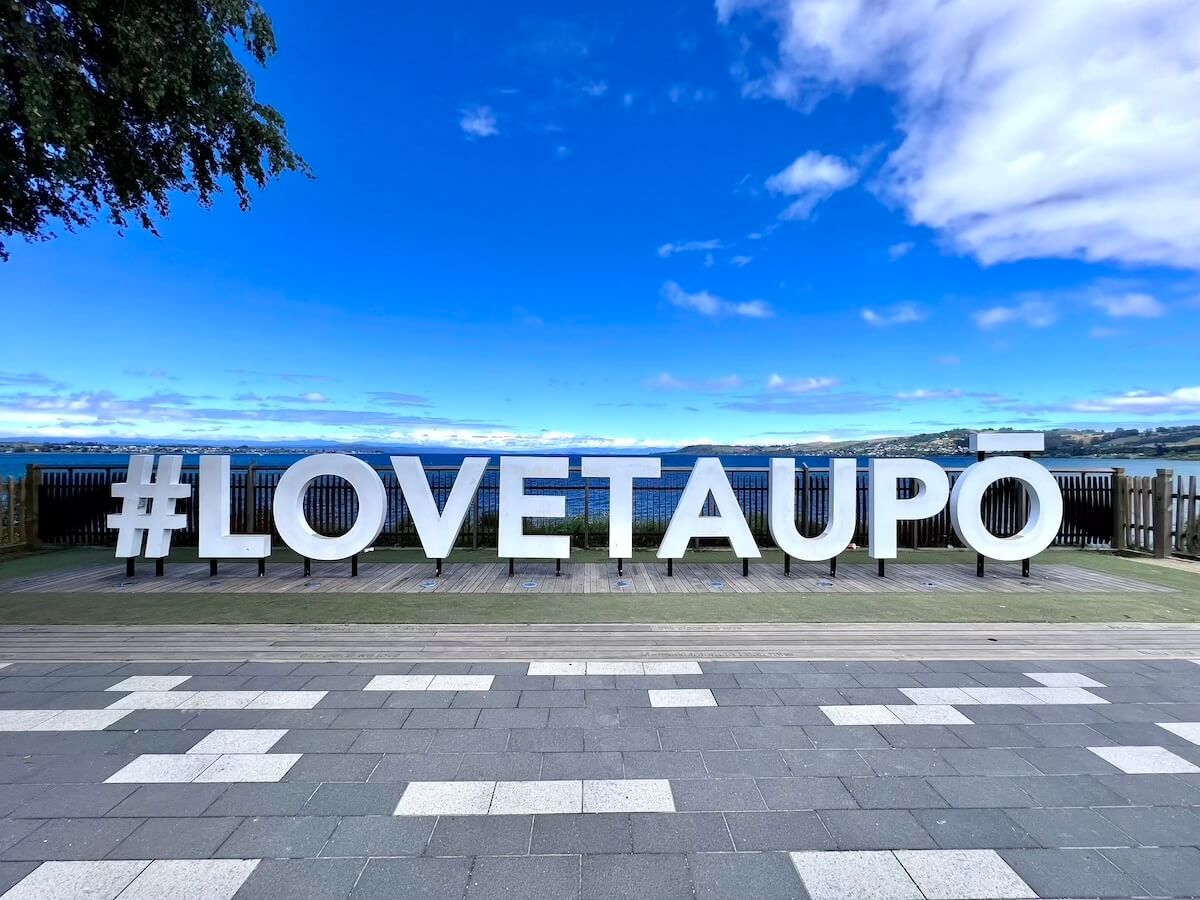
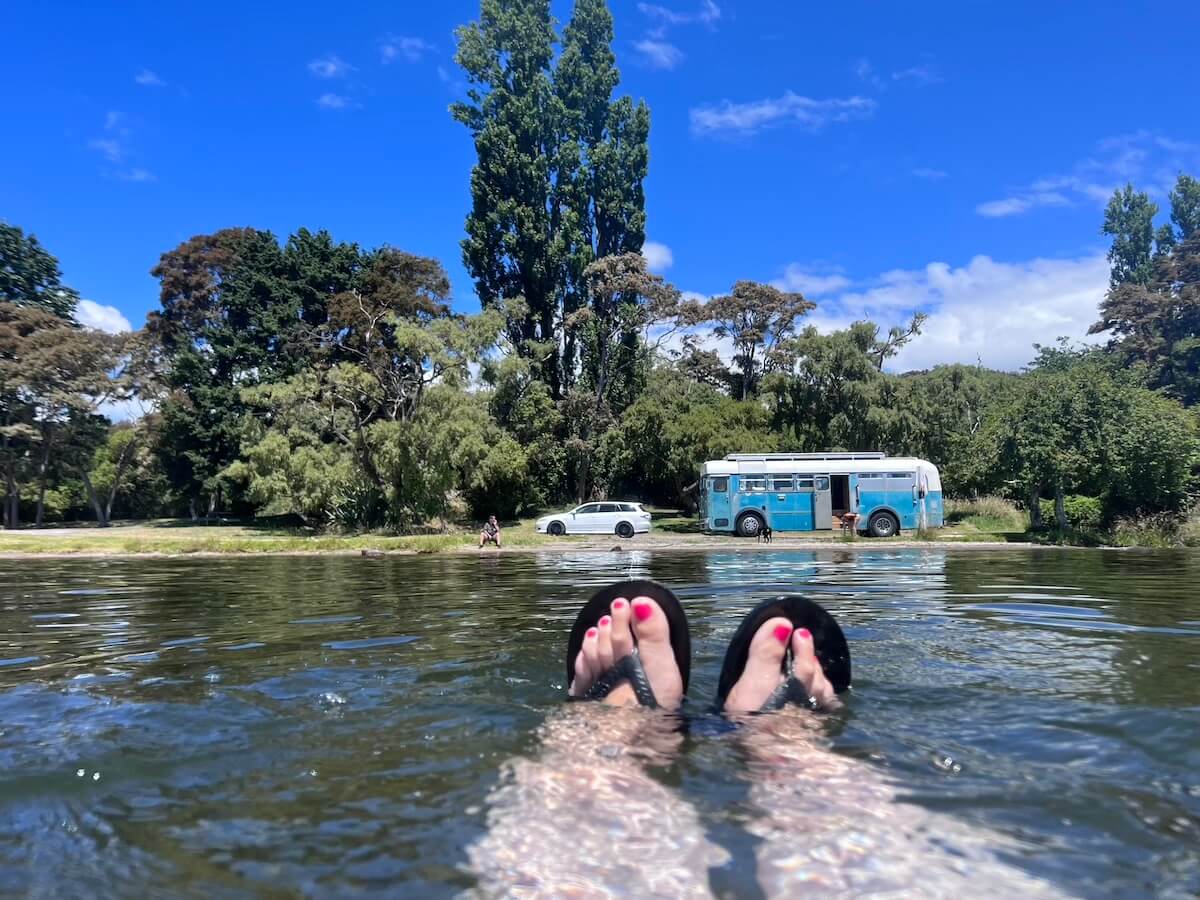
Start your day with a swim in Lake Taupō (if the weather permits). Hot Water Beach is one of my favourite spots. Lake Taupo is literally a caldera (a large depression formed when a volcano erupts and collapses), with thermal activity all around. Hot Water Beach can be seen steaming on a cold morning, and is a great place to take a warm plunge in an otherwise cold lake.
Tip: Another favourite spot for a swim is at Full Moon View, a picnic area off State Highway 1 near Bulli Point.
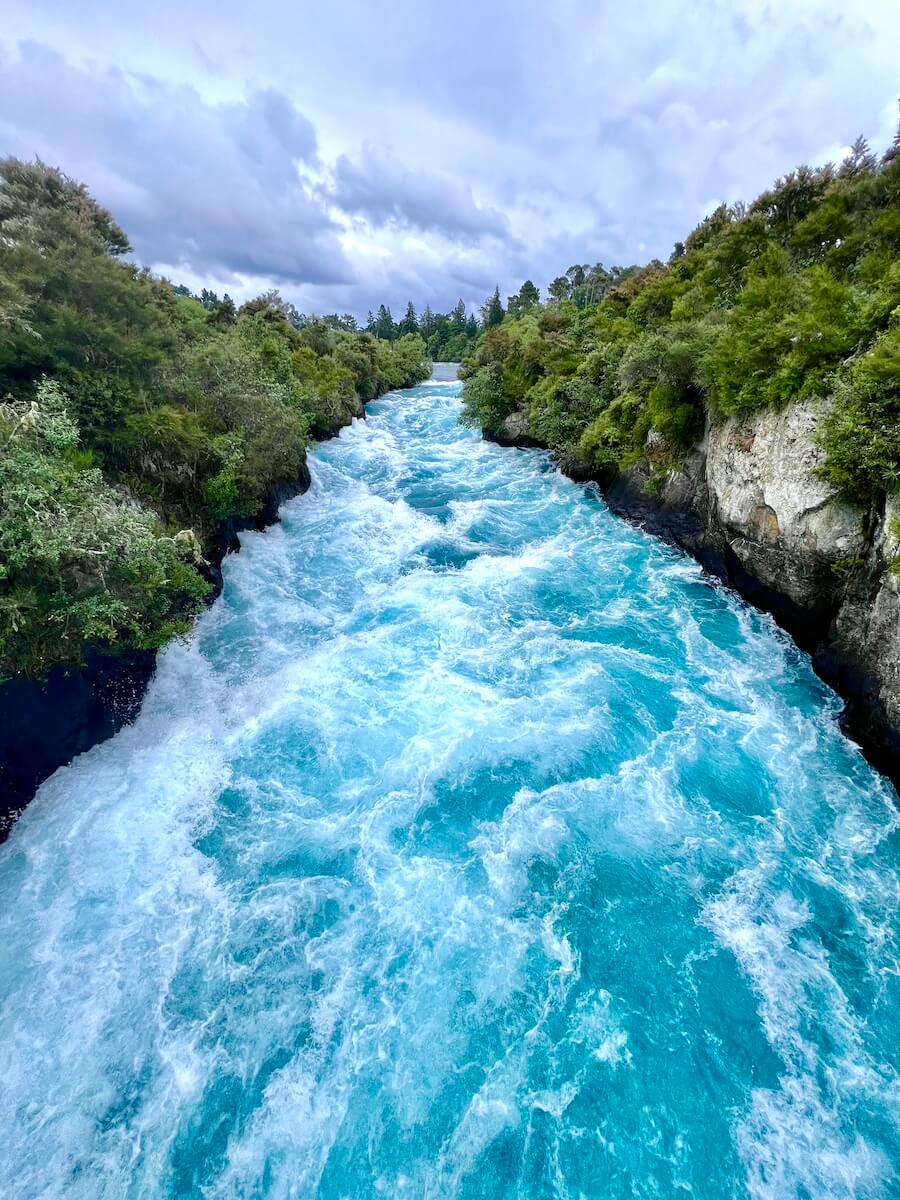
Once refreshed by your morning swim, head to the best free activity in Taupo – Huka Falls! Located 5 minutes drive north of Taupō, Huka Falls is a hugely powerful and impressive waterfall within a gorge, where more than 220,000 litres of water passes through it every second! There are walking trails along the banks of the Waikato River, and jet boats do amazing manoeuvres below the falls for the thrill-seekers amongst you.
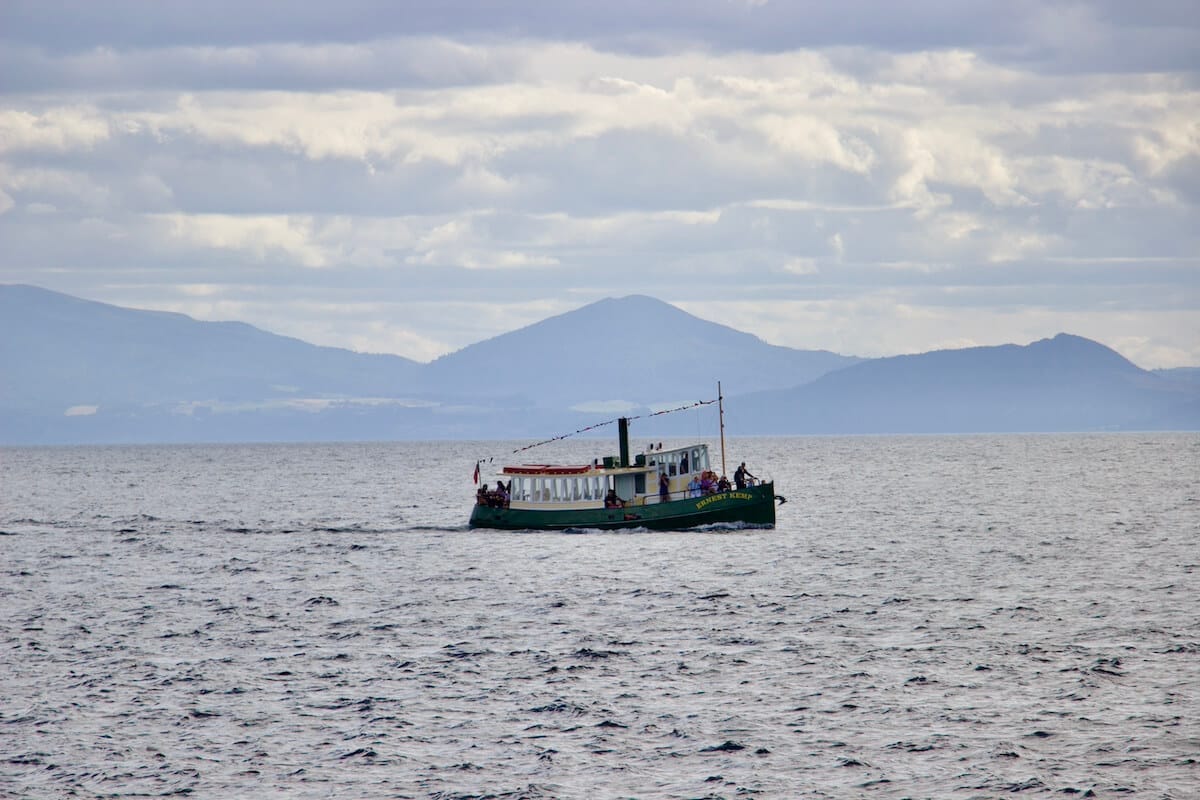
In the afternoon, I would recommend a boat ride out across Lake Taupo. We took the 5pm cruise with Chris Jolly, which includes a stop at the 1970s Maori carvings. The guide / captain was so funny and knowledgeable. It is a fully licensed boat trip, and the gin tonics were good value – it was a delight enjoying the dusk light nursing a nice tipple at the back of the boat! We also noted they had activities for families with kids.

Day 10: Central Plateau & Desert Road to Ohakune
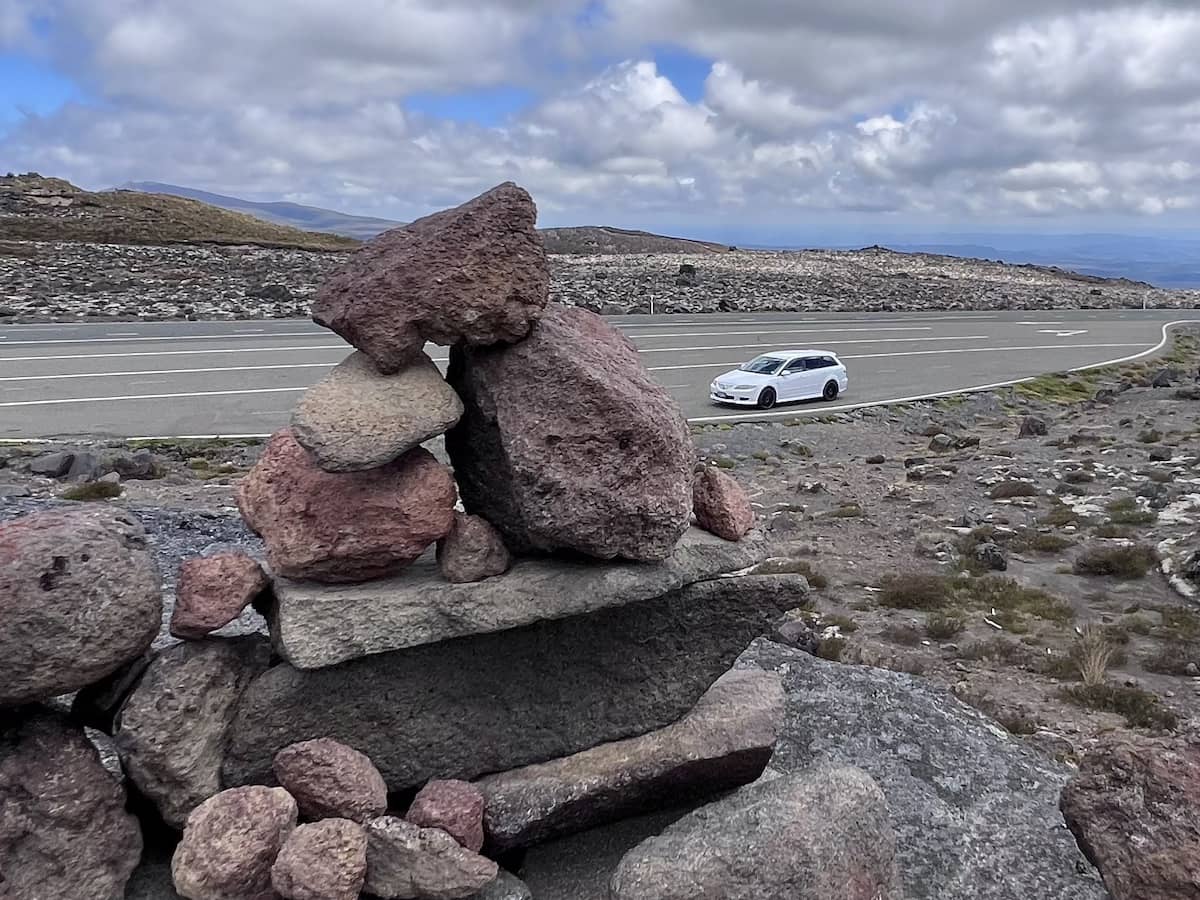
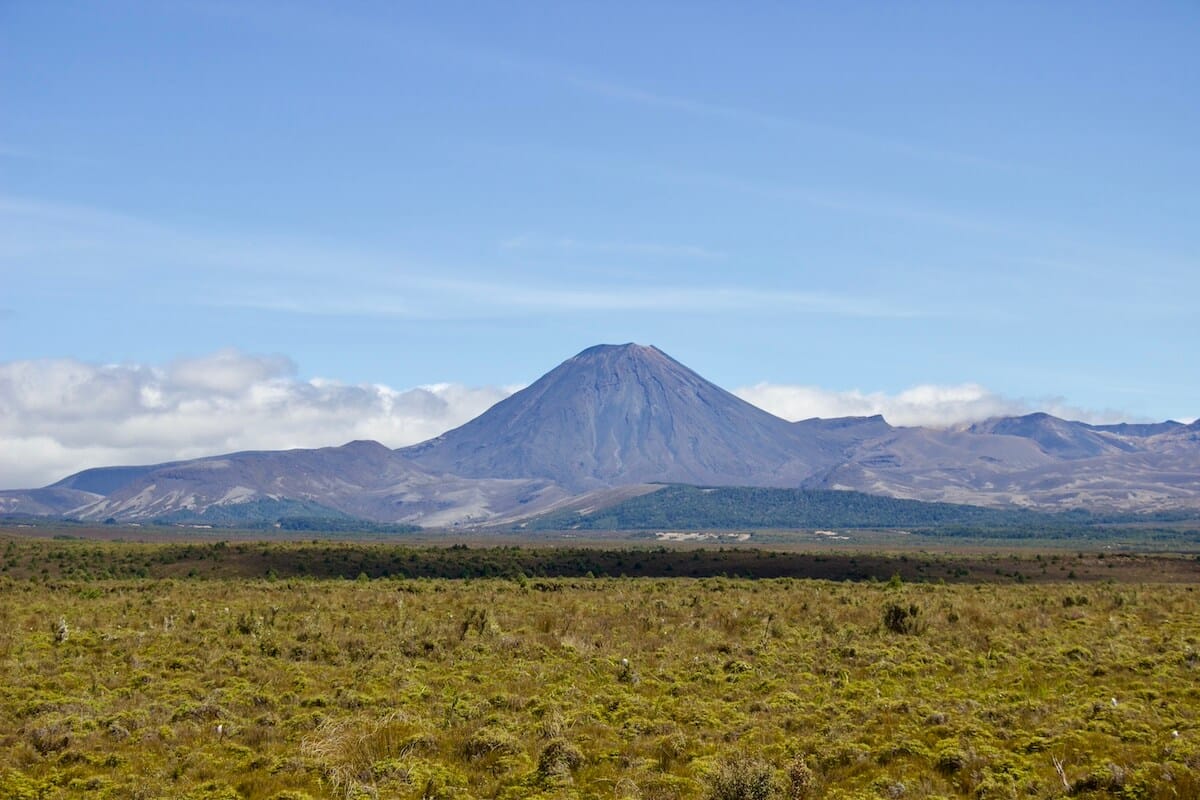
It is time to leave Taupō and head down via the Desert Road to Ohakune. Your GPS will try to take you down the west side of the mountains, but ignore it and go down the east (Desert Road). This other-worldly landscape is a volcanic plateau, formed through eruptions and layers of volcanic ash. The views of the three mountains are magnificent from this drive, so take your time and stop at the pull-outs for the views.
The northernmost peak is Mount Tongariro, the day hike ‘the Tongariro Crossing‘ up to Emerald Lake is a very popular activity for those with a decent level of fitness. Tongariro was the most recent in the chain to erupt, in 2012. The second peak in the chain is Mount Ngāuruhoe – the perfect cone last erupted in 1975. Mount Ruapehu is the raggedy cluster of peaks at the southern end of the chain. Ruapehu is home to three ski fields, Whakapapa, Tūroa and Tukino, and last erupted in 2007.
Volcanoes: It seems strange to me now, speaking so casually about eruptions and volcanic activity – it is just how we grew up in NZ. With regular earthquakes, tsunami evacuation plans, and geothermal locations the norm, it was just what we were used to. That is until the Christchurch and Kaikoura earthquakes (2011 and 2016), and the Whakaari (White Island) disaster (2019) where many lost their lives and it reset our perspective.
Aotearoa’s position on several fault lines comes with a level of activity and risk. The Pink and White Terraces were one of the natural wonders of the world, until a massive eruption of Mount Tarawera in 1886 destroyed them.
If you have time before check-in at Ohakune, I would suggest a jaunt up to one of the ski villages (if the season permits). The forests behind Ohakune, up to Tūroa, are some of the oldest in the area, since they were protected from the Tarawera eruption by Mount Ruapehu!
In summer, the drive up to Whakapapa is magnificent. Tussock grasses give way to black crumbly volcanic rocks as you gain elevation. Look out for pull-outs and walks out to the waterfalls, or take the Sky Waka Gondola up for the views.
Hotel recommendations for Ohakune
Try the Rocky Mountain Chalets Ohakune or The Peaks Motor Inn. We stayed at the King’s Ohakune, and while we would recommend the bar for great pub food with a view, we wouldn’t recommend it for accommodation (unless you’re backpacking and want cheap accommodation with a party atmosphere.


Day 11: Drive to Masterton
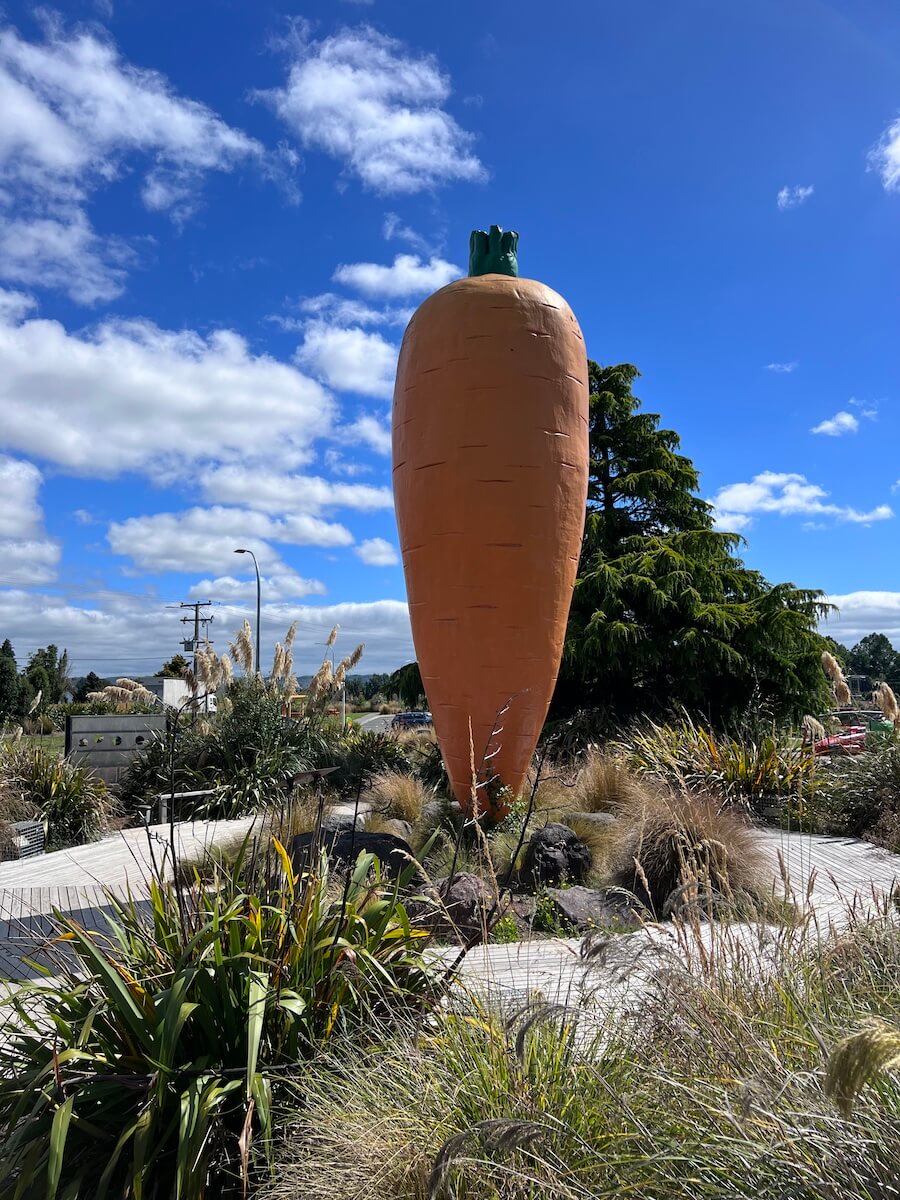
Before you leave Ohakune, stop by the giant carrot statue. This Kiwi icon is one of the many odd giant statues of random things found in NZ, and it is beloved! This area is known for its market gardens and delicious produce.
On your way out of town, stop at the Tangiwai Disaster Memorial to learn about the train derailment of 1953. A volcanic lahar from the Mt Ruapehu crater lake sent a huge wave of water, silt, boulders and debris surging down the Whangaehu River, which knocked out the rail bridge and lead to the deaths of 151 passengers and crew.
Another stop as you leave Ohakune is the National Army Museum in Waiouru. For those who enjoy military history, this could be a good stop. As kids, we would force our parents to stop each time we passed through the area, so we could play on the tanks outside.
On the way south to Masterton, you will pass through Taihape (the gumboot throwing capital of the world, no joke), and Mangatainoka (where Tui beer is brewed). This isn’t tourist trail NZ, but it is dairy farms and great pie stops, guaranteed.
Hotel recommendations for Masterton
Try South Park Motel for a good quality motor lodge near the centre. Or Copthorne Hotel & Resort for a place with a pool.
Day 12: Drive via Martinborough wineries to Wellington
It’s wine day! Pick a designated driver and enjoy some of the loveliest wines in New Zealand. Martinborough is one of the many cute towns in the Wairarapa and is, in my mind, on par with Marlborough for great wine tour experiences. Check out this and other often overlooked NZ destinations here.
Continue on to Wellington via the Remutaka Hill – this amazing incline has a great view at the top, but is very winding, so get your brake-foot ready!
Hotel recommendations for Wellington
We stayed at the TRYP by Wyndham on Tory Street – it offered long-stay rooms with a kitchen and laundry right in the centre of town (it’s stylish too). For something close but not in the loud centre, try Mövenpick Hotel Wellington.


Day 13: Wellington – Te Papa + Mt Victoria Lookout + Oriental Bay
You’ll finish your North Island road trip in the Capital city of Wellington. I may be a little biased, as I was raised here, so I think it is an exceptional place. A vibrant coffee scene, waterfront museums and development, hilltop forests and iconic cable cars, Wellington is a peach of a city. You’ll have 2 full days here to explore some of the highlights.
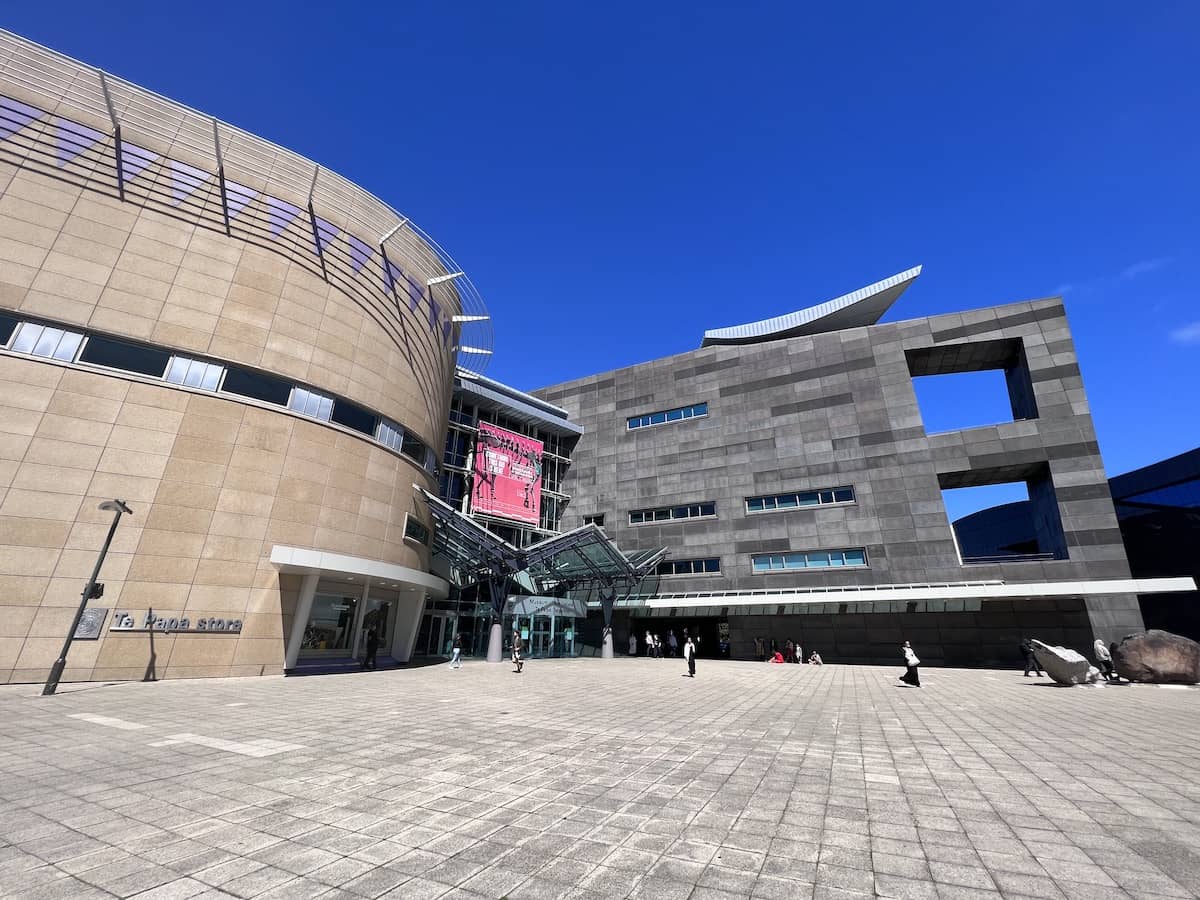
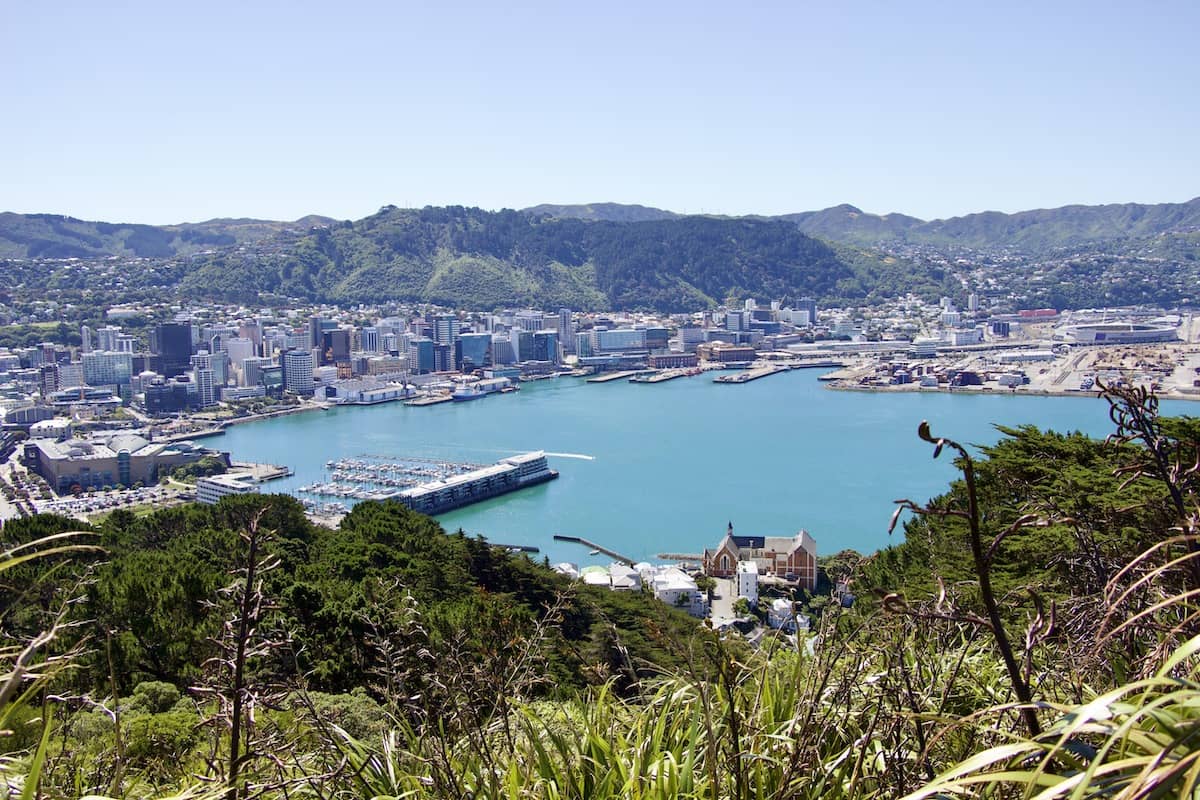
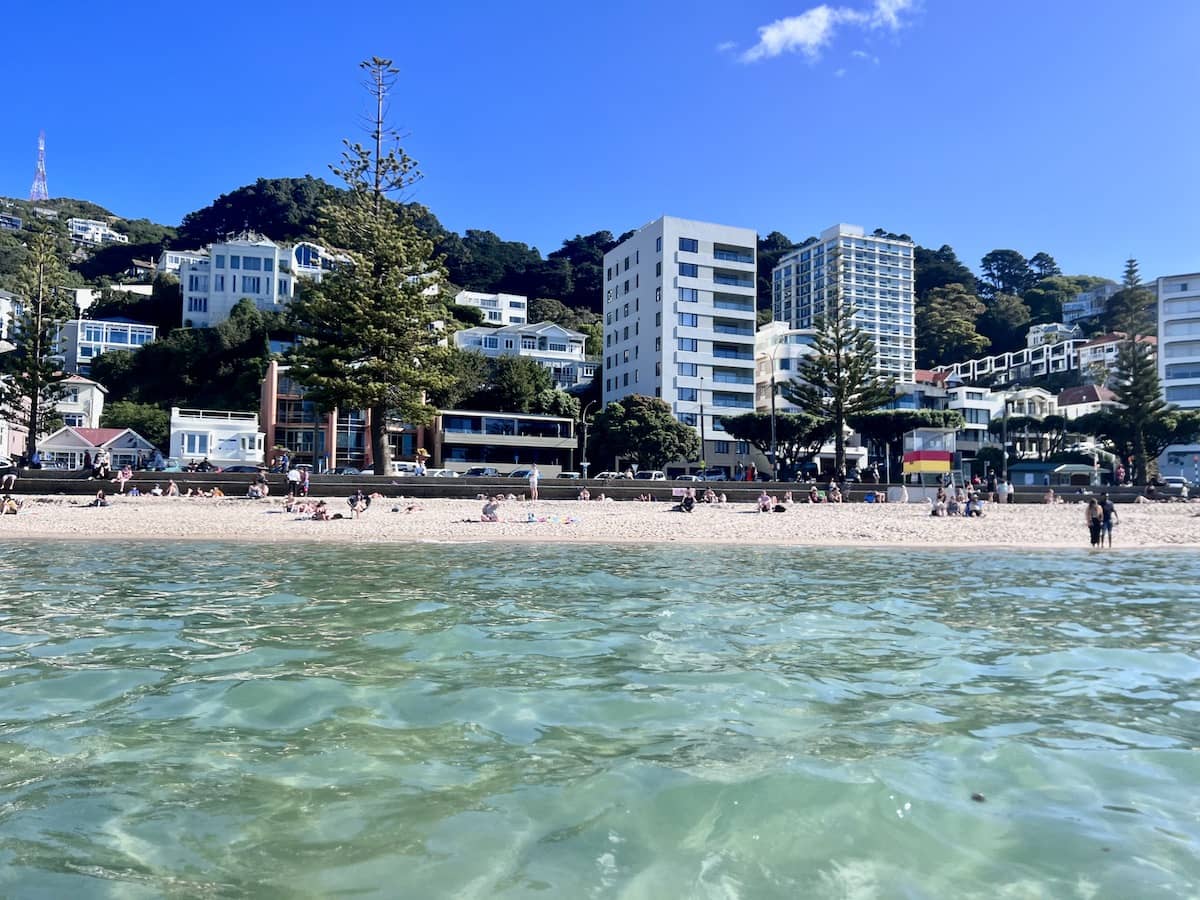
Interesting spots: Top spots for day 1 include Te Papa Museum, Mt Victoria Lookout and Oriental Bay. The waterfront has lots of lovely restaurants and museums. Take a look at my Wellington guide for more detail.
Day 14: Wellington – Cable Car + Zealandia + Botanic Gardens
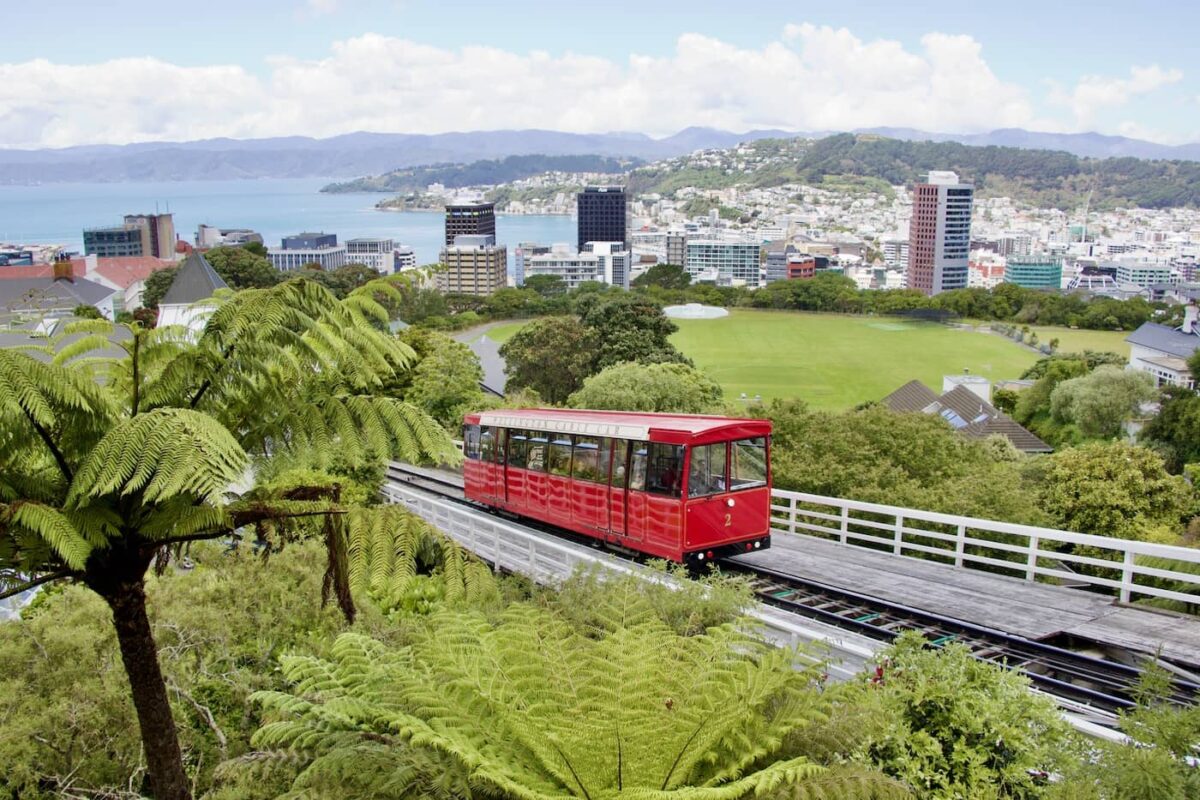
On day two, group together three wonderful outdoor activities – the Cable Car, Zealandia bird sanctuary, and the Botanic Gardens. The Cable Car is a Wellington icon and offers great views from its Kelburn vantage point.
The shuttle for Zealandia leaves from the top of the Cable Car, so it is a natural grouping of sightseeing. Zealandia Te Māra a Tāne is an amazing urban eco-sanctuary, with the aim of restoring the Karori valley to pre-human condition. Rare native birds, tuataras and forests have been regenerated, and this has meant an uptick of native birds across all of Wellington as a result.
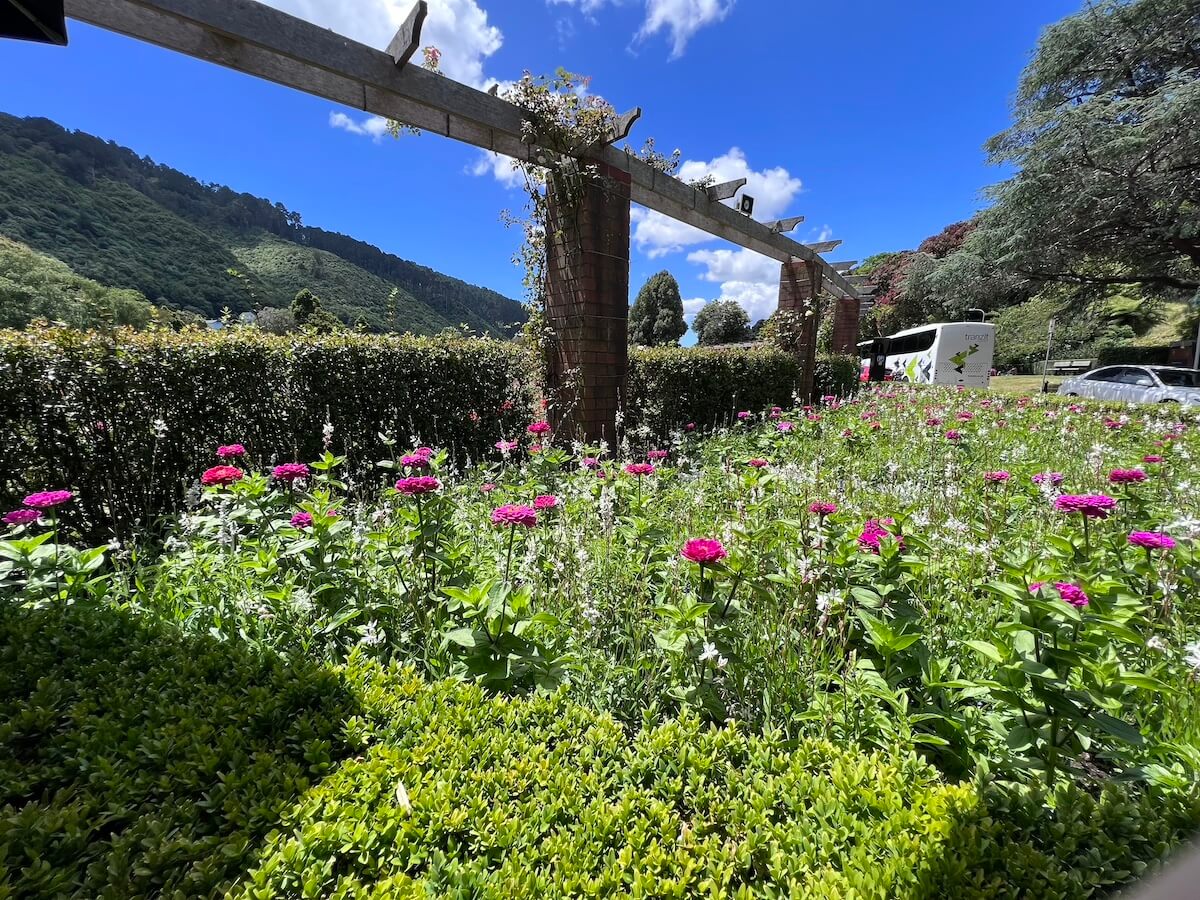
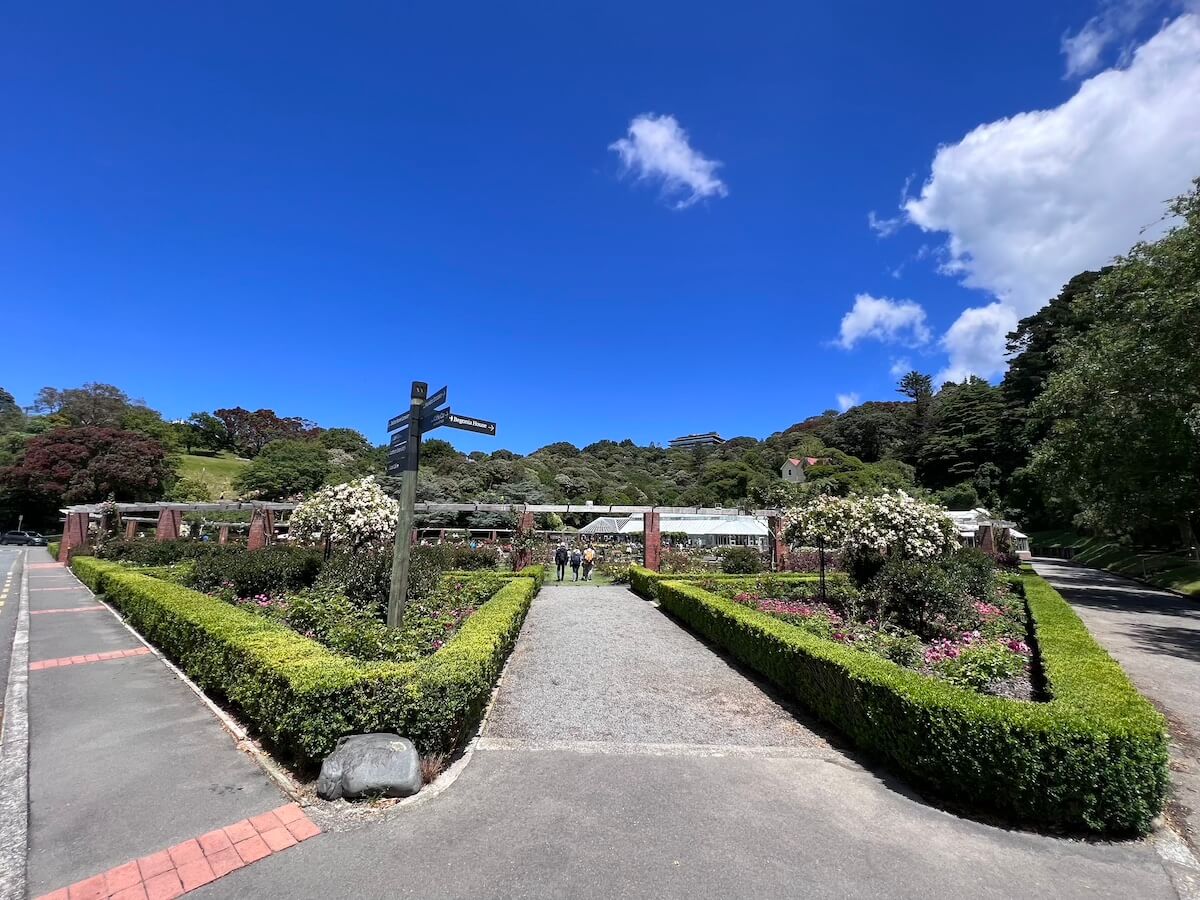
Take the shuttle back to the top of the Cable Car, and instead of returning down it, take a walk down the hill through the Botanic Gardens. The rose garden and cafe at the bottom is a lovely spot for a rest after a busy day!
Two weeks in the South Island
If you have a one-way car hire (Auckland to Christchurch), take the ferry from Wellington to Picton (Bluebridge or Interislander). It takes around 3 hours to cross the Cook Strait. Pick up this route in Kaikoura, and do day 1 and 2 in Christchurch / Akaroa at the end.
Advisory: Be sure to check your car hire rules regarding using the ferry, some rental companies don’t allow it.
Quick View Itinerary for 2 weeks in the South Island, Te Waipounamu
Day 1: Arrive into Christchurch + explore the city
Day 2: Day trip to Akaroa
Day 3: Drive to Kaikoura + Whale-watching + Hanmer Springs
Day 4: Drive the Lewis Pass to the West Coast + Punakaiki + Hokitika
Day 5: Drive via Franz Josef Glacier + Haast Pass + Lake Hāwea
Day 6: Wānaka + Arrowtown + Queenstown
Day 7: Glenorchy + Queenstown town + Skyline
Day 8: Drive to Te Anau / Manapouri
Day 9: Milford Sound or Doubtful Sound day trip
Day 10: Drive to Dunedin
Day 11: Otago Peninsula
Day 12: Drive via Moeraki Boulders to Lake Tekapo
Day 13: Aoraki Mount Cook National Park + Lake Tekapo dark skies
Day 14: Return to Christchurch via Burke’s Pass and Geraldine
Day 1: Christchurch
A 2011 earthquake rocked Christchurch so violently, even their beautiful stone cathedral fell down. Many years later, you can still see signs the damage, and so many new buildings built in its wake.
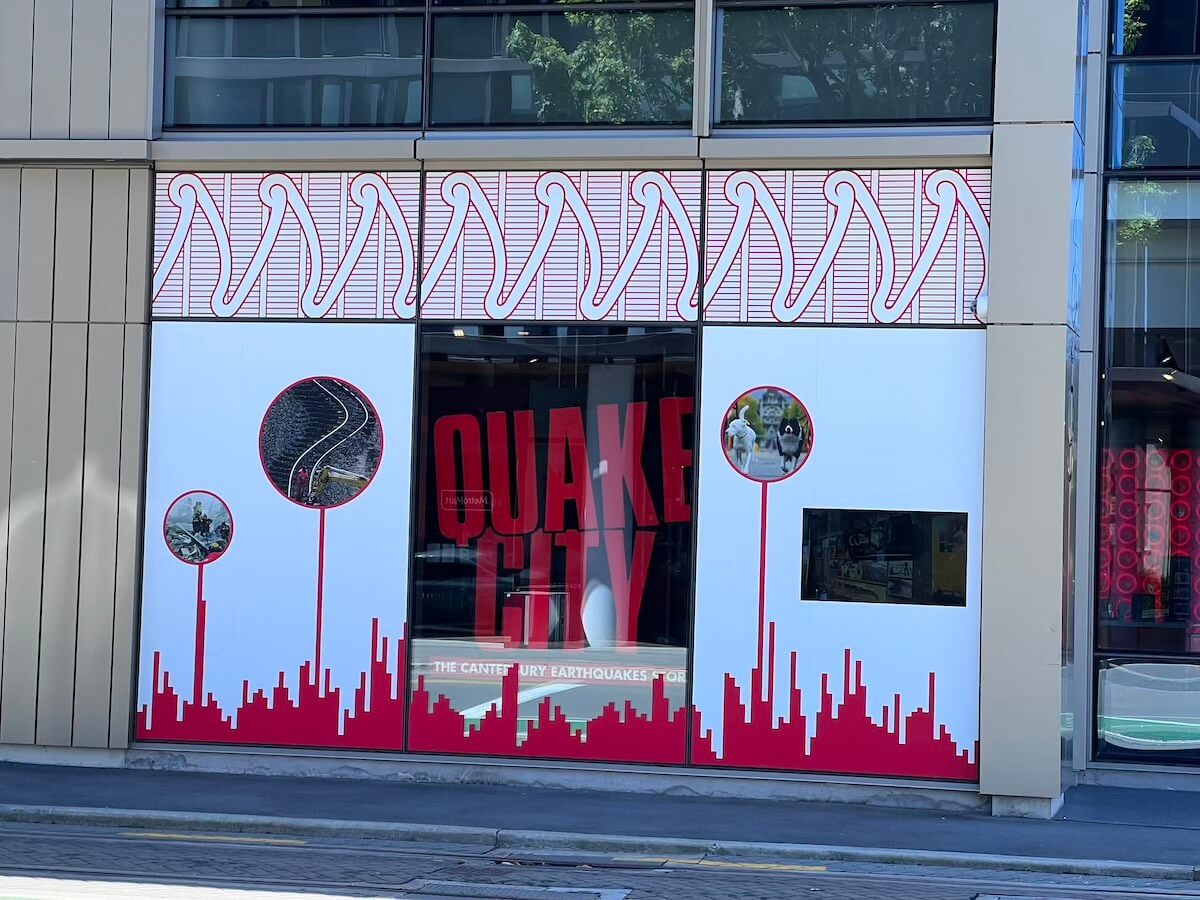
For those visiting for the first time, you may not notice. For those who visited the city pre-earthquake, there is much new to discover. I recommend a visit to Quake City on Durham Street North to learn more.
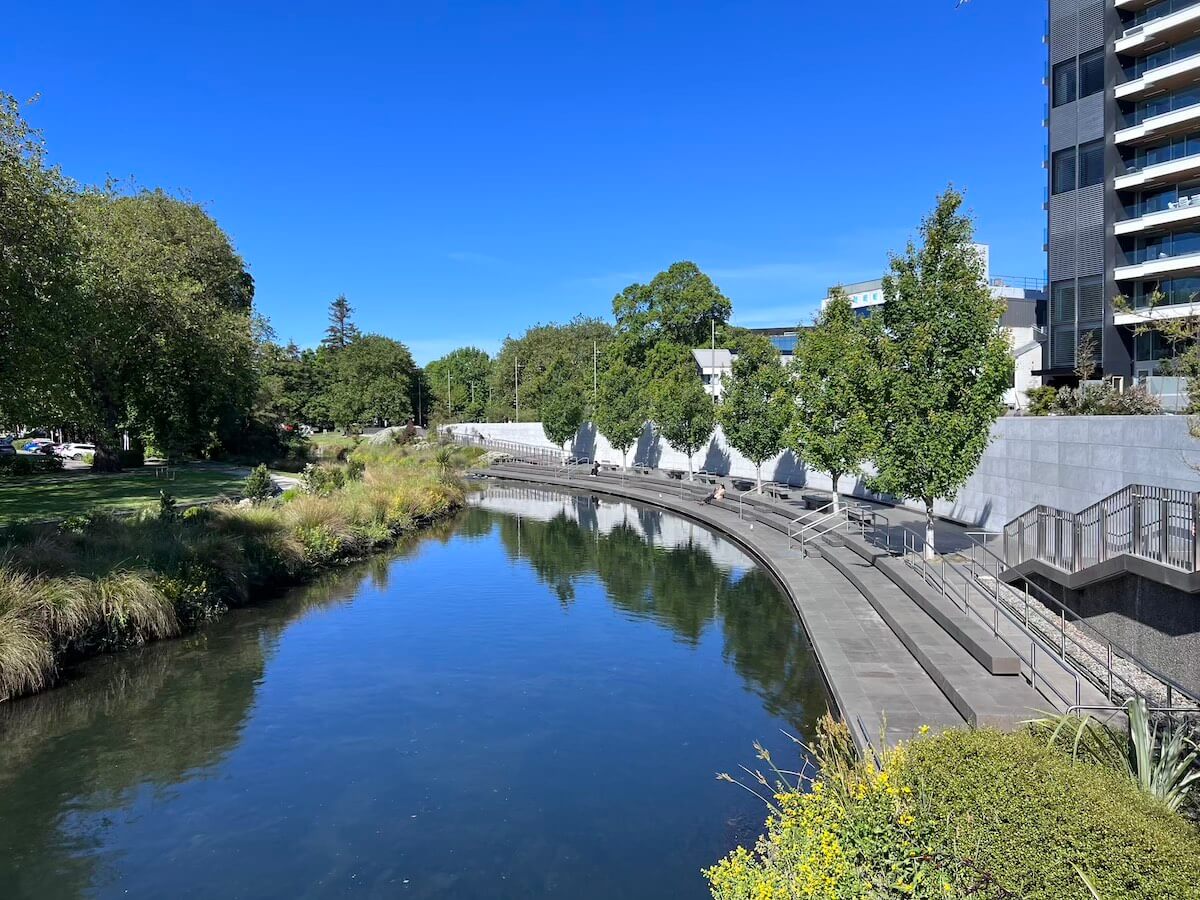
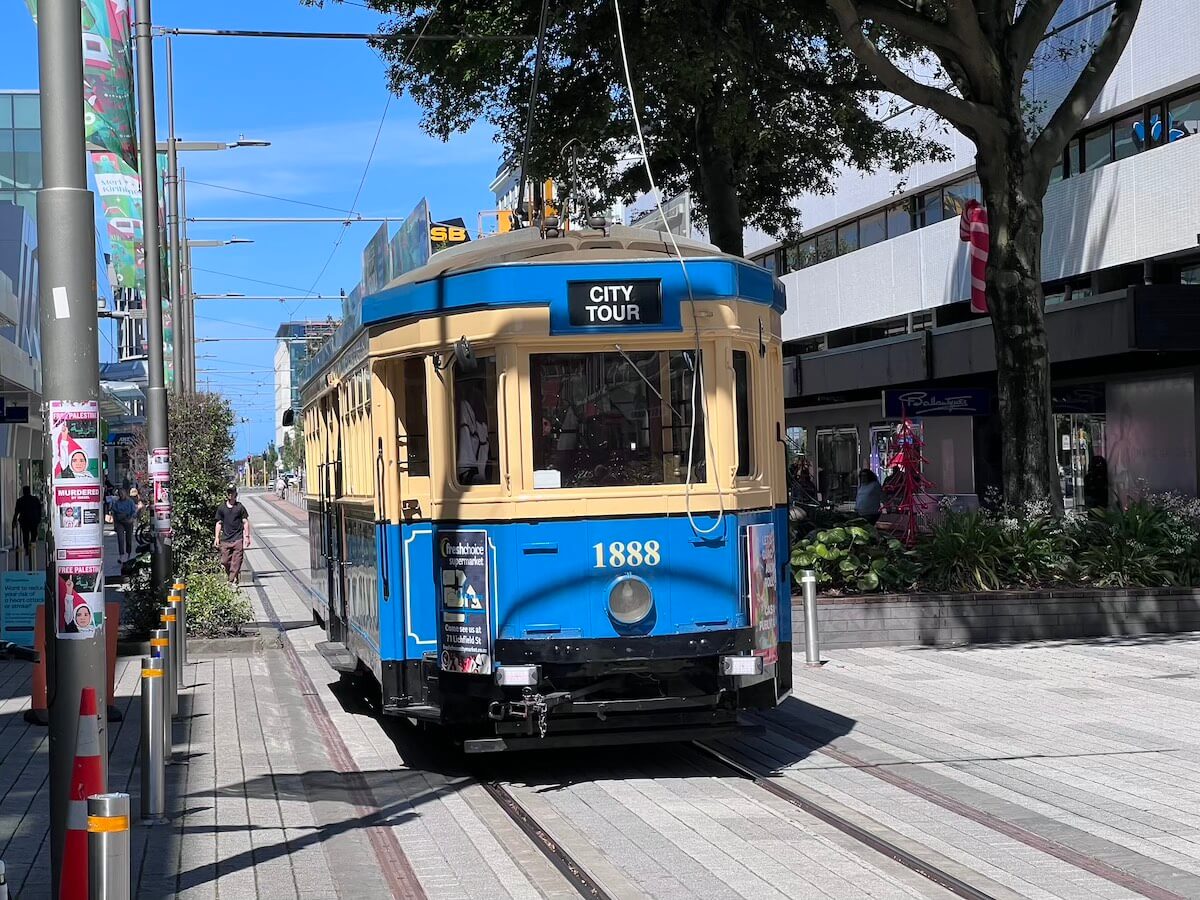
Things to do in Christchurch: We enjoyed a circuit on the hop-on-hop-off vintage tram, and watching the punting along the River Avon, and the Gondola (you can buy a combo ticket). But the real joy of Christchurch is the pretty gardens all around. The Botanics, the walkways along the Avon, and places like The Arts Centre Te Matatiki Toi Ora, bring enrichment visually.
A great spot for people-watching and drinks is Oxford Terrace, where restaurants spill out onto the street, and laneways of pubs create a fun vibe. While Christchurch lacks a little sass for my liking, it is a very genteel city to visit.
Hotel recommendations for Christchurch
We stayed at the Amross Court Motor Lodge, a very comfortable motel near Hagley Park, and an easy walk into town. Central city options include Distinction Hotel or Crowne Plaza, which is a favourite when I am not visiting with a car.

Day 2: Day trip to Akaroa + Banks Peninsula
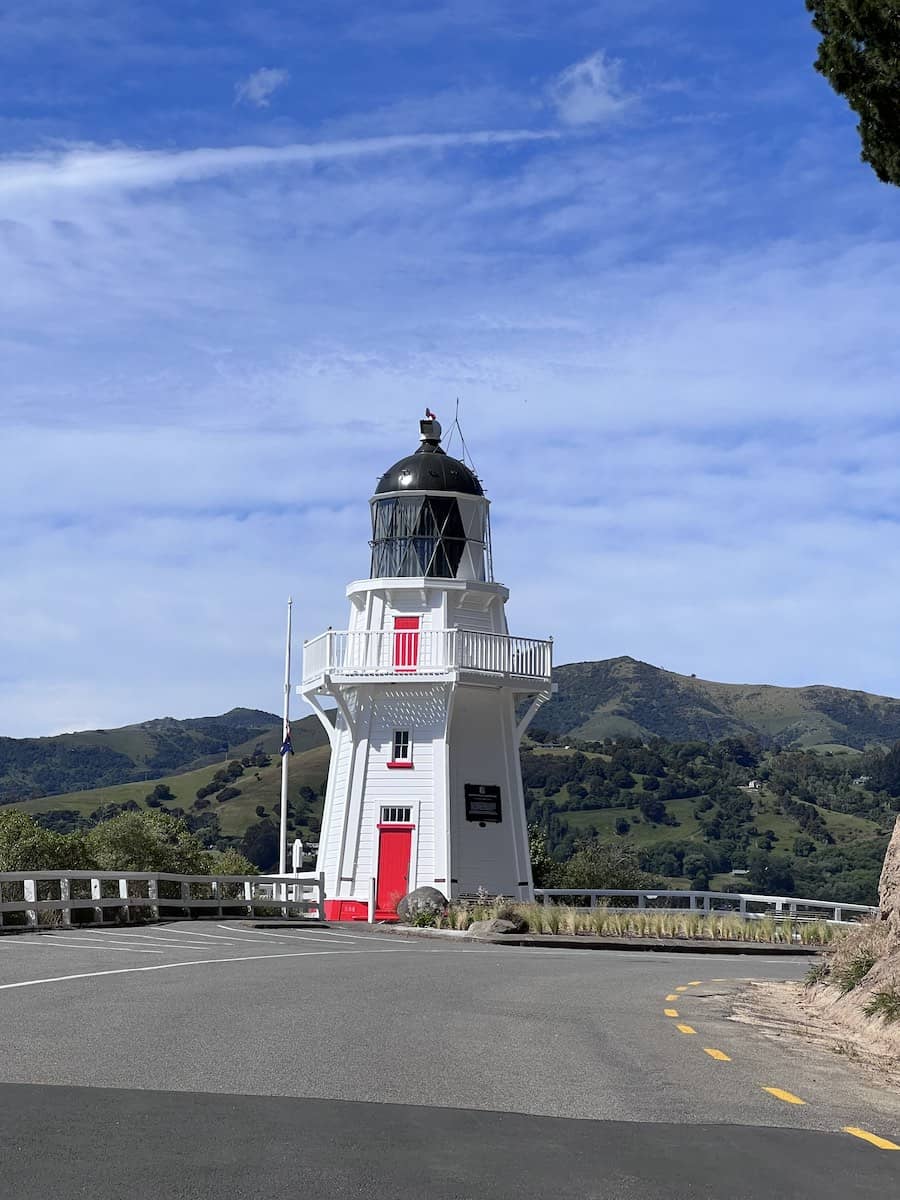
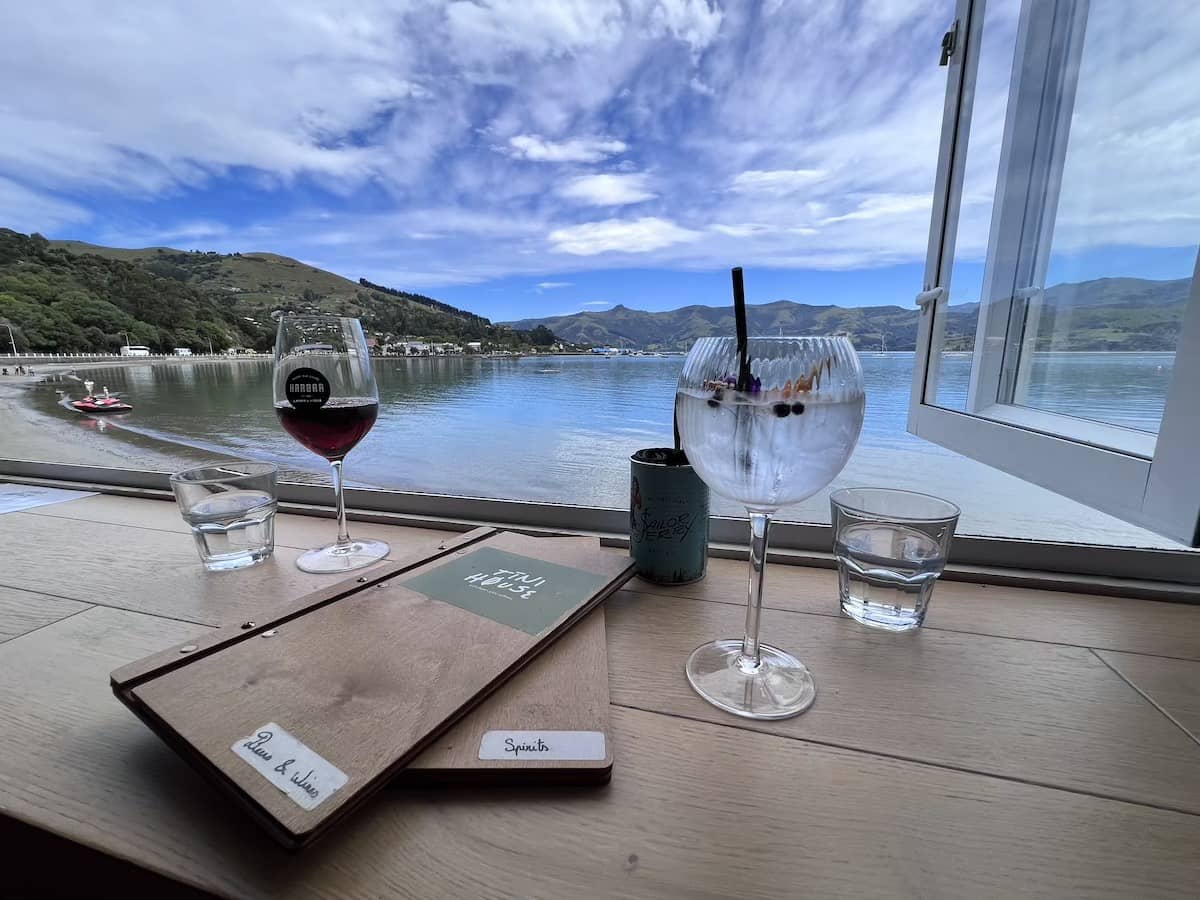
You can’t visit Christchurch without taking a day trip to Akaroa on the Banks Peninsula. If you had longer, I would suggest staying here a few days, it is truly paradise. Early French settlers left their mark on this little remote peninsula and it offers a tranquil and picturesque day trip as part of your New Zealand road trip.
Great activities in Akaroa include: Kayaking eco tours, boat cruises and stargazing tours.
Read more about some of the less-travelled destinations around New Zealand to learn more about Akaroa.

Day 3: Kaikoura Whale-watching + Hanmer Springs
The deep trenches around Kaikoura are ideal for whales and other sea life. Many bull sperm whales actually call Kaikoura home all-year-round, whereas the females migrate. This means that Kaikoura remains a wealth of siting opportunities year round. Humpback whales can be seen in June and July, and Orcas from December to March.
The boats used are large catamarans and it can get very rough out on the water. We visited on a grey day in early December and it was down to the wire whether we would actually be able to go out in the weather. Luckily, it cleared up enough to go, but the waves were rough. There were many people being sick, so be prepared with sea-sick medications if you are prone.
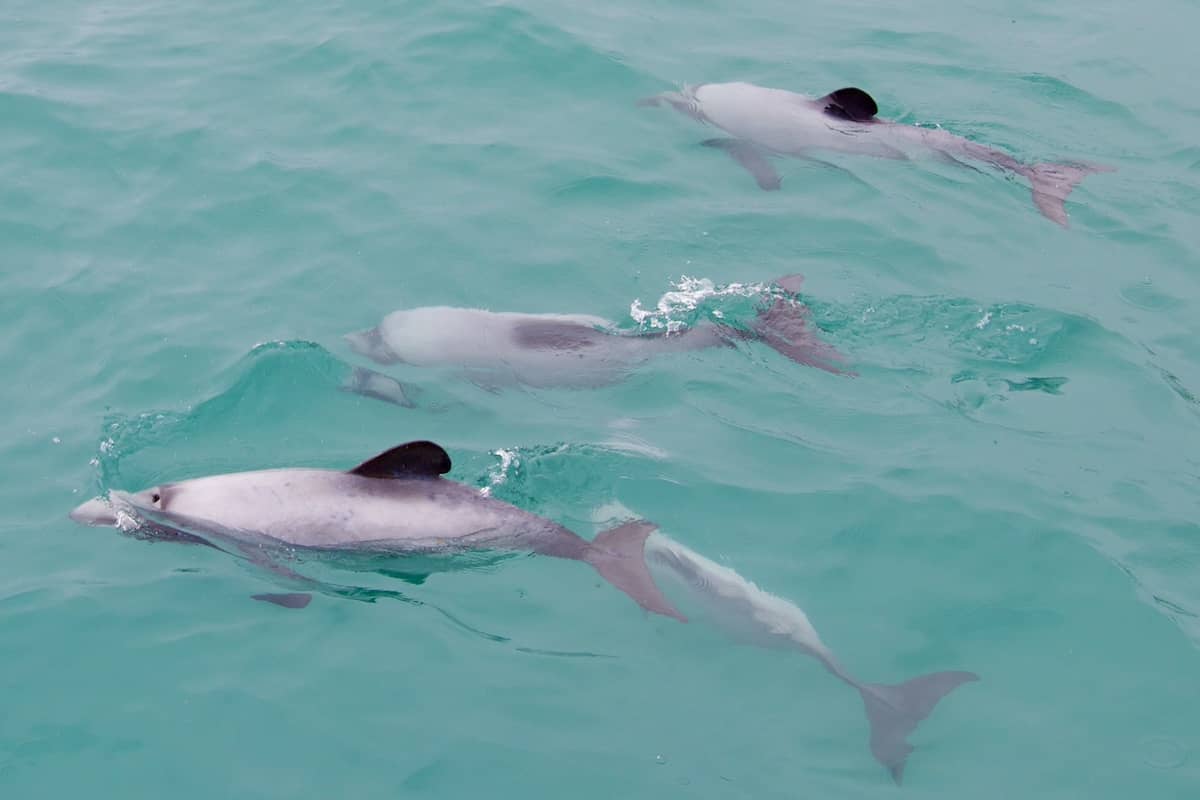
We saw Petrels, Albatrosses, New Zealand Fur Seals, ‘Holey Moley’ the Sperm Whale, Bottlenose Dolphins and Hectors Dolphins, all in one tour!
Up until we visited Kaikoura, we had VERY bad luck with whale watching. I had been on tours (in season) in many parts of the world, and had never seen a whale on one (although I had seen one off the coast of New Zealand as a child). I was starting to lose hope that we would ever seen one in the wild, but Kaikoura Whale Watch came through for us – yay!
Hotel recommendations for Hanmer Springs
Head to Hanmer Springs for the night after your whale-watching. Known for its natural hot springs and gorgeous alpine backdrops, choose a room with a view and enjoy a bottle of local Marlborough wine with mountain views.
For great views, try the Braemar Lodge & Spa. For a mountain chalet style motel, try the Chalet Motel.



As an added extra day if you can accommodate it, visit Renwick in the Marlborough area, a town packed with wineries and cellar doors. Try the Marlborough Sauvignon Blancs, Pinot Gris, and Pinot Noirs.
Day 4: Lewis Pass + Punakaiki + Hokitika
Leave the east coast and head over Lewis Pass to Punakaiki. I know that Arthur’s Pass is the more famous route, and I will give you an option for that below, but my recommendation is to see a little more further north on the West Coast. There will be lots of alpine landscapes in other parts of the alps. And you could also take the TranzAlpine train at the end of your trip to this area too.
Lewis Pass is one of the lower, faster passes over the Alps, and it will take about 3.5-4 hours from Hanmer Springs to Punakaiki. Stops along the pass include Maruia Falls, and some of the scenic views near the alpine lakes.
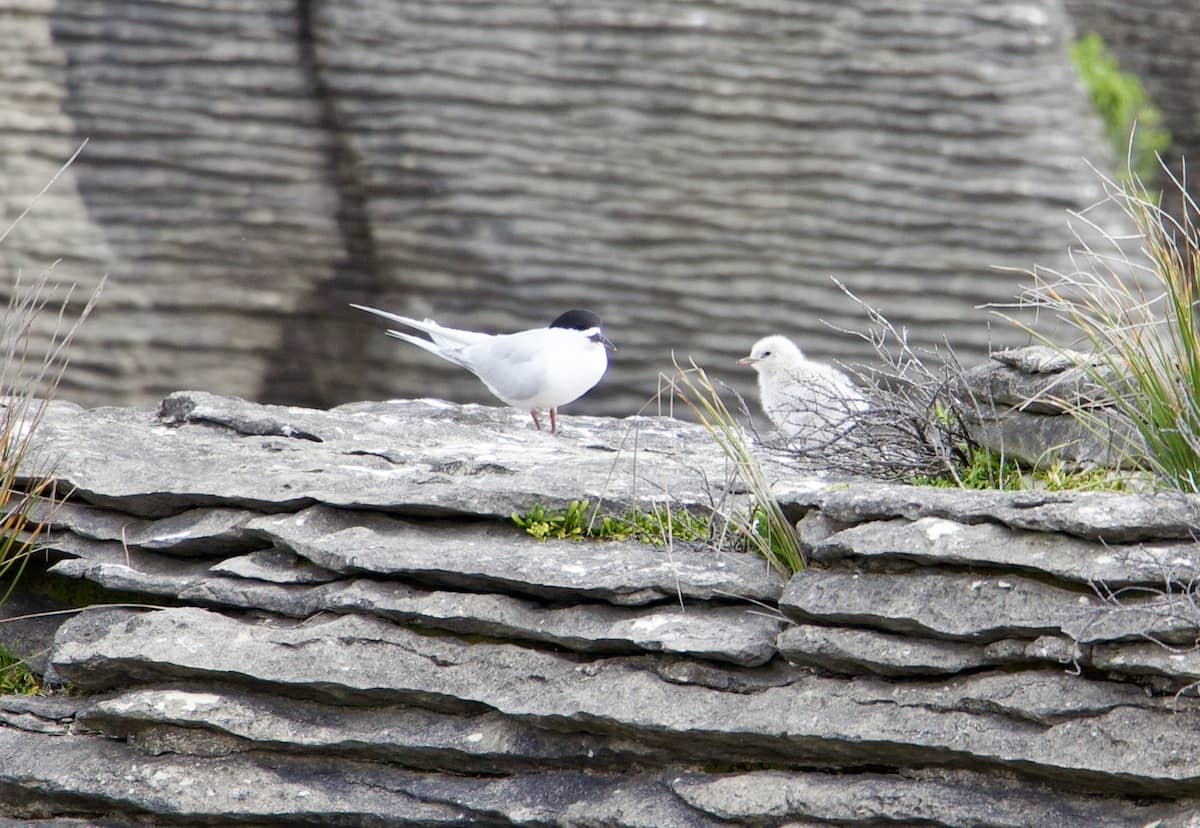
The Punakaiki Pancake Rocks and Blowholes Walk is an absolute treasure. You walk a free and well-sign-posted loop along the limestone formations resembling stacked pancakes, carved by erosion over millions of years. Not only are the rock formations amazing, but the birdlife is remarkable.
Terns and other seabirds nest here. We were lucky enough to visit during nesting season for the Terns. Little fluffy chicks and busy parents feeding their young made for great photos.
There are also powerful blowholes, where seawater bursts through natural vents, creating impressive spurts of water and crashing waves. We spent about 2 hours walking the trail and taking photos, although you can do it much faster if you need to.
Hotel recommendations for Hokitika
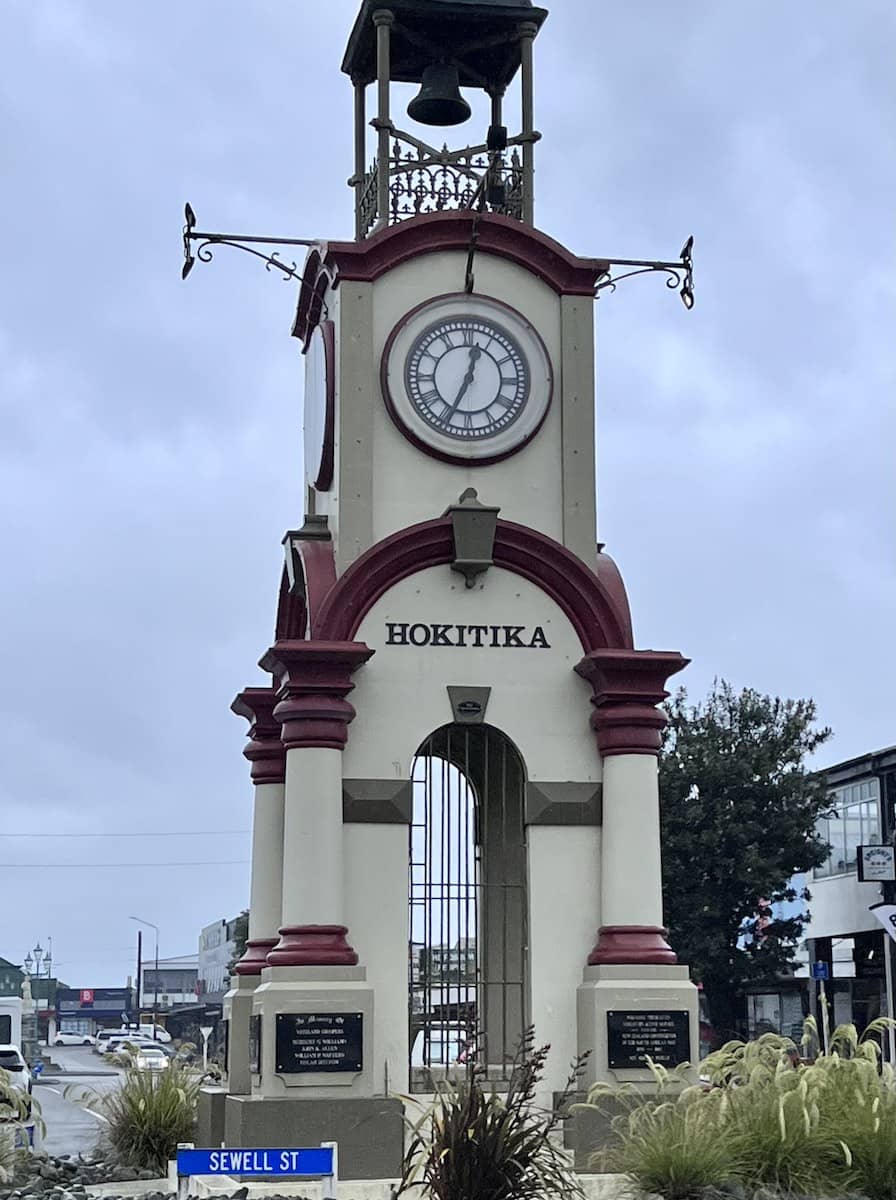
Head south to Hokitika for the night. This cute town has plenty of cafes for tourists, but it retains that typical small town charm that I love about rural New Zealand. We had fish and chips from Hokitika Townchip and it was excellent.
We stayed at the Heritage Highway Motel and enjoyed its proximity to town, and huge rooms.

Alternate route via Arthur’s Pass
If you really want to drive the famous Arthur’s Pass when you’re in New Zealand, which includes the Arthur’s Pass National Park, the quaint Arthur’s Pass Village, Devil’s Punchbowl Waterfall, Otira Gorge Lookout, and many opportunities for Kea (an alpine parrot) sightings, then here is my suggestion:
Stay at Hanmer Springs after Kaikoura, but instead of visiting Punakaiki Rocks, take the road via Oxford to Arthur’s Pass, and go straight to Hokitika. This will take a minimum of 6 hours, and is 100kms longer than the Lewis Pass route. With all the stops, views and hikes along the way, expect to spend all day on the road.
The choice is yours, but it depends on your priorities, capacity for long (winding) drives and sightseeing preferences.
Day 5: Fox / Franz Josef Glacier + Haast Pass + Lake Hāwea
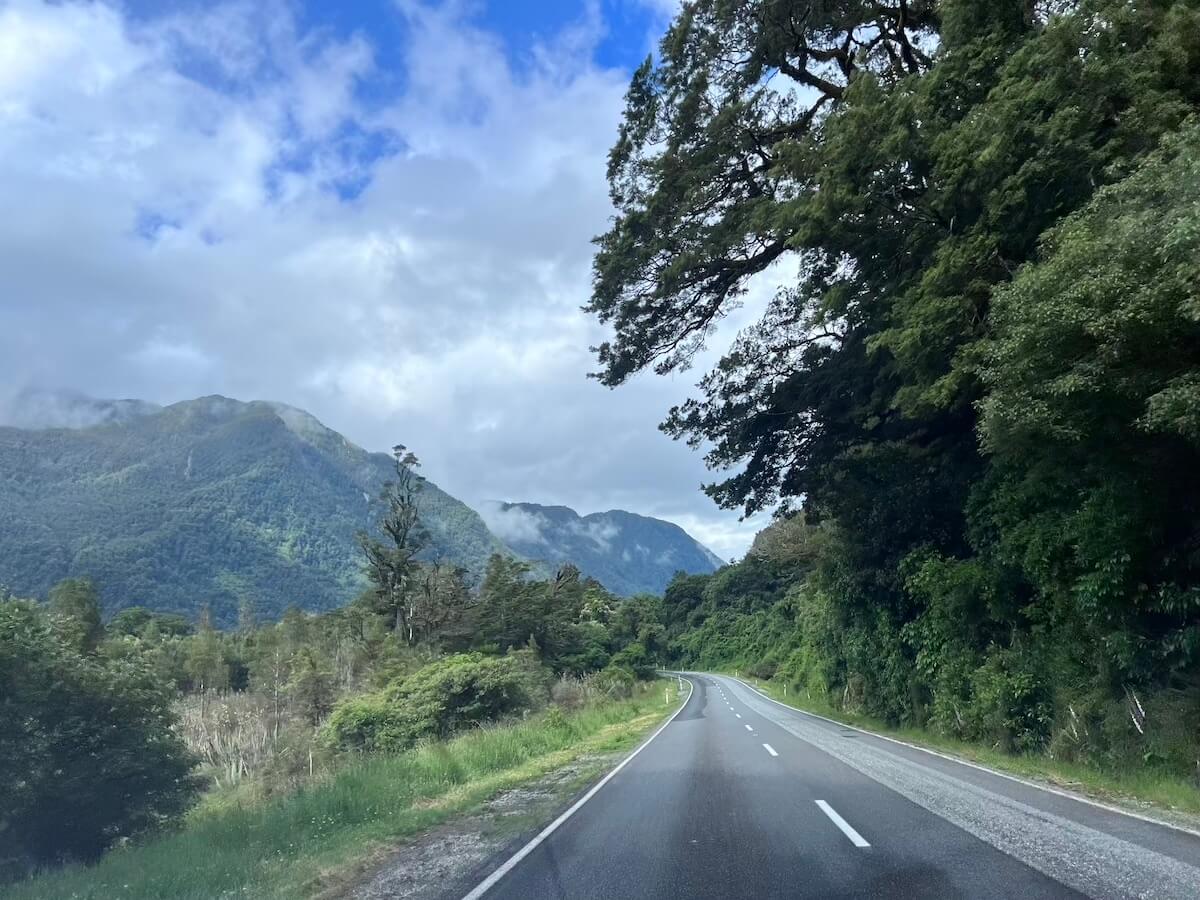
Prepare yourself for a long day today! It’s about 5.5 hours drive with no stops… although you will want to make stops.
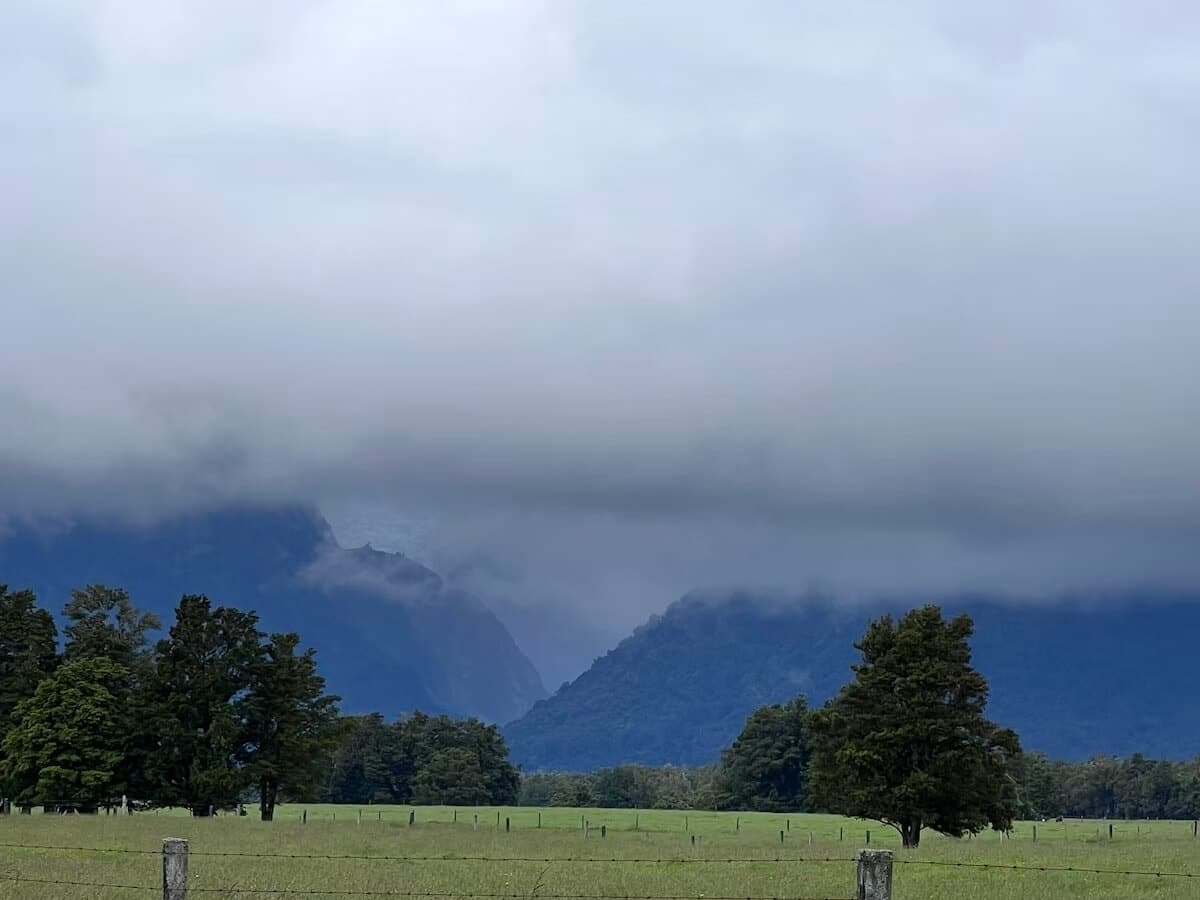
The weather on the West Coast of New Zealand is very wet and grey. This means that the forests are lush, the beaches have Nikau Palms on them, and it feels like a rainforest. Punctuated by views up of the Southern Alps, and the two glaciers Fox and Franz Josef, it is a stunning part of the world… IF you can see it.
The Glaciers
Heading south from Hokitika, you’ll reach the Franz Josef Glacier and hiking area first (Franz Josef Glacier Walk). Drive about 4kms off the highway and the 30 minute walk will get you as close as you can get without a helicopter ride. With the rapidly receding glaciers, you can’t always see much. If glaciers are your thing, and the weather is good, take a helicopter ride!
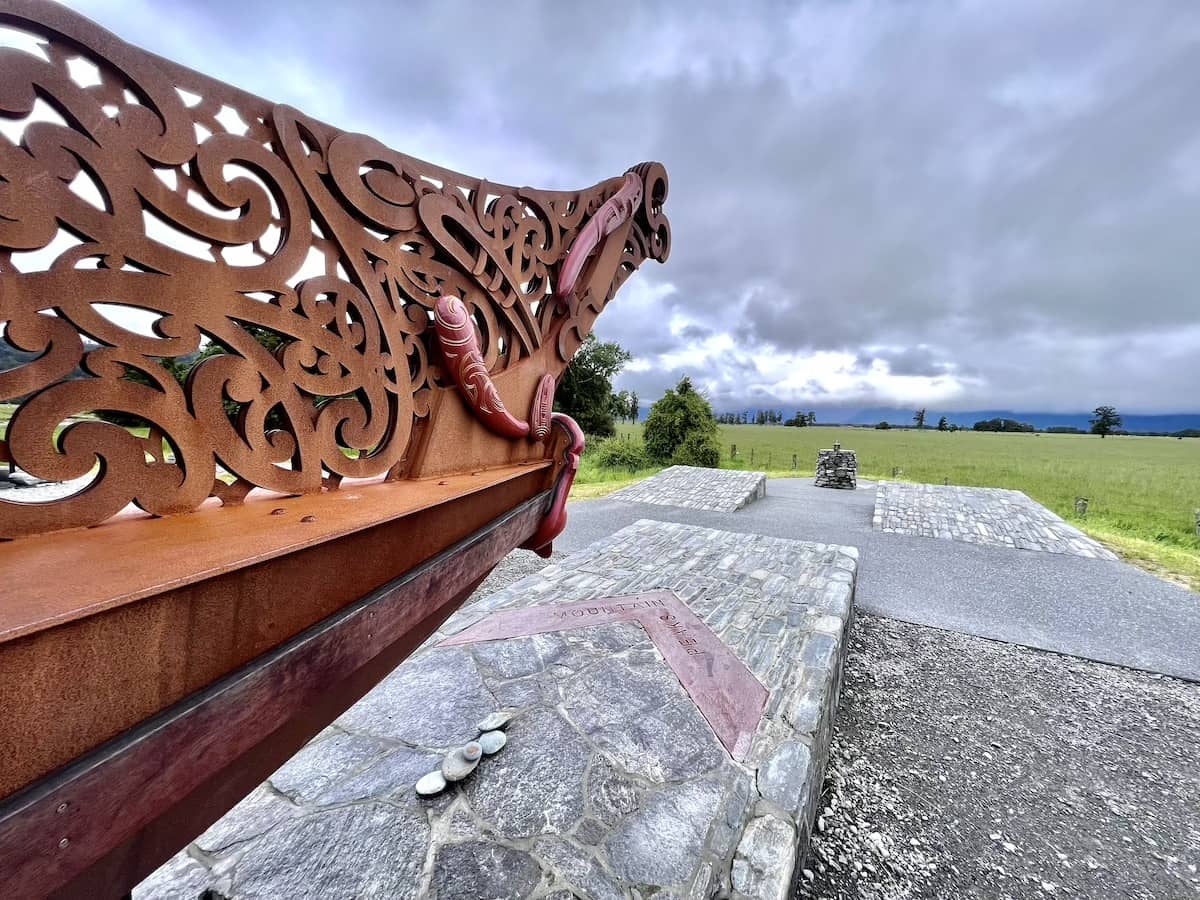
The Fox Glacier Viewpoint / Te Kopikopiko O Te Waka, is a different way to see a glacier. It’s not near the ice formations, but instead out in open valley land on the way to Lake Matheson. With a waka (canoe) sculpture pointing towards the glacier, and native bush nearby to attract birdlife, it is a beautiful spot to go glacier spotting.
We glimpsed Fox Glacier through the clouds, but didn’t get a good view – but that was up to the weather gods, and we enjoyed ourselves anyway! You can do a helicopter tour and hike at Fox Glacier too.
Haast Pass
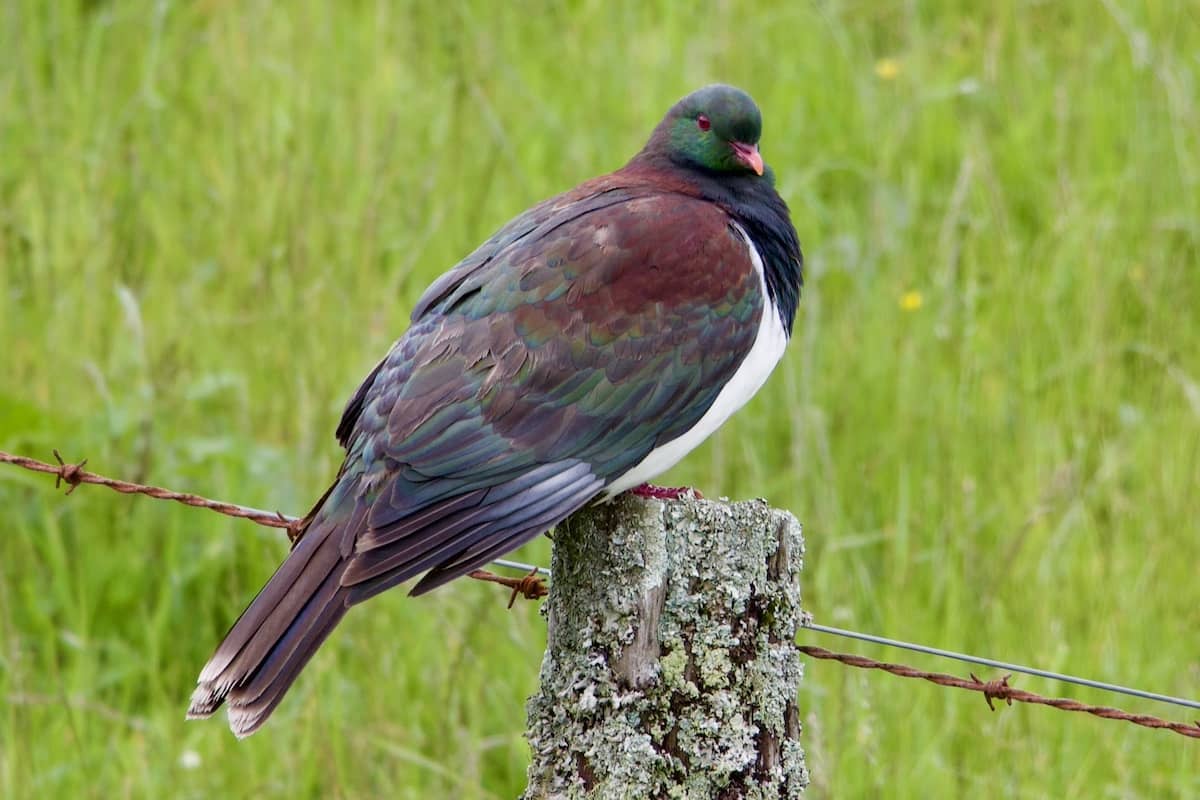
You will then wind your way over Haast Pass (about 2.5 hours from the Fox Glacier Viewpoint). Stops include the Roaring Billy Falls and the Haast River View Point. As you head further inland you will pass Mount Brewster and the Blue Pools. The bridge to the pools was closed when we visited, but if you’re up for a river-crossing and short hike, you can see these beautiful river-pools.
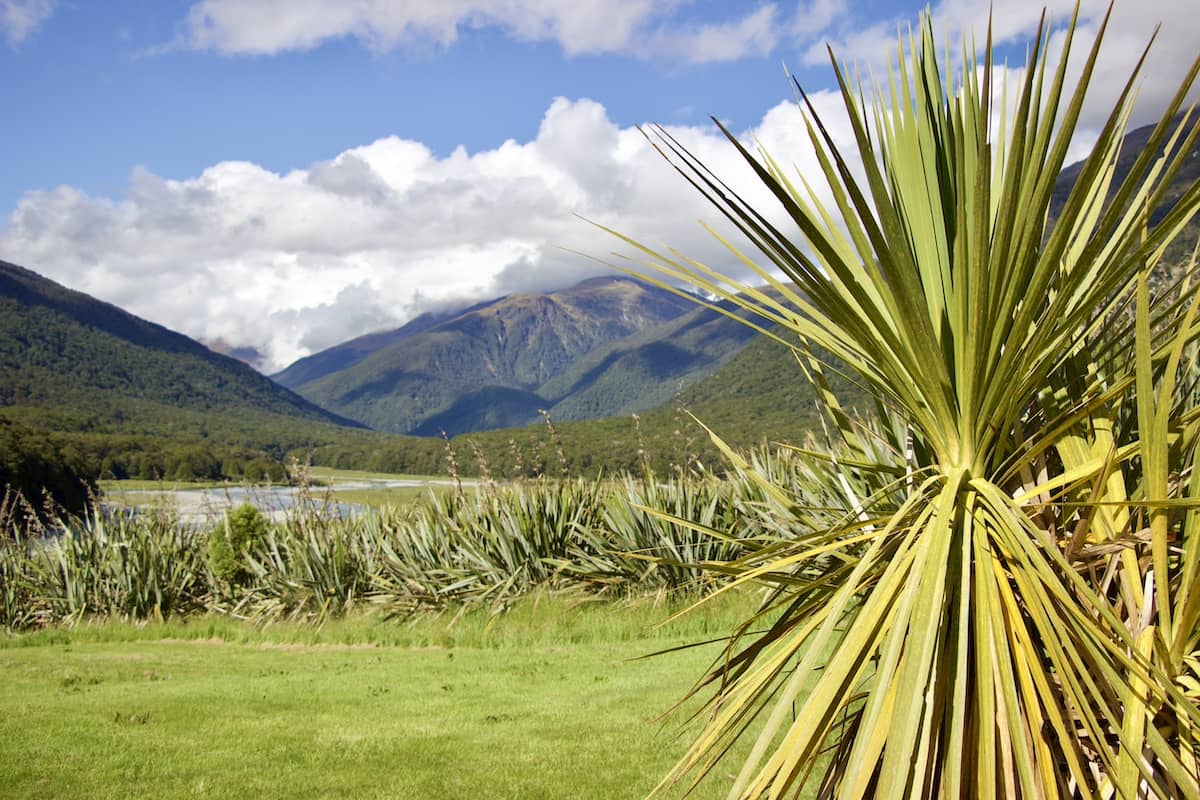
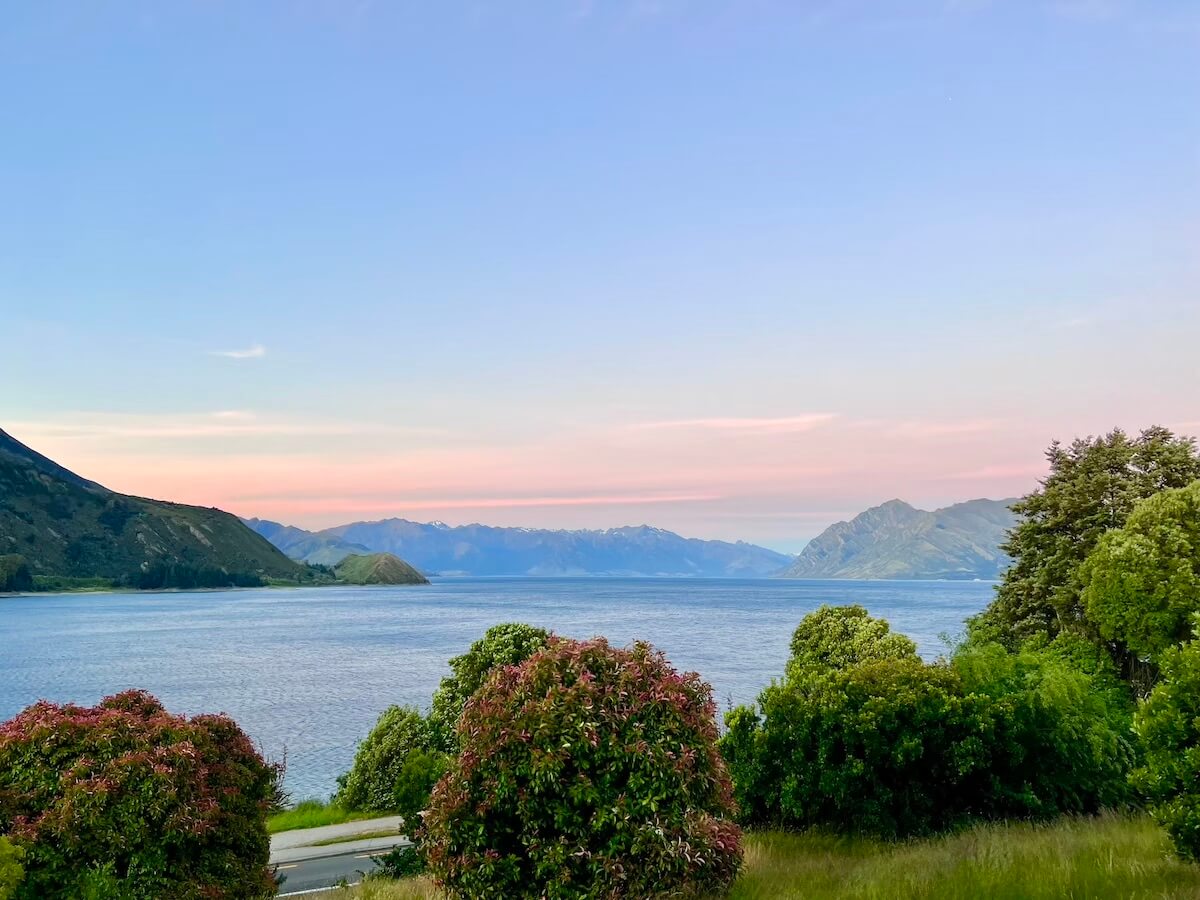
Another hour from Haast Pass will bring you along the tip of Lake Wānaka and then onto Lake Hāwea. These views are stunning, and luckily there are pullouts to take photos of these vibrant blue lakes.
Hotel recommendations for Lake Hāwea
We stayed at the Hawea Hotel, with incredible views of the lake and onsite restaurant and bar. Splurge on the lake view room with balcony, you won’t regret it!

Day 6: Lake Wānaka + Arrowtown + Queenstown
After a long drive yesterday, you’ll be pleased that today is a short journey (only 85kms), but with some wonderful stops.
After enjoying dusk over Lake Hāwea, why not enjoy sunrise over Lake Wānaka, at the famous Wanaka Tree. This tree grows in the water offshore, a short walk/drive from Wanaka township (drive past the shoreline shops and it’s accessible from the carpark on the right). It is probably one of the most photographed trees in the world. It’s THAT Wanaka Tree.
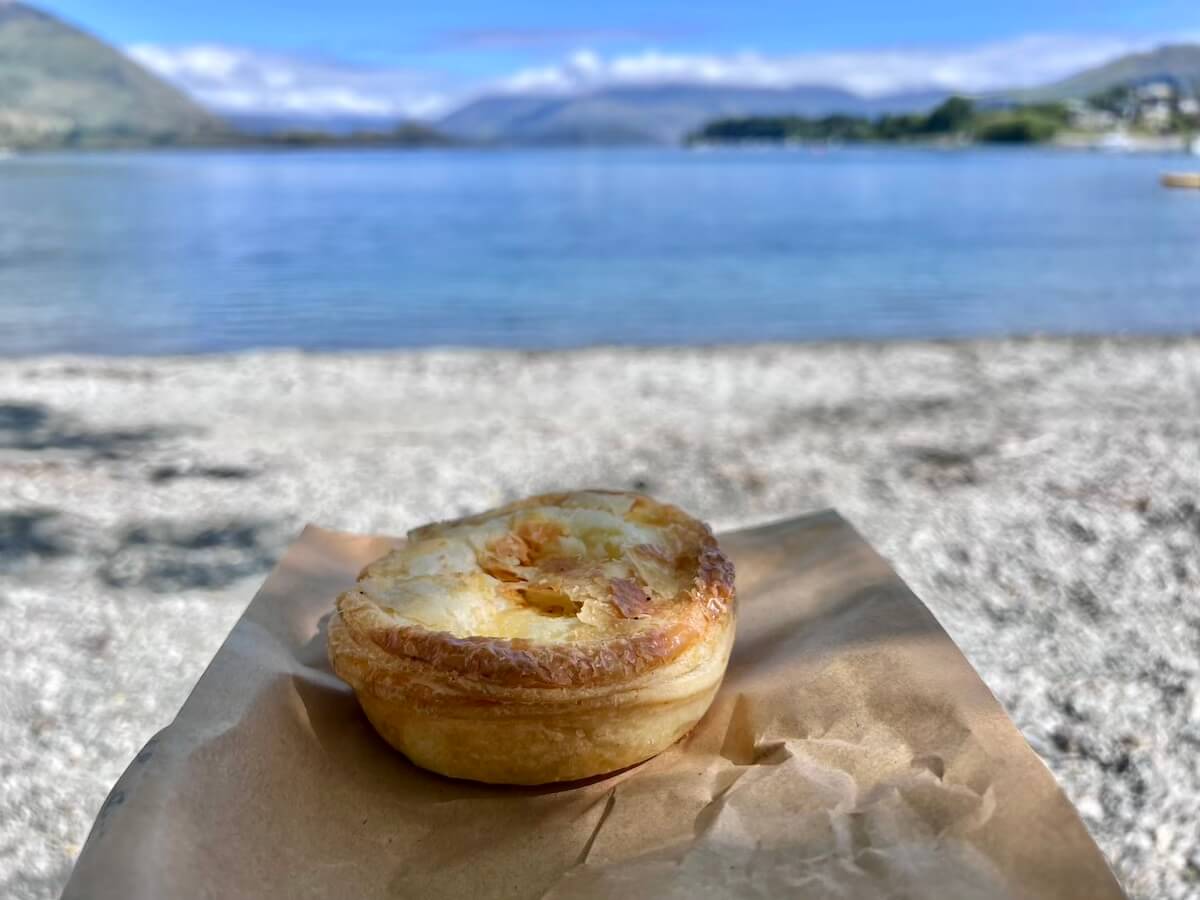
We rose before dusk and went to catch the sunrise, but cloud cover stopped us having anything spectacular. It was still a gentle and beautiful way to start the day. We grabbed a coffee and bacon & egg pie for breakfast on the shore of Lake Wānaka afterwards and it was perfection.
We returned to our hotel at Lake Hāwea to freshen up before driving out via the cute ski village of Cardrona and over the immense Crown Range Summit. The views over this pass, the highest paved road in New Zealand, are incredible. Take in the yellow hues of the tussock grass, and views down to Queenstown.
Your next stop is the historic town of Arrowtown. This old mining town was once a boom-town of the Euro-pioneer age in NZ. The wealth is obvious in the shops, banks and homes in this area. It has been preserved and is now a tourist destination, thriving with shops, restaurants and gorgeous 19th-century gold-rush buildings. There is also a restored 1880s Chinese village, where you can learn about the gold-mine workers who lived here.
Onwards to Queenstown, the adventure sports capital of New Zealand (some say the world). There’s much to discover for non-adrenalin-junkies too. For us, we enjoyed the beautiful landscapes, lakefront serenity, and many dining options.
Hotel recommendations for Queenstown
We stayed at the Alexis Motel, which is up on the hill to the east of downtown, offering great views and parking. For something downtown and on the waterfront, try the Crowne Plaza or Rydges Lakeland Resort.
Queenstown has more accommodation options than homes (sadly), although this does mean many options for visitors! Being the tourist hub it is, expect to pay a bit more than average for lodging here.

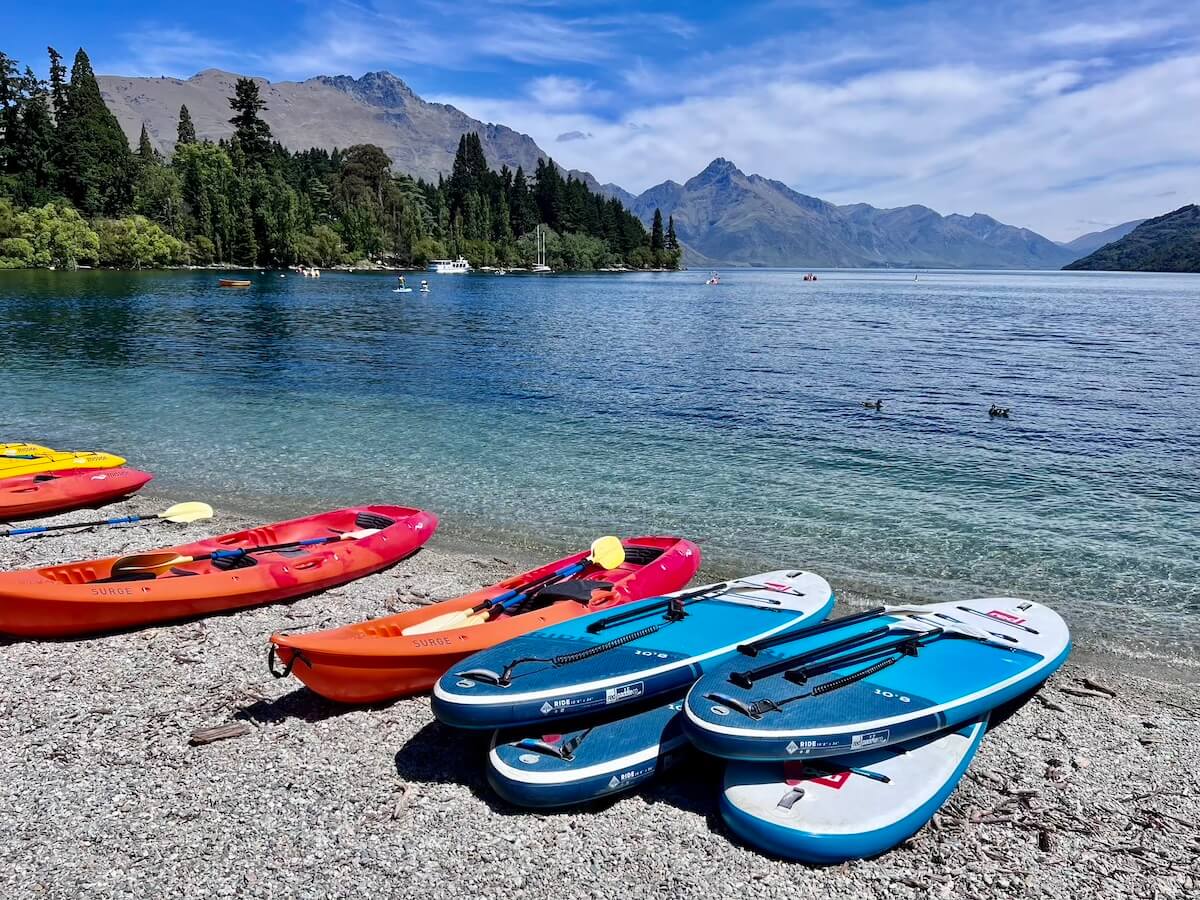


Day 7: Glenorchy + Lake Whakatipu + Queenstown
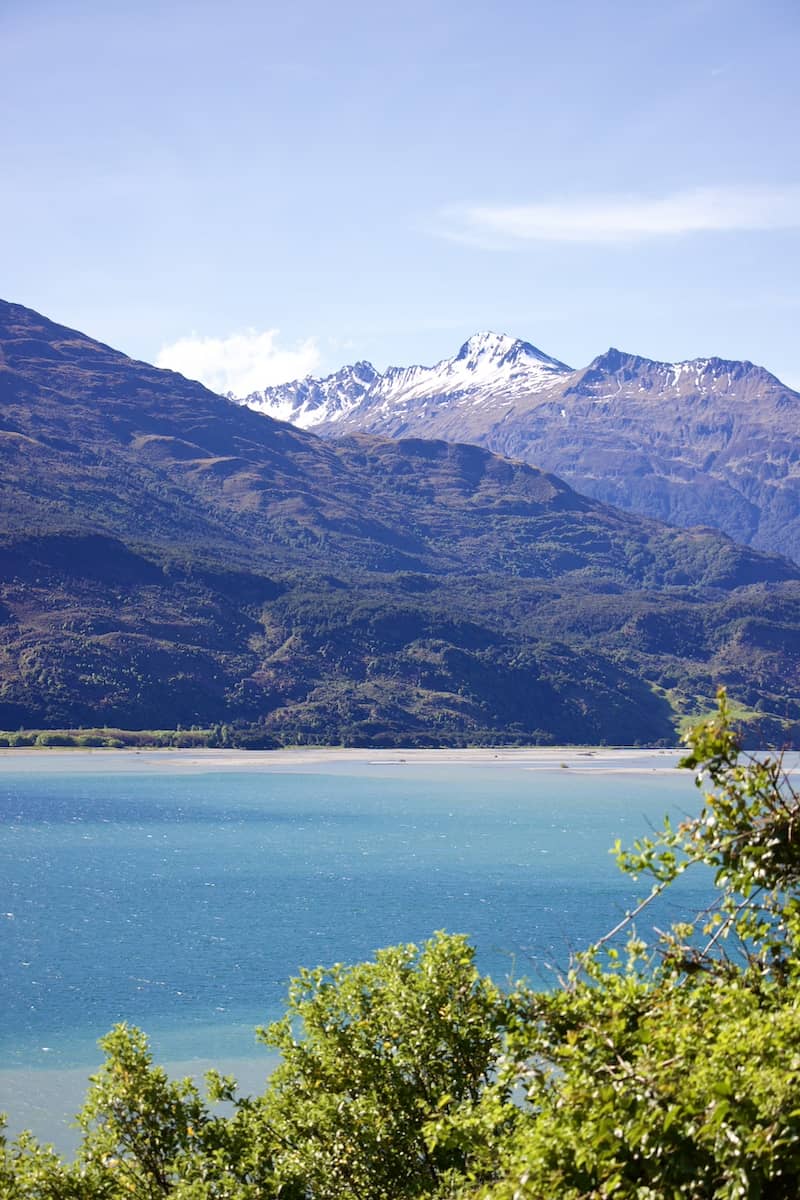
In the shadow of The Remarkables mountains, Queenstown is a hub in both summer and winter. Wrapped around Lake Whakatipu, Queenstown has a ski-town kind of vibe, with hotels and hostels outnumbering domestic dwellings, and bars aimed at the young and energetic a-plenty.
But as we walked from our hotel (Alexis) down the hill and around the sleepy waterfront, we were struck by how, especially in the shoulder seasons, it is quite lovely even for us crowd-haters.
Glenorchy
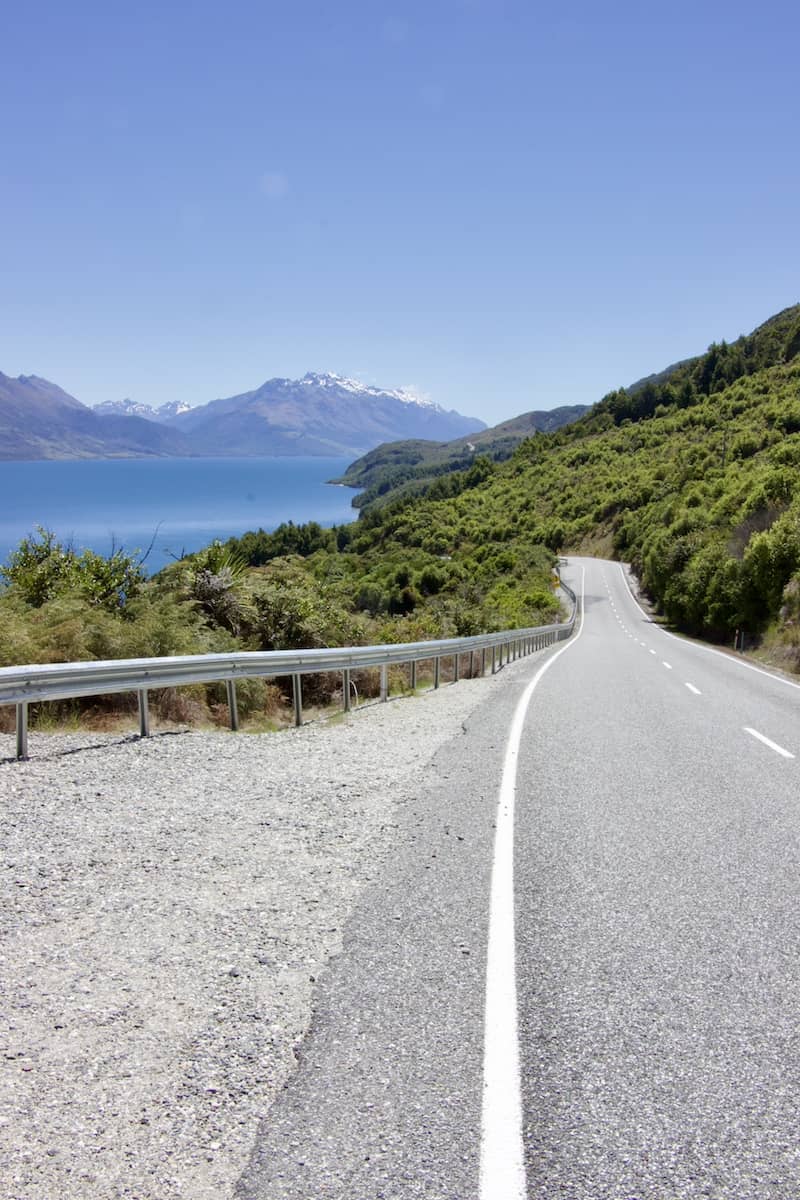
A drive out to Tāhuna Glenorchy is an absolute must-do when visiting Queenstown. This scenic drive up the northern arm of Lake Whatatipu is exceptionally beautiful, and rivalled any views and scenic drives we have driven in the Southern Hemisphere. After the 45km drive, enjoy the picturesque township of Glenorchy, including the Glenorchy Restored Steamship Depot (the famed red shed), the lagoon walkway and marina.
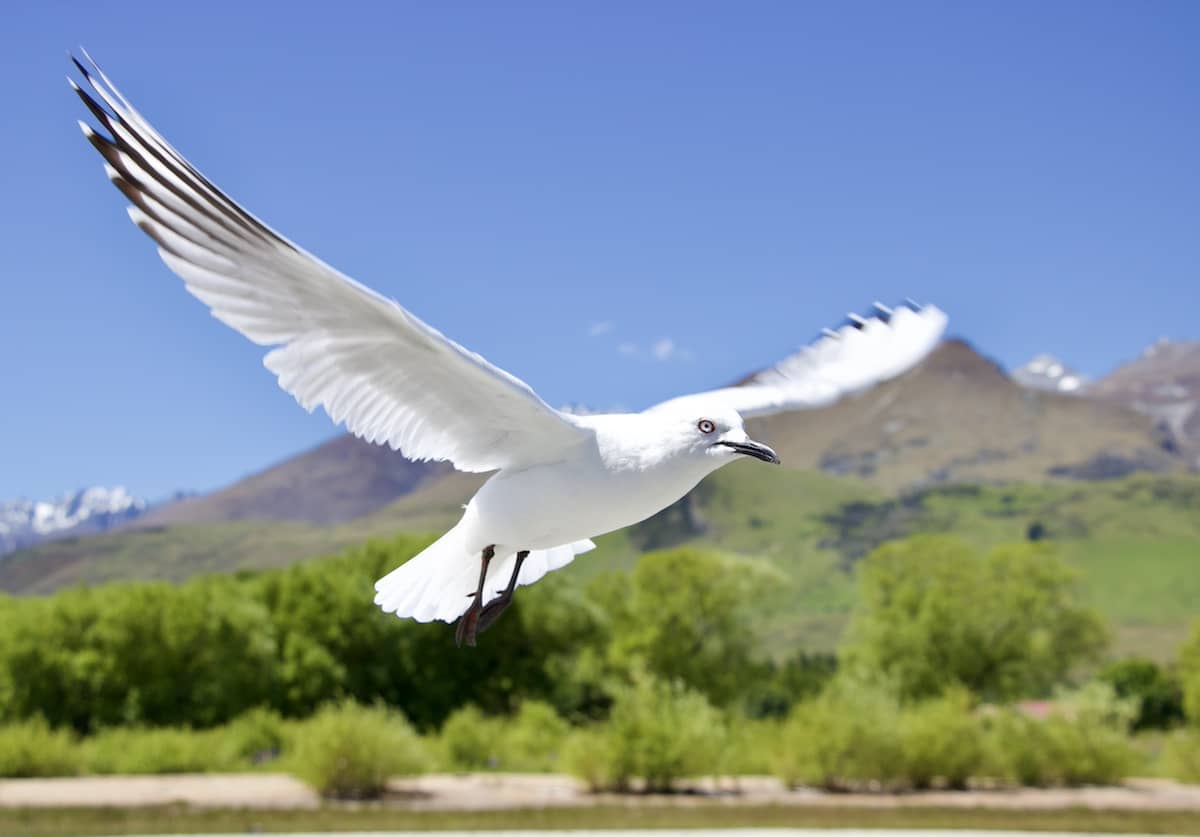
Have a picnic for lunch in Glenorchy – but beware the enthusiastic gulls!
If you have time to stay overnight in Tāhuna Glenorchy, I would recommend it. This area has just become a dark sky sanctuary, where you can enjoy incredible dark skies in a remote and stunning location!
Lake Whakatipu
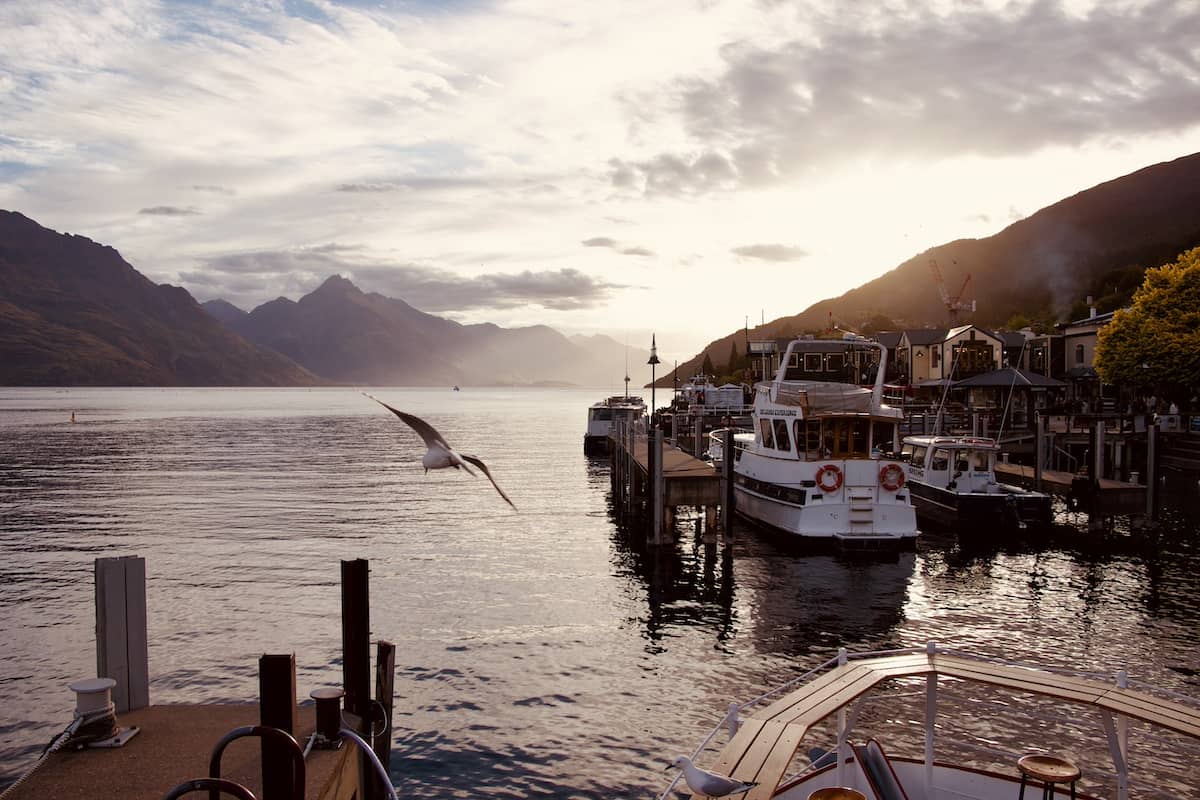
Taking a boat tour across Lake Whakatipu on the historic TSS Earnslaw, a 1912 Edwardian coal-powered steam ship, is an excellent way to spend the afternoon. Leaving from downtown Queenstown, the TSS Earnslaw is one of the oldest tourist attractions in New Zealand. Seeing the coal loaded was amazing, and seeing the engine room work is very cool.
You can either take a return trip without getting off, or get off at Walter Peak Farm.
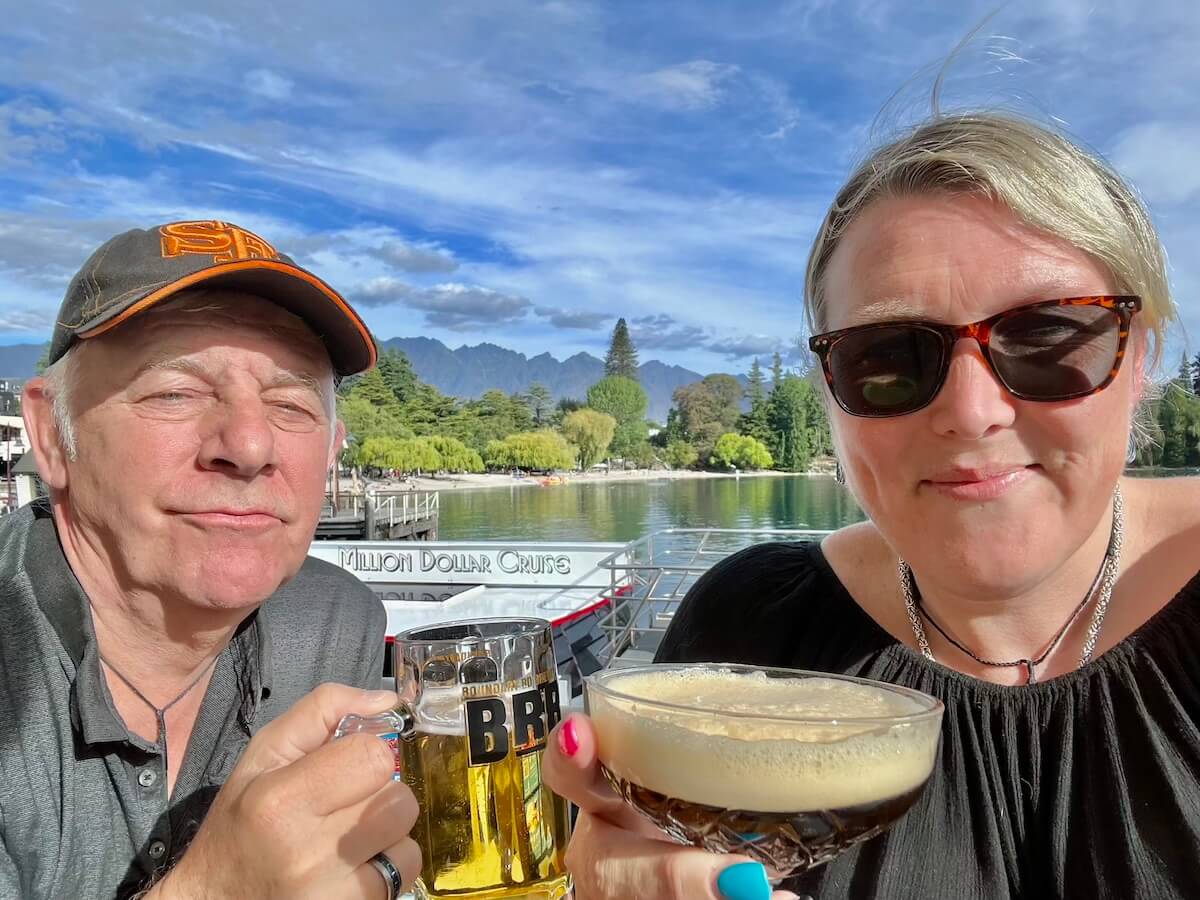
End your day exploring Queenstown and enjoying one of the many restaurant options. Our pick of the trip was Perky’s Floating Bar – a boat bar on the lake, with gorgeous terrace views and BYO food (discounts from nearby takeaways).
Tourist sights to consider in Queenstown:
- Skyline Queenstown Gondola
- Shotover Jet
- Various bungy jumps from AJ Hackett
- Skydiving
- Water sports on Lake Whakatipu
- Kawarau Gorge Suspension Bridge
- Ithilien Lookout (for LOTR fans, where Sam and Frodo saw the Oliphaunts) & other filming locations


Day 8: Drive to Te Anau / Manapouri
The only goal of today is to get to your next accomodations, so you have time to spend the morning in Queenstown if you wish.
Your destination will depend on whether you have chosen to do a Milford Sound or Doubtful Sound tour. I’d recommend Manapouri for Doubtful Sound, and Te Anau for Milford.
Rest and recuperate after a busy few days, because tomorrow will be a long day and a winding drive!
Hotel recommendations for Te Anau
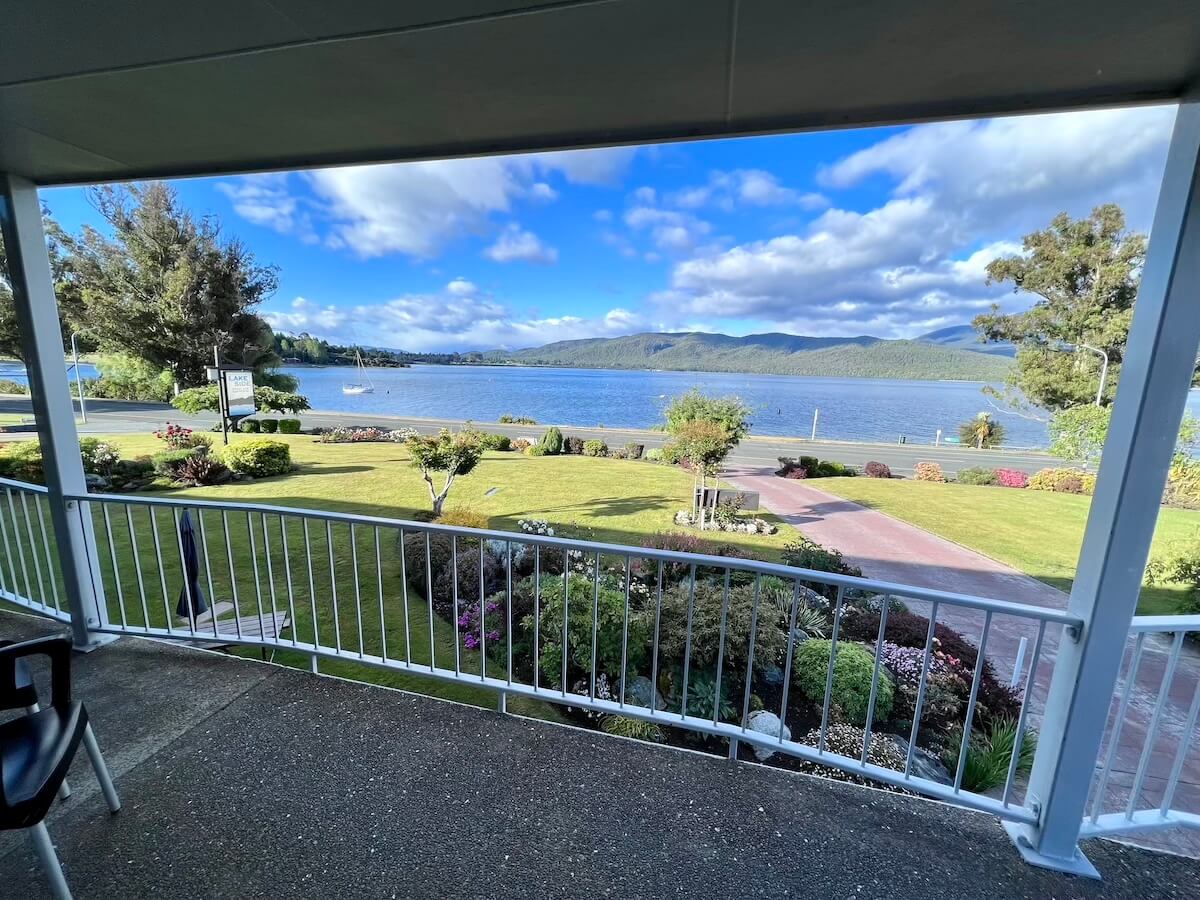
We stayed at the Lakeside Motel & Apartments which was a comfortable and convenient option for our stay. Lakefront Lodge was slightly closer to town, but booked during our dates.
Day 9: Milford or Doubtful Sound day trip
We chose to do the Milford Sound drive and day cruise. As much as I would’ve loved to do a Milford Sound or Doubtful Sound overnight trip, we personally couldn’t justify the cost. But, if it is within your budget to do so, I have heard nothing but amazing things. We chose a Milford Sound day cruise, which takes between 2-3 hours. It is a great way to get a taste of the place, and is do-able in a day trip from Te Anau.
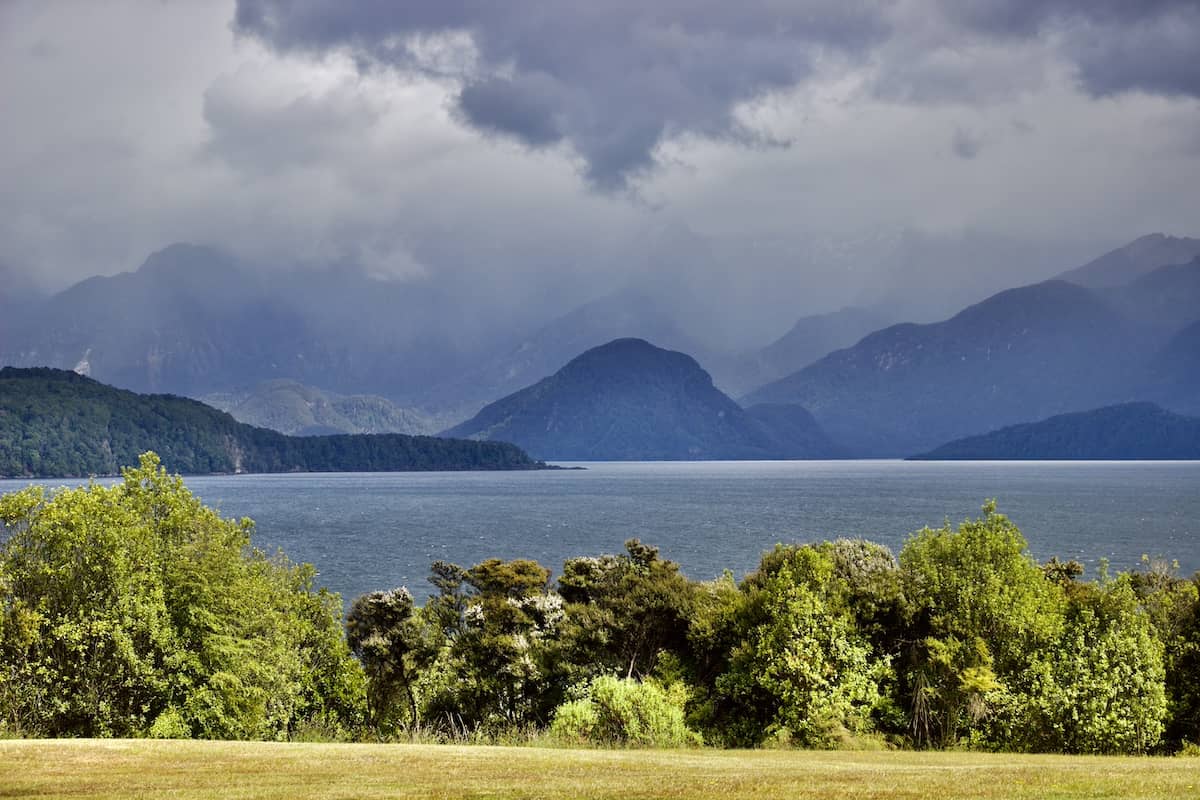
The drive from Te Anau to Milford Sound is long and winding and just so beautiful. Give yourself lots of time to enjoy the drive, as it is filled with lupin fields, mountain views and impossible tunnels and roads. We gave ourselves 3 hours to drive the 1.5 hour (120kms) drive. This allowed us time to stop for photos many times, and to find parking and get a coffee before our cruise.
We couldn’t have had a better day for our exploration through these fiords. It rained in the morning, which meant all of the Milford Sound waterfalls were out and running, but it was sunny for our tour – perfection!
We chose a mid-week 1pm cruise in early December, which was mostly empty and offered us great seating and views without fighting for them. We saw penguins, fur seals and dolphins. The 60+ strong pod of Bottlenose Dolphins resident in Milford Sound is rallied by matriarch, Snowflake, and they love to play in the wake of the boats. We returned to our car at about 3:30pm and were back in Te Anau at about 5:30pm.
The tranquility of the fiords, the steep and dramatic cliffs and waterfalls, and prolific wildlife made this one of the most memorable things we did in New Zealand.
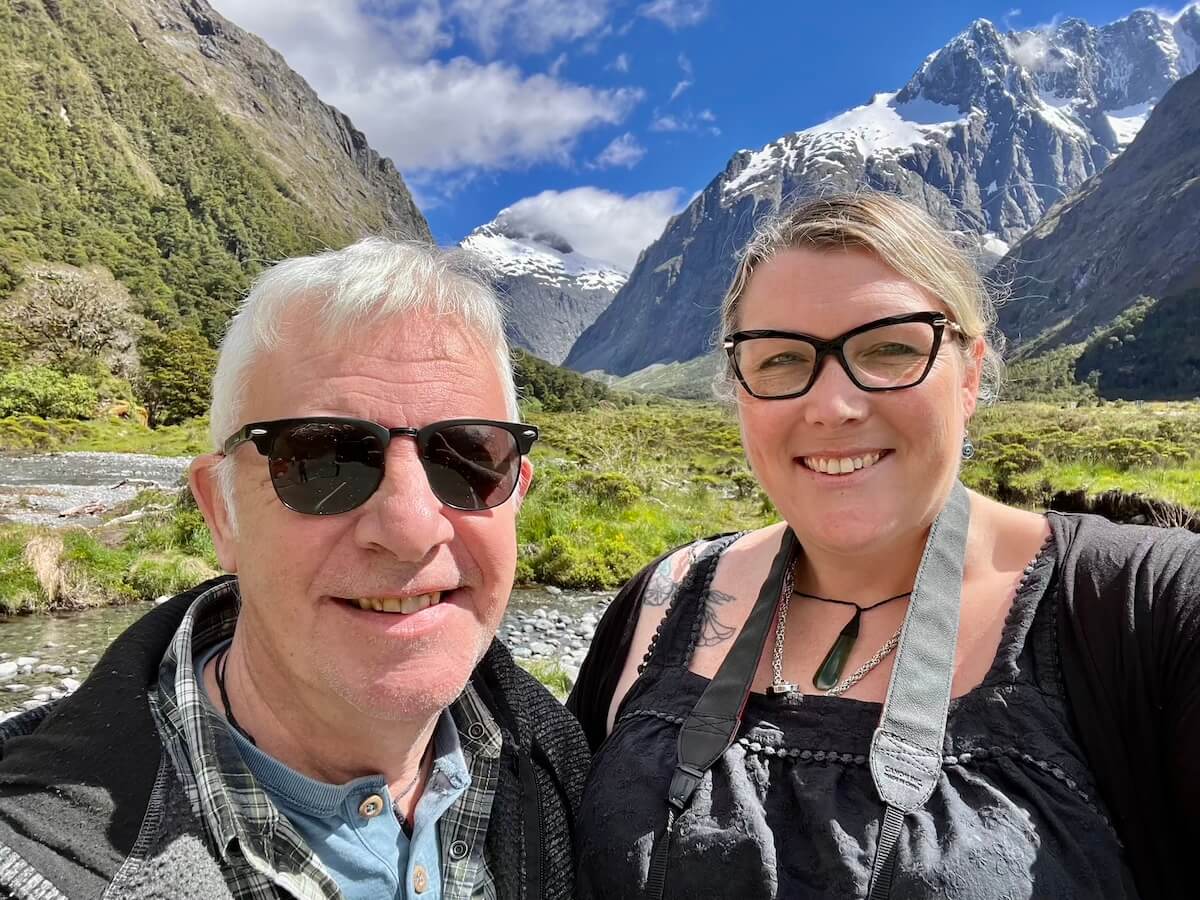
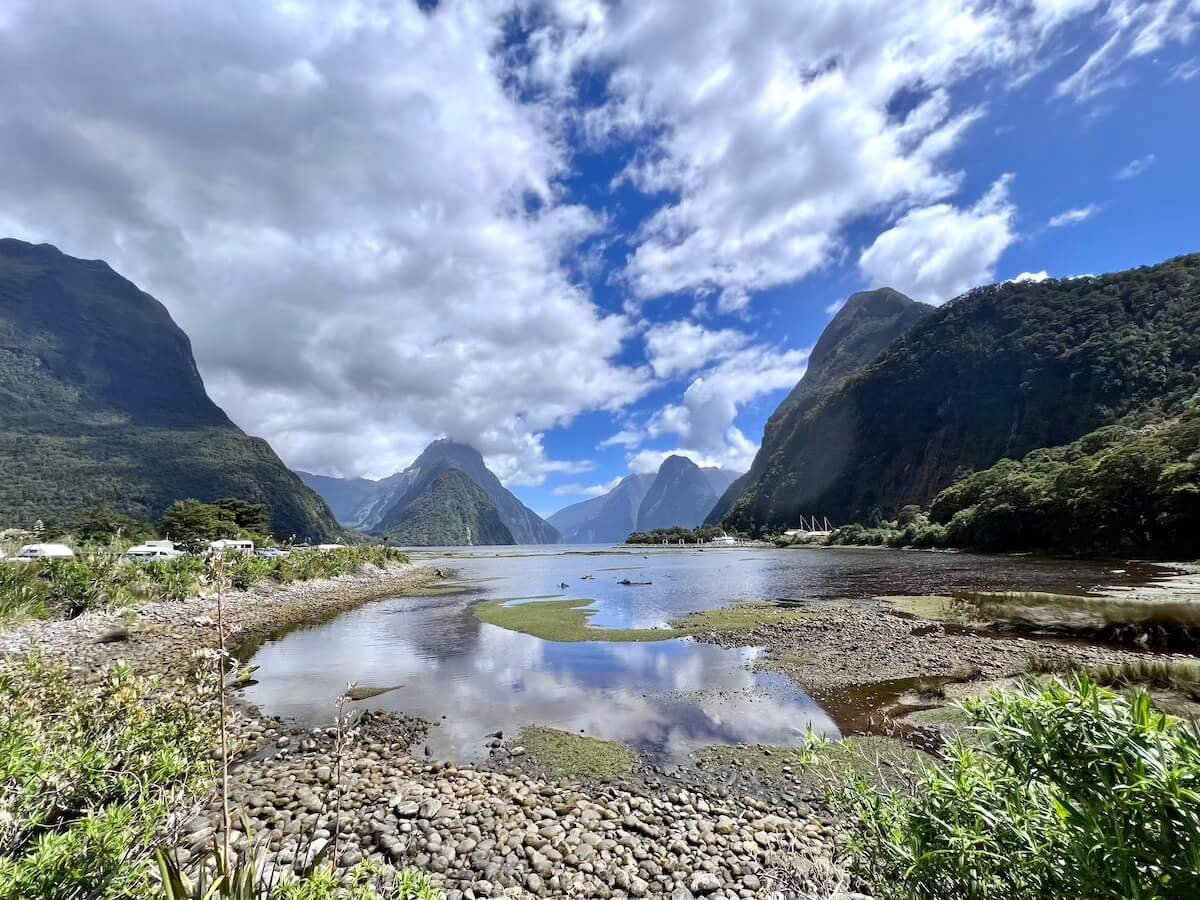


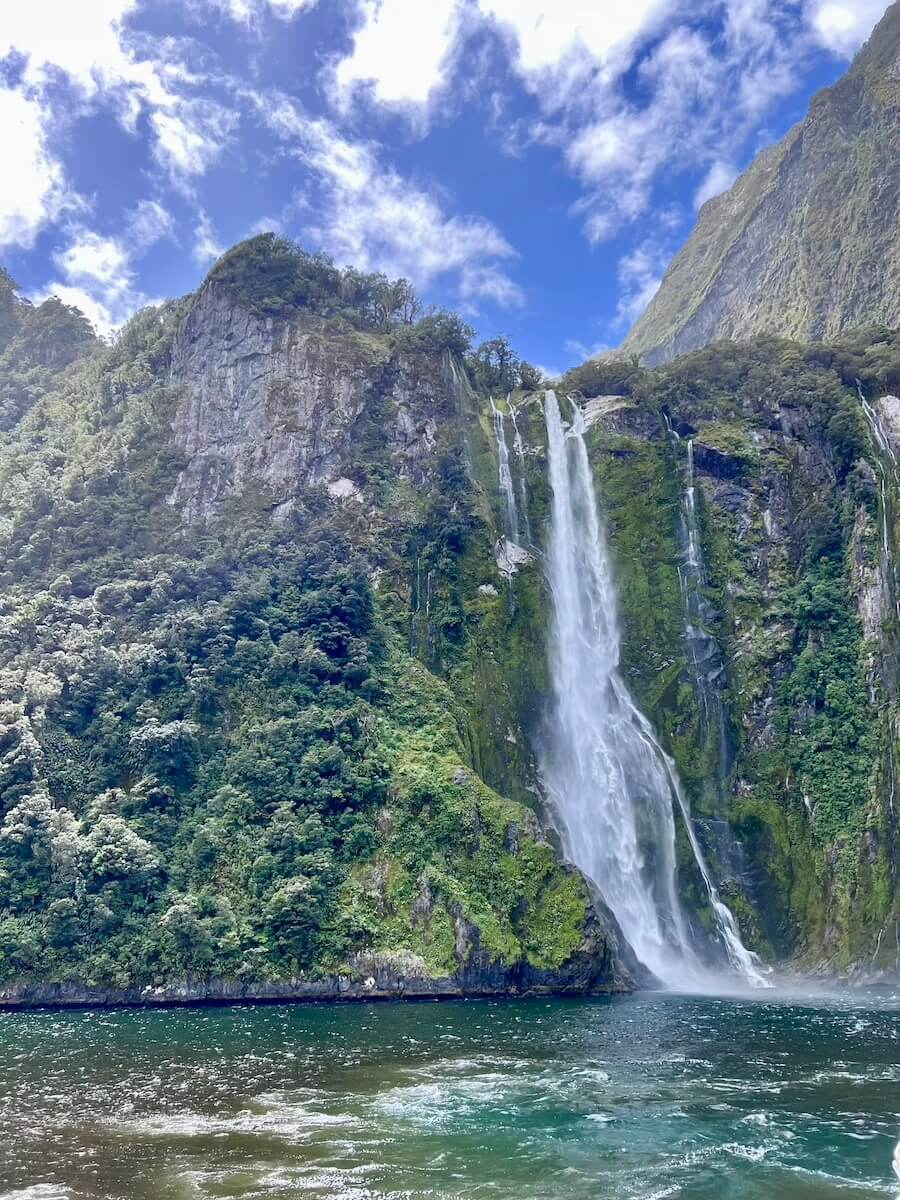

ADDED EXTRA: If you have extra time, head south to Stewart Island / Rakiura in between Fiordland and Dunedin. A trip down to the island off the south coast of the South Island is a great addition to your New Zealand road trip.
Day 10: Drive to Dunedin
You will now take the 94 highway across Southland towards Dunedin. This 290km is through farming country and towns like Mossburn, Lumsden, Gore and Balclutha. It is a different landscape from the one you’ve just left, flat plains and straight roads. Stop by a local dairy and get yourself some Kiwi treats for the road trip, my favourites are peanut slabs (chocolate bar), spicy tomato Munchos and Fruju popsicles!
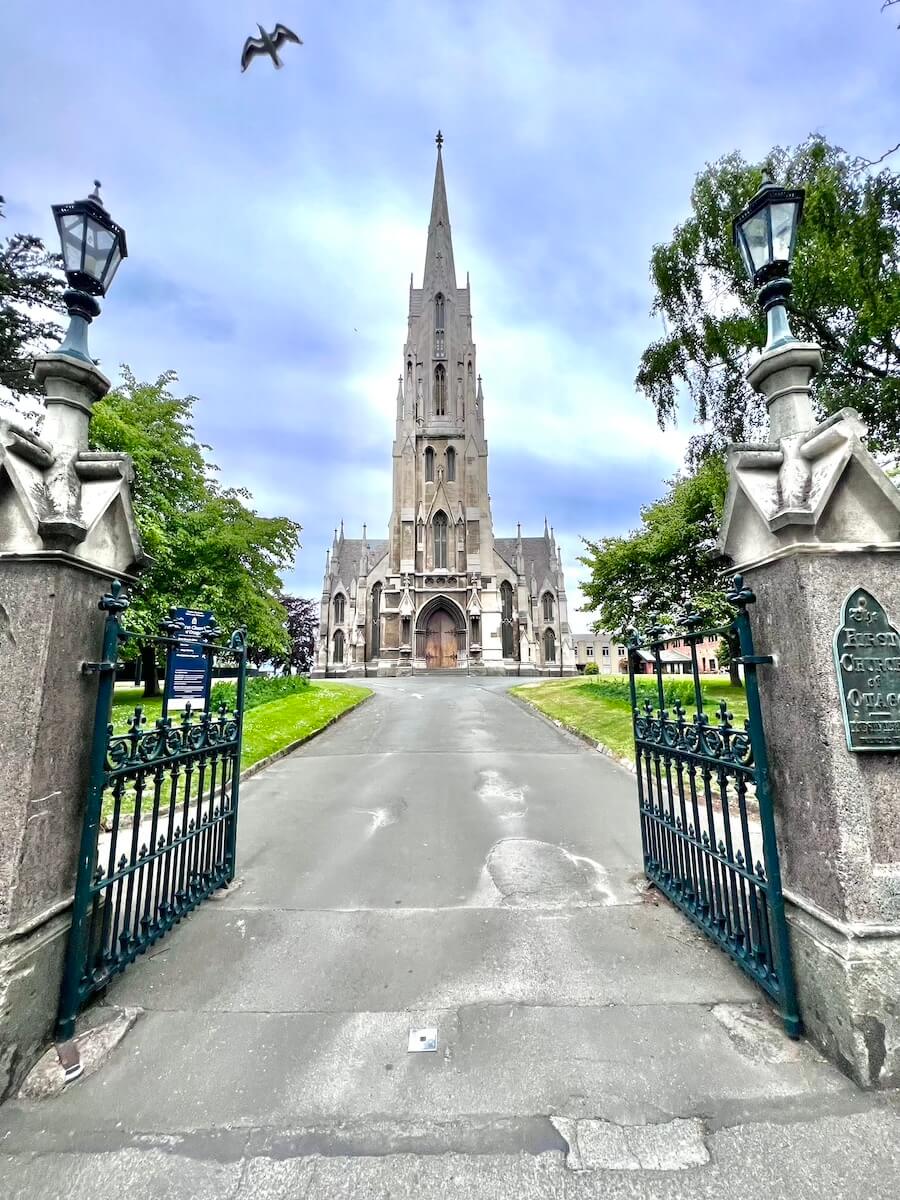
Dunedin is a hip student city at the head of the Otago Harbour. Known as having a similar street layout to Edinburgh in Scotland (Dùn Èideann, the Scottish name for Edinburgh), having been settled by many Scots during the European influx in the 1800s. Ōtepoti is the Māori name, which is so lovely, don’t you think?
Home to the huge Otago University, Dunedin has a youthful vibe, is a bit rough around the edges, but loads of cheap eats and interesting bars. It has a thriving art and culture scene, and some wonderful architecture.
Hotel recommendations for Dunedin
We stayed at the Dunedin Motel and Villas, which was very convenient for town and had lots of parking.

Day 11: Otago Peninsula + Dunedin
The Otago Peninsula is home to the only mainland Albatross colony in the world. The Royal Albatross Centre is a wonderful way to learn about these incredible birds and see them in their colony via special viewing windows. Seeing the grand Northern Royal Albatross / Toroa is so special. You can only visit via a tour, and bookings are recommended.
If you miss this activity, you can watch the colony on the Albatross cam on their website!
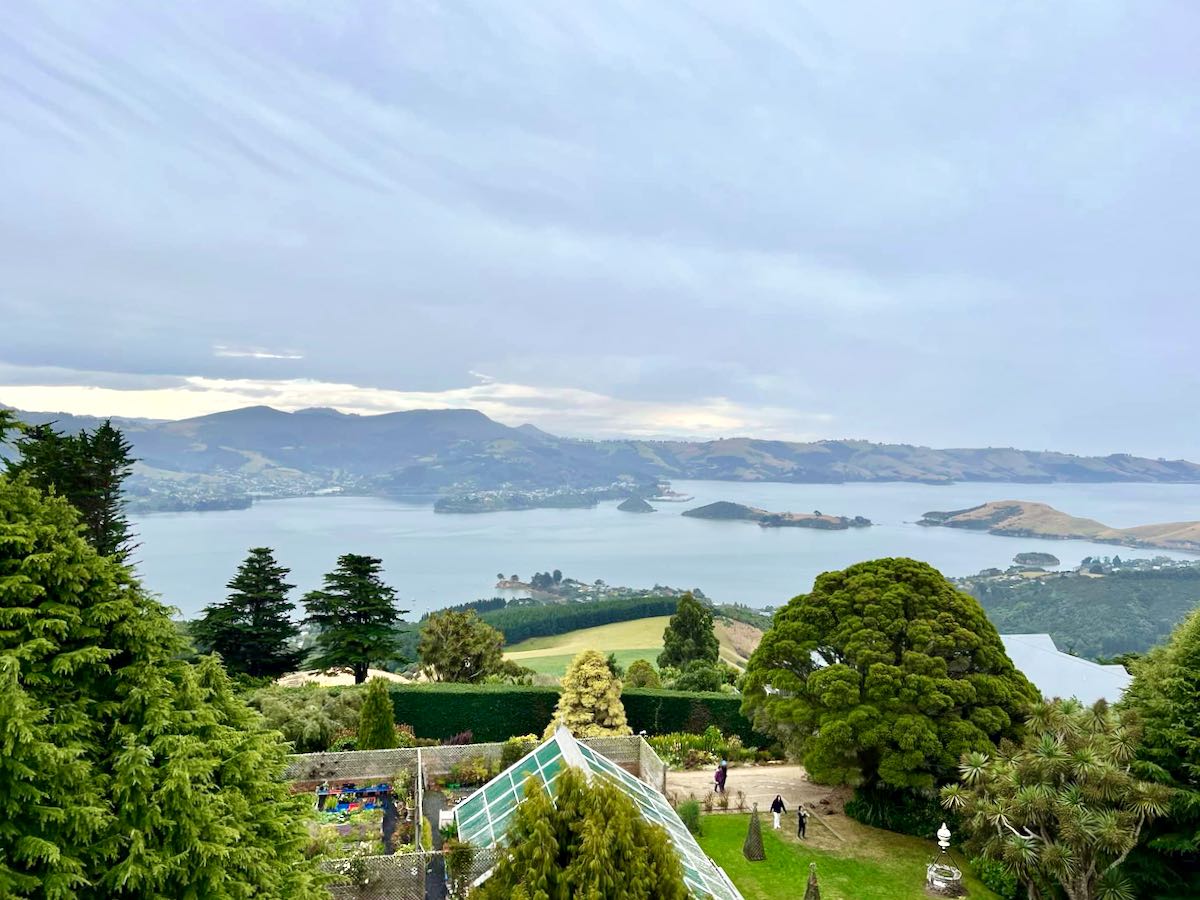
The other major tourist destination on the Otago Peninsula (apart from lovely beaches) is Larnach Castle. This ‘mock castle’ was built in the late 1800s for William Larnach, and is now open as a tourist attraction. As New Zealand’s only castle, it’s pretty cool.
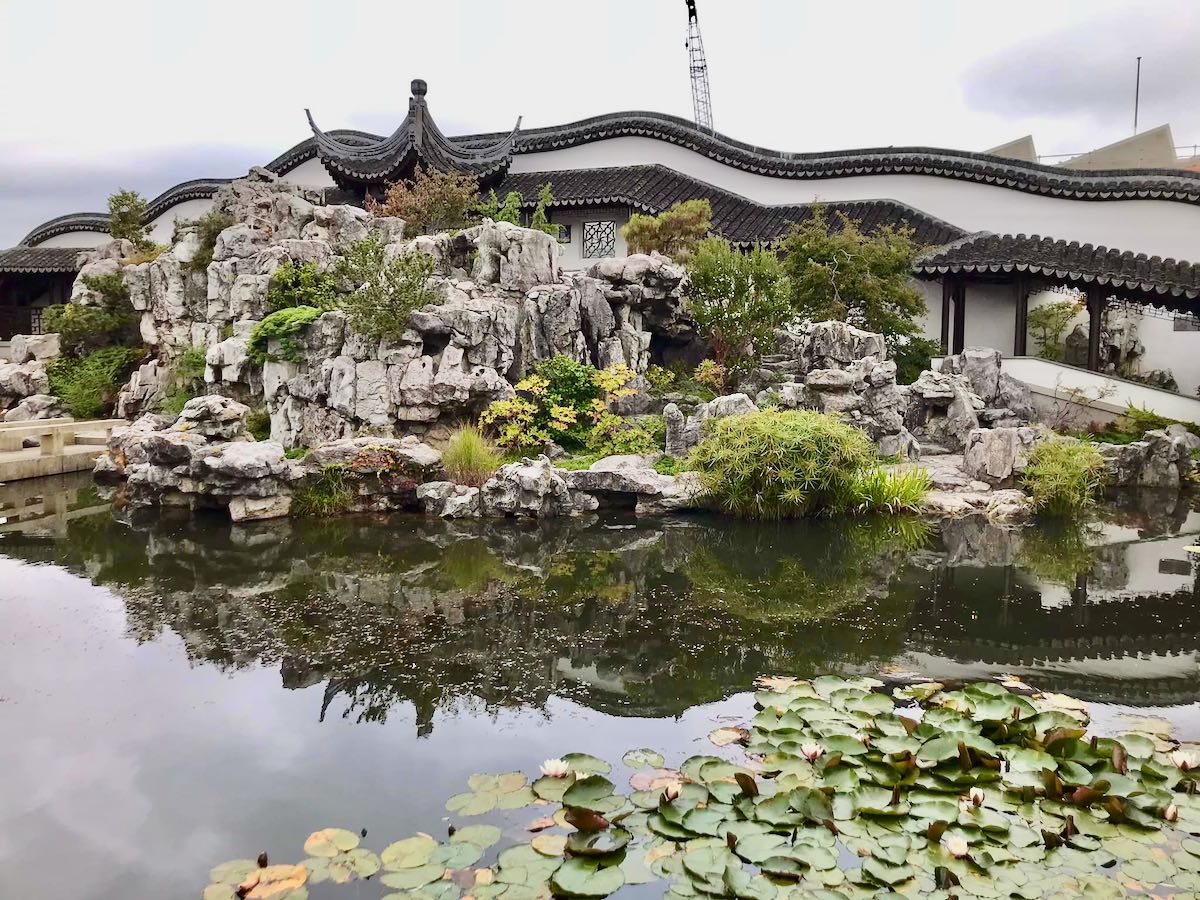
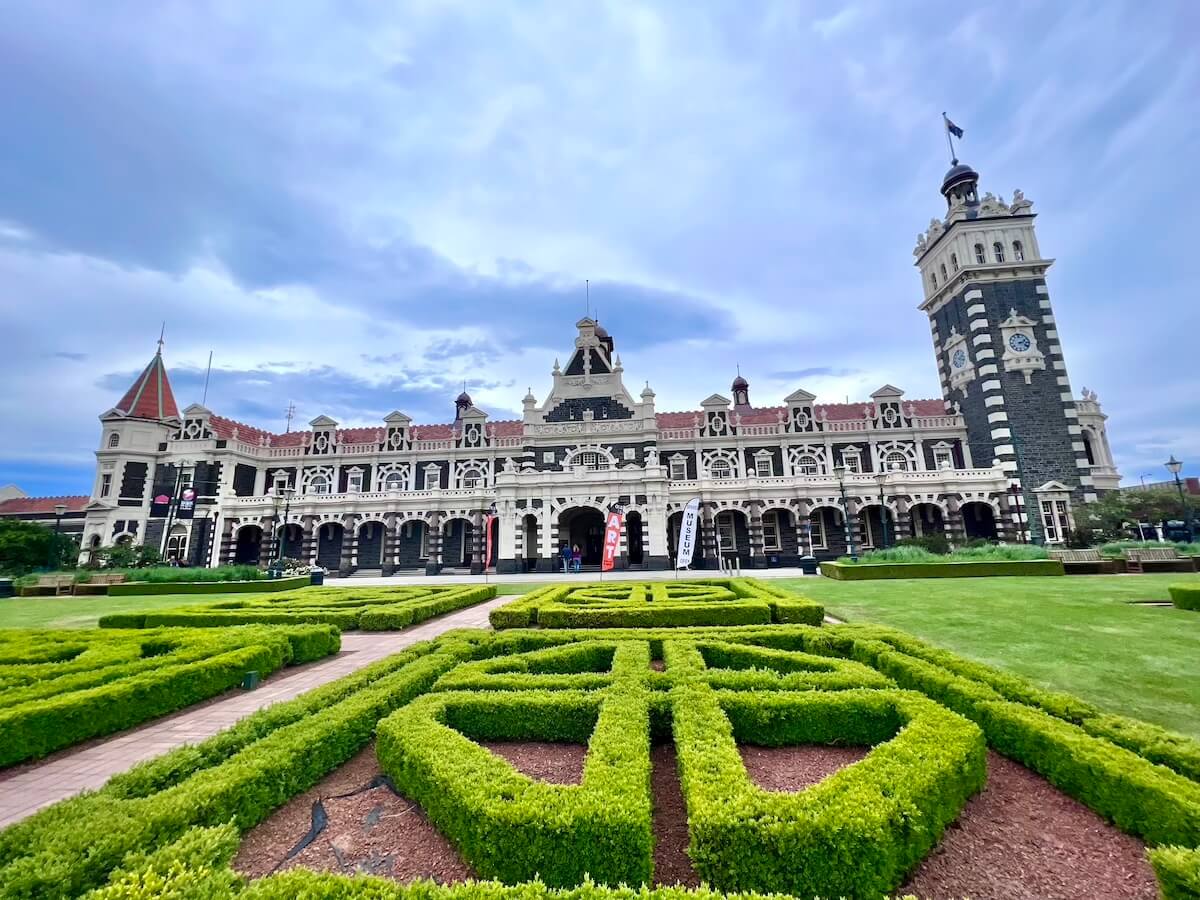
Back in Dunedin proper, some top attractions include the Lan Yuan Chinese Garden and the Otago Art Society, which is in the grand old train station. Don’t miss a visit to Baldwin Street, the world’s steepest drivable residential street with a 35 percent gradient!

Day 12: Moeraki Boulders + Lake Tekapo
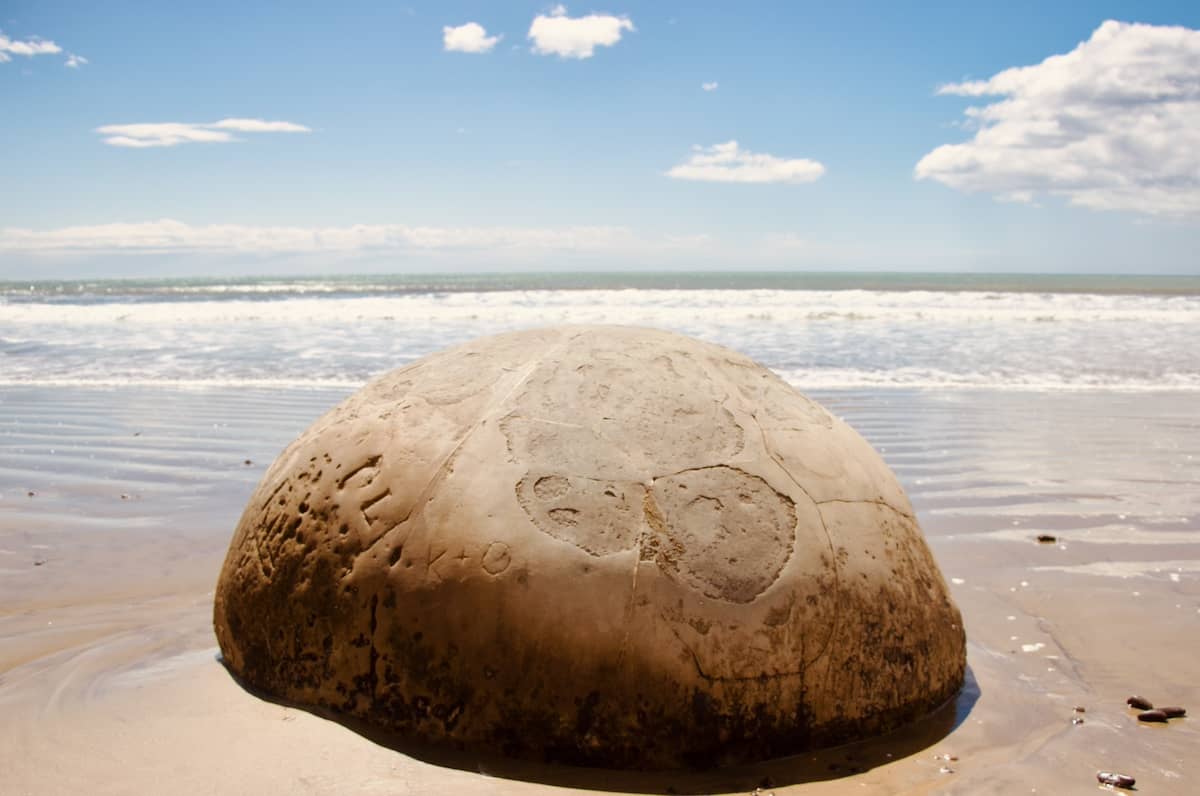
It’s time to head back inland towards the Southern Alps, but not before a visit to the amazing alien landscape of the Moeraki Boulders / Te Kahīnaki. Located 1-hour north of Dunedin, it is a fascinating stop as you head north. Formed 65 million years ago, and eroded from the surrounding earth in remarkable spheres, the Moeraki Boulders require a short walk down to the beach.
This is a tourist hot spot, so expect to have to wait for photos, and to have to put up with ‘influencers’ taking 700 selfies while trying to look zen on a boulder and thus ruining everyone else’s photos 😜
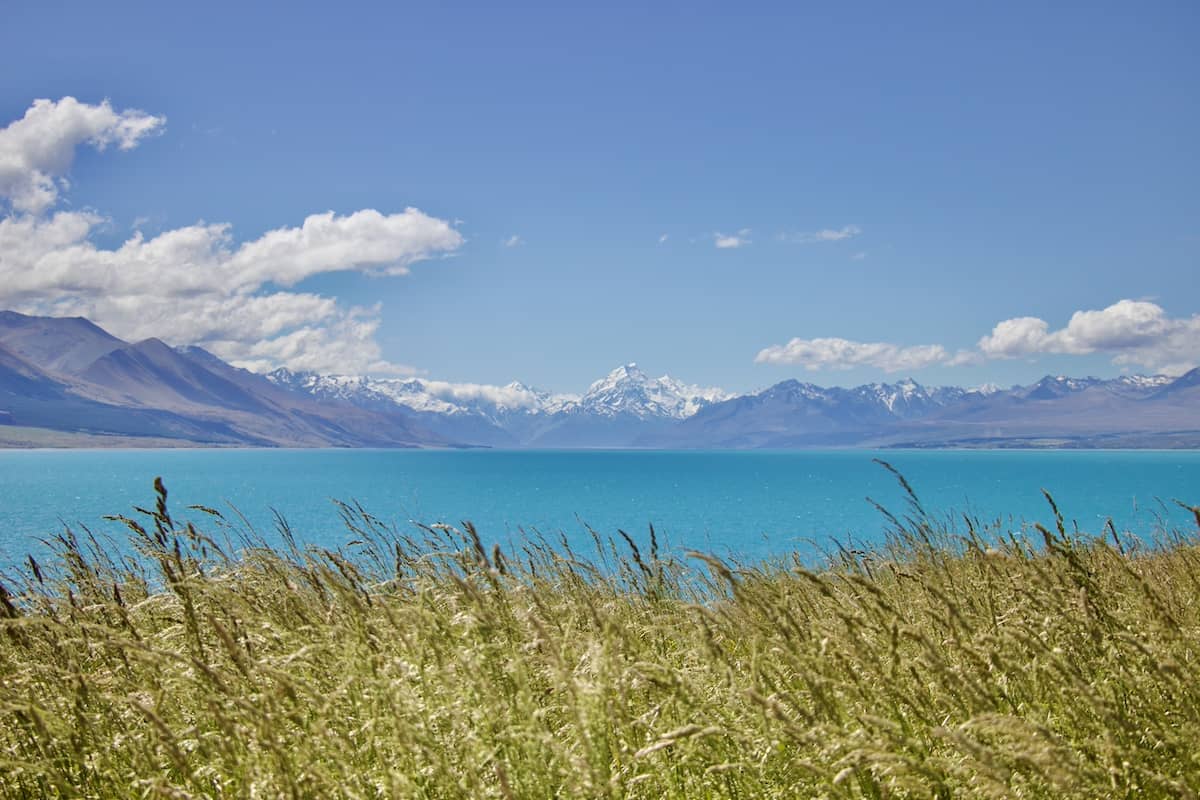
After visiting with the boulders, take the 83 highway inland towards Omarama and on towards Lake Tekapo. You will pass the road to Aoraki / Mount Cook (and return the tomorrow for a full day in this area), before passing the mind-blowingly blue Lake Pukaki. Stop here at the visitor’s centre for lush views towards Mount Cook with the vivid blue lake in the foreground.
Lake Tekapo is a tourist town, with a mix of relatively expensive accommodations, restaurants and takeaways. Many people visit for 1 night on a tour, so there is that touristic turnover. That is why it is nice to stay for a couple of days and see it a little calmer in between waves of tour buses.
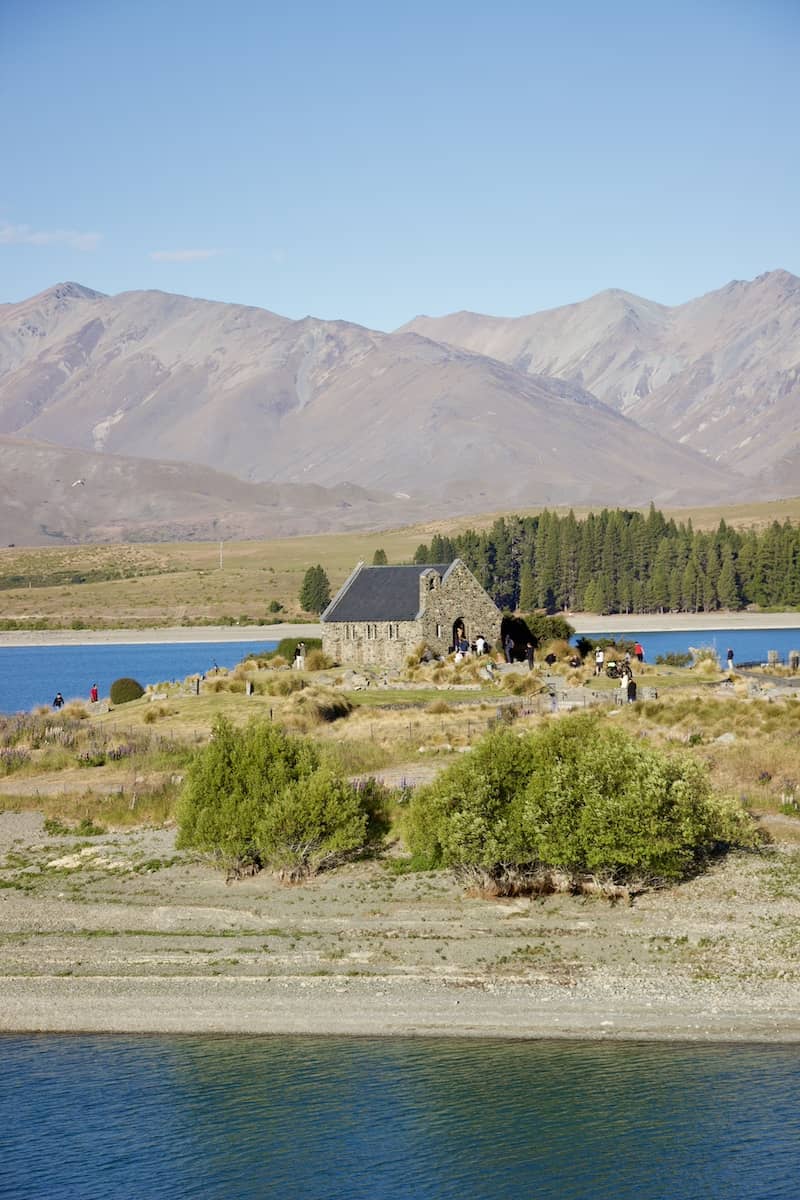
Take a walk along the waterfront, get some fish and chips and picnic along the lake. Walk along to the picturesque Church of the Good Shepherd, surrounded by lupins and sitting proudly on a small rise over the Tekapo River.
Hotel recommendations for Lake Tekapo
We stayed at the Mack n Tosh self-catering apartment. It was immaculately clean, and we enjoyed the views from the balcony. Options near the shops include Lake Tekapo Village Motel or Haka House Lake Tekapo.


Day 13: Aoraki Mount Cook National Park + Lake Tekapo
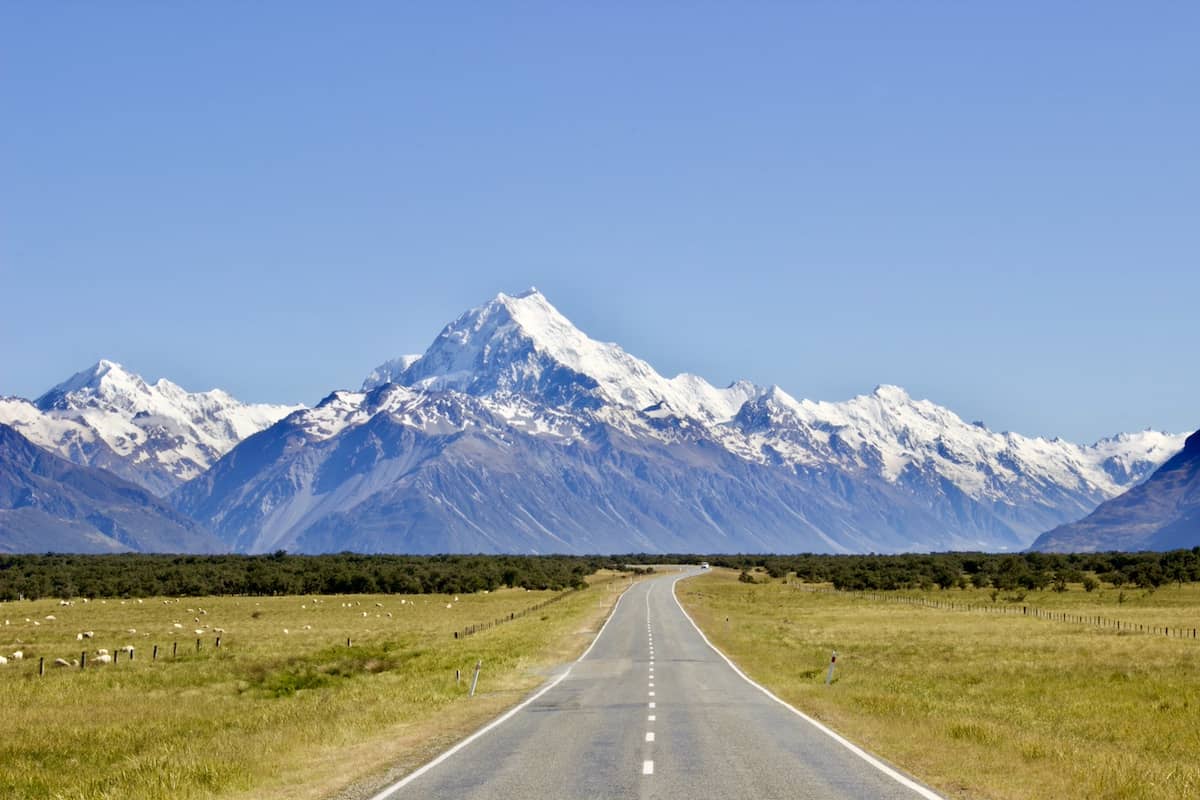
The queen of the Southern Alps, Mount Cook Aoraki – at 3,724 metres high, it is the tallest mountain in New Zealand. The scenic route up along Lake Pukaki is breathtaking. Get your camera ready, and be prepared to stop often, there are just so many amazing views.
That said, on a cloudy day, Mount Cook can hide behind clouds, so it doesn’t always look as picture perfect as it did on our visit. I don’t know what we did to appease the weather gods, but we had the best luck with these sights. We didn’t have the budget for a helicopter or flight over Mount Cook, but if you do, it would be incredible!
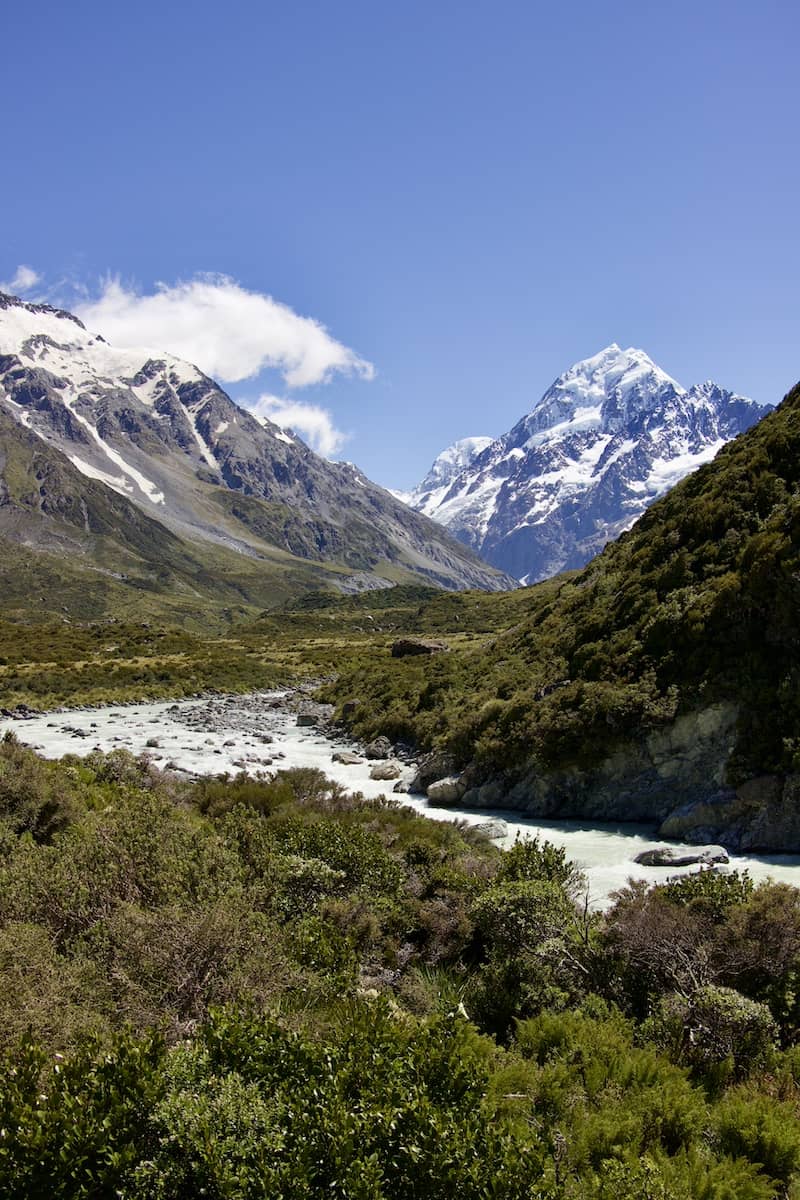
If you want to take a relatively easy hike, the Hooker Valley Track is fantastic. This 10km return walk is well-maintained, and made up of easy incline gravel trails and boardwalks. There are 3 swing bridges along the way, the second of which is long and suffers from crazy winds which sometimes cause it to close. We saw people of all ages doing this hike.
The other thing I suggest you do while in the Aoraki Mount Cook National Park is sneak a peak at the Tasman Glacier. Receding at 30cm per day, like many other glaciers around the world, it is an endangered species!
Follow the signs from near Mount Cook Village and drive up to the carpark. There is a steep track with many steps that takes you up to a wonderful viewpoint. Or you can take a boat tour out to the glacier, where you get to see and maybe even touch glacial icebergs, and see the glacier up close. The boat tour is very expensive though [around $179pp in 2024], so this may not be accessible to all.
End your day with a Dark Sky Project stargazing experience in and around Lake Tekapo. The lake and mountains means that light pollution is minimal and the skies are mesmerising.


Day 14: Burke’s Pass + Geraldine + Return to Christchurch
Your last day! The end to this action-packed month in New Zealand involves vintage cars and some of the best pies you’ll ever try.
As you leave Lake Tekapo, you’ll travel through an unassuming little town called Burke’s Pass. A few houses, an historic church, and the Three Creeks Trading Company. A mish-mash of vintage cars, Americana, beautifully crafted picnic tables (and tiny homes), alongside a gift shop. It’s an awesome spot to pick up some Kiwiana gifts to take home!
Next stop is the town of Geraldine. Home, after extensive testing (by me and my husband), of the best pies in New Zealand. From the humble Parkside Dairy, opposite Geraldine Primary School, grab yourself a Pepper Steak pie and some fresh ‘hot chips’ (fries) and enjoy this delightfully Kiwi lunch!
If you want to try some sexy gourmet pies, a detour to the World Famous Sheffield Pies in Sheffield might be in order (in the name of research, you see). Their flavours include venison and whiskey relish or lamb’s fry pies!
The return drive from Lake Tekapo to Christchurch takes 3-hours, or 3.5-hours if you include a detour to Sheffield.


If you have any extra time in Christchurch, take the famous TranzAlpine train over the Southern Alps, to Arthur’s Pass and Greytown. It’s an expensive excursion, but is listed as one of the most famous rail journeys in the world.
Where to add if you have more than a month in NZ
- Northland – the far north of New Zealand is so wild and beautiful. With special spiritual significance for the Māori at Cape Reinga, where the spirits depart off the tip of Aotearoa, it is a special place to visit. Highlights are Tāne Mahuta Kauri Tree, Opononi, Ahipara, 90-Mile Beach, Kerikeri, Waitangi, Russell (Kororareka), and the Hundertwasser Toilets at Kawakawa.
- Akaroa – add days and downtime in Akaroa, it’s heaven on earth.
- Taranaki – my whanau are from there, so I’m biased. But it’s on my list of lesser-visited gems.
- Napier – an art deco city on the North Island. Cyclone Gabrielle caused widespread damage to the area in February 2023, so it needs visitors more than ever.
- Ōpōtiki & Gisborne – the East Cape is about as off-the-beaten-track as it gets in NZ. Wildly beautiful beaches, great roadside seafood spots, and lovely communities with cool art and cultural projects a-go. Ōpōtiki is where my Irish kin settled in the late 1800s.
- Waitomo Glow Worm Caves – I couldn’t squeeze this into the North Island road trip, but I would recommend squeezing this in if you are going near Te Kuiti. Seeing the glow worms, the limestone caves, and the tomos (caverns) is amazing.
New Zealand FAQ
How to spend a month in Aotearoa New Zealand
I hope you have enjoyed this behemoth post on how to spend a month in New Zealand. I had a lot of fun writing about my homeland, and sharing the road trip routes we have enjoyed.
Due to Aotearoa’s distance away from the rest of the world, and its incredible beauty, it is worth trying to get as much time off as you can to spend a decent length of time here.
While it is an expensive country overall, it is a country set up for backpackers. There are lots of hostels, bus routes, and hitchhiking is pretty common. We saw a lot of campers, but they were all those tiny campers (think Jucy or Happy Campers, small vans with converter beds), and we just can’t fit or enjoy those tiny spaces. We also didn’t find any cheap quotes for these. It was cheaper for us to stay in motels (booked in advance), and most of these had kitchens.
Whatever way you choose to spend your month in New Zealand, I wish you many happy adventures and memories in Aotearoa!
Love road trips as much as we do?
Here are some more road trip resources for you!
All photos & content © Hannah Henderson and may not be used without permission (sharing this blog post is fine, though!). Images shot with a Canon DSLR T3i Rebel + Canon EF-S 18-135mm f/3.5-5.6 IS STM; and an iPhone.



We plan to spend a month or so in the North Island and then head to the South Island for another month or so. Enjoyed reading your ideas for a longer trip (most blogs, travel books only have 2-3 week itineraries for the whole country). Your add on ideas were useful and liked the tips. You are the only one who has even mentioned Stewart Island which we will visit. As birders, it sounds great. Looking forward to exploring your homeland starting in January.
Oh I’m so glad you found this article useful. Please email me if you have any questions, and let me know how your trip goes!