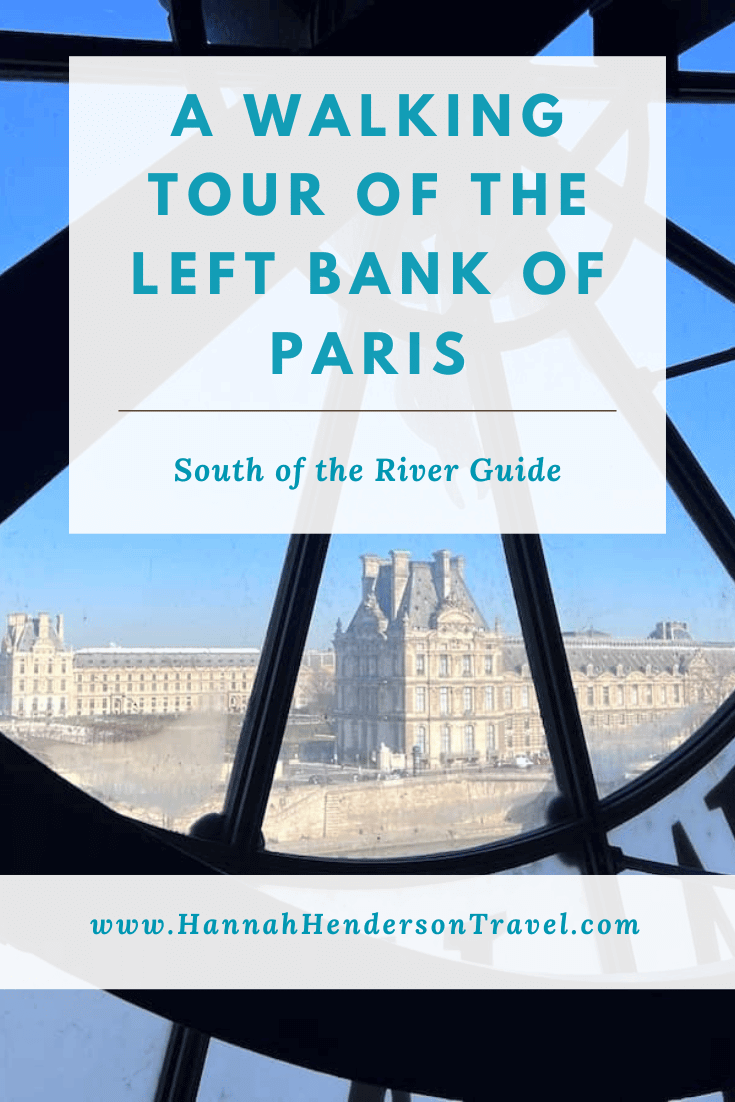
Some of the oldest streets in Paris are south of the river, on the Left Bank. It was, and is still in many ways, the bohemian and artistic heart of Paris. While historically more laid-back than the Right Bank, today’s Rive Gauche blends classic Parisian elegance with a vibrant energy, offering excellent restaurants, boutique shopping, and so many amazing attractions. This walking tour of the left bank of Paris can be enjoyed in sections across multiple days, or used as inspiration for places to wander in general.
Self-Guided Walking Tour Ideas for the Left Bank of Paris
South of the la Seine has always been my ‘neighbourhood’. It is where my Dad spent time in the 60s, it is where I usually stay, and where I prefer to hang out. Away from the most populous tourist areas, but not missing incredible places to see, it has a lovely balance of normal everyday life and tourism.
These self-guided walking tours are between 3.5-6kms each, so you can do them individually or string them together, depending on your ability / energy levels.
Left Bank Walking Route 1:
From literary haunts to medieval weaponry, this walking route takes in the area around Saint-Germain-des-Prés, part of the 6th arrondissement.
This route easily connects to route 2. At only 3.7 kms / 2.3 miles, this one is an easy one to start off your walking adventures on the Left Bank.
HOTEL RECOMMENDATION: The beautiful Hôtel Récamier is between Saint-Germain-des-Prés and the Jardin du Luxembourg. Hôtel Saint-André des Arts is in the heart of the area, on Rue de Buci.
Shakespeare & Co.
This route starts at Shakespeare & Co., the city’s famous English bookshop on the Left Bank. Originally founded by Sylvia Beach in 1919, the original store was a literary hub for writers like Ernest Hemingway, F. Scott Fitzgerald, and James Joyce, whose novel Ulysses Beach published.
The current Shakespeare & Company, opened in 1951 by George Whitman at 37 Rue de la Bûcherie, continues the tradition of being a haven for writers and readers (and now tourists). The shop is filled with cosy reading nooks and towering bookshelves.
UNESCO heritage Bouquinistes
The Bouquinistes are riverside booksellers along the Seine. They are an institution, and a UNESCO World Heritage listed feature of Paris, so it is far more than just quaint riverside market stalls.
The special cabinets are designed to sit on the walls of the river embankment wall, and prop open to display the books and trinkets on sale. While most hold true to antique books, some Bouquinistes sell prints and souvenirs too.


Fontaine Saint-Michel
Grandeur is the watch word. Well, at least it was during Haussmann’s city planning!
The Fontaine Saint-Michel was part of Baron Haussmann’s massive renovations of the city in the mid-1800s. It features a dramatic sculpture of Saint Michael defeating the devil, flanked by two winged dragons that spout water into the basin below.
It recently made an appearance in Emily in Paris, where Mindy and the band busk together!
Musée de Cluny – National Museum of the Middle Ages
Wander south along the Boulevard Saint-Michel to the Museum of the Middle Ages. The Musée de Cluny is dedicated to medieval art and history. It occupies two historic buildings: the 15th-century Hôtel de Cluny, a former abbey residence, and the remains of ancient Gallo-Roman thermal baths from the 3rd century.
The museum’s most famous treasure is the ‘The Lady and the Unicorn’ tapestry series, considered one of the greatest masterpieces of medieval art. Taking up a whole room, they are very impressive. I quite enjoyed the displays of medieval weaponry too!
Behind the museum are some tranquil gardens that are a delightful spot to read a book or have a sandwich.
Lunch at Bouillon Racine or POlidor
If you’d prefer a dine-in meal, Bouillon Racine and Polidor offer two options for a bouillon experience. Workers meals, unfussy service and trestle tables where you eat elbow to elbow with your neighbours are common.
Bouillon Racine is more upscale, but both serve traditional meals like bourguignon and confit of duck.
Polidor has always been a favourite of mine, but it has come up in the world since it was featured in the movie ‘Midnight in Paris’. It even has a real toilet now, instead of the old squat arrangement!


Cour du Commerce Saint-André
The Cour du Commerce Saint-André is a historic passageway in Saint-Germain-des-Prés. This cobblestone alleyway connects Boulevard Saint-Germain to Rue Saint-André des Arts, offering a glimpse into old Paris with its atmospheric cafés, boutiques, and remnants of the past.
One of its most famous landmarks is Le Procope, the oldest café in Paris. Established in 1686, it once hosted luminaries like Voltaire, Rousseau, and Benjamin Franklin.
The passage was also significant during the French Revolution – the printing press of revolutionary journalist Jean-Paul Marat was located here, and remnants of a guillotine workshop can still be seen.
Café de Flore & Les Deux Magots
While these two cafes are very popular these days with the influencer crowds, if you are interested in literary history they may still be of interest to you.
Particularly if you are interested in the life and works of Jean-Paul Sartre and Simone de Beauvoir. Café de Flore was their regular hangout and where they discussed their Existentialist movement philosophies. They lived nearby at 42 Rue Bonaparte (and are buried at Montparnasse Cemetery).
Les Deux Magots was established in 1885, and predates its neighbour. It became a favourite of Surrealists, Dadaists, and later the Existentialists, with visitors like André Breton, Ernest Hemingway, and Pablo Picasso.
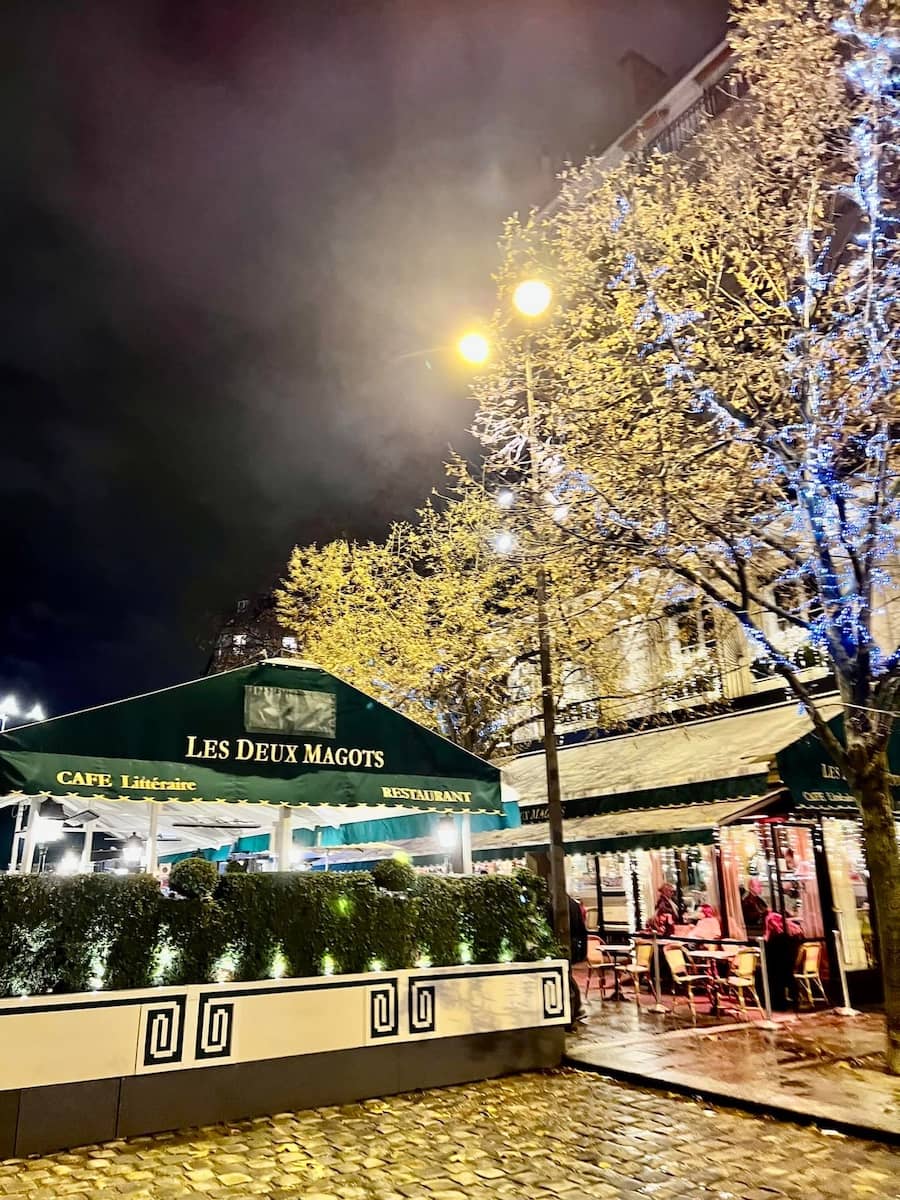
HOT TAKE: I found the increased influencer traffic at Les Deux Magots on my last visit quite amusing, given that the people who have made these cafes famous would’ve found influencer culture quite mad! Existentialism emphasised individual freedom, authenticity, and responsibility. Sartre, de Beauvoir, Hemingway et al. rejected superficiality, societal expectations, and materialism—values that are often at odds with modern influencer culture.
Palais des expositions des Beaux-Arts Or River Walk
End this route with a visit to the Palais des expositions des Beaux-Arts – the exhibitions from the Fine Arts School of Paris. One thing that Paris has always fostered is art and artists (it is so much more than the City of Love). This part of the art school serves as an exhibition space for student and faculty work, as well as for major art events. There is always something interesting going on here.
If you’re all museum’d out, follow the river back down to Notre Dame and the Bouquinistes.
Left Bank Walking Route 2:
The second loop takes in beautiful parks, some Roman history, some modern architecture, and more literary history.
At only 5.6 kms / 3.5 miles, it is an easy 1/2 day activity that can join up with route 1 easily.
HOTEL RECOMMENDATION: A gorgeous boutique hotel near the Jardin du Luxembourg is the Relais Saint Jacques.
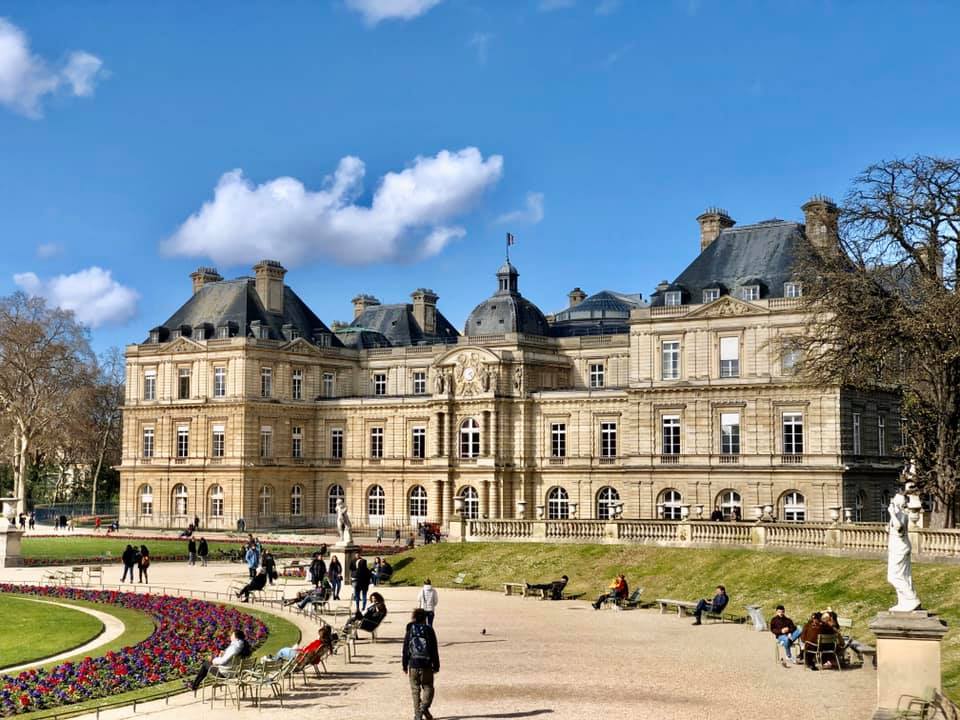
A Picnic lunch at the Luxembourg Gardens
Start your day at Le Jardin du Luxembourg for a picnic. Grab yourself a baguette and some salami (and maybe a cheeky bottle of wine) from one of the many shops on the Boulevard Saint-Michel; and enjoy sitting out in these wonderful gardens. The chairs are provided, so no need to bring your own. Oh, and remember to not to sit on the grass – that’s prohibited!
In the warmer spring weather, there are kiosks serving coffee and food, and pony rides for the children. You’ll find kids sailing their boats in the fountain, and people enjoying the beautiful surroundings.

Pantheon
Originally built as a church dedicated to Saint Geneviève, the patron saint of Paris, the Pantheon was later transformed into a mausoleum honouring the country’s most esteemed figures.
Designed by architect Jacques-Germain Soufflot, the building is a masterpiece of Neoclassical architecture, inspired by Rome’s Pantheon, with a massive dome and grand Corinthian columns.
The crypt houses the remains of Voltaire, Rousseau, Victor Hugo, Émile Zola, Marie Curie, Josephine Baker and Alexandre Dumas. The building also features Foucault’s Pendulum, a famous 1851 experiment demonstrating Earth’s rotation.
HOTEL RECOMMENDATION: Our favourite hotel overlooking the Pantheon is the Hôtel Les Dames du Panthéon.


Arènes de Lutèce + Arab Institute
After your visit to the Pantheon, continue past the Church of Saint-Étienne-du-Mont, and north-east towards the river.
Take a half-block detour to see the hidden roman arena, Arènes de Lutèce. Tucked behind terraced apartments, the arena was unearthed in the late 1800s, before being properly excavated in 1918. It is now a popular spot for neighbourhood kids to play football (soccer)!
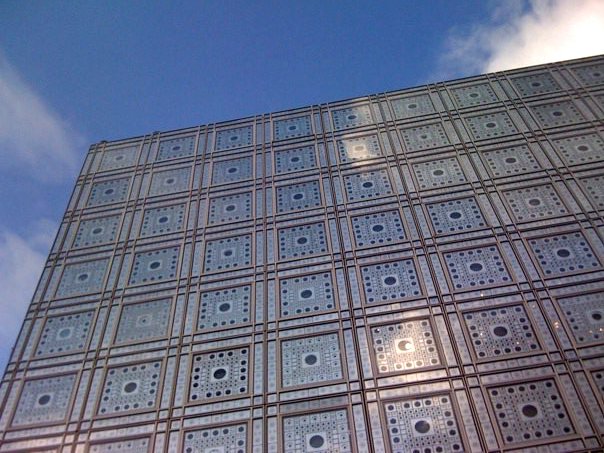
Continue to the Institut du Monde Arabe (Arab Institute) to check out their latest exhibition. Or at least to see the utterly stunning building that houses it, designed by Jean Nouvel.
The outside walls have hundreds of geometric shaped photo-sensitive apertures; that open and shut to allow the light and heat in as needed.
Jardin des Plantes + Museum of Natural History
Head south now through the Jardin des Plantes. Established in 1635 as a royal medicinal garden, it has since evolved into a vast scientific and educational hub. The garden features a stunning rose garden, Alpine plants, centuries-old trees, and expansive greenhouses filled with exotic flora from around the world.
Visit with the animals at the Ménagerie, the zoo at the Jardin des Plantes (especially if you are travelling with children). They also have wonderful hippo statues that the kids can have their photo taken with.
Or pay a visit to the impressive National Museum of Natural History. The museum is divided into several sections, including the Grande Galerie de l’Évolution, an exhibition of preserved animals in a grand hall, telling the story of biodiversity and evolution. Nearby, the Gallery of Paleontology and Comparative Anatomy houses an extensive collection of dinosaur skeletons and anatomical specimens.
HOTEL RECOMMENDATION: Rue Monge has many traditional hotels of varying price points. The Hôtel Maxim Quartier Latin is a reliable mid-ranged hotel in the 5th arrondissement between the Jardin des Plantes and Rue Mouffetard.
Cave la Bourgogne + Rue Mouffetard
Walk south-west to Square Saint-Médard (only about 1km total from the gardens). Have dinner at my favourite bistro in Paris, Cave la Bourgogne. A traditional bistro, it is isn’t flashy or fancy, it is just extraordinarily consistent, serving delicious salads and traditional fare.
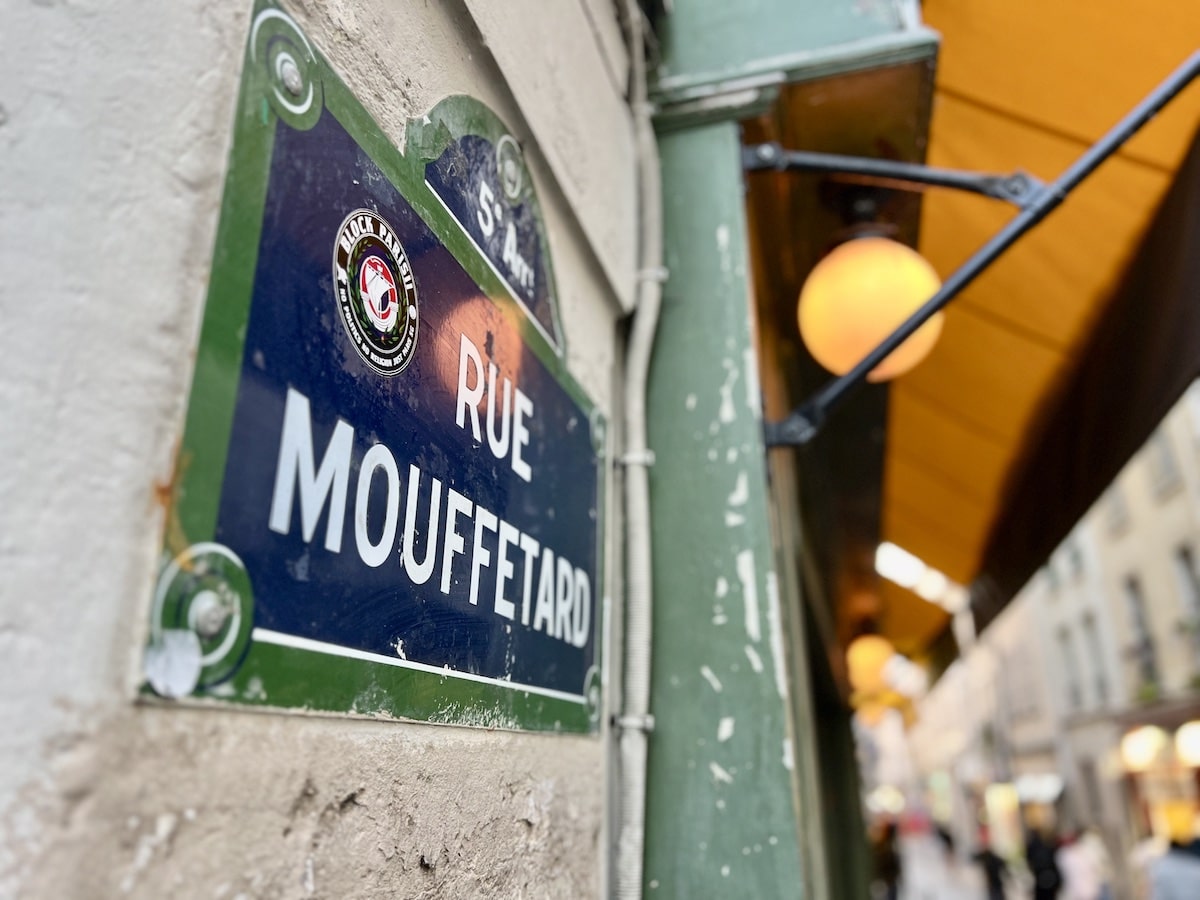
And now it is time to walk up what is reputed to be one of the oldest streets in Paris – Rue Mouffetard. Dating back to neolithic times, it became a Roman Road, and then managed to survive the Haussmann redevelopments during the reign of Napoleon III. It is now a vibrant street with a markets at the lower end, wonderful cheese, wine and gift shops, and great restaurants and bars along it.



Cocktails on Place de la Contrescarpe
Place de la Contrescarpe is my people-watching heaven. Pick one of the many cafés that line this square and watch the world go by. Parisian cafés typically serve simple food options alongside coffee, wine, and pastis. Unlike fast-paced coffee shops elsewhere in the world, cafés in Paris encourage you to linger—there’s no rush to leave.
Sitting at a café with an espresso or a glass of wine, watching Parisians go about their day, is one of the most quintessential Paris experiences, and Place de la Contrescarpe is ideal for this pursuit.
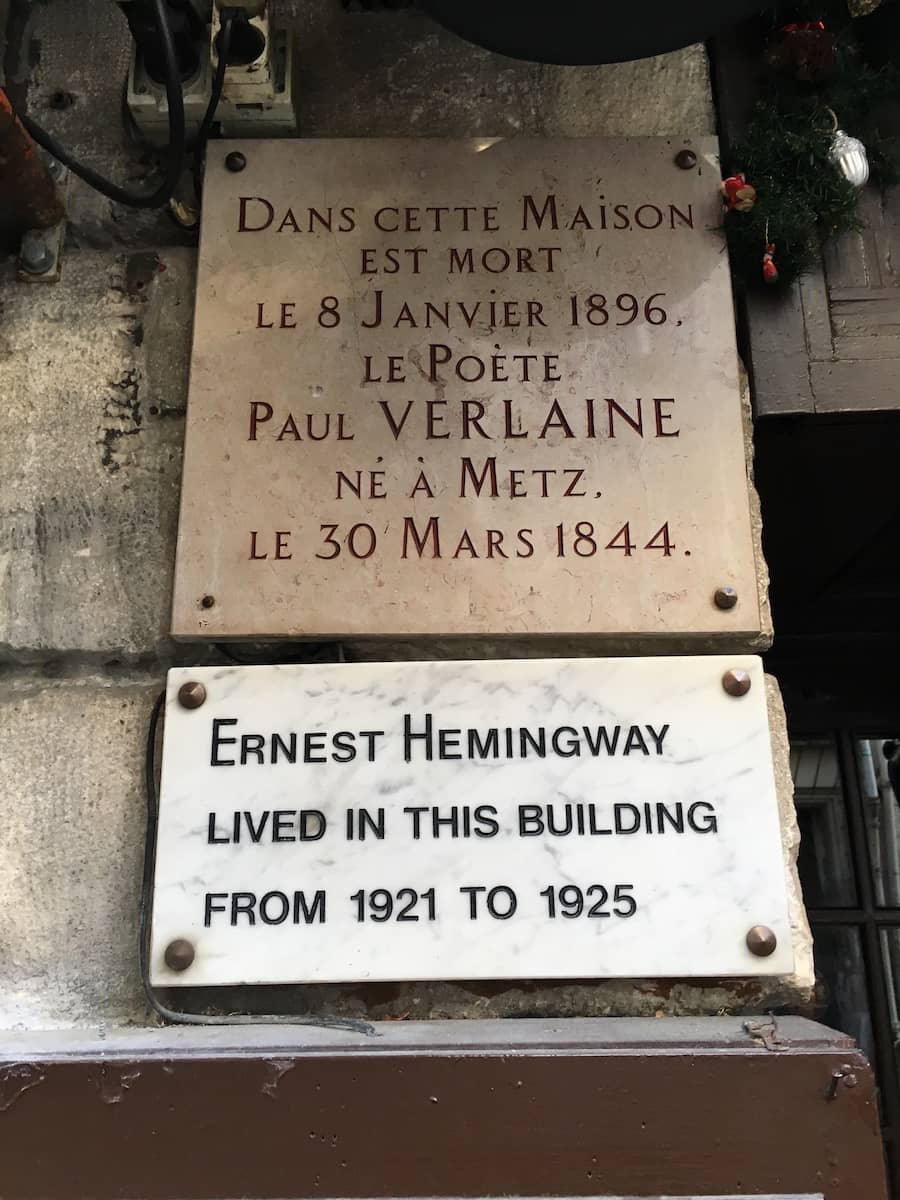
The 19th-century French poet, Verlaine, lived nearby Rue Mouffetard, and was known to frequent the cafés and bars around here.


Left Bank Walking Route 3:
This route shall be dubbed ‘Museums that aren’t the Louvre!’. Hey, I have nothing against the Louvre, but it isn’t south of the river, and that’s what I’m focussing on.
Starting at the most divine re-use of a train station there ever was, Musée d’Orsay, and rambling through the 7th arrondissement. This route takes you as far west as we are going to go on our routes, as the rest becomes more vast and touristy as it stretches towards the Eiffel Tower.
This route is 5.3 kms / 3.3 miles.
HOTEL RECOMMENDATION: My recommendations in the 7th are the Hôtel Duc de Saint-Simon and Hotel de l’Universite.
Musée D’Orsay
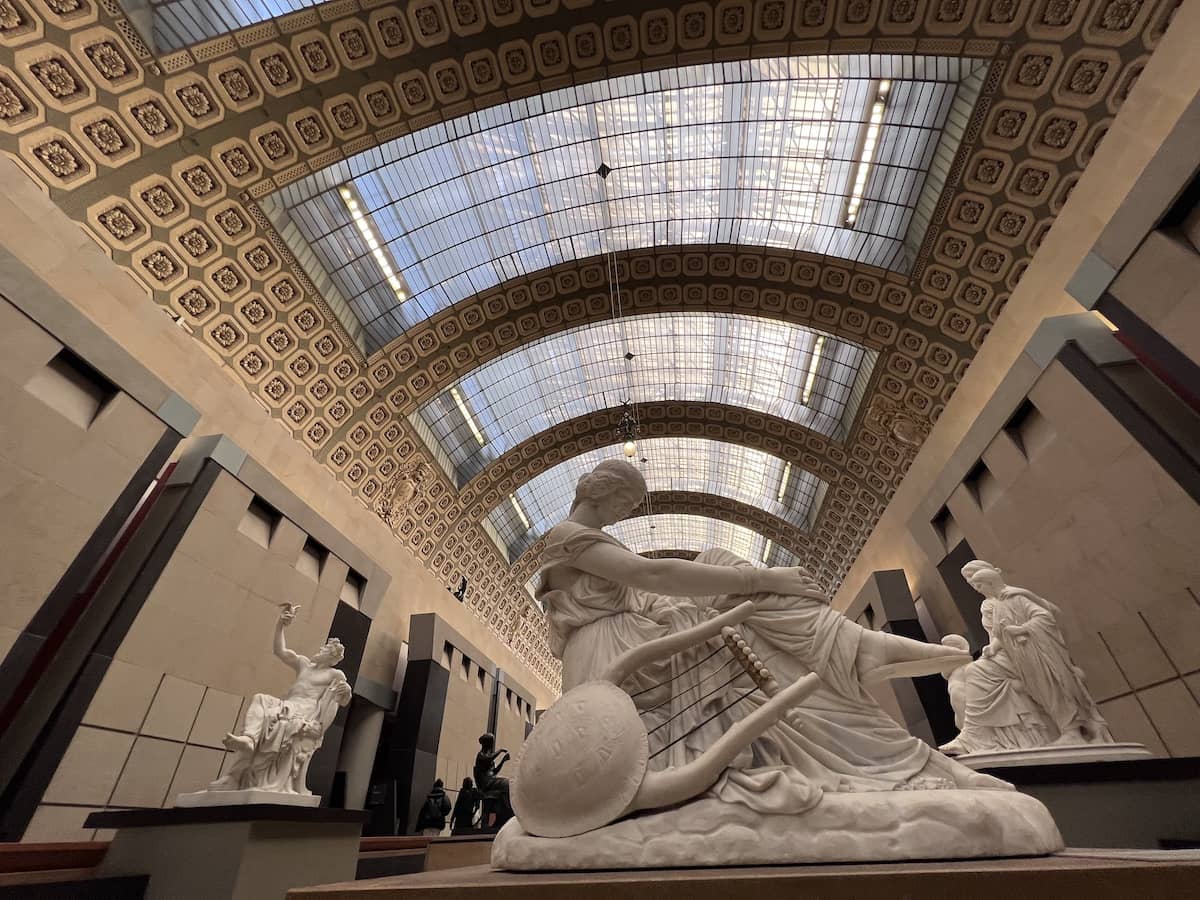
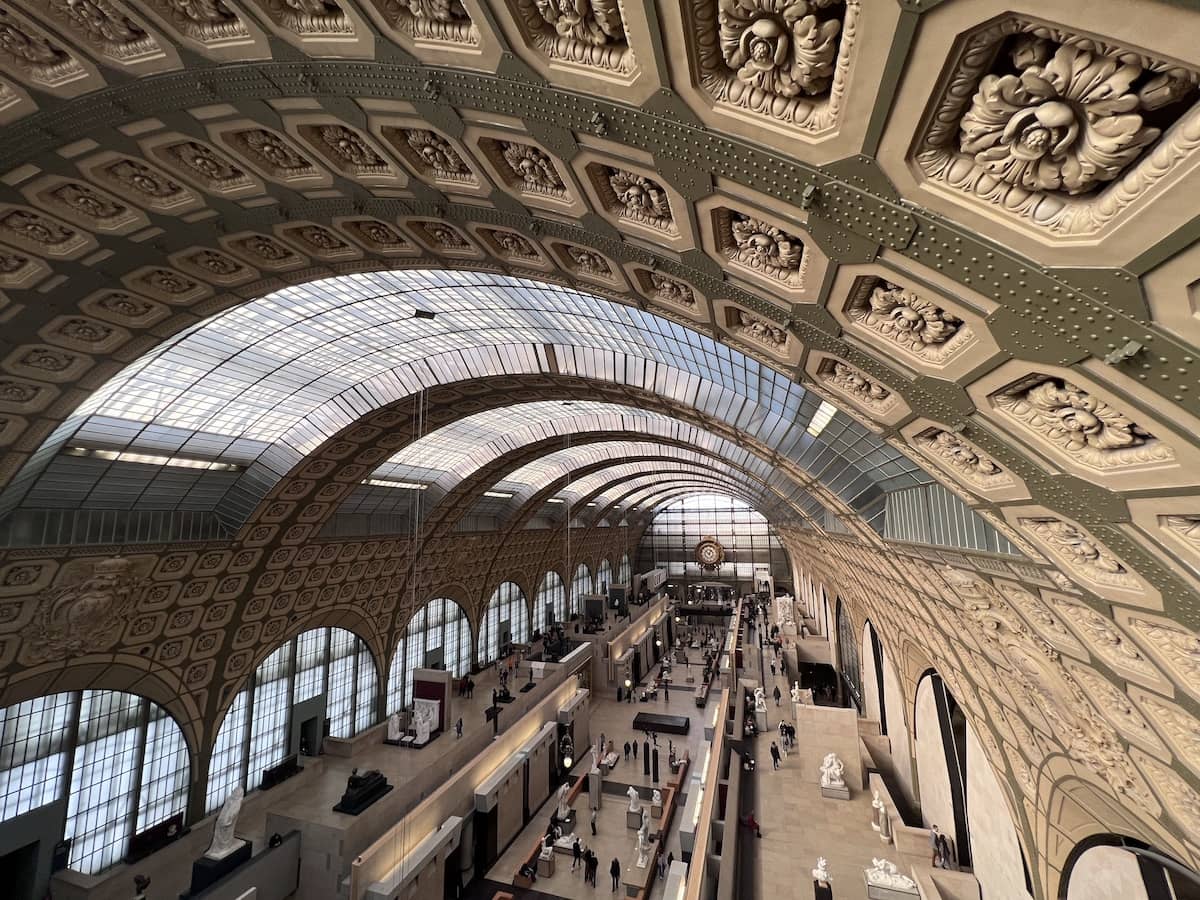
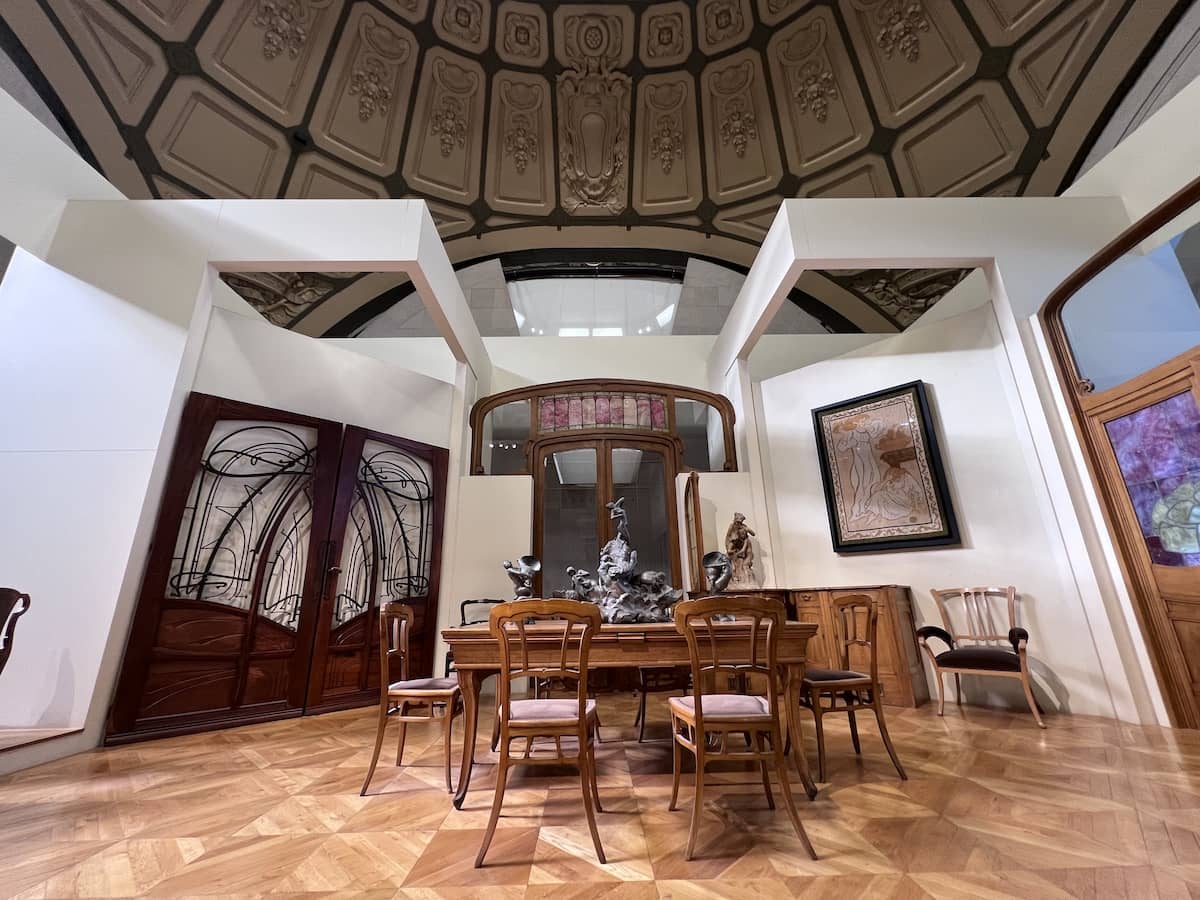
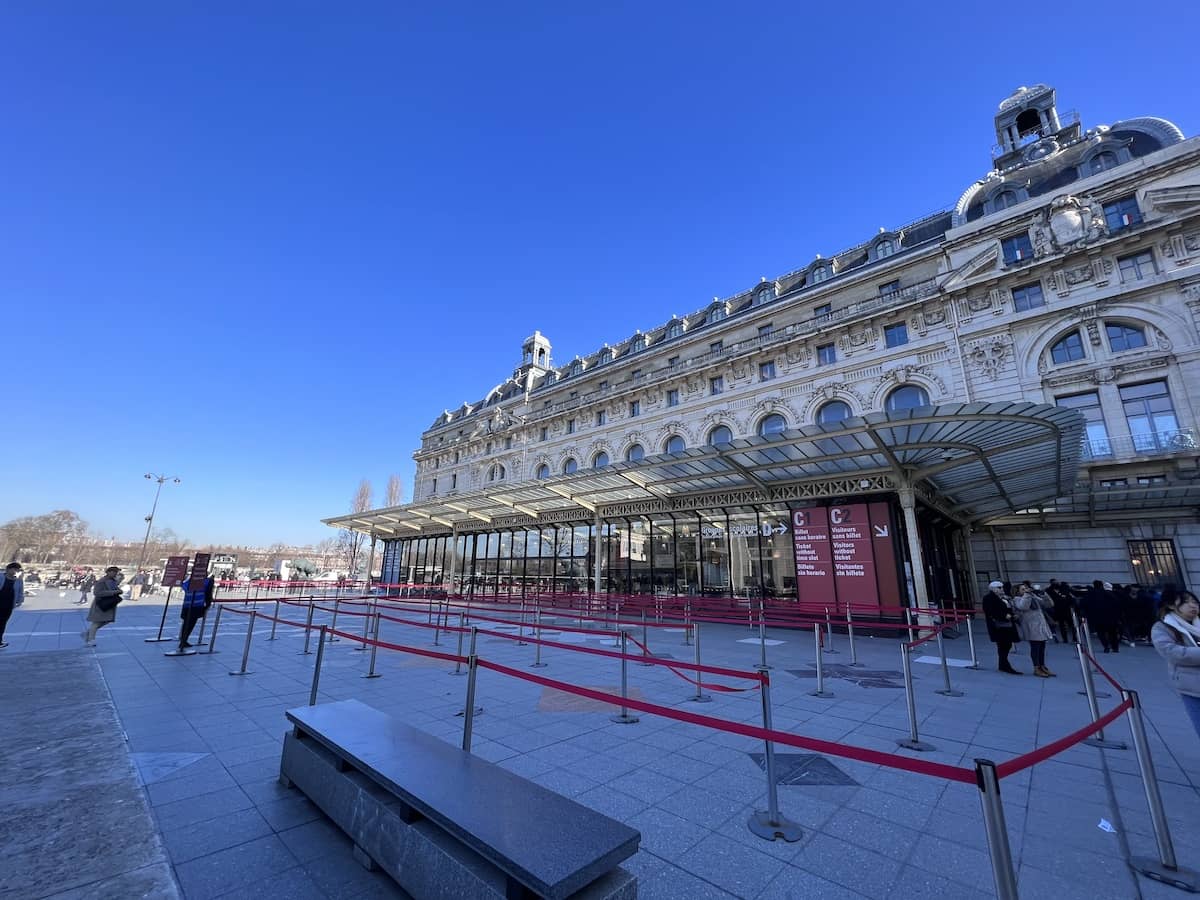
One of the most captivating buildings and art spaces you’ll ever see, the Musée d’Orsay was once a railway station. Built in 1900, The Orsay train station (Gare d’Orsay) stopped serving long-distance trains in 1939, as its platforms were too short for modern trains. After that, it was used for suburban services.
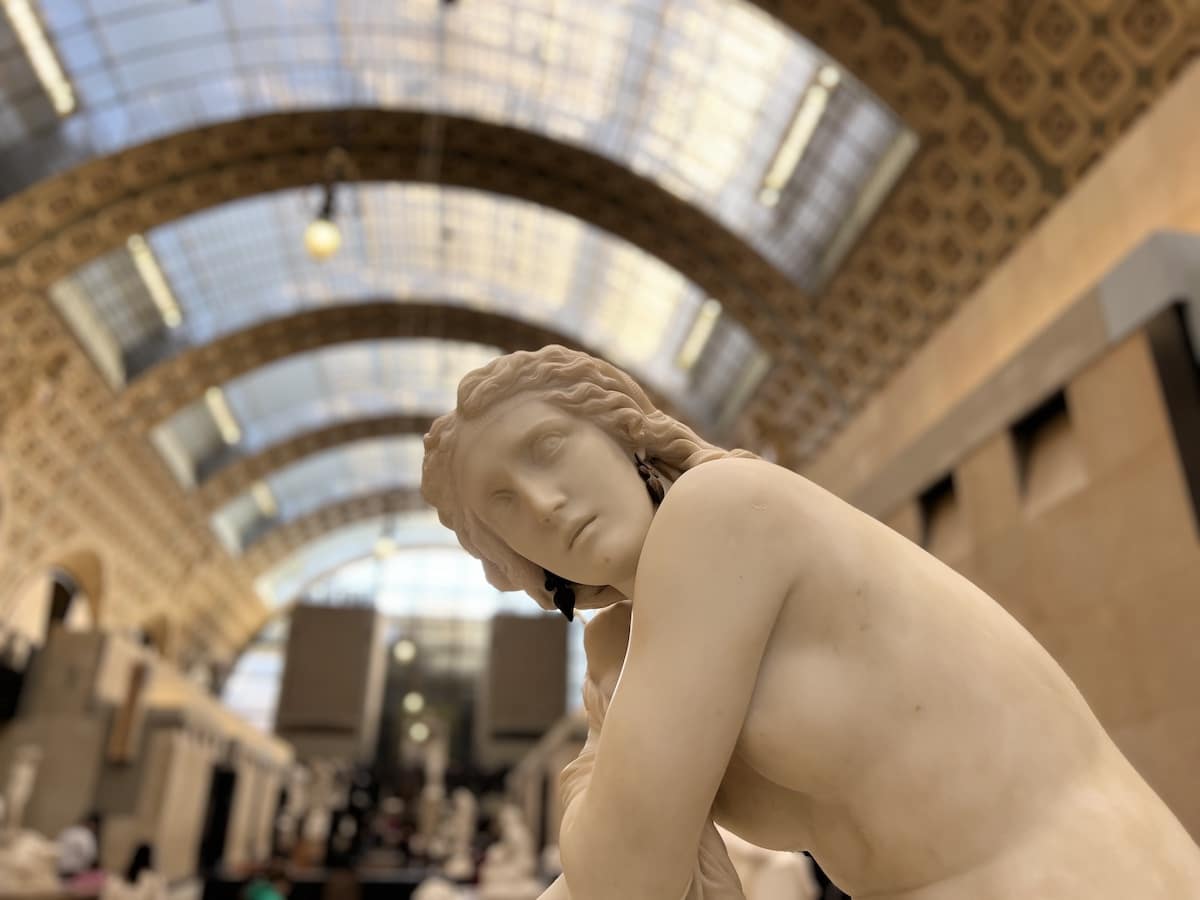
In 1986 it was converted to this beautiful museum. It has an exceptional collection of Impressionist and Post-Impressionist art, featuring masterpieces by Monet, Van Gogh, Degas, Renoir, and Cézanne. As well as collections of sculptures in the main hall, and rooms of decorative art (Art Nouveau and Art Deco specifically).
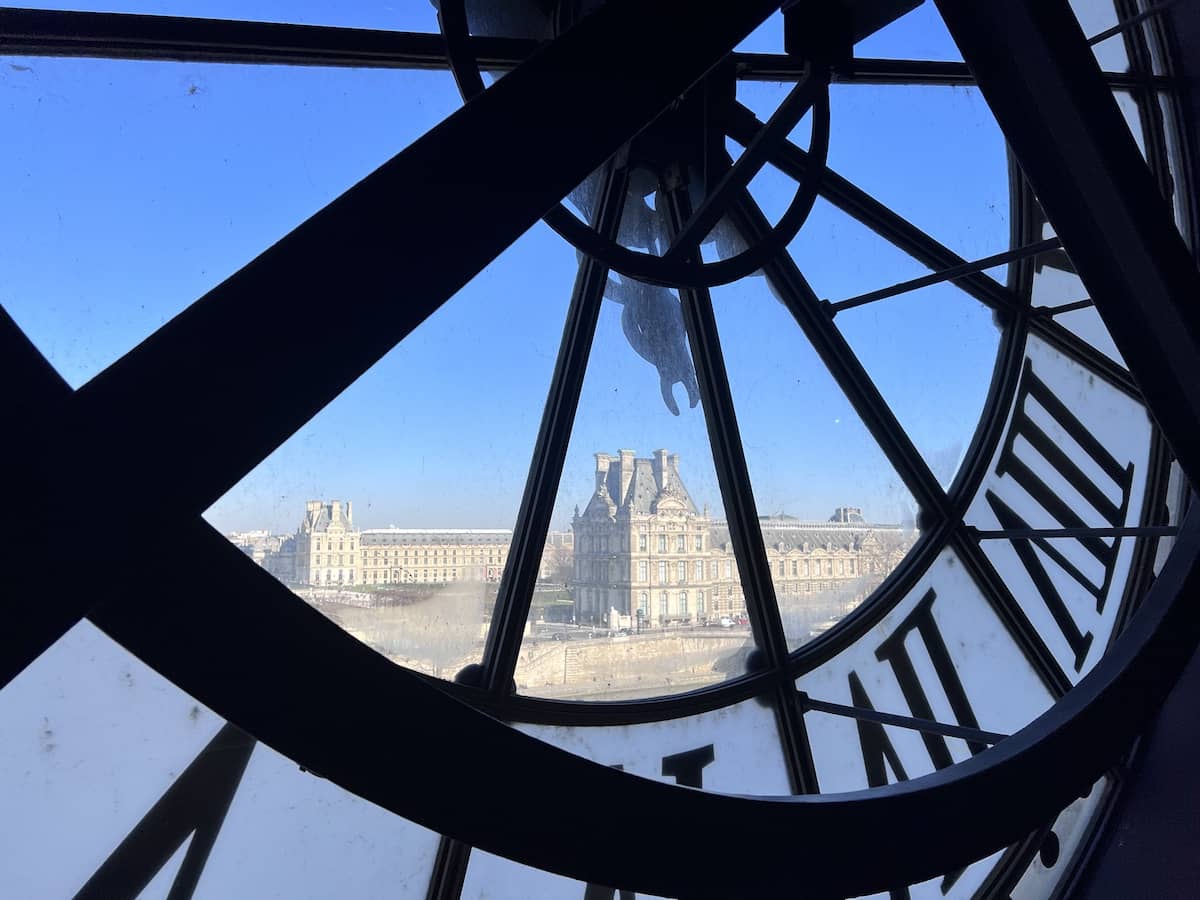
The huge window clock faces offer glimpses to the outside, and there is a cafe to enjoy lunch or a snack. Don’t miss the view from the platform at the far end of the hall – it gives you wonderful views of the curved ceiling.
Deyrolle
One of the quirkiest places you’ll see anywhere in the world, let alone Paris, is Deyrolle.
Deyrolle (46 Rue du Bac) is a historic taxidermy shop and natural science boutique. Established in 1831, it has been a go-to destination for collectors, scientists, and artists fascinated by preserved animals, insects, and botanical specimens. Inside, you’ll find an almost museum-like collection of mounted animals, delicate butterflies, and educational posters.
I have a weird fascination with quirky museums and taxidermy in general, so this place is one of my favourite oddity finds!
Lunch in Beau Passage
Beau Passage is a stylish, modern courtyard tucked away in Paris’s 7th arrondissement, with a selection of high-end restaurants, gourmet shops, and contemporary art. Located between Rue du Bac and Boulevard Raspail, it was designed to blend historic architecture with modern design, featuring greenery and sculptures.
For lunch, Bistrot du Passage has a pretty terrace and offers traditional fare. For a wine bar vibe and an upscale menu, Allénothèque by Michelin-starred chef Yannick Alléno is lush.
Beau Passage is perfect for a chic, peaceful dining experience. It’s the modern take on the Cour du Commerce Saint-André!

Musée Rodin
On your way to the Rodin Museum, you will walk past the Hôtel de Matignon (57 Rue de Varenne), not a hotel but the residence of the French Prime Minister!
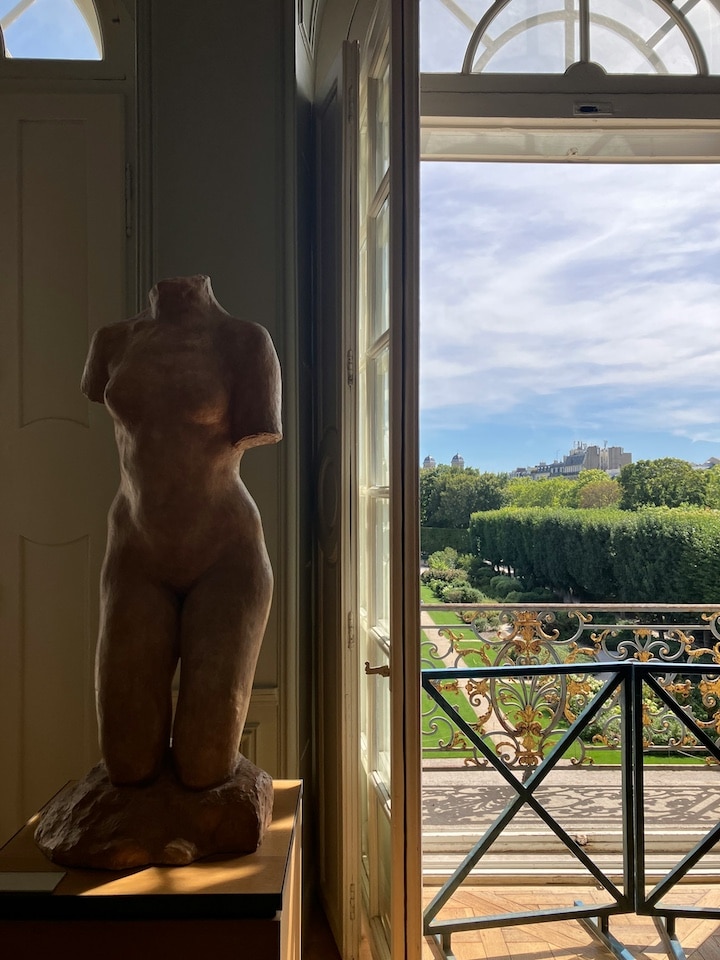
Located in the Hôtel Biron, an 18th-century mansion, Musée Rodin houses an extensive collection of Auguste Rodin’s sculptures, drawings, and personal artefacts – including The Thinker, The Kiss, and The Gates of Hell.
The museum has a beautiful sculpture garden, which has lovely seats and relaxing corners from which to enjoy the sculptures.
Napoleon’s Tomb / Musée de l’Armée
Stop by Place Vauban for an awesome view of Napoléon’s Tomb.
His tomb is in the Dôme des Invalides, part of the Musée de l’Armée complex. The golden dome was originally built as a royal chapel for Louis XIV. It became Napoleon Bonaparte’s final resting place in 1840. His red quartzite sarcophagus is in the circular crypt beneath the dome, surrounded by statues and inscriptions detailing his military achievements.
The Musée de l’Armée covers French military history from the Middle Ages to World War II. If sculpture isn’t your jam, swap the Rodin stop out with a visit to this museum instead. If museums in general aren’t your jam, just carry on walking!

Fluctuart – Centre d’art urbain
From the pomp and ceremony of Invalides, to a floating modern art boat!
Fluctuart is a floating urban art centre on the Seine, near Pont des Invalides. Opened in 2019, it is the world’s first floating museum dedicated entirely to street art and graffiti.
Across three levels, it has exhibition spaces, a rooftop terrace, and a bar, offering free entry to visitors. With rotating exhibitions, workshops, and live art events, Fluctuart offers something a bit different to end your walk with!
Eiffel Tower or Invalides / River Walk Return Loop
At this point in the walk, you can either head west along the the Eiffel Tower, or return east along the river to close the loop.
If you return back east along the river, enjoy the views down Avenue du Maréchal Gallieni to Invalides – the symmetry of the avenues, lawns and trees are so striking.
Left Bank Walking Route 4:
Pushing the southern boundaries of the Left Bank, we explore the sassy suburb of Montparnasse in this route.
From literary hangouts to underground boneyards, this district is full of theatres and interesting spots!
At 4.5 kms / 2.8 miles, with an optional literary and art side quest (1km / 0.6 miles), this is a great way to explore the artist haven of Montparnasse.
HOTEL RECOMMENDATION: The stunning Art Deco Hôtel Le M is a great option in Montparnasse. Nearer the Catacombs, the Hôtel du Lion is simple and convenient.
The Catacombs
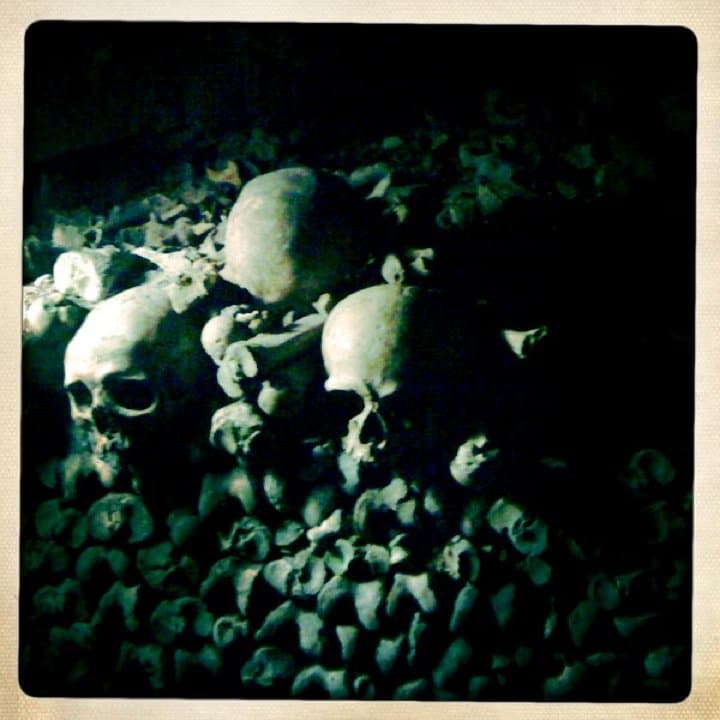
When a city has been in continuous use for as long as Paris has, the cemeteries get full. Cue, the catacombs!
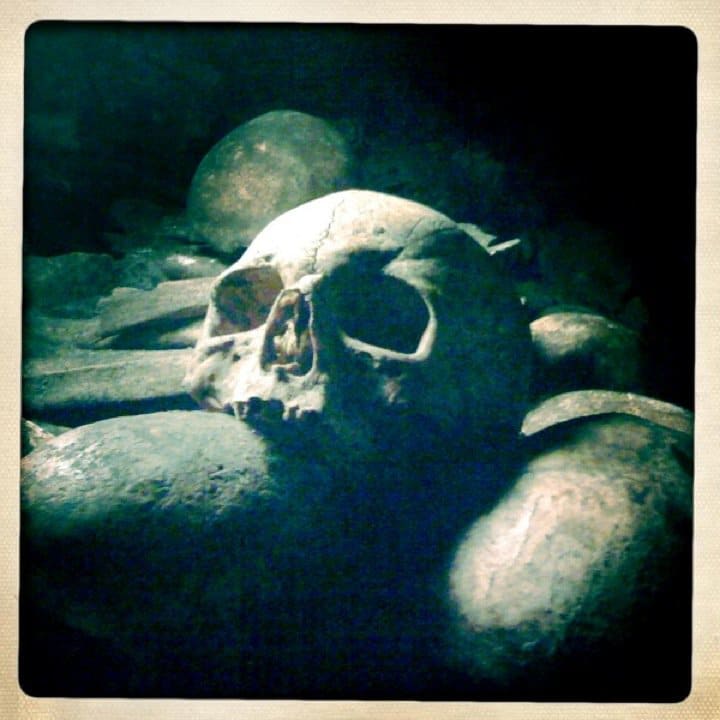
Originally limestone quarries, they were converted in the late 18th century to address the overcrowding of cemeteries. Bones were carefully arranged into decorative walls and patterns, creating an eerie yet fascinating site.
And yes, it seems awfully morbid these days, but it does sort of align with the mausoleum style of burial (but on a grand, less personalised, scale).
The entrance is near the Denfert-Rochereau metro / RER station, and you take a self-guided tour through the dark tunnels and narrow passageways stretching about 1.5 km (1 mile). The site is cold and damp, with 131 steps down and 112 steps back up, making it a unique but slightly challenging experience.
For those who don’t like being underground / in dark or narrow spaces, the nearby Cartier Foundation for Contemporary Art, and the Giacometti Institute are good alternatives.
Depending on the time of day you walk this route, stop at Chez Papa (6 Rue Gassendi) before or after your visit to the Montparnasse Cemetery.
Montparnasse Cemetery
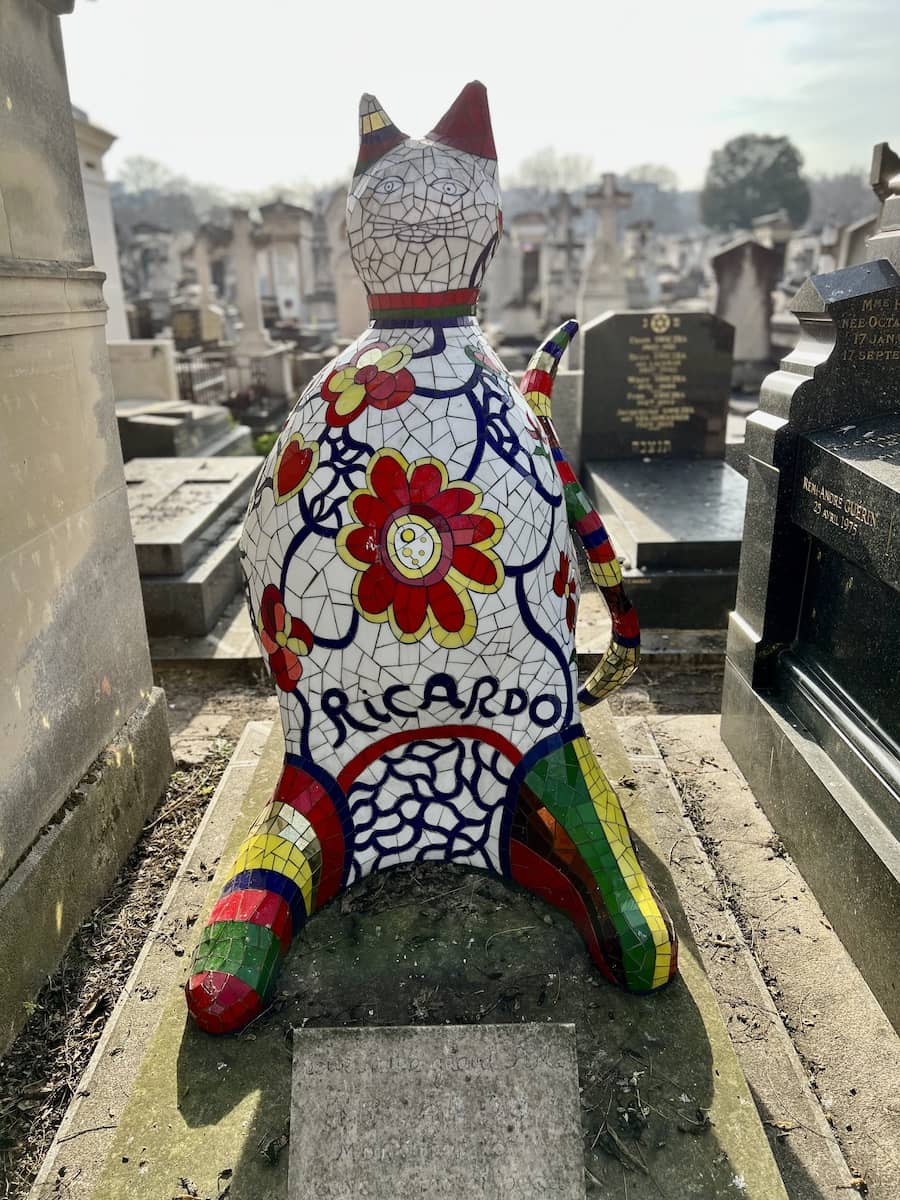
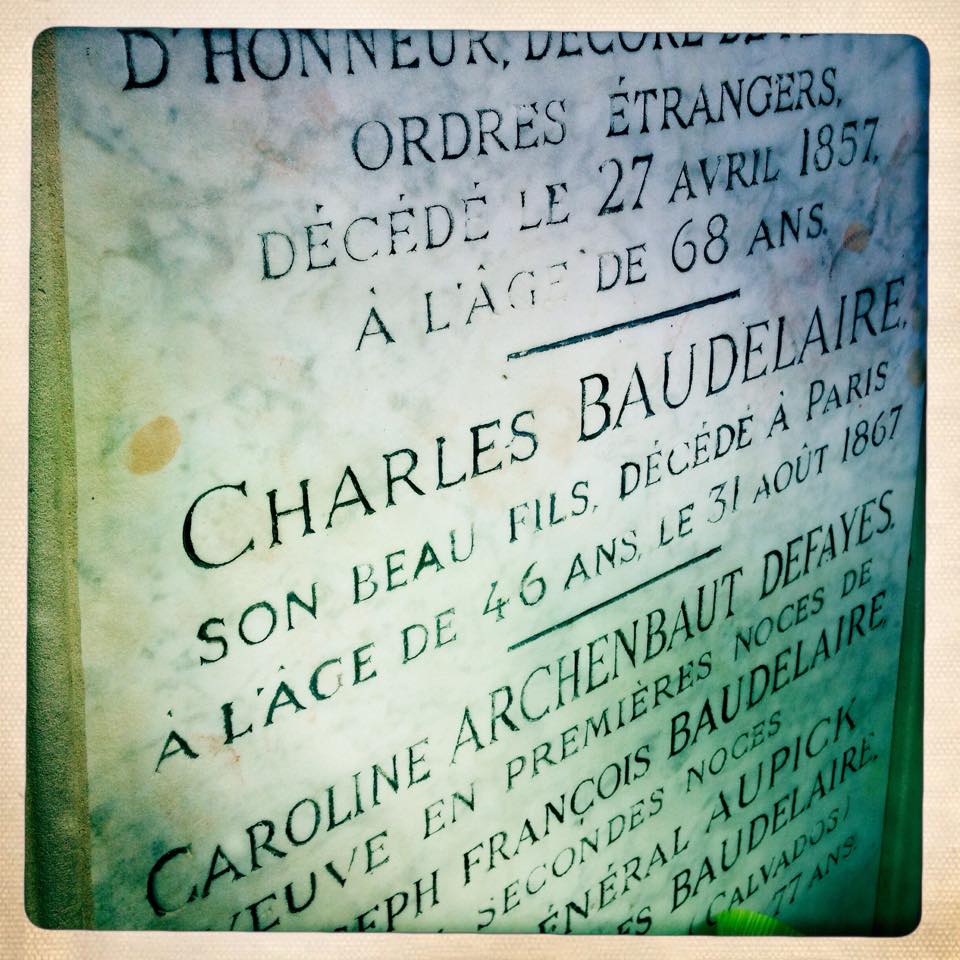
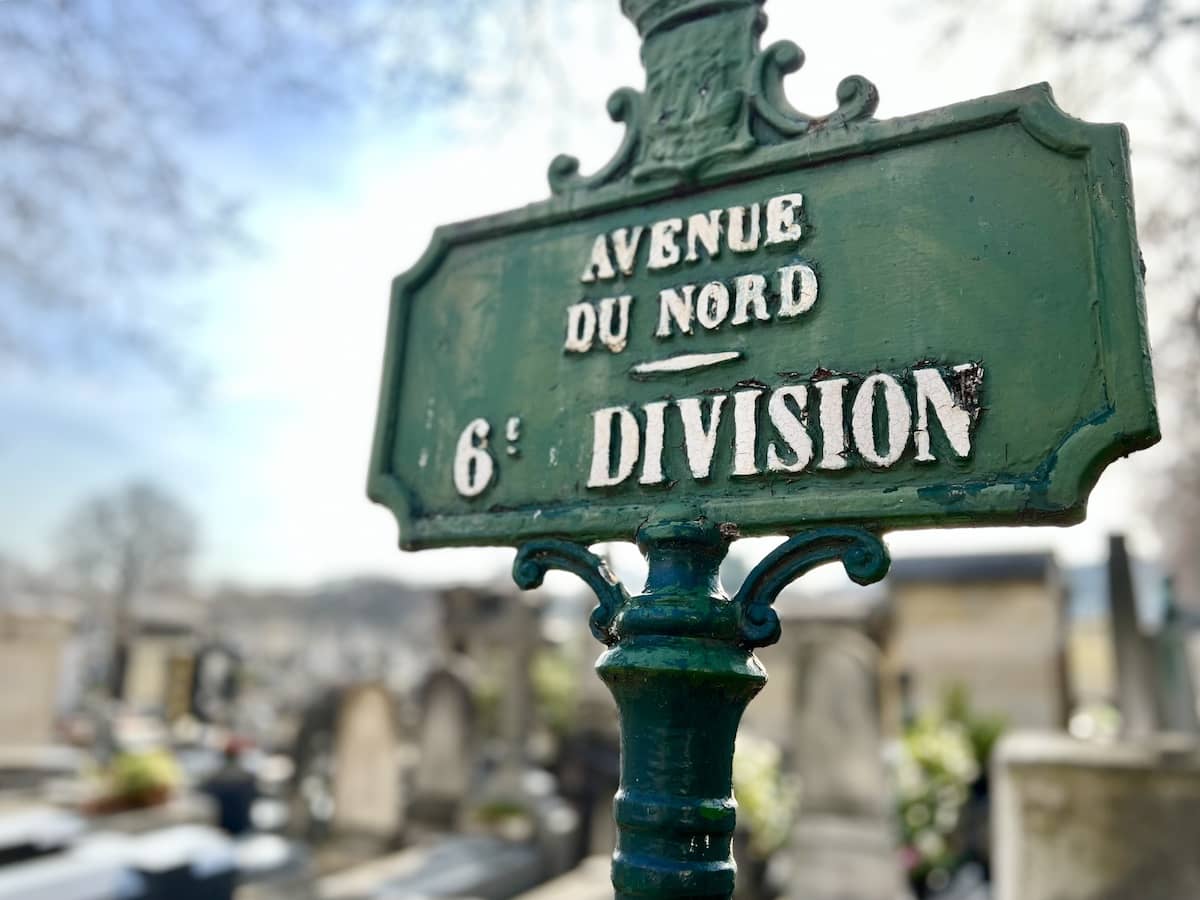
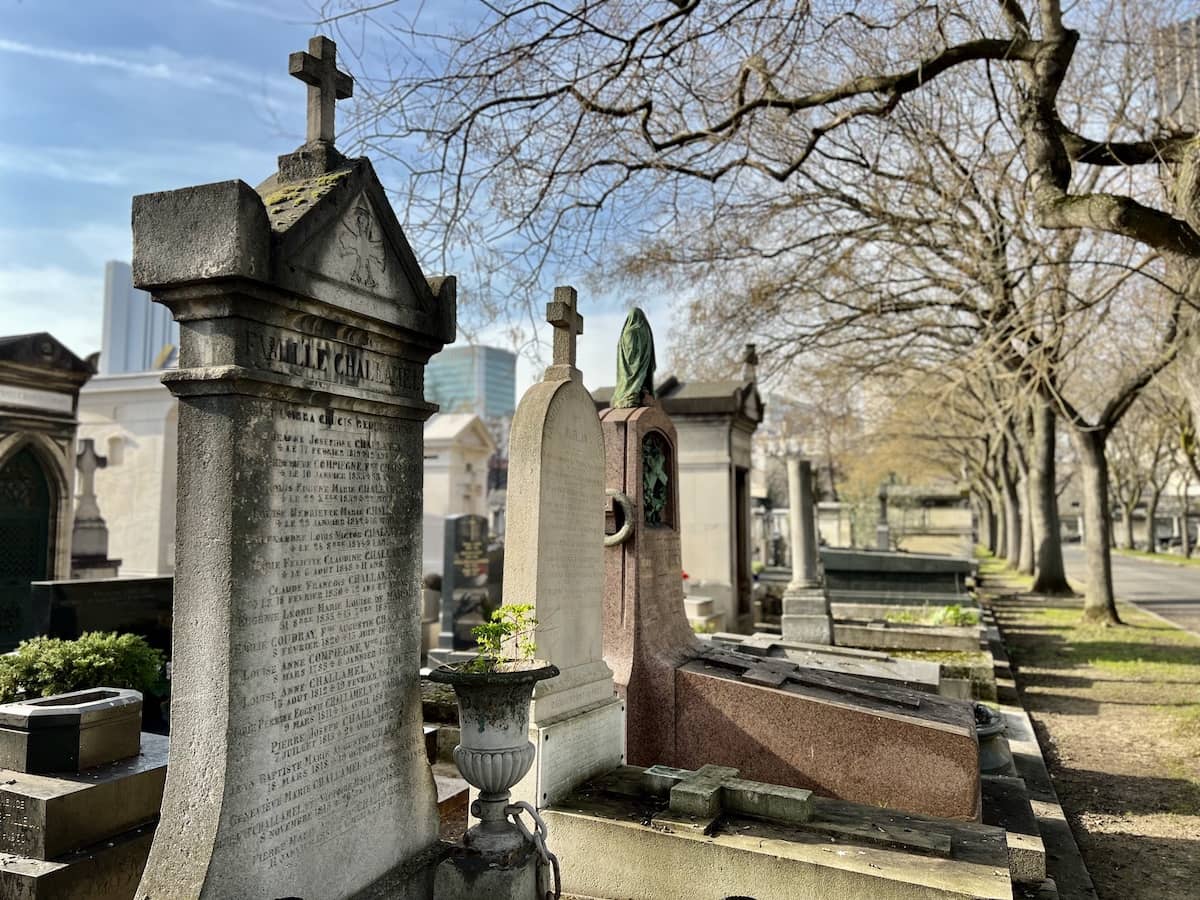
Paris also has gorgeous above ground cemeteries too, thankfully! Most people flock to Père Lachaise, and while that is lovely, my preferred cemetery to frequent is Montparnasse. My favourite French author, Charles Baudelaire, is buried here. As are Jean-Paul Sartre and Simone de Beauvoir, who made the Left Bank their home and their Existentialist stomping ground.
The graves are well looked after, and the trees and avenues are lovely to wander through.
Rue de la Gaité
Make sure you leave out the same southern exit of the cemetery, so that you can loop down Rue de la Gaité. This street is aptly named, and is the heart of the Paris theatre district. Small theatres, artistic bars and a gritty yet lively streets make this area a delight. There are many noodle bars and world cuisines in this area too, so that makes a nice break from the usual bistro food options.
Montparnasse Tower
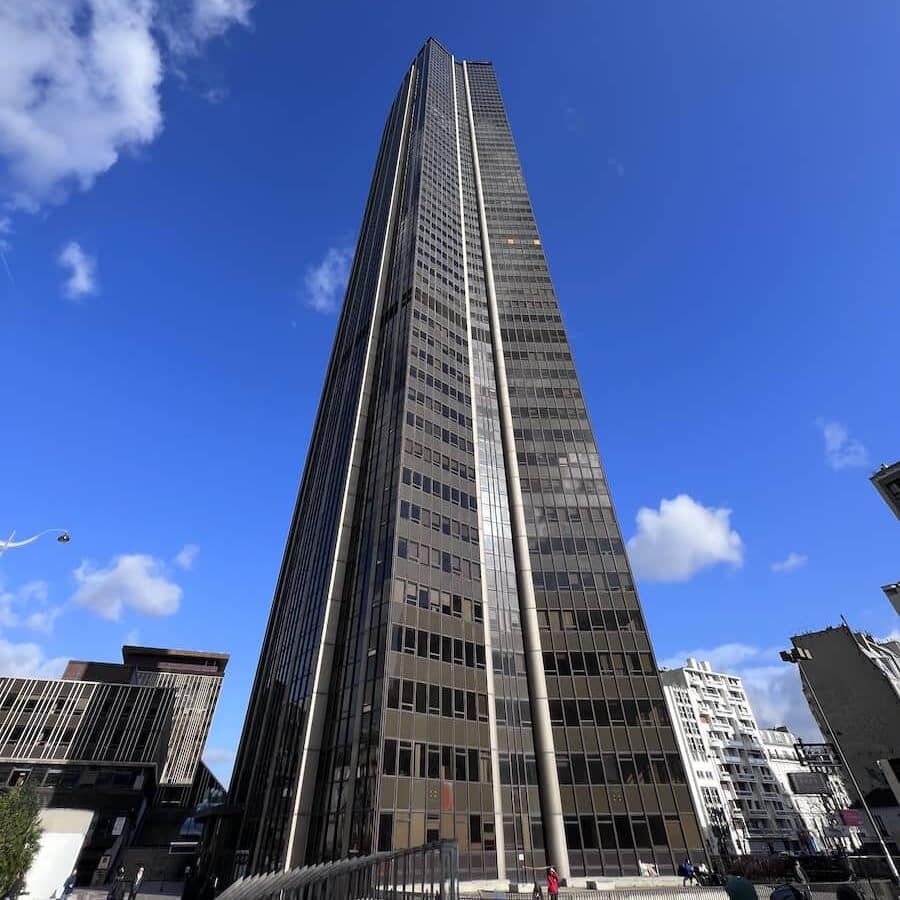
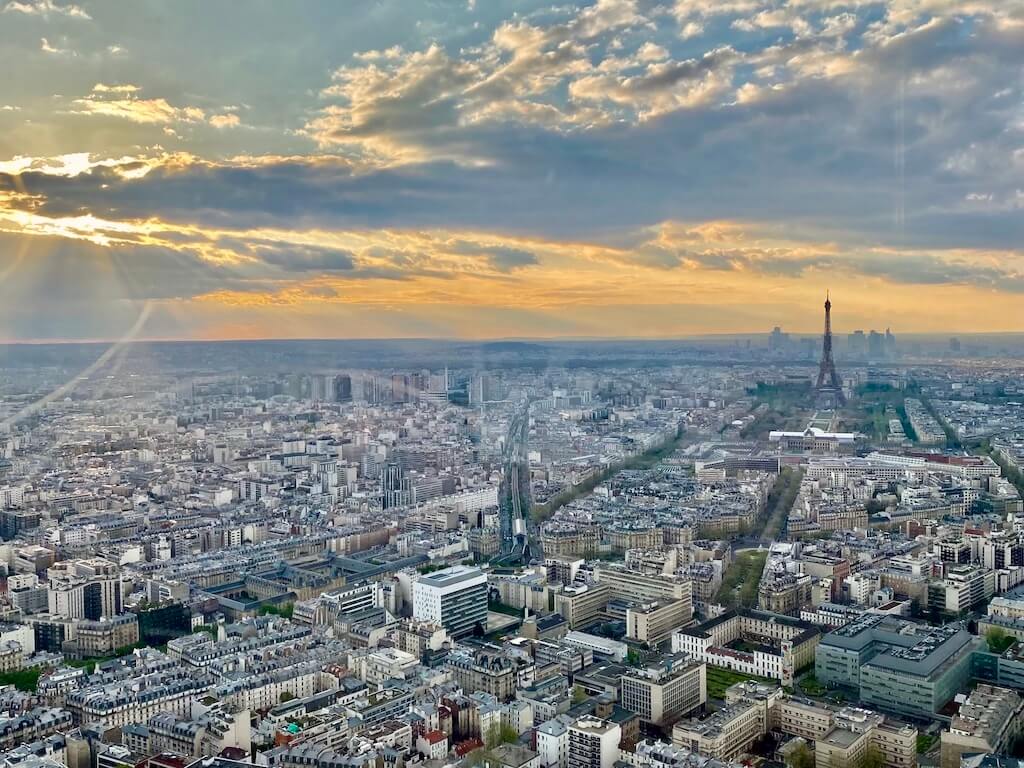
One of the best views in Paris is from the Montparnasse Tower. This modern tower cause so much of a backlash from locals, that Paris banned high-rises within the Péripherique ring road. All the big business high rises are now outside the main 20 arrondissements, and it makes the landscape remarkably low-rise for a big city!
The up side of this high-rise? The views! With a viewing floor and cafe, offering views over Paris on the 56th floor, plus a rooftop terrace, it is a fantastic thing to do on your walk around Montparnasse.
There is also a restaurant on the 56th floor, Ciel de Paris, which is perfect for that romantic dinner or special occasion.
A Literary & Artistic Side Quest
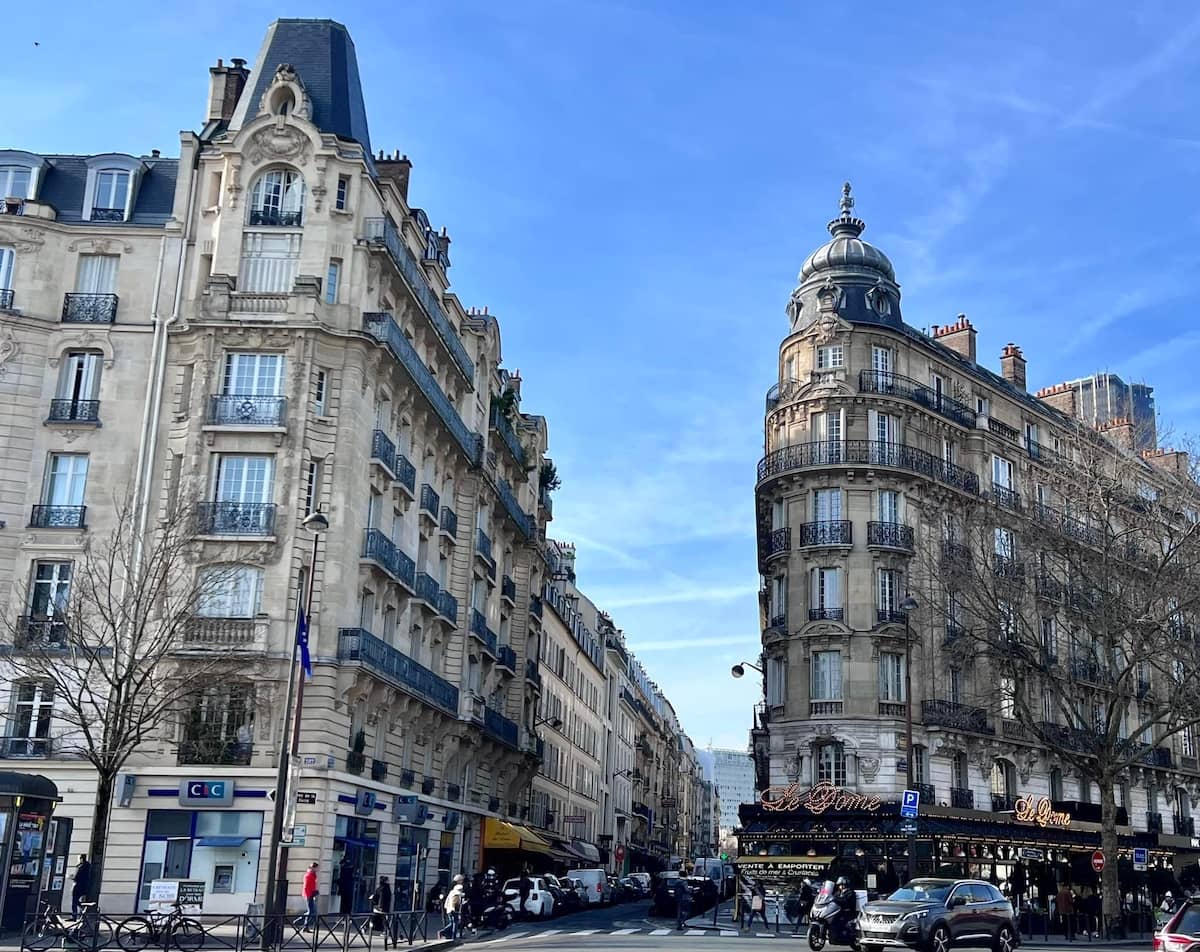
For those who are drawn to Paris because of literary or artistic inspiration, this next part of the wander is to see some of the places where notable writers and artists lived and worked in Montparnasse. It’s all within a small area between the La Rotonde cafe and the southern end of the Luxembourg gardens.
- Ernest Hemingway – lived at 113 on Rue Notre-Dame des Champs from 1924-1926
- Paul Cezanne – lived at 5 rue de Chevreuse
- Paul Gauguin and Alphonse Mucha shared a studio at 8 rue de la Grande Chaumière between 1893-1895
- Gertrude Stein lived at 27 rue de Fleurus
The cafes around this area were the hangouts of these burgeoning artists and writers. La Rotonde, Le Dôme, Le Select, and La Coupole are all still operating and still part of the fabric of artistic Montparnasse. La Closerie de Lilas, a block down, is where Hemingway wrote much of The Sun Also Rises.
I don’t know about you, but these little pieces of history weave an inspiring tapestry for me around Paris, but the best part is how this city still inspires with the life and vibe that still shines.

Statue of Liberty
End this route in the south end of the Jardins du Luxembourg. See a maquette of the Statue of Liberty, or admire the Fontaine des Quatre-Parties-du-Monde.
There are apparently a few statues of Lady Liberty in Paris, or nods to her. I’ve only seen two – one in the Luxembourg Gardens, and the other on Île aux Cygnes – a 11.5-meter (37 ft) replica on the Seine, facing west toward New York, which was inaugurated in 1889.

The Left Bank of Paris Guide
Exploring the Left Bank on foot is the perfect way to soak up its charm, literary legacy, and epic café culture. From the grand halls of the Panthéon to the artistic treasures of the Musée d’Orsay, and the hidden courtyards of Saint-Germain-des-Prés, it all tells a story.
These 4 self-guided walking tours add up to around 20 kilometres / 12 miles, and are perfect for those who have a little more than a short visit in Paris! I hope they help you enjoy the Left Bank as much as I do!
Whether you’re discovering roman history or watching the world go by at a cafe, the Left Bank offers the very best of Parisian life (IMHO). Take your time, wander with this post as inspiration (but not the rule!), and let the soul of south of the river Paris reveal itself with every step.
Don’t miss my favourite cafes of the Latin Quarter!
All photos © Hannah Henderson and may not be used without permission (sharing this blog post is fine, though!). Images shot with a Canon DSLR T3i Rebel + Canon EF Lens 50mm 1:1.8 STM; and an iPhone6s.