One of the most famous drives in the world, Australia’s Great Ocean Road is a wonderful drive if you love road trips. Australia is vast, so while this 1000 kilometre+ drive is 3-days of your life, it is just a tiny fraction of the whole circumference of the Australian coastline. Driving from Melbourne to Adelaide via the Great Ocean Road is a brilliant way to see more of the country, see some wildlife, and some very special landscapes.
Enjoy Melbourne and Adelaide at either end of this road trip
I recommend spending 4 days in Melbourne (at least) before you drive the Great Ocean Road. This wonderfully colourful city has such a cool vibe, lots of trendy eateries, and is very arts-orientated.
At the end of your trip, don’t miss a chance to spend a few days in Adelaide, the Barossa Valley and Murray River. The old German vibes of Hahndorf are a kick too.
If you are nature-lovers, an overnight trip to Kangaroo Island is also very special.


The Great Ocean Road from Melbourne to Adelaide (of vice versa)
Part of the Princes Highway from Sydney to Adelaide, the Great Ocean Road is a stunning section of this coast road, from Anglesea to Nullawarre in Victoria, Australia. Here are my preferred stops along the way, including sights, wildlife and nature spots, and accommodation suggestions.
Day 1: Melbourne to 12 Apostles
270 kilometres / 168 miles
Memorial Arch
Drive time from Melbourne to Memorial Arch: 1h45
Welcoming you to the Great Ocean Road is the Memorial Arch. This coastal road was built by the veterans of the World War I, so it is their living monument. The archway has parking and some informational panels to memorialise the remarkable engineering feat that this road represents.


Lorne
Drive time from Memorial Arch to Lorne: 20 mins
Lorne is a great spot to pick up provisions if you are staying at self-catering accommodations. At the beginning of town is a Foodworks supermarket (opposite the campsite), where you can stock up for your lunchtime picnic and dinner items.
Further down the road is the promenade with shops, cafes and views out over a playground and sand dunes towards the beach. Stop for a coffee here. There are also several shops selling beach items, in case you fancy a turn on the beach. Sunscreen, towels, floatation devices, swimsuits, and flip flops (or thongs as they call them in Australia / jandals in New Zealand) are on offer.



Mount Defiance Lookout
Drive time from Lorne to Mount Defiance Lookout: 15 mins
The hilly landscape is hard to imagine navigating without this road, and the impressive terrain is visible from the roadside pullout at Mount Defiance. The lookout area is on the left, which is best suited to those driving from Melbourne to Adelaide (you drive on the left in Australia and NZ).


Kennett River Koala Spotting
Drive time from Mount Defiance Lookout to Kennett River: 15 mins
Your first major stop is the Kennett River Koala Walk. The parking lot at Kafe Koala is your target, and the Koala Walk is a short walk from there. It’s a roadway you walk on, surrounded either side with gum trees. If you are lucky, as we were, you may catch a glimpse of a sleepy koala.
The walk isn’t the most peaceful as some we’ve been on in Australia, as it is a roadway (with homes located further up the hill). But it is worth the uphill climb around the first few bends to see what wildlife you can spot.
Stop into the cafe for lunch if you haven’t planned a picnic already. We got a takeaway coffee to drink as we walked up the hill.


Apollo Bay
Drive time from Kennett River to Apollo Bay: 30 mins
Apollo Bay is another beach town along the route. With a lovely white sand beach, it is a popular holiday spot. If you wanted to extend your stay and do some of the Great Ocean Walk or hikes into the Great Otway National Park, then Apollo Bay is a good spot will lots of amenities and a relaxed beach vibe.
Maits Rest Rainforest Walk
Drive time from Apollo Bay to Maits Rest: 20 mins
As you wind your way into the rain-forested hills of the Great Otway National Park, you have the opportunity to stop and take a walk among the beautiful 300-year-old trees. The Maits Rest Rainforest Walk is a quick and easy 20-minute walk through the lush rainforest, where carnivorous snails live, and bird song rings out around you.
It was quite magical here, despite the rain closing in as we finished our walk.
Cape Otway Lightstation (detour)
Drive time from Maits Rest to Cape Otway: 20 mins (15 mins back to the highway afterwards)
An additional detour is out to the Cape Otway Lightstation. A 30 minute detour will take you to the oldest surviving lighthouse on mainland Australia. This rocky coastline was the scene of many shipwrecks, so the lighthouse was built in 1848 (which given the terrain is quite the feat). You can pay to climb the lighthouse, and there is also a cafe for refreshments.
On the day we visited, there was a wild storm that rolled in and out, so we missed the walk down to the light station sadly.


12 Apostles at Sunset
Drive time from the Cape Otway turnoff to the 12 Apostles: 1 hour
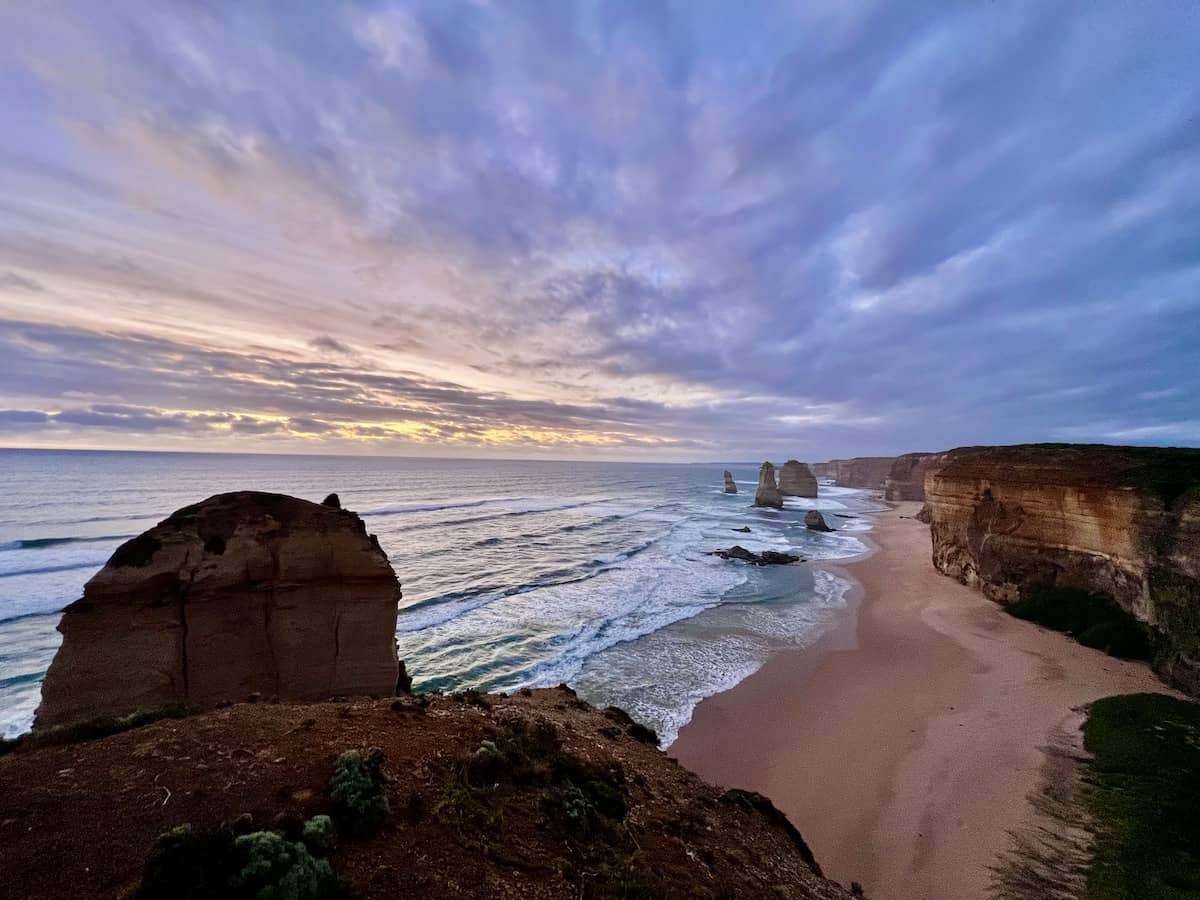
Thankfully, the storm passed for our evening activity – sunset at the 12 Apostles. We had time to check-in at our accommodation, and drive there with plenty of time to see the sky change with stunning colours.
Parking is free, as is entry to the viewing areas of the Port Campbell National Park at the 12 Apostles. There is a short paved walk from the carpark and visitor centre to the viewing platforms. The toilets and visitor centre is closed out of normal business hours, but the path and platforms are open 24/7 365 days of the year.
We arrived about 15 minutes before technical sunset, and I’m glad we did, as there was still enough light to see the flocks of Fairy Penguins making their way onshore and across the beach to their dens in the dunes and caves. I only wish I had brought my 500mm lens with me for that!
The purple hues in the sky were captivating, and the stacks took on a mysterious misty look. We stayed about 45 minutes, until the light had gone and the chilly spring winds forced us to retreat. Back to our rental cottage to warm up!


Where to stay near the 12 Apostles, Australia
We stayed at the delightful 12 Apostles Cottages. Set up in the farmland a short distance from the coast, our little cottage offered beautiful relaxing views, a full kitchen, bbq, a bathroom and 2 bedrooms. There were two independent cottages, and a farm house for rent. Their goats and chickens made for cute morning companions while I drank my coffee.


Day 2: 12 Apostles to Mount Gambier
255 kilometres / 158 miles
12 Apostles at Sunrise
I love seeing places in different lights, so we got up early to see the 12 Apostles at sunrise too. Sadly, the grey weather stopped us getting any impressive colours. But no matter the weather, it is such an impressive coastline.
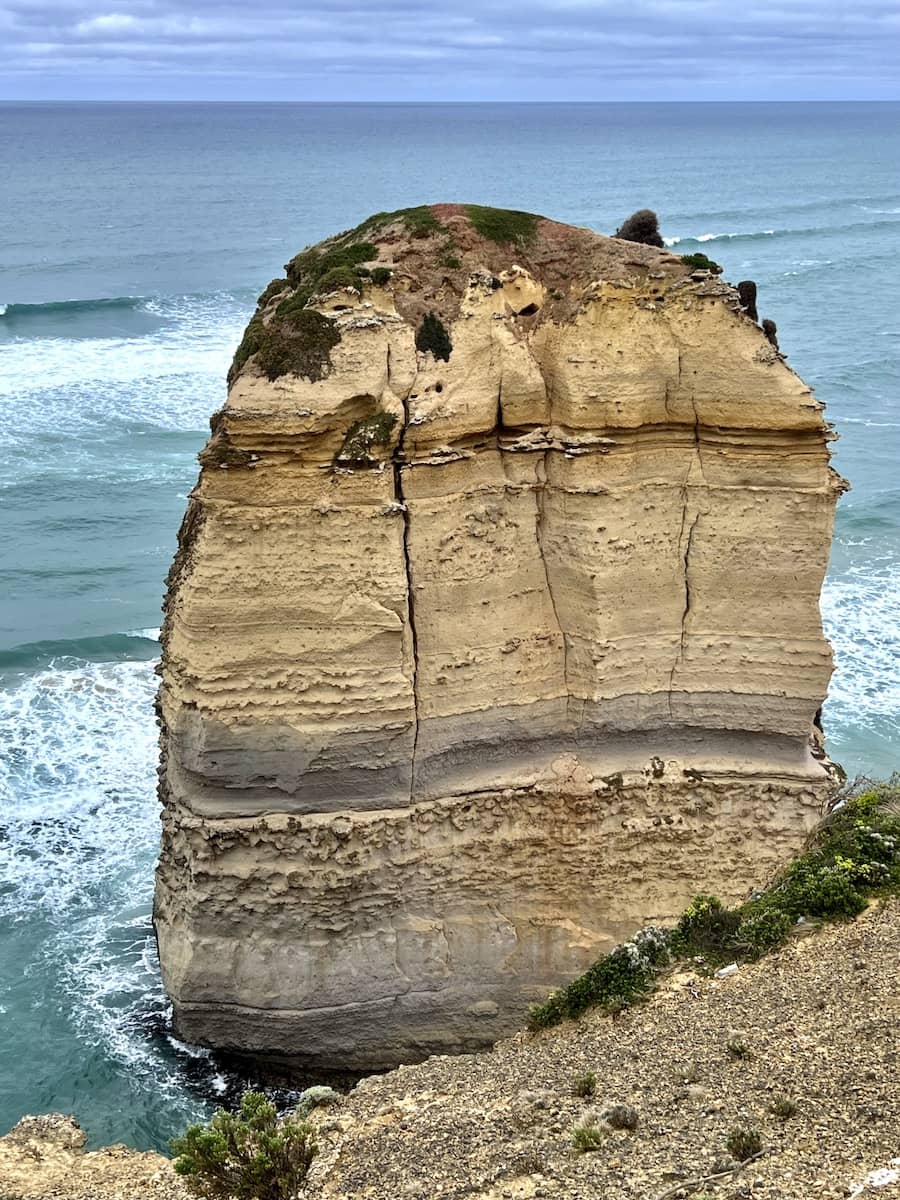
These iconic limestone stacks were formed over millions of years by erosion. Once part of the cliffs, over time tunnels formed, and then arches, and finally isolated columns. There are only 8 stacks visible from the lookout (as many have collapsed over time). There are around 30 along the whole coastline.
The tide was high both visits for us, so alas we couldn’t use the Gibson Steps to climb down the beach. We stopped at the lookout (a little before the 12 Apostles carpark), and the steps were steep and windy!




Loch Ard Gorge, Tom & Eva Lookout and Razorback
Drive time from 12 Apostles to Loch Ard Gorge: 5 mins
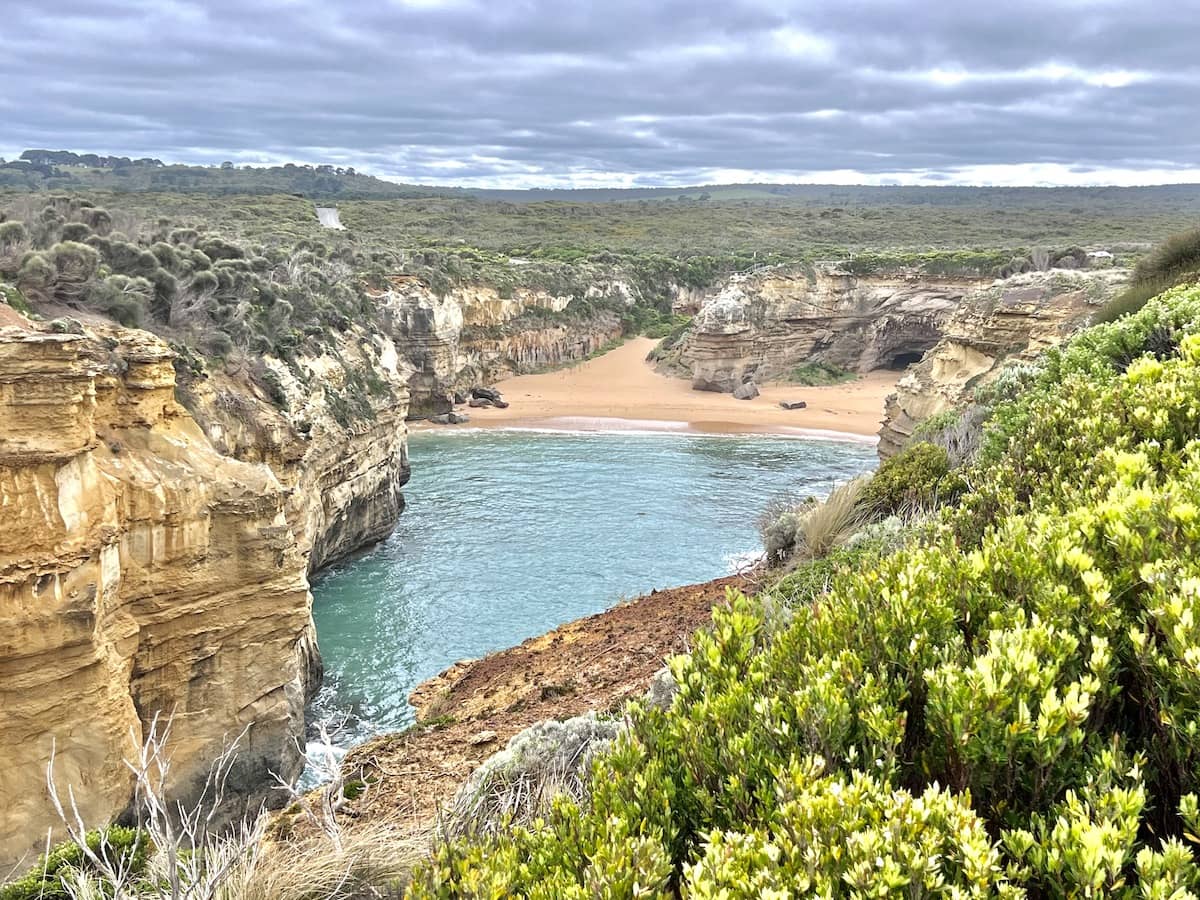
The next stop off is the carpark for Loch Ard Gorge, Tom & Eva and Razorback rock formations. The gorge is a u-shaped bay, renowned for its stunning cliffs and vibrant turquoise waters (even in grey weather it was bright blue). Named after the ill-fated Loch Ard shipwreck, the two nearby stacks are named after the only two survivors, Tom and Eva.
The nearby Razorback formation is a striking natural feature, jagged edges formed over millennia, and now home to seabirds. There are wonderful, and accessible, paths along this stretch of coastline, including large viewing platforms.
There are lots of other walks and viewpoints, including Mutton Bird Island and Sherbrook River Watch Point, but we decided to move on further down the coastline, as there is lots to see!




london Bridge & The Bay of Martyrs
Drive time from Loch Ard Gorge to London Bridge: 20 mins
The next stop is London Bridge and the Bay of Martyrs (more stone stacks). London Bridge was once a double arched stack connected to the mainland, but constant waves from the Southern Ocean caused one to fall, and now it is just a lonely arch offshore.
Watching the huge swells fill and empty the cave was quite captivating.
The Bay of Martyrs is a smaller group of stacks further along the coast. It is a unique and amazing landscape to witness.

Nullawarre
Drive time from London Bridge to Nullawarre: 25 mins
The little, nondescript town of Nullawarre marks the end (or beginning, depending on which direction you choose to drive this route) of the Great Ocean Road. The Princes Highway continues, but the Great Ocean Road section ceases here. Many don’t make it this far, they drive as far as Loch Ard Gorge and then hightail it back to Melbourne. But I can’t recommend carrying on to Adelaide enough – it is such an interesting and diverse route.
Port Fairy
Drive time from Nullawarre to Port Fairy: 45 mins
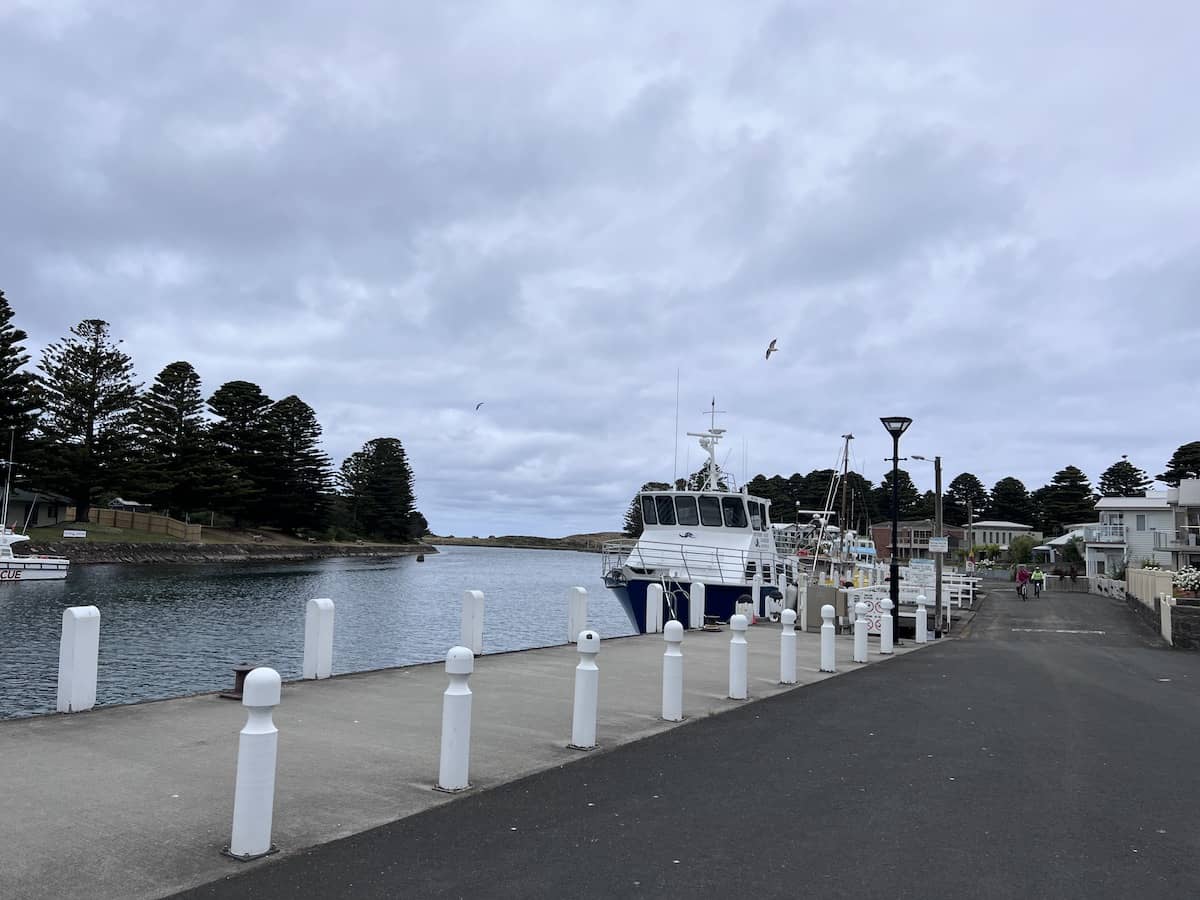
Time for fresh seafood for lunch! Down at the port on the Moyne River, you’ll find a boat with fresh fish and lobster, alongside a cooker on the back deck – where you can choose and then have your seafood cooked right in front of you!
On Bank Street, you’ll find gorgeous little cafes, bakeries and other eateries. It’s a lively and funky little downtown, where we would’ve enjoyed spending the night if timescales had allowed.
Crossing into South Australia, and onwards to Mount Gambier
Drive time from Port Fairy to South Australia sign: 1h40
We couldn’t miss a selfie opportunity with the Welcome to South Australia sign. Having driven halfway across Victoria, it was a worthy roadside stop!



Where to Stay in Mount Gambier
Drive time from South Australia sign to Mount Gambier: 25 mins
Mount Gambier is one of those strange towns that is so remote, you can’t quite fathom how people ended up here. But there was mining and industry, and the usual pioneer spirit! And as a result, there are some lovely historic hotels here. The majority of historic hotels are clustered around Cave Garden / Thugi (a huge sinkhole with surrounding gardens). Mount Gambier Hotel, Mac’s Hotel, Mount Gambier Jens Hotel, and Colhurst House to name a few.
We stayed at the Grand Central Motel, a roadside motel not far from this area. We didn’t spend any time exploring Mount Gambier, as we were tired from the day of driving, but we did get great fish and chips there!
Day 3: Mount Gambier to Adelaide
463 kilometres / 288 miles
Blue Lake / Warwar
Blue Lake is a volcanic crater lake, on the edge of Mount Gambier, with a vivid blue hue. It is a water source for the area and is a popular attraction and recreation area. Nearby Potter’s Point Lookout offers great views of the lakes and Mount Gambier.
The Long Straight Roads of South Australia
Drive time from Mount Gambier to Millicent: 45 mins
Once you hit South Australia, you start to see a change in landscape – the winding Victoria coastline gives way to stretches of straight roads, forestry, and brush instead of rainforests. It was along this leg of the journey that we saw far more roadkill – between Portland VIC and Robe SA we must’ve seen about 14 dead kangaroos and 1 dead koala – it was so sad.
We stayed along the coastline, visiting Bridgeport for a coffee, passing through areas with names like Millicent and Rendelsham – a reminder of the colonial influence in the area.


Robe
Drive time from Millicent to Robe: 1 hour (via Beachport)
Drive time from Mount Gambier to Robe: 1h40 (via Beachport)
Robe was our lunch spot. I had heard that Long Beach was a stunning stretch of white sand beach, so we grabbed a pie and a lamington (read more about these cakes here) from the Robe Bakery and enjoyed the beautiful blue water.
Robe is super cute, and would be a lovely place for a beach holiday. Laid back cafes, a supermarket, a walkway round the waterfront, and a chill vibe – perfection!


Kingston
Drive time from Robe: 30 mins
We continued along to Kingston and were delighted by this giant lobster statue. I’m a huge fan of random, giant roadside attractions (like Carhenge in Nebraska, and the big carrot in Ohakune, NZ), so this was a kick!
I can’t say too much about Kingston, as we just passed through.

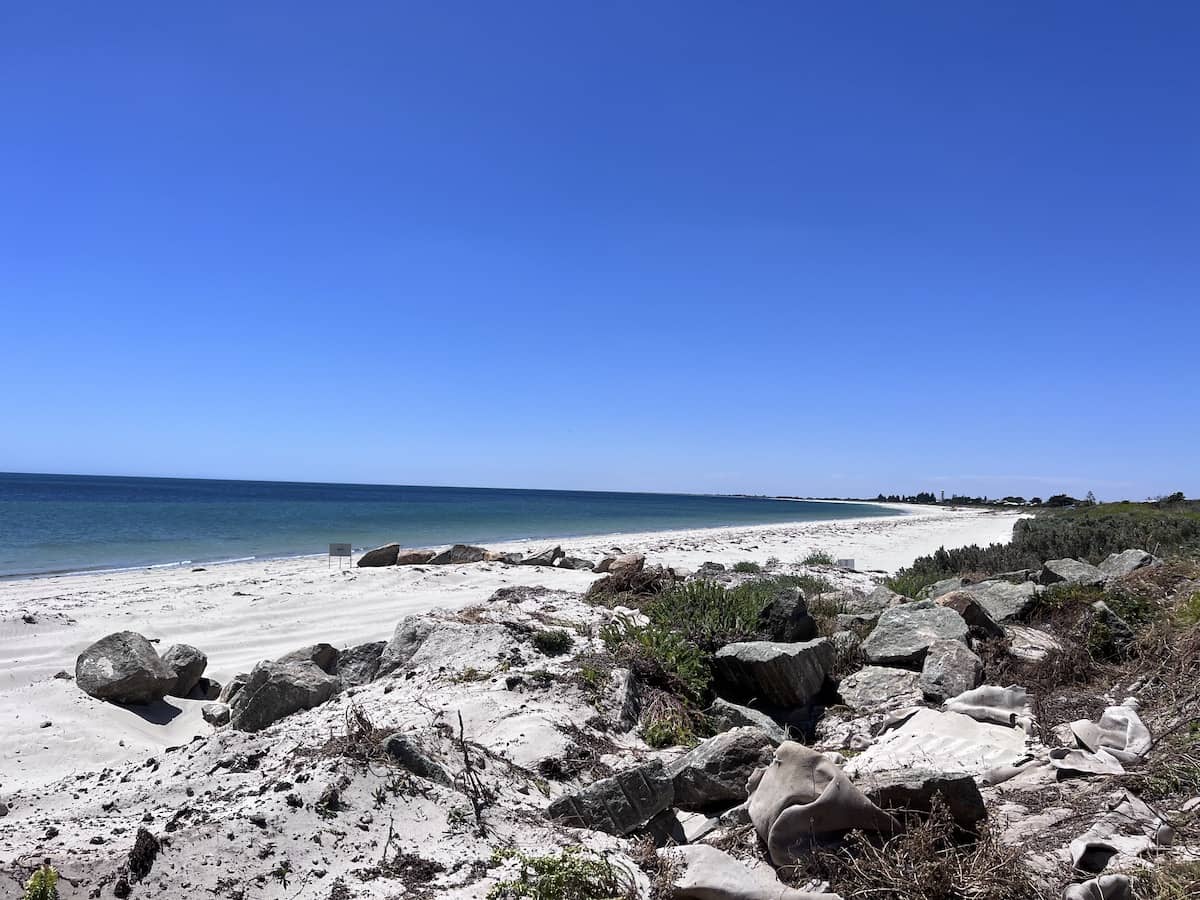
Coorong National Park
Drive time from Robe to Coorong: 1 hour
The Coorong is a coastal lagoon system in between Robe and Adelaide. This long stretch of wetland is a haven for birdlife, including a huge colony of Australian Pelicans (at Jack Point).
The Coorong is of huge significance to the Aboriginal people, particularly the Ngarrindjeri nation. With cultural, spiritual, and historical value, as well as serving as a vital source of food, water, and materials.
The Coorong is also central to many Dreamtime stories, traditions, and ceremonies that connect the Ngarrindjeri people to their ancestors and land.


Meningie
Drive time from Coorong to Meningie: 30 mins
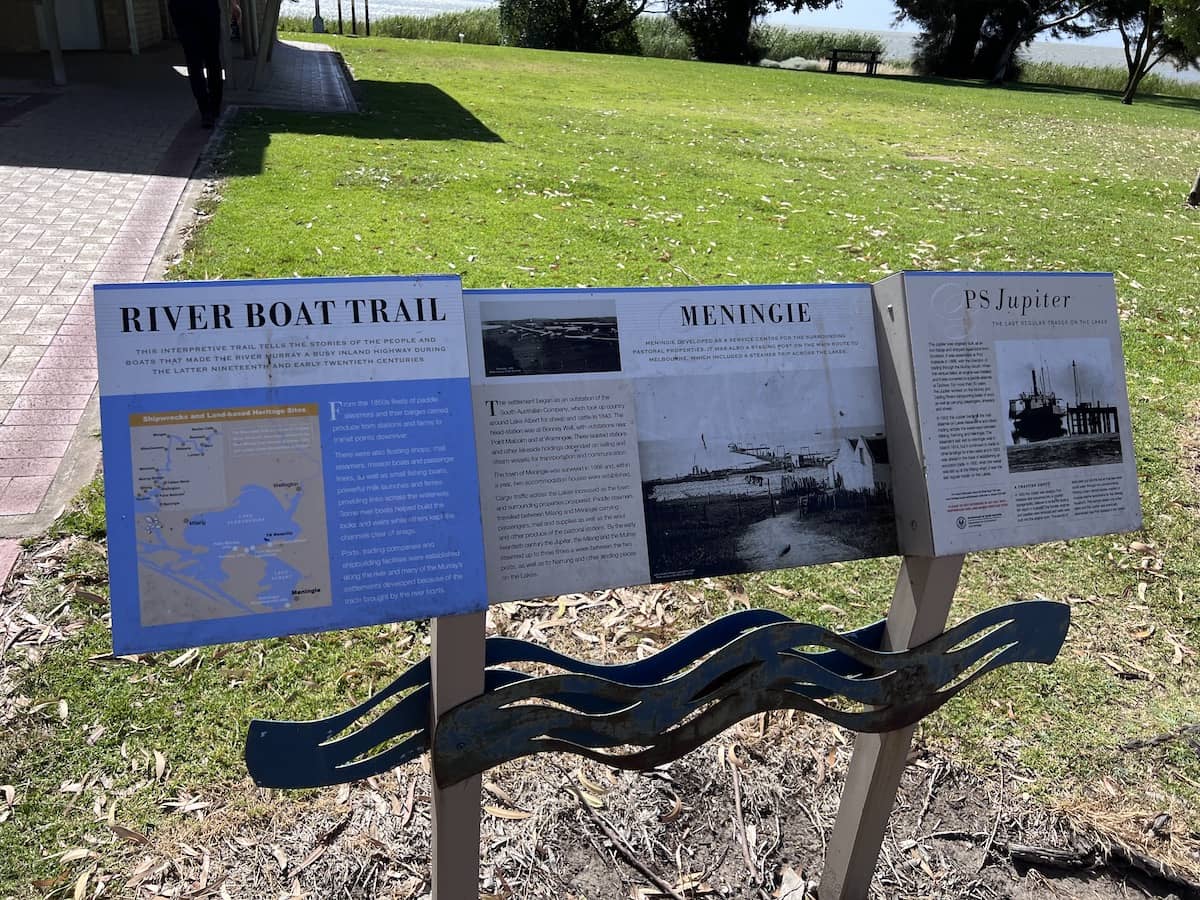
Meningie is on the shores of Lake Albert. We stopped by the public conveniences, and walked the River Boat Trail, which tracks the region’s steamboat heritage with informative signs, beautiful landscapes, and opportunities for birdwatching and fishing. It was a peaceful pitstop on a gorgeous day.
If you want to replicate this stop, put Jubilee Park into the satnav.




Things to do in & around Adelaide
After driving the Great Ocean Road in 3 days, you might want to relax a bit, so consider taking tours and enjoy not driving for a few days!
- Old Tailem Town Pioneer Village
- Murray River Cruise
- Barossa Valley Wine Tour
- Hahnforf
- A trip to Kangaroo Island
In Adelaide:
- Central Market
- Botanic Garden
- South Australian Museum
- River Torrens Cruise
Murray River Cruise
Drive time from Meningie to Murray Bridge: 1 hour
Drive time from Adelaide to Murray Bridge: 1 hour
Drive time from Hahndorf to Murray Bridge: 35 mins
An easy drive from Adelaide or Hahndorf, Murray Bridge is the jumping-off point for a day cruise along the Murray River. We took a ride with Captain Proud, an endearingly ancient paddle boat. The boat took us down river for about an hour, had lunch aboard and then tootled back – it was such a relaxing way to spend a few hours.
We saw lots of birds – cockatoos, galahs, cormorants, and herons and egrets, as well as big flocks of pelicans following the river to the sea.


Hahndorf
Drive time from Murray Bridge to Hahndorf: 40 mins
You can choose to stay in Hahndorf or in Adelaide for your visit to the area, the former has a laid back vibe, and the latter is a modern city with all that entails.
Hahndorf was founded in 1839, and is the oldest surviving German settlement in Australia. Aside from the delicious Adelaide wines, you can enjoy the history and culture, the well-preserved German architecture, artisan shops, and local eateries serving traditional German cuisine.
We loved chilled evenings at the Hahndorf Inn, eating German pretzels and sausage, and my husband enjoyed the steins of beer. It was so odd to be in a little slice of Germany in Australia – it made me think of all the immigrants that settled here and in New Zealand and brought a piece of themselves halfway around the world.


Where to stay in Hahndorf
We stayed at the Hahndorf Motel, a very central and comfortable motel with parking. It was across the road from the historic Hahndorf Inn for delicious German food, and near to a supermarket and shops.
Where to stay in Adelaide
Drive time from Hahndorf to Adelaide city centre: 30-40 mins (depending on traffic)
If you want to have a bit of rest and relaxation after your long drive, stay out at Henley Beach, somewhere like the Ramsgate Hotel. For a city centre option, The Mayfair is a really well-priced 5-star. We stayed at the Ibis Adelaide, which was very walkable and clean.
Great Ocean Road FAQ
If you love travel, and love road trips down under? Get your inspiration here!
All photos & content © Hannah Henderson and may not be used without permission (sharing this blog post is fine, though!). Images shot with a Canon DSLR T3i Rebel + Canon EF-S 18-135mm f/3.5-5.6 IS STM; and an iPhone.