Ho Chi Minh City is Vietnam’s largest urban centre and is a fascinating mixture of its different pasts, from French colonial buildings and wartime landmarks to rapidly developing modern neighbourhoods. It isn’t as naturally captivating as Hanoi, but it has a different set of charms. 2 days in Ho Chi Minh City will give you a great taster experience.
We spent a week in Ho Chi Minh City and really enjoyed the incredible food options, the views from the skyscrapers, and the modern city vibes. I definitely recommend longer than 2 days in the city, but here are some ideas to get you started.
Brief history of Ho Chi Minh City
Ho Chi Minh City, formerly Saigon, has a complicated history shaped by Vietnamese, Chinese, French and American influences. The area was originally part of the Khmer kingdom before Vietnamese settlement expanded southwards from the 17th century. The French captured Saigon in 1859 and developed it as the capital of their colony of Cochinchina, leaving behind much of the city’s French architecture and infrastructure.
After French rule ended following the First Indochina War, Saigon became the capital of South Vietnam and played a central role in the Vietnam War. The city fell to North Vietnamese forces on 30 April 1975, bringing the war to an end. In 1976, Saigon was officially renamed Ho Chi Minh City (HCMC), after the revolutionary leader who had died in 1969.
It’s important to note that the name Saigon is still very commonly used – in place names and by the locals in everyday use.
Where to Stay in Ho Chi Minh City
I have first hand experience of three hotels in Ho Chi Minh City, and all were great in different ways:
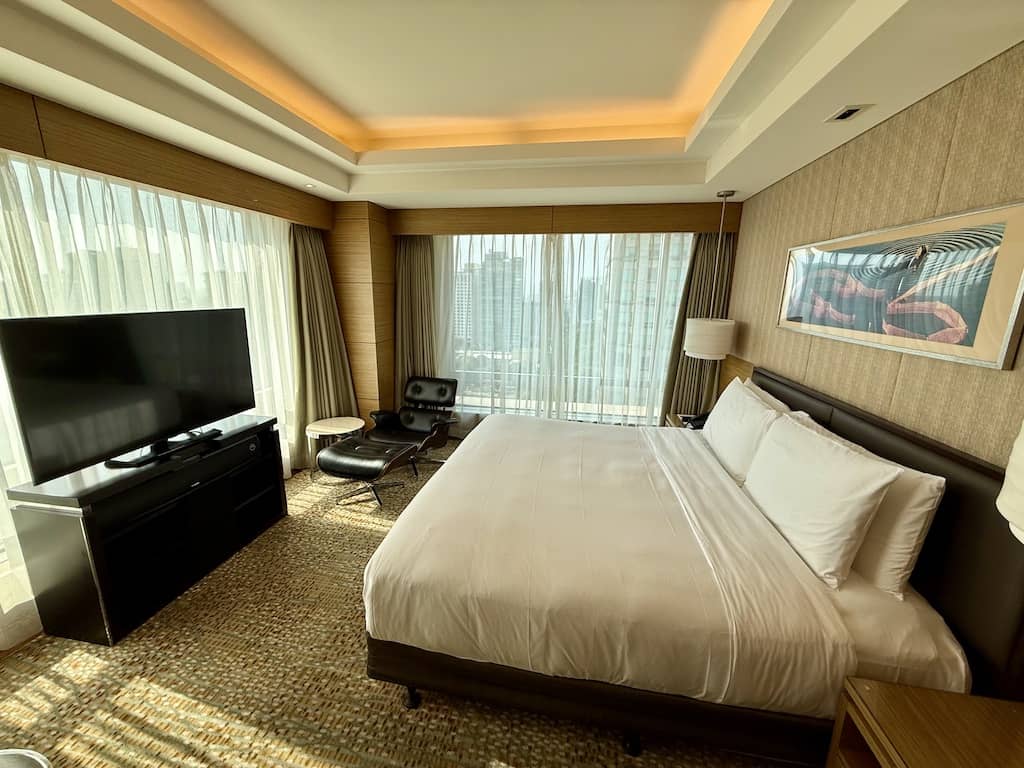
- JW Marriott Hotel & Suites, Saigon – This was one of the most stunning hotels we’ve been in, partly because of the gorgeous duel aspect corner suite upgrade we got, but also because the Elite Status Lounge was fantastic. Great food and drink offerings and such attentive staff.
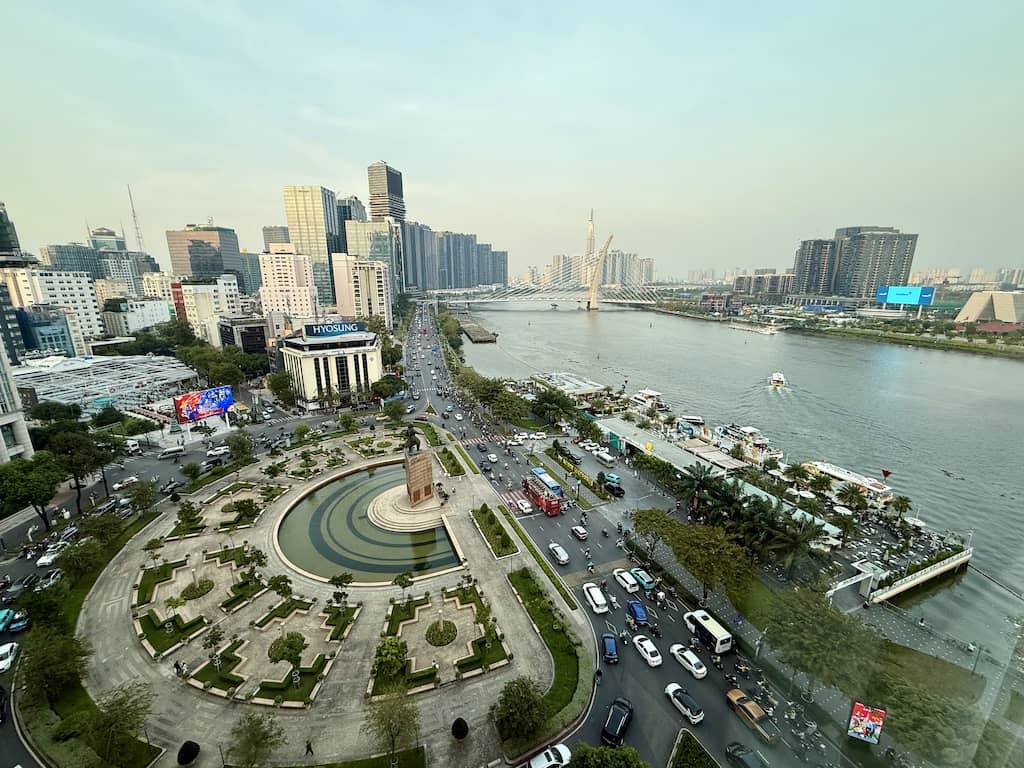
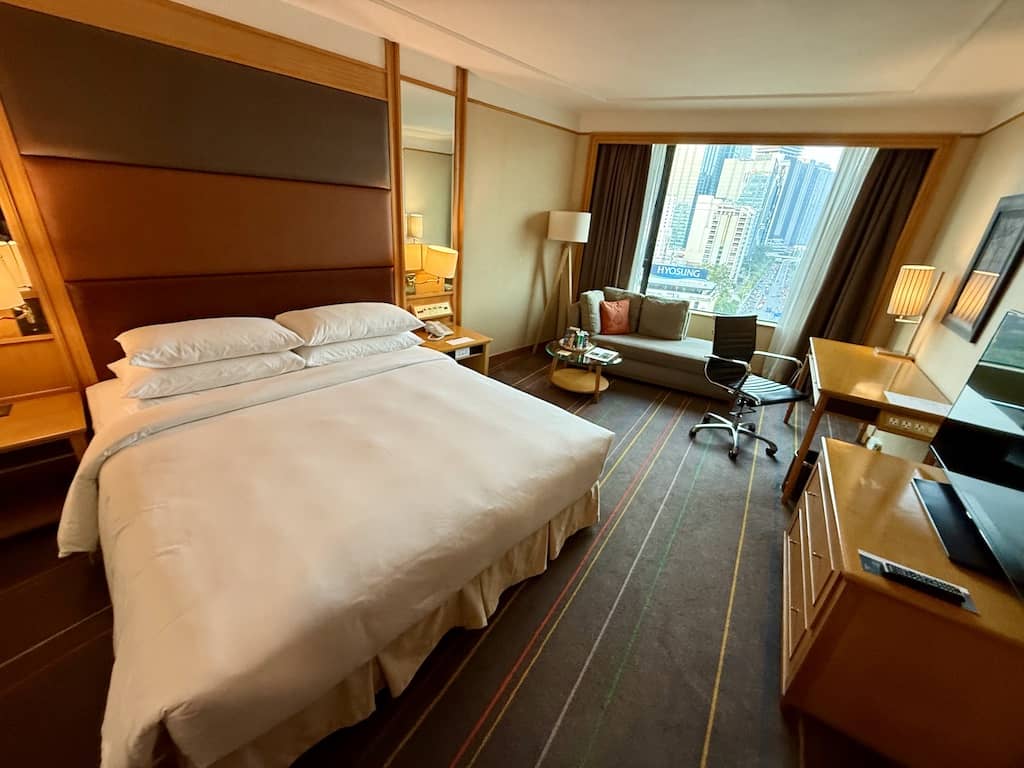
- Renaissance Riverside Hotel Saigon – We stayed here for New Year because it has a great view of the river and the fireworks. While it’s an older property, the rooms are lovely and the views over the river are fantastic. Ask for a room looking over the big roundabout at Riverside Park – especially if you are staying at New Year.
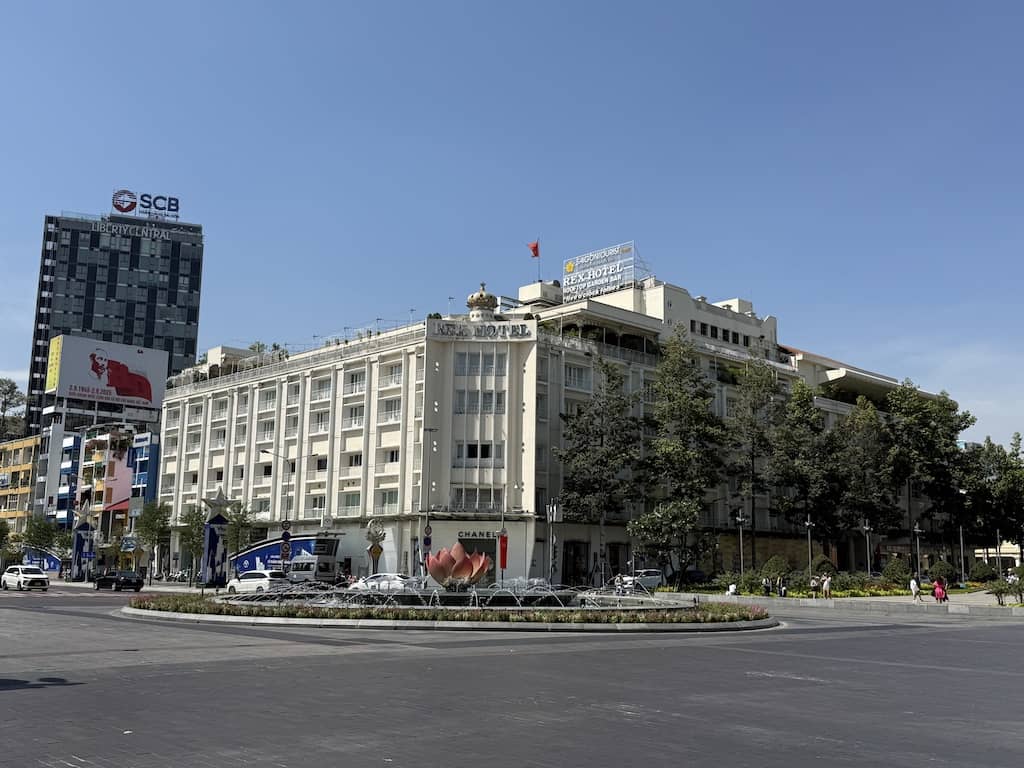
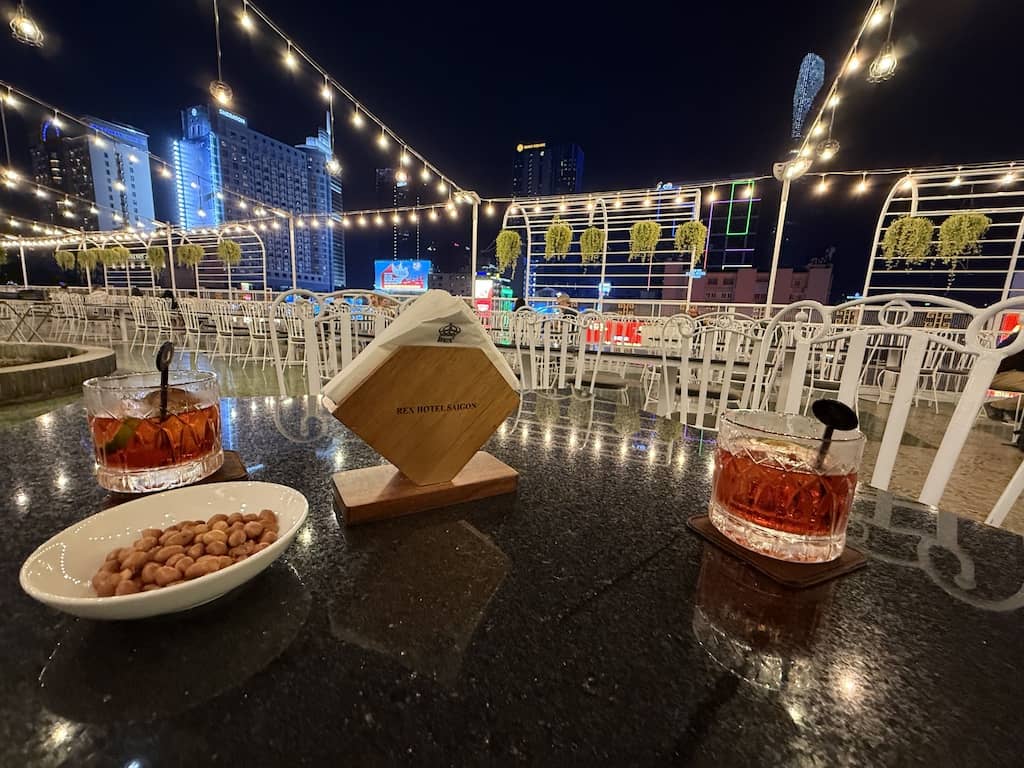
- The Rex Hotel – The Rex became famous during the Vietnam War, when the American Information Service was based here and it became a regular gathering place for US officials, military personnel and foreign journalists. Their 5pm briefings were legendary. Nowadays, the Five O’Clock Follies bar provides a particularly atmospheric place to have a drink and contemplate how dramatically Saigon has changed since those wartime press conferences. The drinks ain’t cheap though. The hotel itself is a bit dated and showing its age, so if you want modern luxury, choose the JW and just visit the Rex for the rooftop bar.
2 Days in Saigon
War Remnants Museum
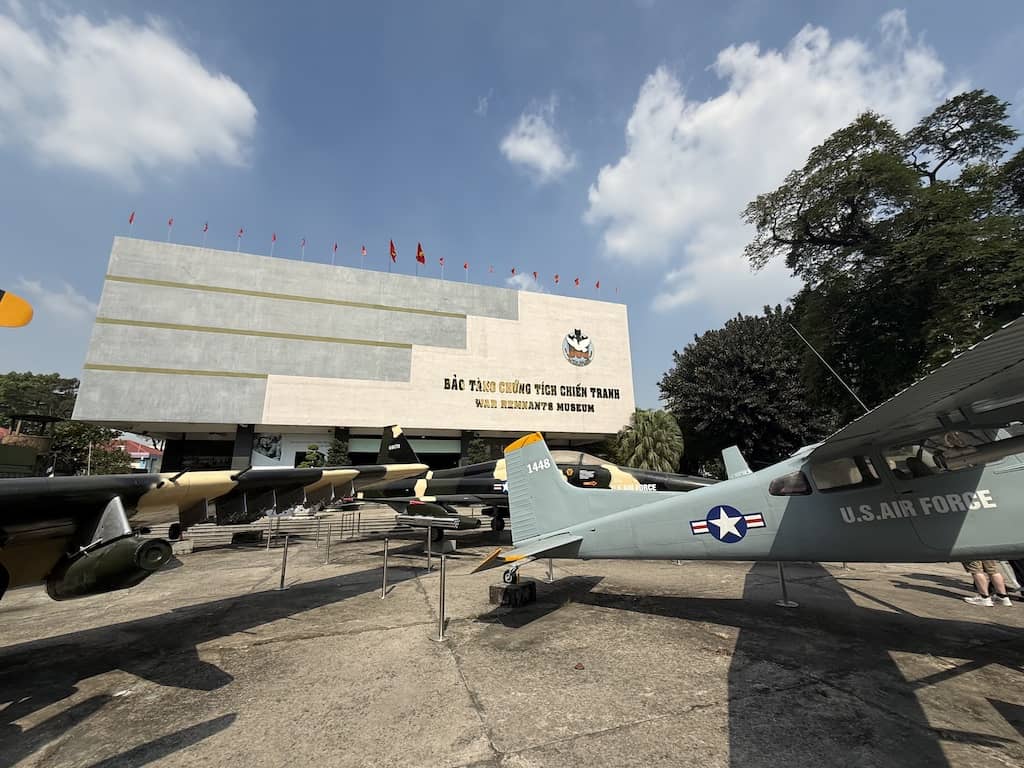
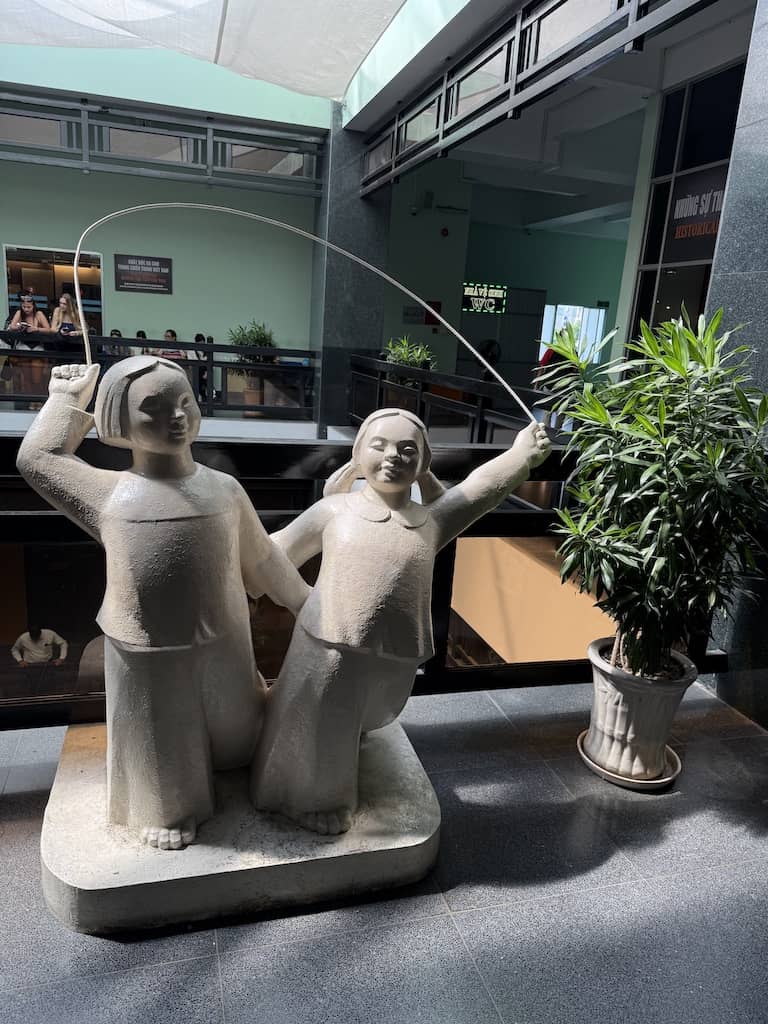
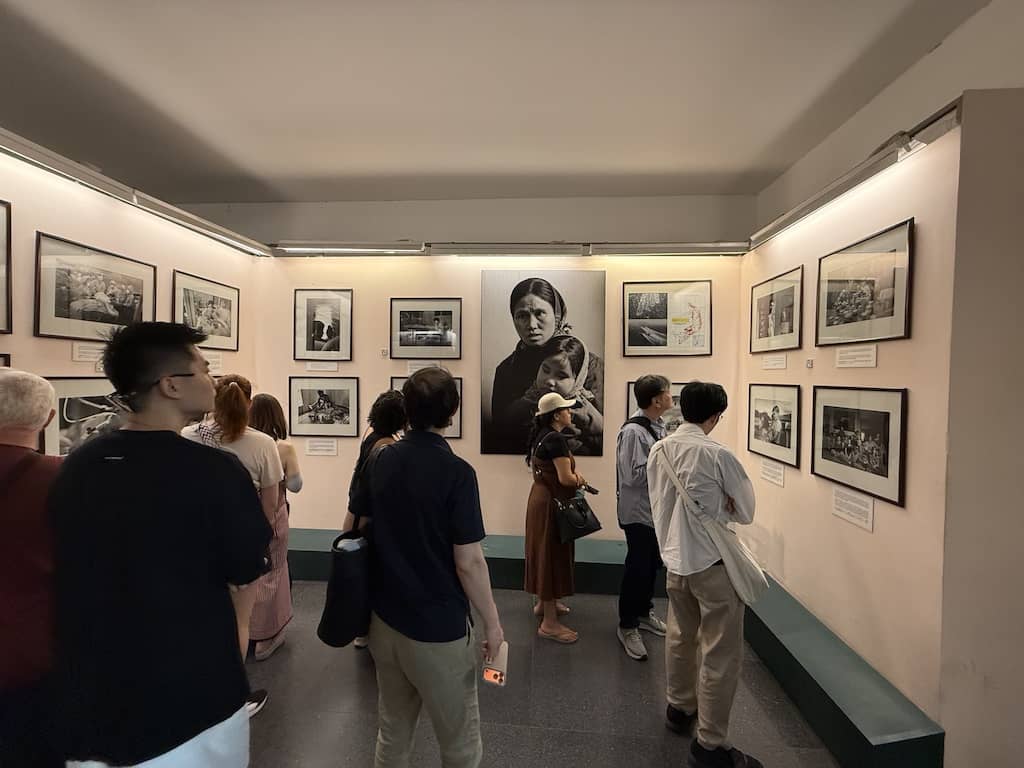
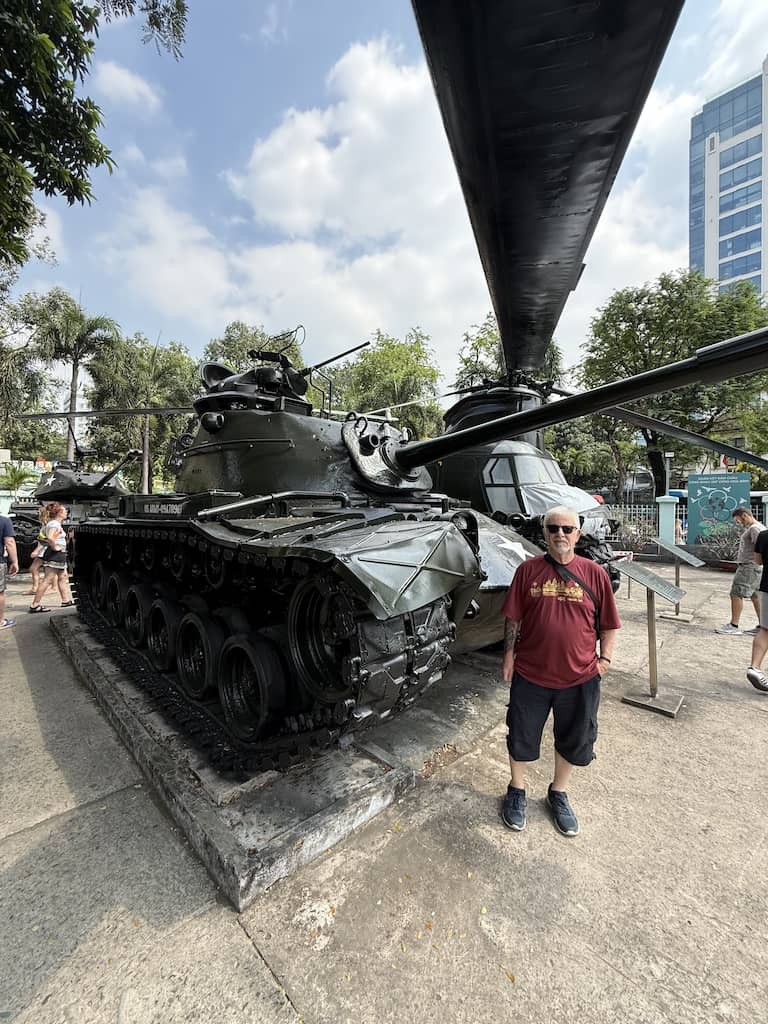
If there is one place that I definitely recommend everyone visit when they are in HCMC, it is the War Remnants Museum. This large and modern complex has tanks and aircraft outside, and exhibitions about the Vietnam war (specifically the American phase from 1954 to 1975) inside.
NOTE: One thing to note is that it’s a Communist state run museum, and therefore presents a biased view, which sometimes ends up being propaganda. It was, after all, originally called the Exhibition House for US and Puppet Crimes. There are omissions around abuses by the North Vietnamese forces and the Viet Cong, for instance. Despite the biased framing, much of the visual evidence – including the harrowing photographs of the devastating effects of Agent Orange, and napalm – is historically accurate and important to recognise. It’s just something to keep in your mind as you visit.
Independence Palace
A block away is the Independence Palace, former home and workplace of the President of South Vietnam during the Vietnam War. The current building was completed in 1966 after the original French colonial palace was demolished, and it became one of the defining locations of the war’s final days.
On 30 April 1975, a North Vietnamese tank crashed through its gates, an event regarded as the fall of Saigon.
You can tour the well-preserved 1960s interiors, including the presidential offices, reception rooms, command centre and basement tunnels.

Saigon’s French Colonial Landmarks
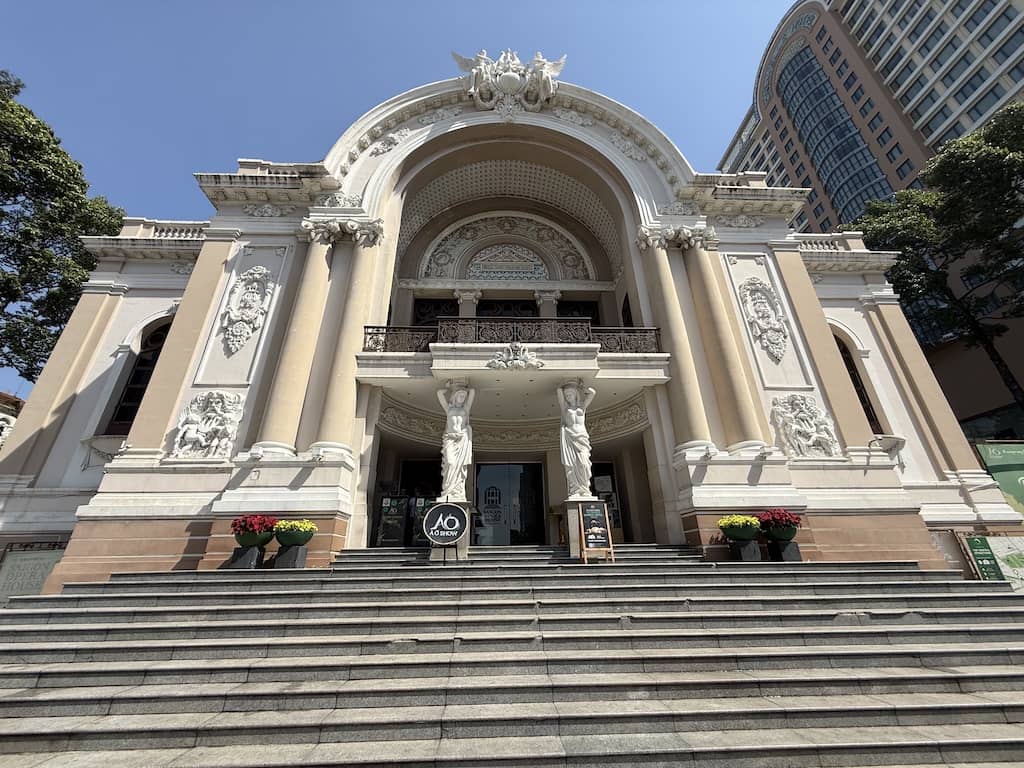
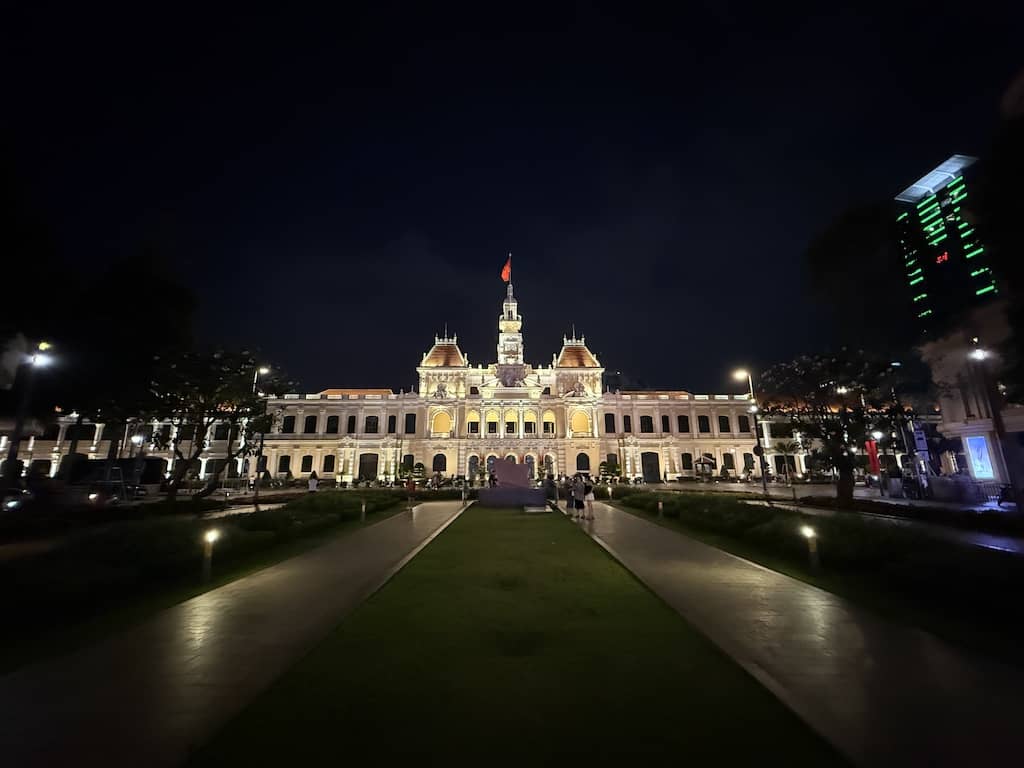
While a colonial past can be uncomfortable to reconcile, the snippets of it still visible in Ho Chi Minh City are now points of interest. The Opera House, Notre-Dame Cathedral and Saigon Central Post Office are beautiful examples of French colonial architecture in Ho Chi Minh City.
- Saigon Opera House – Built in 1897, the opera house was modelled on European opera houses; and now sits surrounded by high-rises. A little historic oasis in the bustling city.
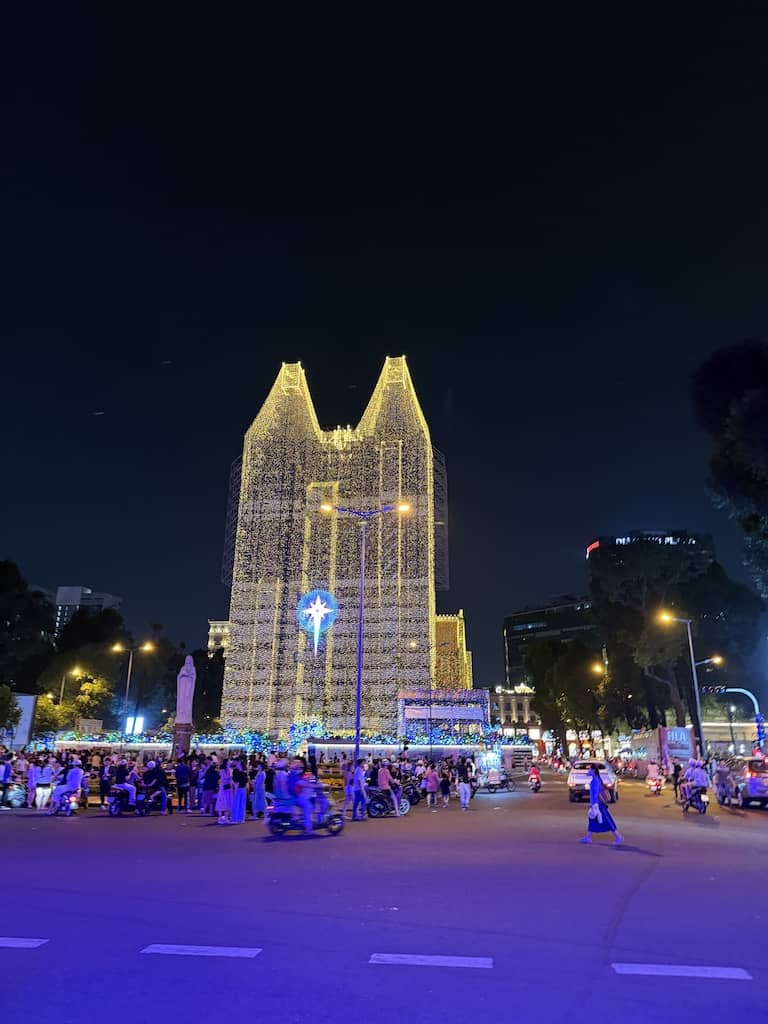
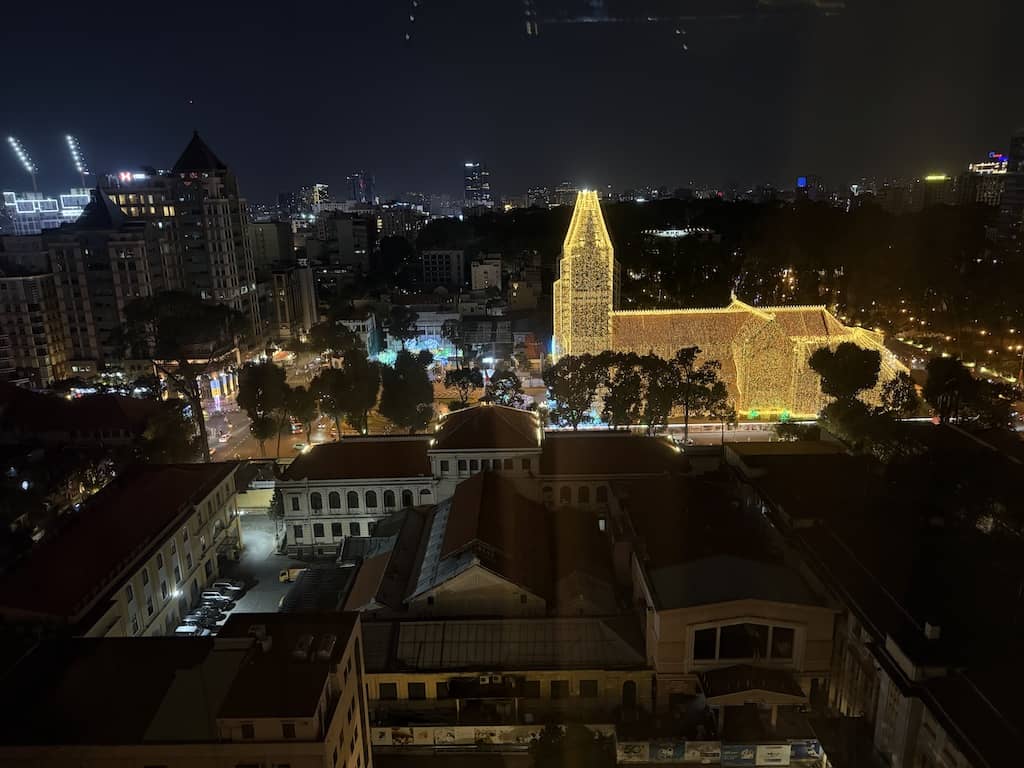
- Notre-Dame – Sadly, Notre Dame was under renovation during our visit (sad for us, not for it); but we appreciated the lights covering the scaffolding. Built by the French in the late 19th century using materials imported from France, the red-brick cathedral is one of Saigon’s best-known colonial landmarks. I hope the renovations bring her back to life.
- Saigon Central Post Office – Right next to the Rex hotel, the post office building looks more like a palace than a post office. Completed in the 1890s, the post office is actually still in use! Go inside to see the ornate interior, arched windows and historic maps.
Ben Thanh Market
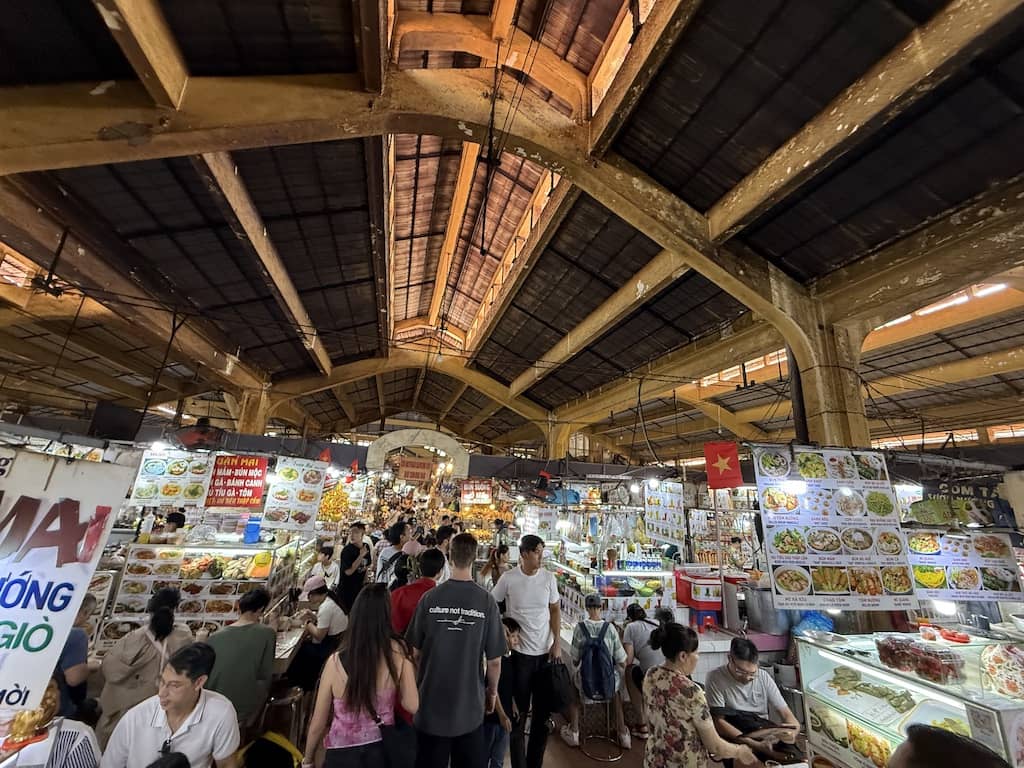
Prepare yourself for the chaos that is Ben Thanh Market. It is a sensory overload on every level. But if you want yourself a bargain, it’s a great place to start. It is most famous for knock-off handbags (which you have to be careful of at customs), but you can get all sorts of things here – jewellery, homewares, phone cases and tech, luggage, clothing, shoes, souvenirs and food!
The rabbit warren of stalls can get disorientating, and the smell of plastic / packaging can be overwhelming in this overcrowded place. But it’s a bizarrely fun experience!
Bartering is expected, but don’t take advantage. I looked around first, asked prices on comparable items, then once I’d found a good price, I either paid it, or offered 1/3 off. A general rule is: take the price, offer 1/3, then settle on 2/3rds.
Explore Cholon and Ho Chi Minh City’s Chinatown
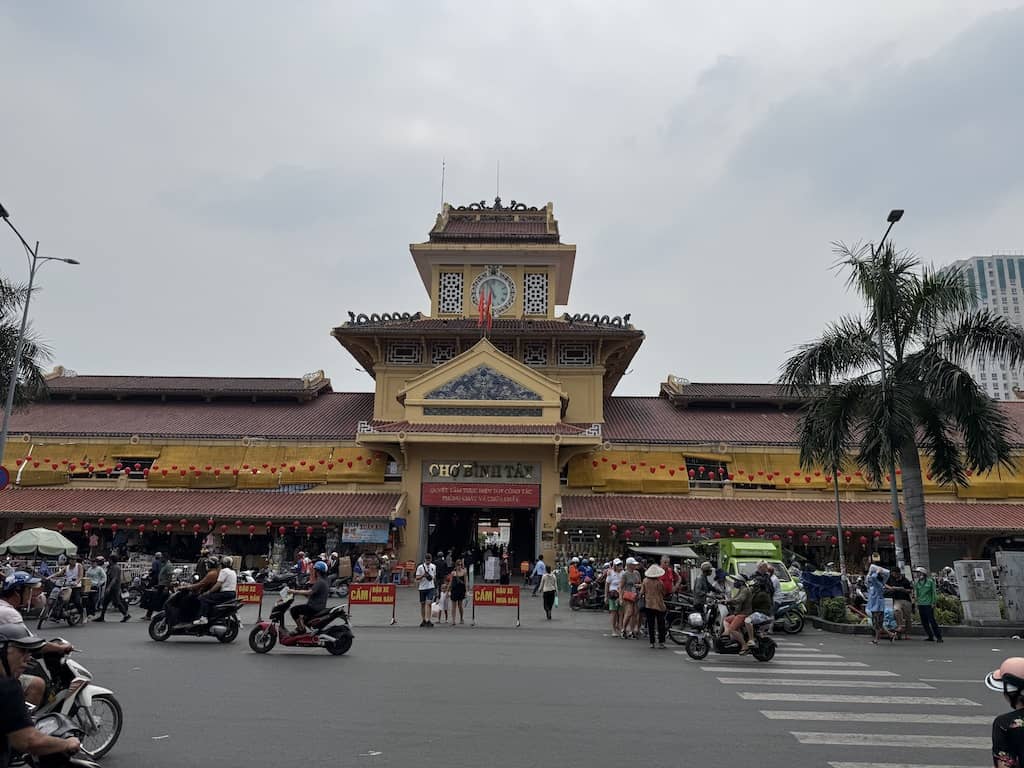
But for markets, I actually preferred the buzzing chaos of Ho Chi Minh’s chinatown! Head out to Cholon by Grab and explore the Binh Tay Market.
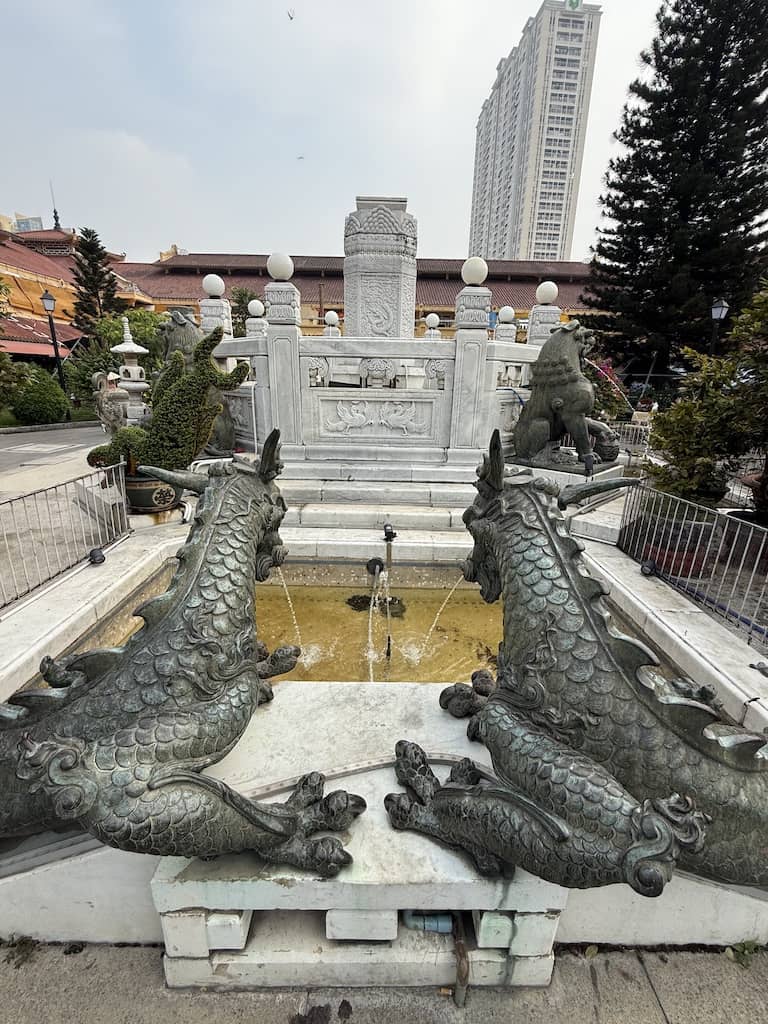
It’s more rough and ready, but the deals are good and the Chinese garden in the courtyard is lovely. We met a man doing exercise by the fountain and sat and chatted with him for a while – it was a sweet moment.
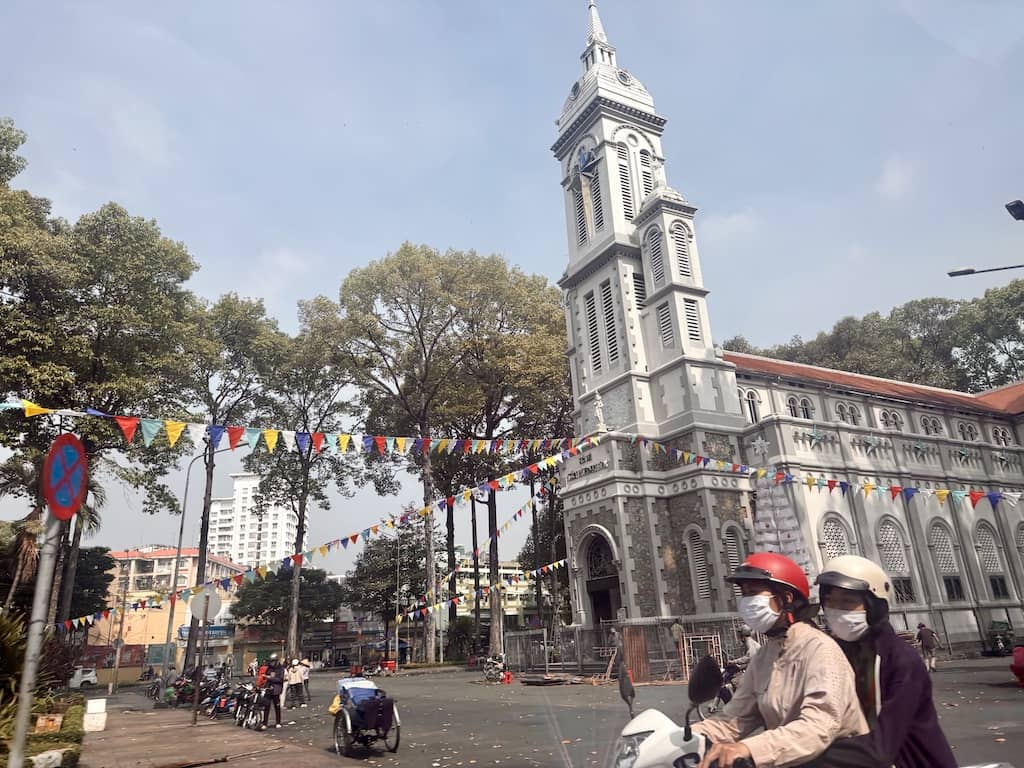
The shops surrounding Binh Tay are like an extension of the market – with street stalls overflowing with brooms, plasticware, pots, pans and crockery. We enjoyed the cacophony, the nearby Church of St. Jeanne D’Arc, and the cafes we found nearby.
Landmark 81 Tower Sky View
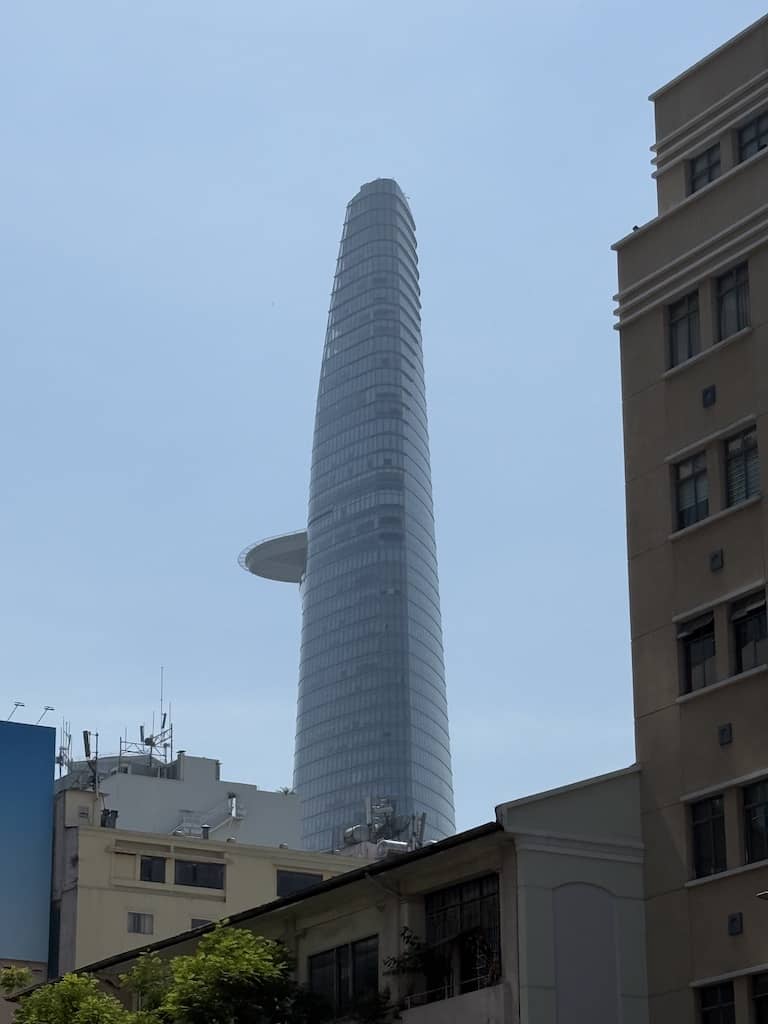
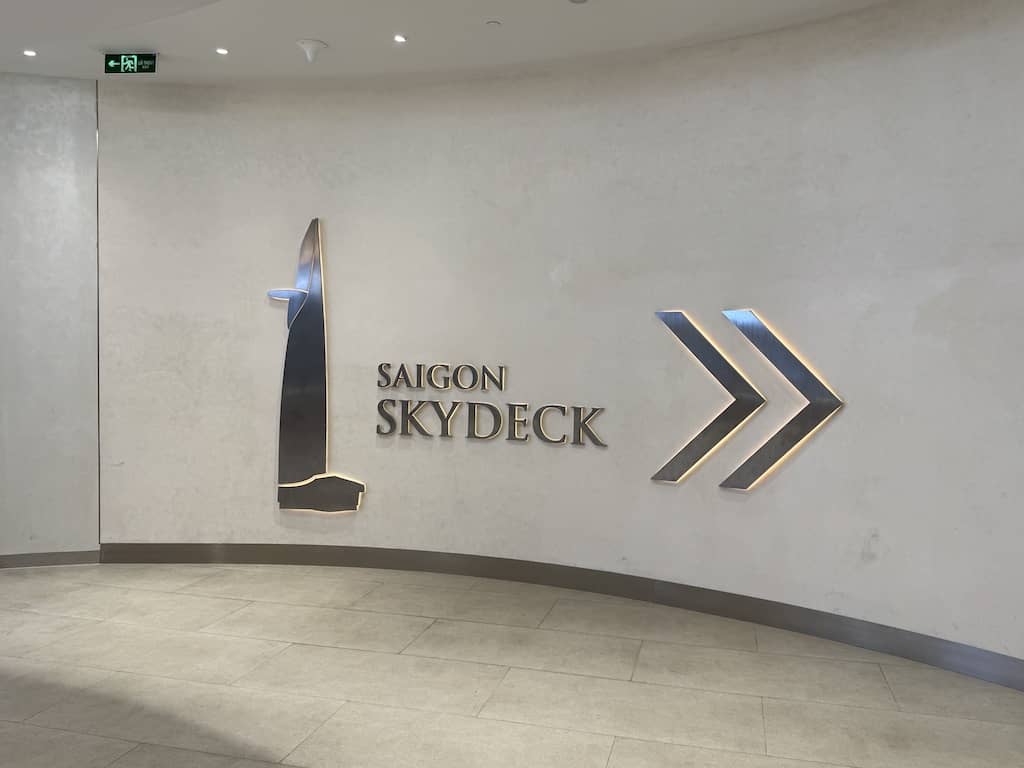
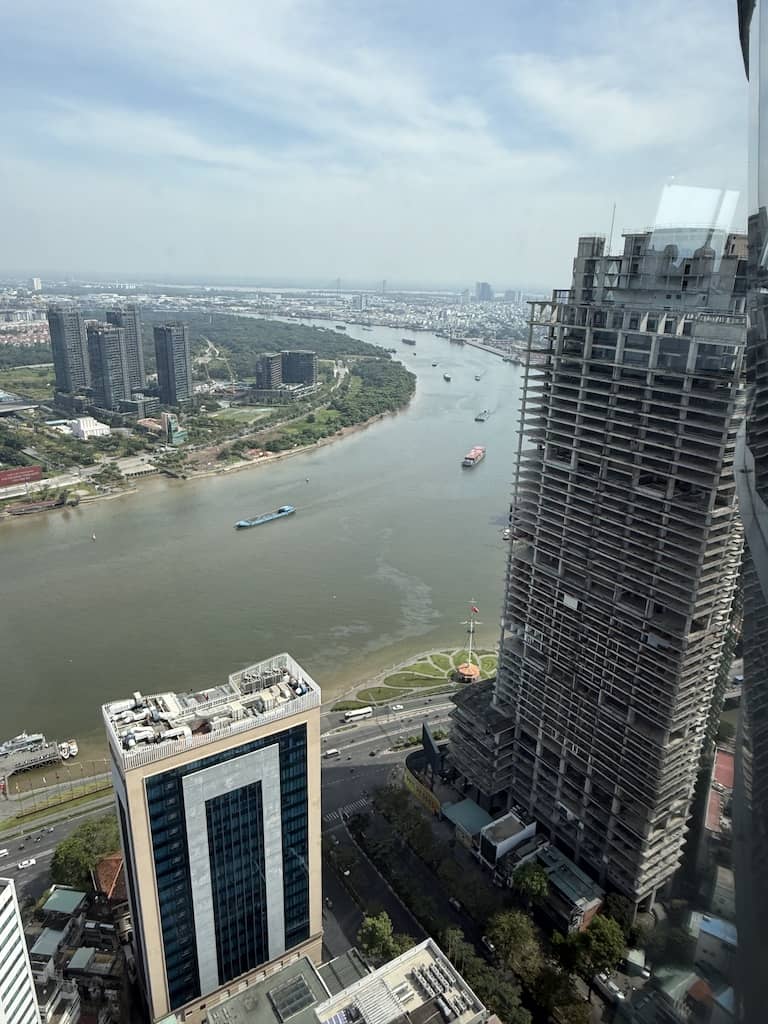
It’s rare that I pay for a view, but the verticality of the city made me want to see it from above. The Bitexco Financial Tower is an amazing high-rise with a helicopter pad sticking out one side, and the Saigon Skydeck is on the 49th floor. This 360-degree inside viewing floor has full length windows and signage to help you understand the view you are seeing.
For a reasonable $10 USD entry, it’s a great activity to let you appreciate the cityscape if you only have 2 days in Ho Chi Minh City.
Novelty Fun: Book Street, The Cafe Apartments, an absinthe Bar, & The Manufacture Courtyard
Vietnam is fantastic at creating a product out of novelty – as a swiftly developing country, it’s definitely a child of the digital age. But with that comes some cool attractions. Here are some of my favourites:
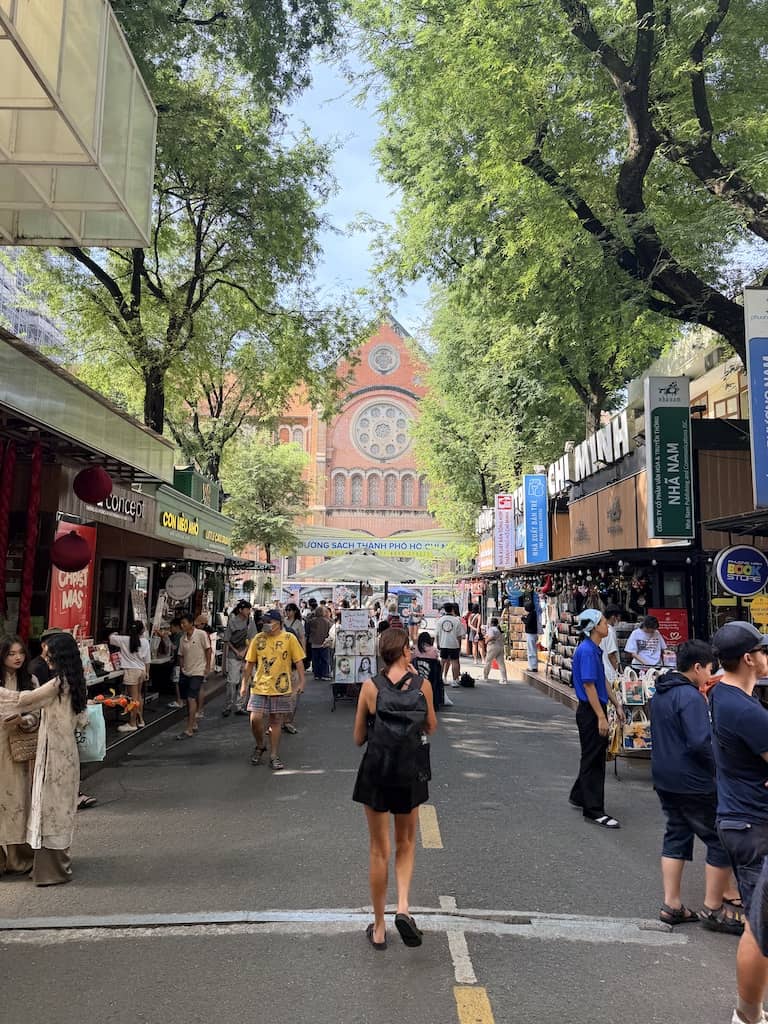
- Book Street – Nguyen Van Binh Book Street is a pedestrianised stretch lined with bookshops, publishers and small cafés close to the Central Post Office. It has books in both Vietnamese and English. Thanks to my sister for this gorgeous photo.
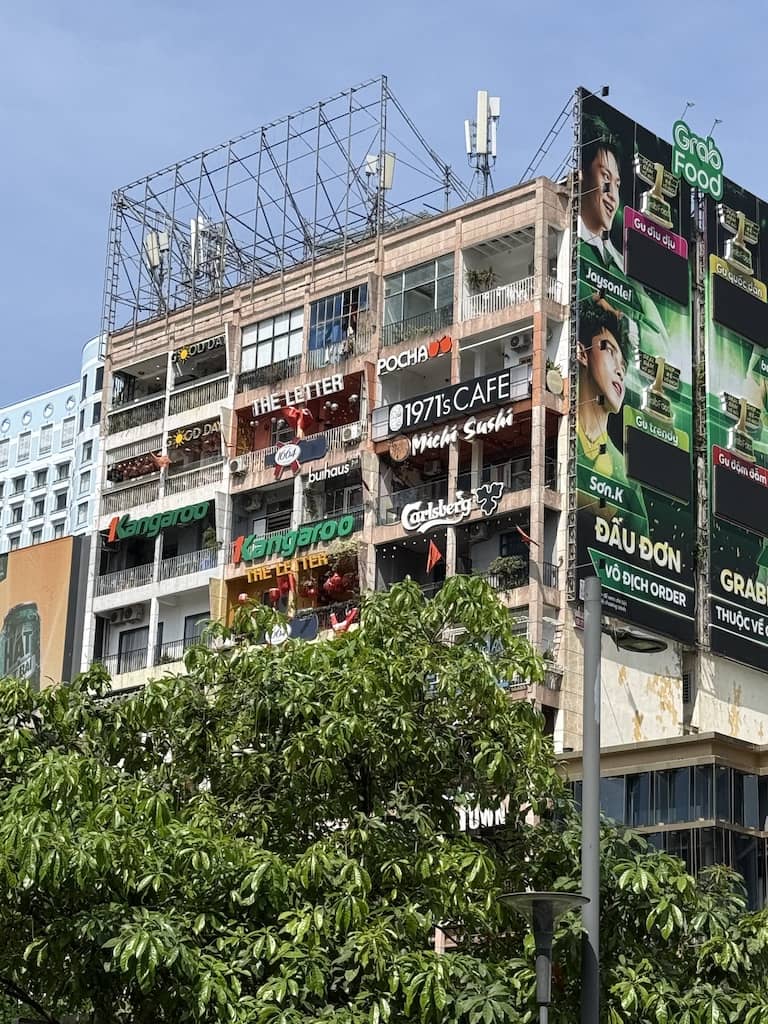
- The Cafe Apartments – You’ve probably seen the Cafe Apartments on instagram! This former apartment block on Nguyen Hue has been taken over by independent cafés, restaurants, boutiques and small businesses, with each floor offering something different. The building’s slightly ramshackle appearance is part of its appeal, although the cafés themselves range from very simple to quite polished. Be warned, they charge a fee to use the elevator, so you’ll either have to walk up the stairs or queue and pay for the elevator access.
- Aviator Absinthe Bar – I am part of a global community of absinthe-lovers, and try to support absinthe bars wherever we travel. The Aviator Bar is hidden away above the busy streets – a true prohibition style speakeasy. They specialise in absinthe and cocktails, with a vintage aviation theme. It isn’t the cheapest place to drink – we spent $200 / 175€ for 4 people, but that included many cocktails and many good quality absinthes. We loved the staff, the resident dog (it’s in someone’s front room), and the vibe of the place.
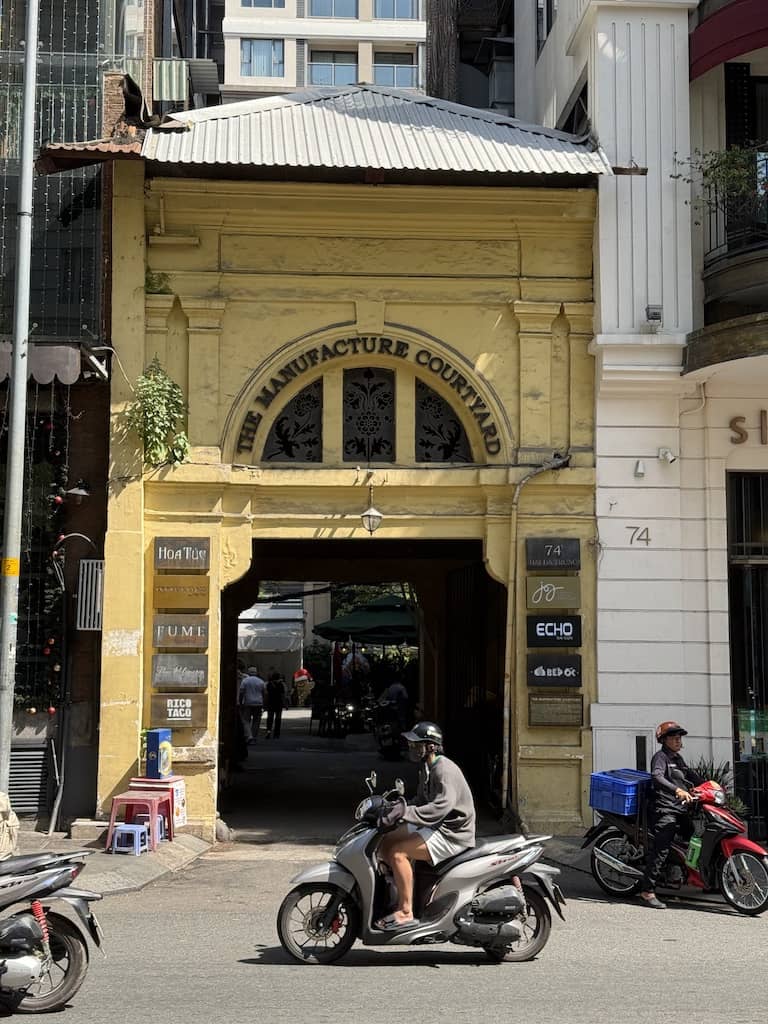
- The Manufacture Courtyard – This was originally the French colonial government’s opium-processing factory, known as the Manufacture d’Opium de Saïgon. Opened in 1881, it is a little slice of an interesting industry history that has been conserved (in part). The surviving entrance and courtyard are now occupied by restaurants and street food carts and bars. We stumbled across it because it is near the JW Marriott Hotel & Suites.


Where to Eat in Saigon
To be honest, we had some of the best food of our trip in Ho Chi Minh City. We also had some of the worst. But, for variety and value, it was exceptional.
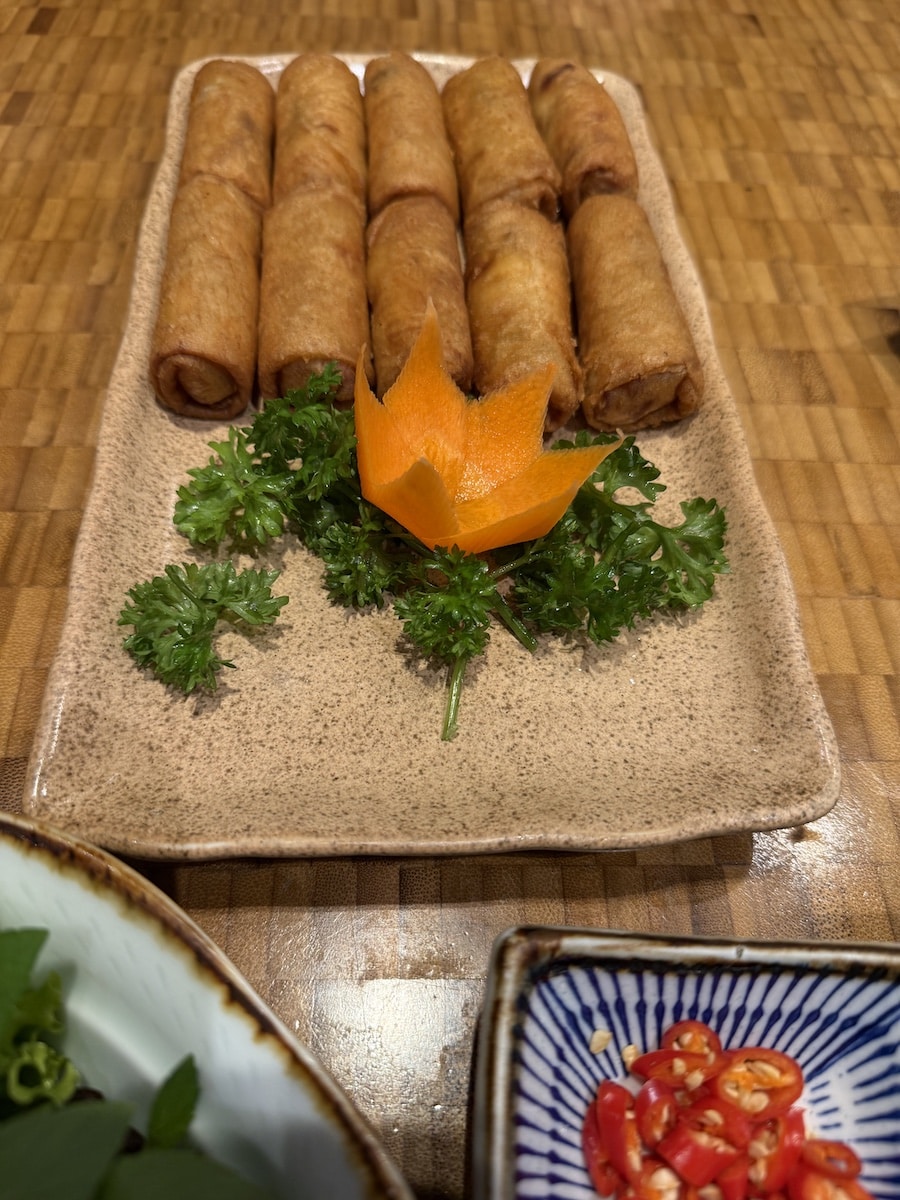
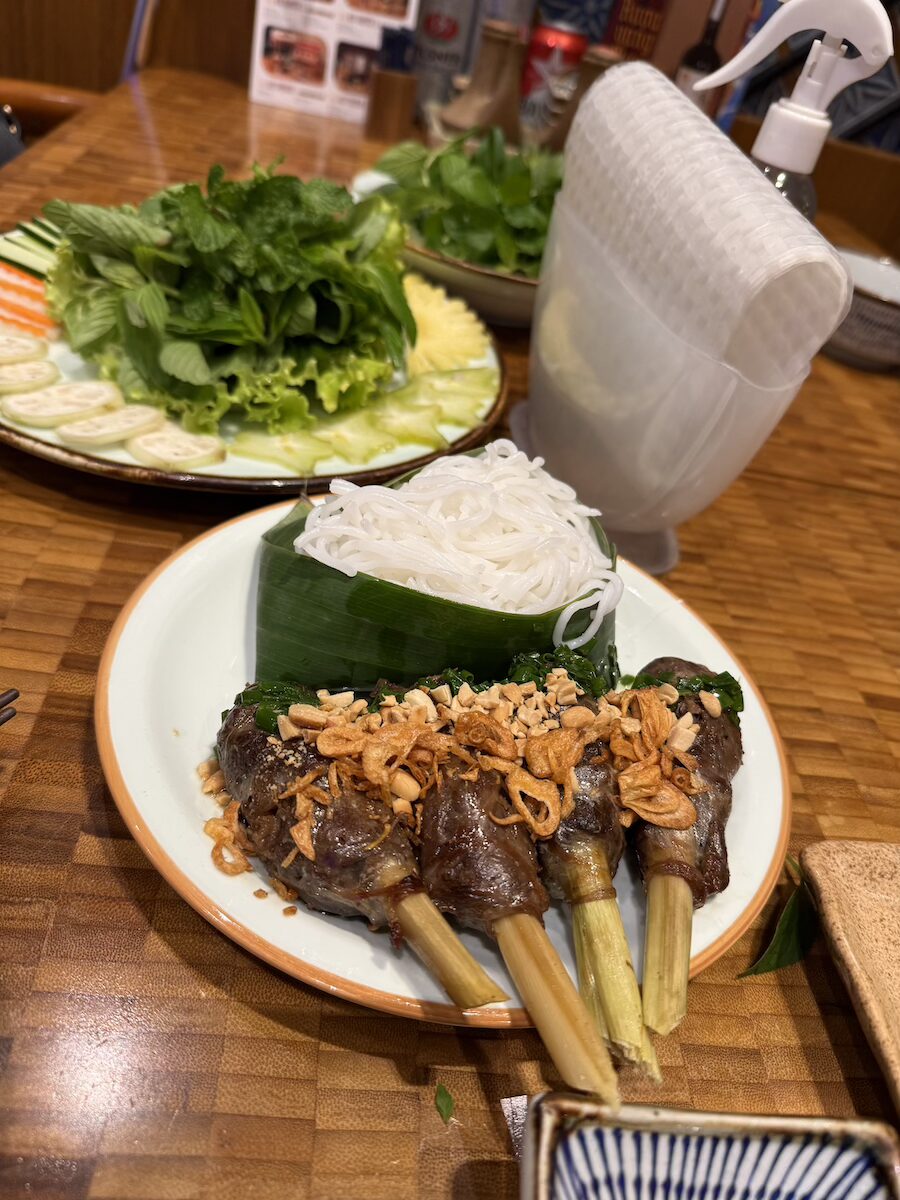
- Hoang Yen Vietnamese Cuisine – We arrived in HCMC on New Year’s Eve, and hadn’t organised anything for dinner, so we chanced this restaurant near the Renaissance Riverside Hotel Saigon. It was nearly full of large family groups, but they squeezed us into a corner. Huge tanks of live seafood line one wall, and the menu is inventive and interesting. Their banh xeo and beef wrapped in betel leaves were so phenomenal, we returned for a second visit during our stay. Their lotus seed spring rolls were the most unusual texture – nutty and crunchy – what a delight!
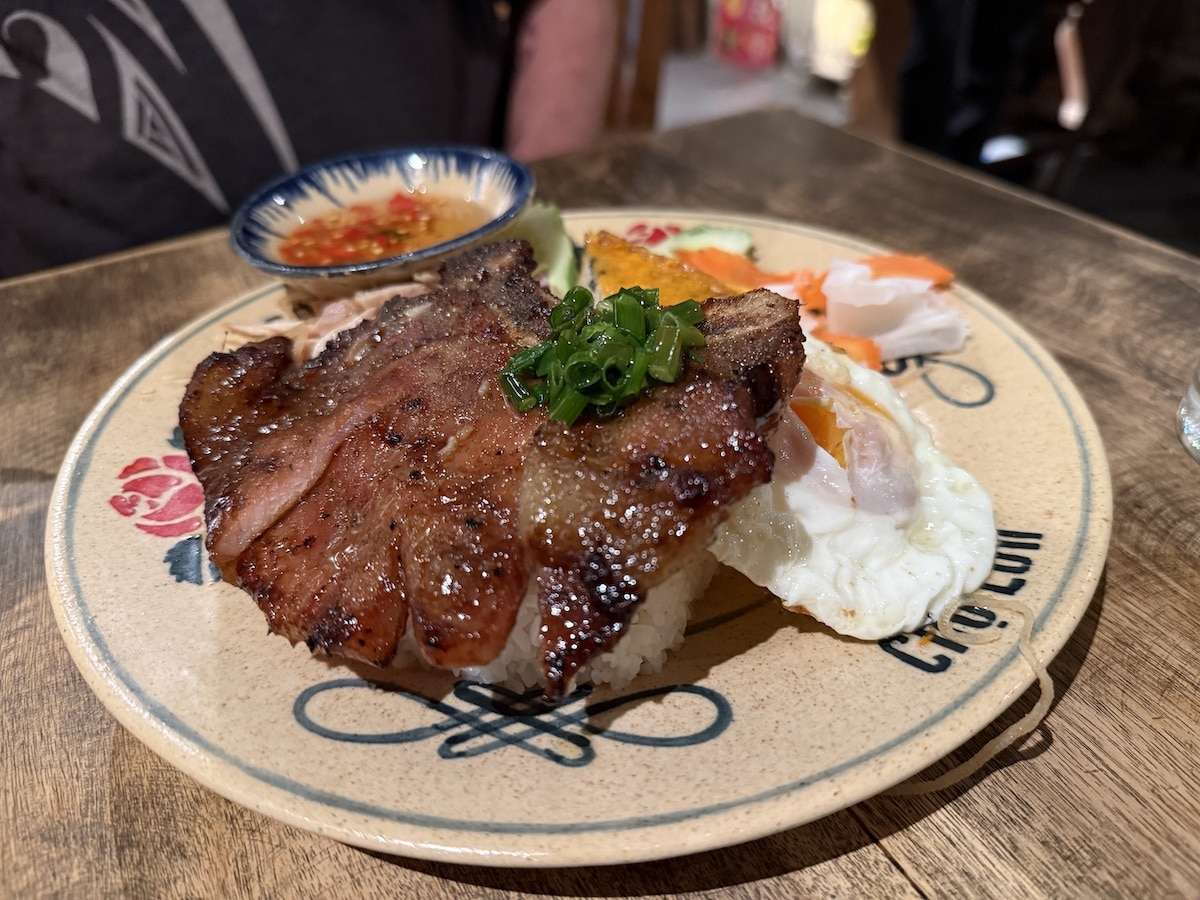
- Cơm Tấm Mộc – We were told to visit Cơm Tấm Mộc for ‘broken rice’ – a Saigon speciality – a fridge-clearance kind of meal, using meat, veg and fried eggs served on leftover rice. This is a great budget meal.
- Hoang’s Kitchen – If you are travelling with vegans (as we were), Hoang’s Kitchen offers lots of vegan and non-vegan options. Their green papaya salad and fried tofu were fantastic.
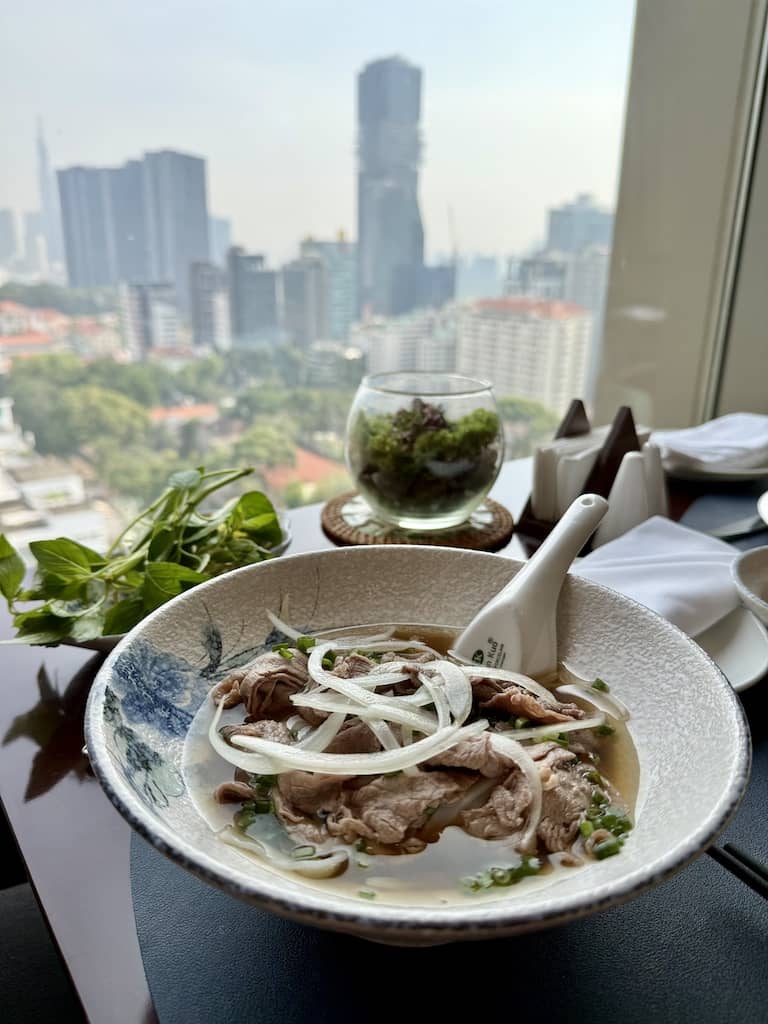
In the range of Phos available across Vietnam, our favourites were in Hue and Ninh Binh, but I appreciated the huge array of extra condiments we seemed to receive in HCMC compared to the other places.
Same goes for the Banh Mi, I loved every regions versions, but enjoyed the array of pickles and sauces in the banh mi in HCMC.
For foodies, I recommend a street food tour, or a vegetarian food walking tour.



If you are in Ho Chi Minh City longer – Take a Saigon River Cruise, visit the Pho Museum, or take a city tour by vintage jeep!
Ho Chi Minh City / Saigon FAQ
See more Vietnam content here!
All photos & content © Hannah Henderson and may not be used without permission (sharing this blog post is fine, though!). Images shot with a Canon DSLR T3i Rebel + Canon EF-S 18-135mm f/3.5-5.6 IS STM; and an iPhone.