Hanoi is cacophonous, a true assault on the senses. But that isn’t a bad thing. In fact, it was a part of our week there that became a sort of white noise of happiness – horns, the buzz of animated conversations, and calls of ‘madame, madame, you want to buy’? A backdrop to the incredible food and sightseeing Hanoi has to offer. This is my guide to 3 days in Hanoi, Vietnam – which can serve as a starter guide to longer visits too.
Enjoy Hanoi’s vibrancy and cacophony – it’s part of the experience!


3 Days in Hanoi – Itinerary Ideas
We spent more than a week in Hanoi, and these are some of the things we enjoyed the most during that time. It’s a bit of a pick n’ mix list, where you can choose what you’re into. I found the sightseeing approachable and relaxed in Hanoi – there’s lots to do, but you don’t have to do all of it to still enjoy the city.
Wander the Old Quarter
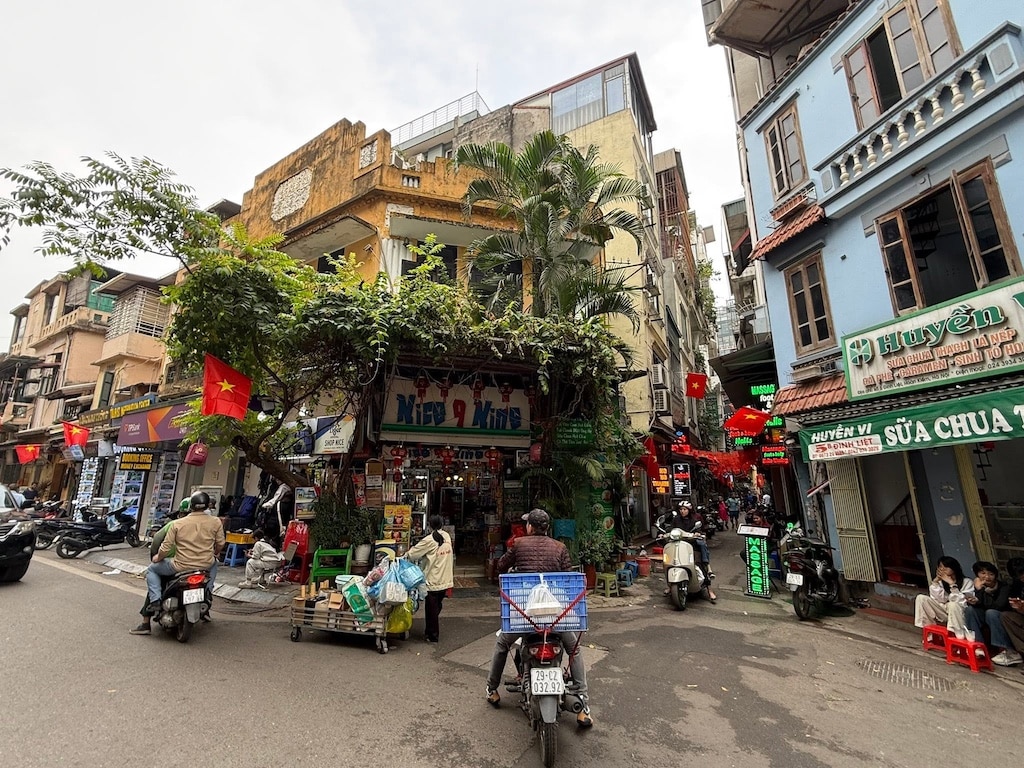
Stepping out the front of your hotel and into the hustle and bustle of the Old Quarter is such a treat. From navigating the pavements lifted by tree roots, to stepping around stock that is spilling out of over-filled stores, it can be a bit of an obstacle course – but that just adds to the adventure!
The buildings are a mix of French colonial, modern additions and temples. It’s colourful, a little crumbling, and all kinds of interesting. The tiny restaurant stools are everywhere, and watching the different street foods being prepared and served is fascinating.
Places of note in the Old Quarter include:
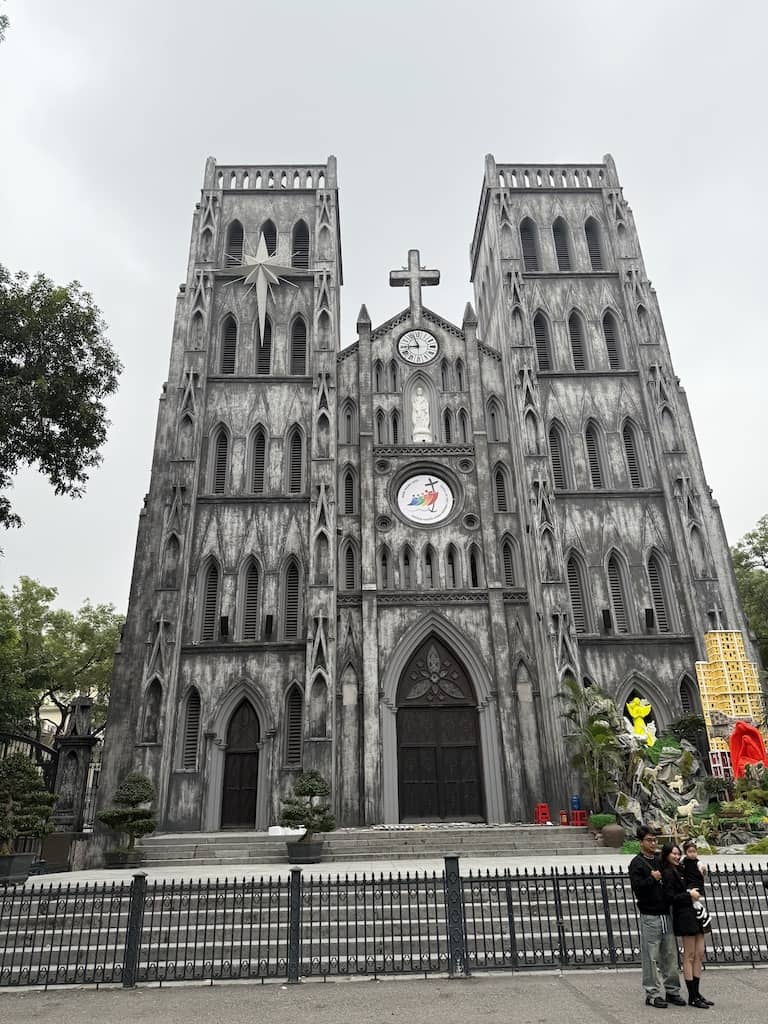
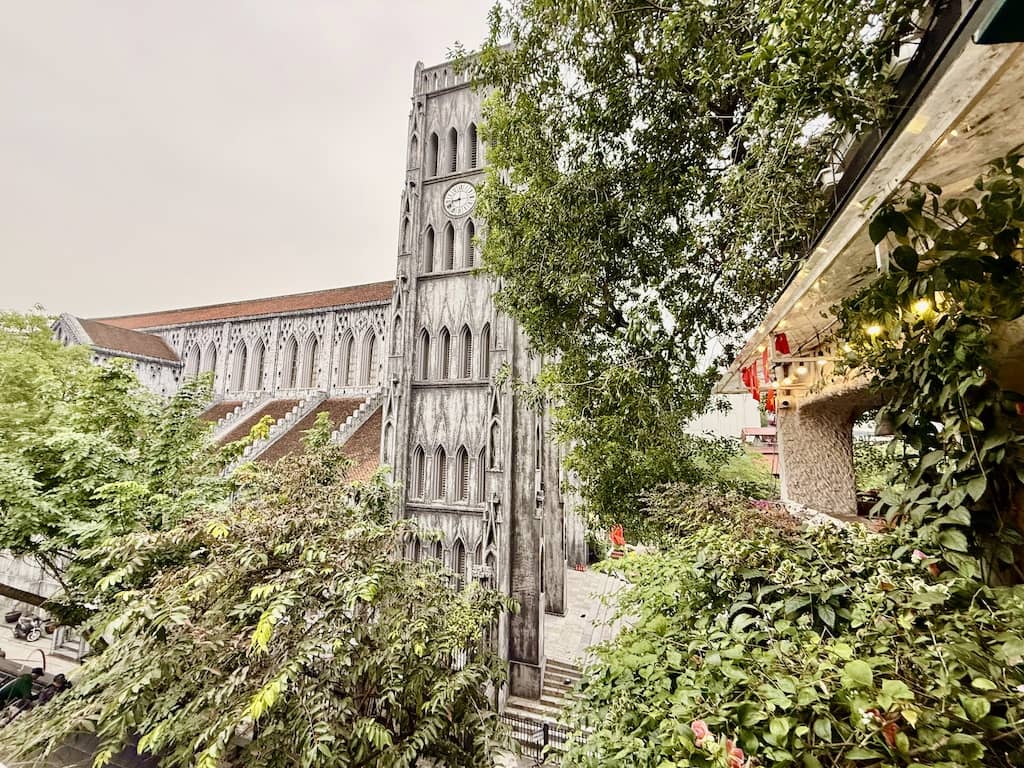
- St Joseph’s Cathedral – A lovely Gothic Revival (Neo-Gothic style) church, with cafes all around the square.
- Bach Ma Temple – Hang Buom Street – this is one of the Old Quarter’s oldest and most atmospheric temples.
- 87 Ma May Ancient House – A beautifully preserved traditional tube house that gives you a glimpse of how merchant families lived and worked in the Old Quarter.
- O Quan Chuong (Old City Gate) – The only surviving gate from the old Thang Long Citadel’s city walls. It dates back to the 18th century and is easy to miss if you’re concentrating on the shops and traffic around it, so look up as you approach.
- Dong Xuan Market – Hanoi’s largest traditional market and a good place to see the commercial side of the Old Quarter. Even if you aren’t looking to buy anything, it’s worth wandering through to see the sheer variety of goods and the activity around the market.
- Hang Ma Street – One of the Old Quarter’s most colourful streets, associated with paper goods used for religious ceremonies and celebrations.
CROSSING THE ROAD: Many of the city streets have traffic lights, but prepare yourself for crossing the road with scooters flying past you. My biggest tip is to be confident in your movements – judge a gap, look both ways, and then start walking confidently. Stay walking at a solid pace, because the scooters will try to judge where to drive around you – so if you change speed or stop, you are more likely to get hit.


Hoan Kiem Lake + Ngoc Son Temple
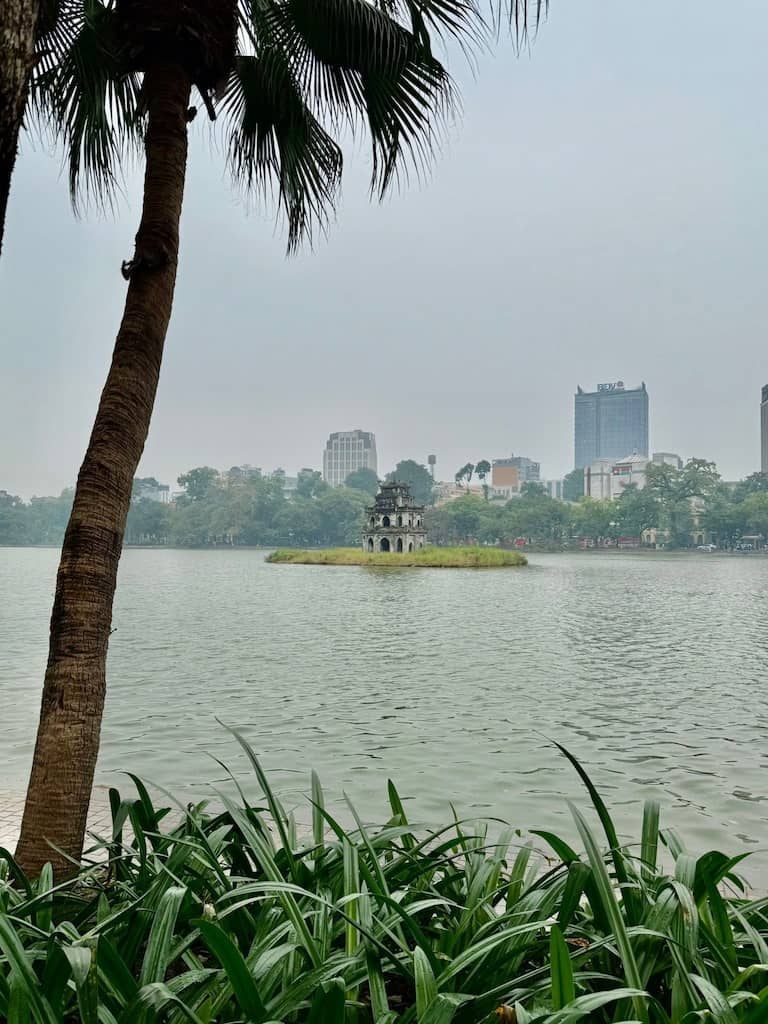
Hoàn Kiếm Lake is a peaceful lake with pagodas in the middle. It is a little slice of heaven in the middle of the chaos.
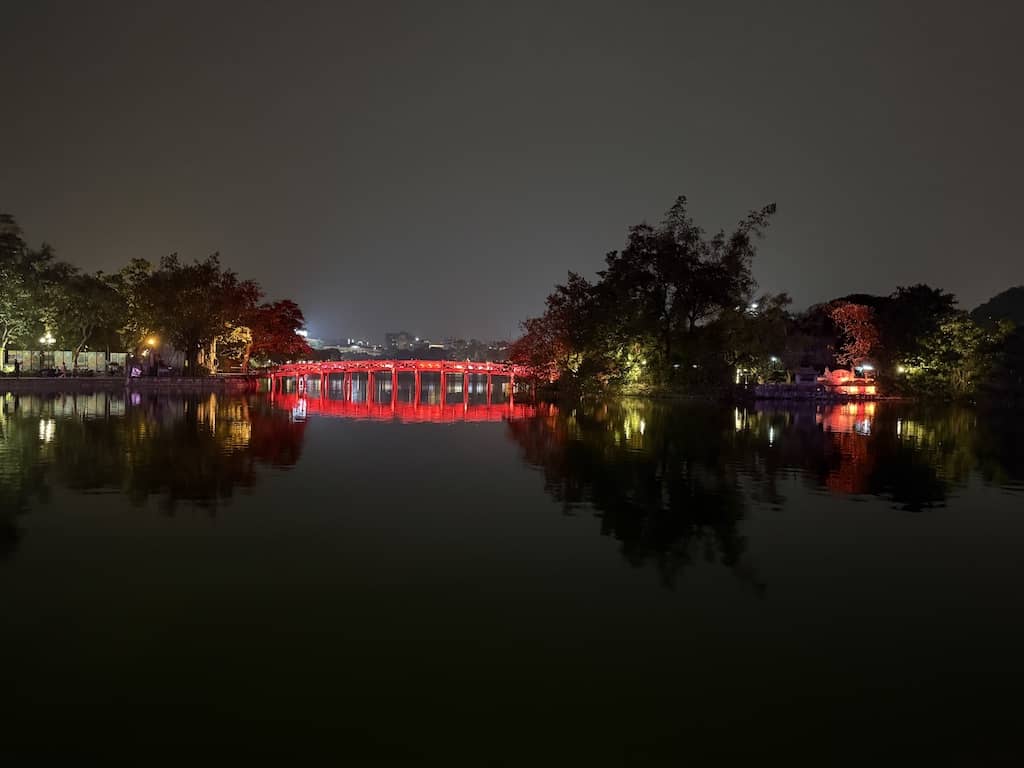
Turtle Tower sits in the middle of the lake is a gorgeous little temple not connected to the lake edge. Then there is Ngoc Son Temple at the north end of the lake, with the beautiful Red Bridge (Huc Bridge) to access it. This red wooden bridge was built in 1865, and makes a serene scene at any time of the day, but is especially pretty at night.
We walked around Hoan Kiem Lake many times during our visits – there is something peaceful about it, even when the rest of the city is frenetic.

Hanoi’s French Colonial Architecture
The legacy of French colonialism in Vietnam isn’t a light and breezy travel blog subject, but you can’t understand the architecture and cuisine hangovers of Vietnam without acknowledging it.
France’s colonisation of Vietnam began in 1858 and lasted for nearly a century, until the French defeat at Điện Biên Phủ in 1954. The colonial regional name of Indochina (Vietnam, Cambodia and Laos) is still commonly used in France, even now.
The crossover of architecture and the food influence are the remnants of this colonial presence, and there is something fascinating about the melange of influences.
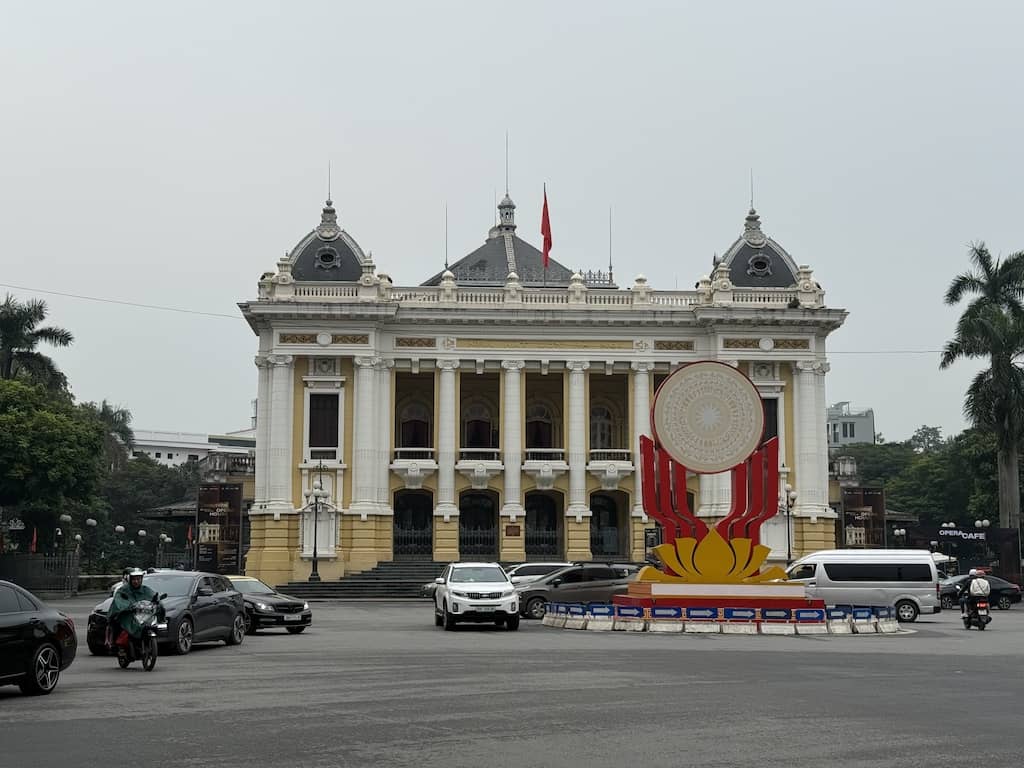
Some historic hotels, like the Sofitel Legend Metropole Hanoi and Hotel de l’Opera are glorious examples of preserved architecture in the French Quarter. In other instances, you can see the turn of the century style, but it has been consumed and added upon by future decades
Water Puppet Theatre
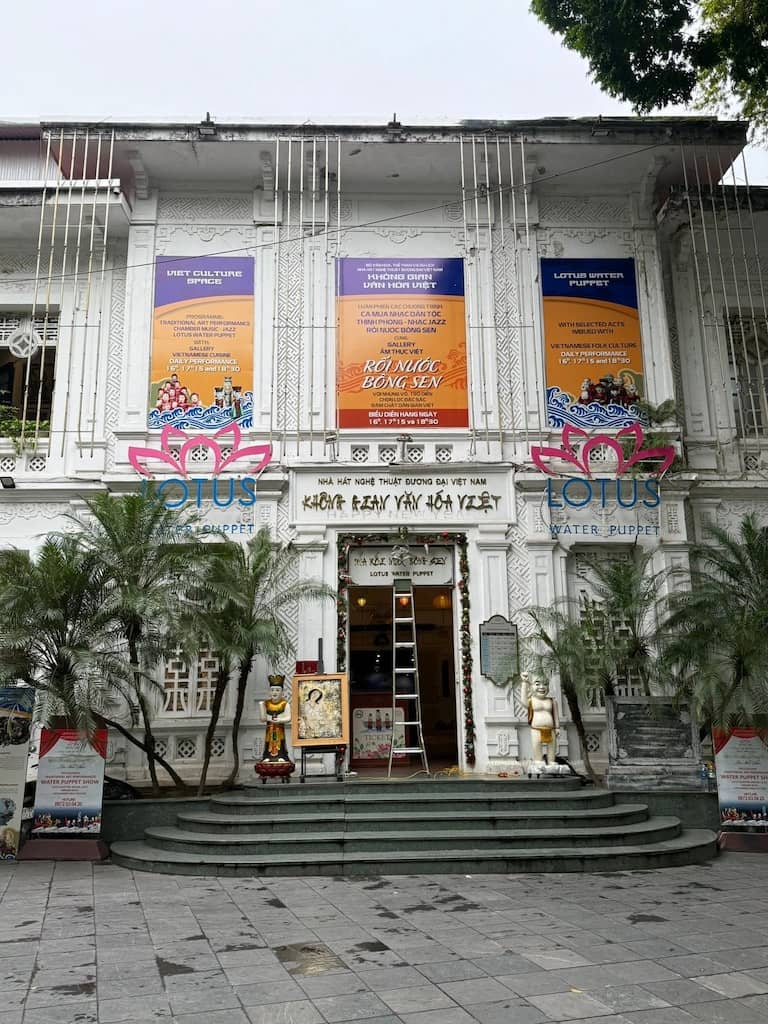
Hanoi’s water puppet theatre is a traditional Vietnamese art form where wooden puppets appear to dance and perform on the surface of a water-filled stage, accompanied by live musicians and singers.
There are a few theatres near Hoan Kiem Lake to choose from. Book your tickets in advance if you are short on time.

Ho Chi Minh Mausoleum Complex
On the weird tourism scale, visiting the Ho Chi Minh Mausoleum is up there with the more odd things I’ve done. Not because visiting cemeteries isn’t something we do, I love wandering Paris’s Montparnasse and Père Lachaise cemeteries after all. But this was very much a spectacle, and did feel vaguely voyeuristic.
Ho Chi Minh was a Vietnamese revolutionary leader who played a central role in Vietnam’s struggle for independence from French colonial rule and later became the first president of North Vietnam.
This huge memorial complex has a large square (the most notable nod to Communism we encountered aside from the overt military presence), temples, a museum, a peaceful garden, and lots of convenient concessions.
You must cover your knees and shoulders, so remember to wear long trousers and modest clothing. Don’t get caught out like my husband did and have to buy the obligatory ‘elephant pants’ at an inflated price!
There are no photos allowed in the Mausoleum itself, and you are ushered to the viewing first in long and orderly queues. There is no stopping once you are inside, but you walk around an eye-level walkway on three sides of the glass coffin – where you can see the mummified body of Ho Chi Minh. It is a strange experience.
After you are ushered out, you can then explore the rest of the complex. There were many celebratory groups gathered on the square – graduations and couples dressed up and having their picture taken. The museum and nearby temples are good too, so don’t skip those.
You can buy skip the line tickets in advance, or just queue up like we did – there wasn’t a long wait during our visit.



Imperial Citadel of Thang Long + Flag Tower
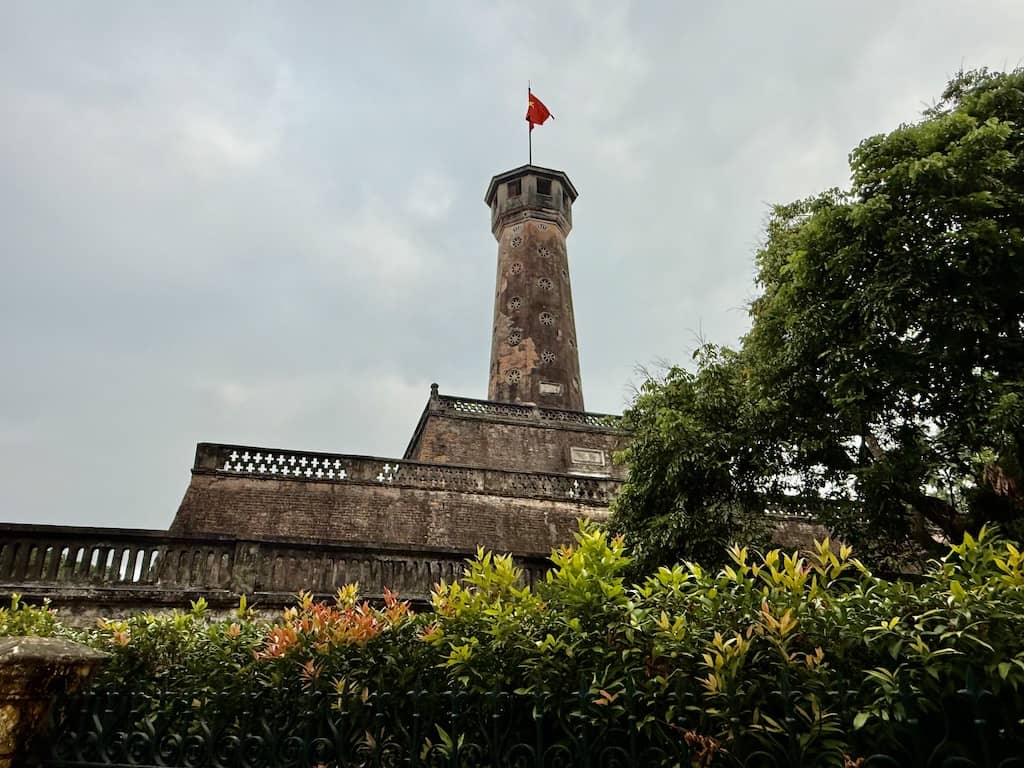
The Imperial Citadel of Thang Long is one of Hanoi’s most important historic sites, and was the political centre of Vietnam for more than 1000 years. The site has been occupied by successive Vietnamese dynasties, and the archaeological excavations reveal layers of buildings and artefacts dating back centuries.
The Hanoi Flag Tower stands just outside the citadel and can be seen from all around. Built in 1812 during the Nguyen dynasty, it is around 33 metres high and survived the destruction of much of the old imperial complex.
It only costs around $4 USD / 3.50€ to visit, and is closed on Mondays. There are also special night tours and private tours too if you’re interested.
Hoa Lo Prison “Hanoi Hilton”
Built by the French in 1896 to hold Vietnamese political prisoners during the colonial period, Hoa Lo became notorious for its harsh conditions. And during the Vietnam War, the prison was used by Northern Vietnam to hold captured American pilots, who dubbed it ‘Hanoi Hilton.’
Visiting Hoa Lo Prison was really interesting (and sad). We got the audio guide, which is definitely a good idea, as it is very comprehensive compared to the signage. John McCain was held here for five years (after ejecting from his aircraft into Trúc Bạch Lake).
You can get tickets on the door, or visit as part of a wider walking tour that focuses on this era of history.


West Lake Area + Tran Quoc Pagoda
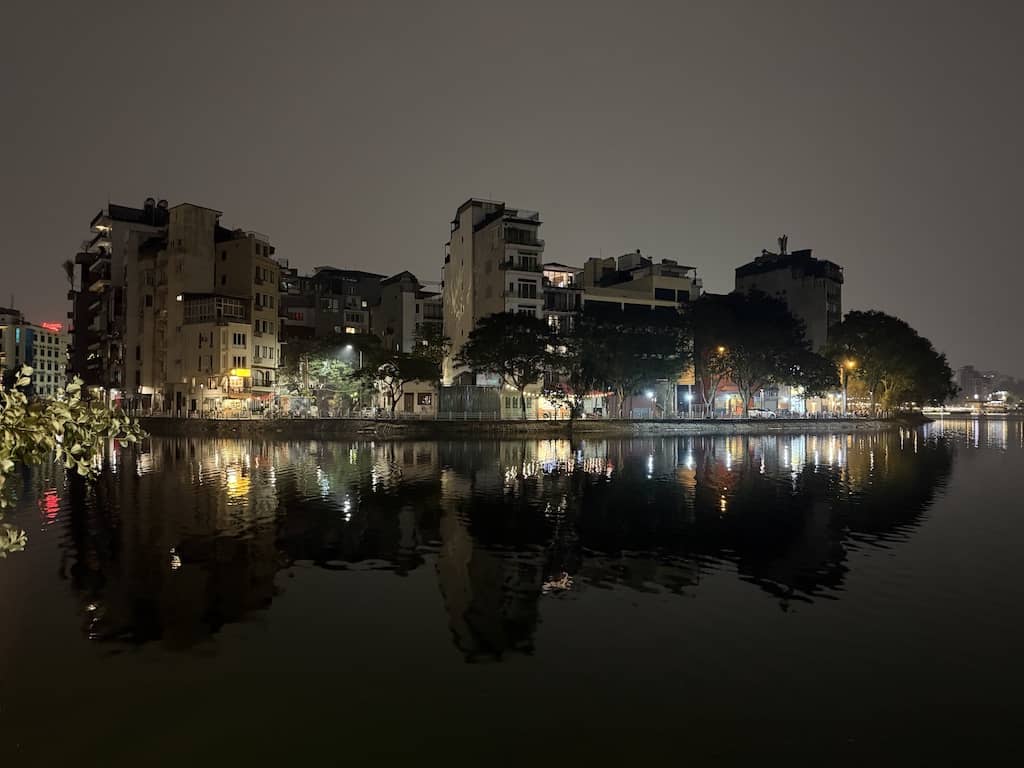
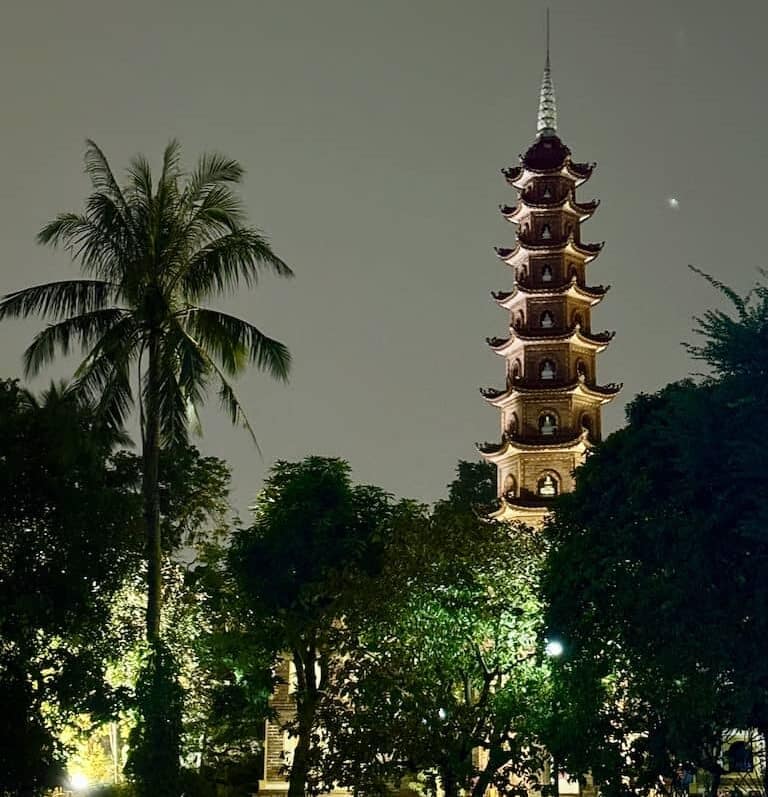
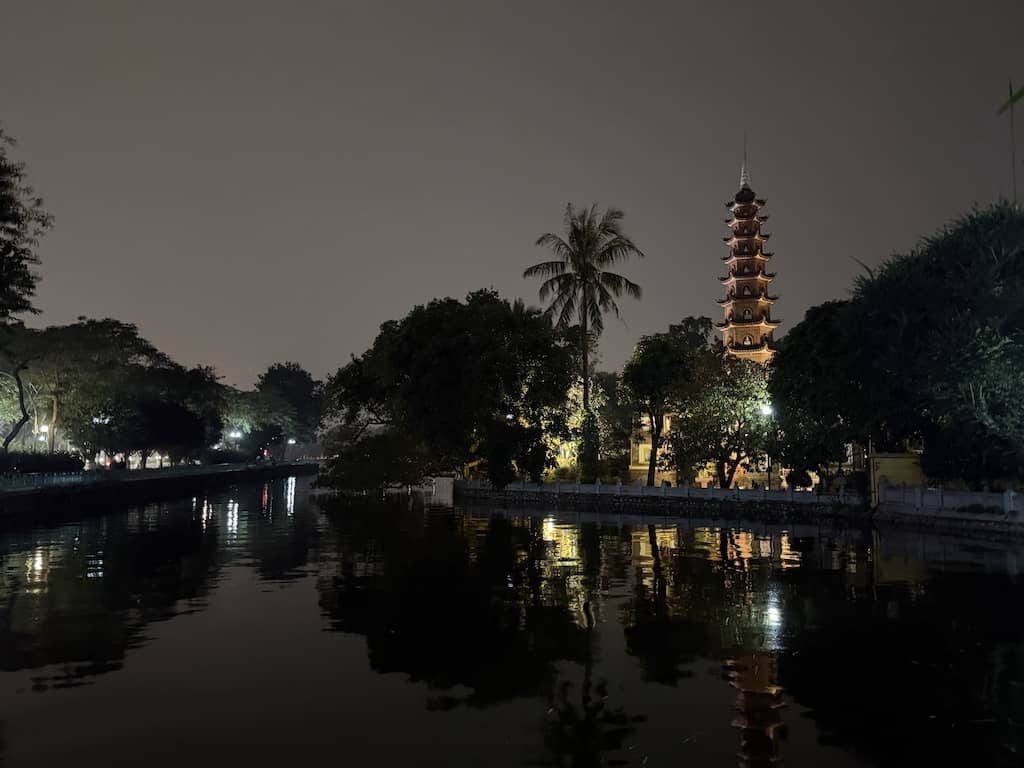
We loved the area around West Lake and Trúc Bạch Lake. These two lakes are divided by a causeway (with a road over it) and the Tran Quoc Pagoda.
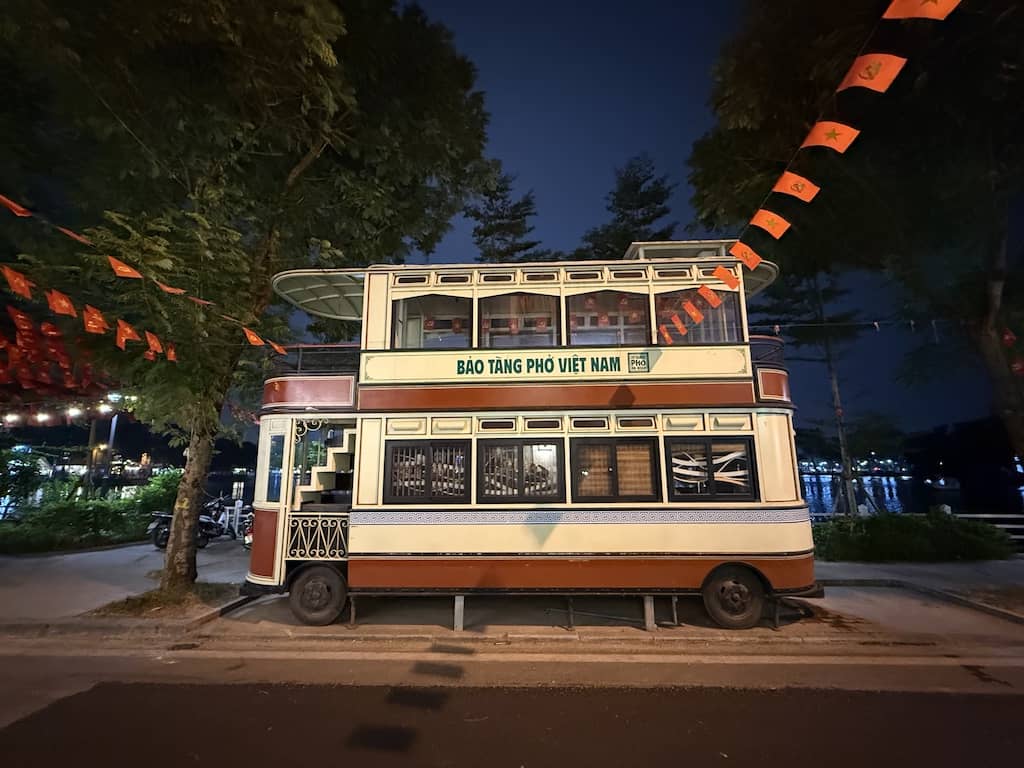
We walked across the causeway, to the pagoda, and then around Trúc Bạch Lake in one evening – stopping for drinks and dinner along the way. It’s a quieter, more residential and really peaceful. You’ll also find some of the old double-decker trams along the lake promenade.
Don’t miss getting some Pho Cuon rolls from Phở Cuốn Chinh Thắng. This is definitely an area I’d consider staying for a longer visit when next in Hanoi.

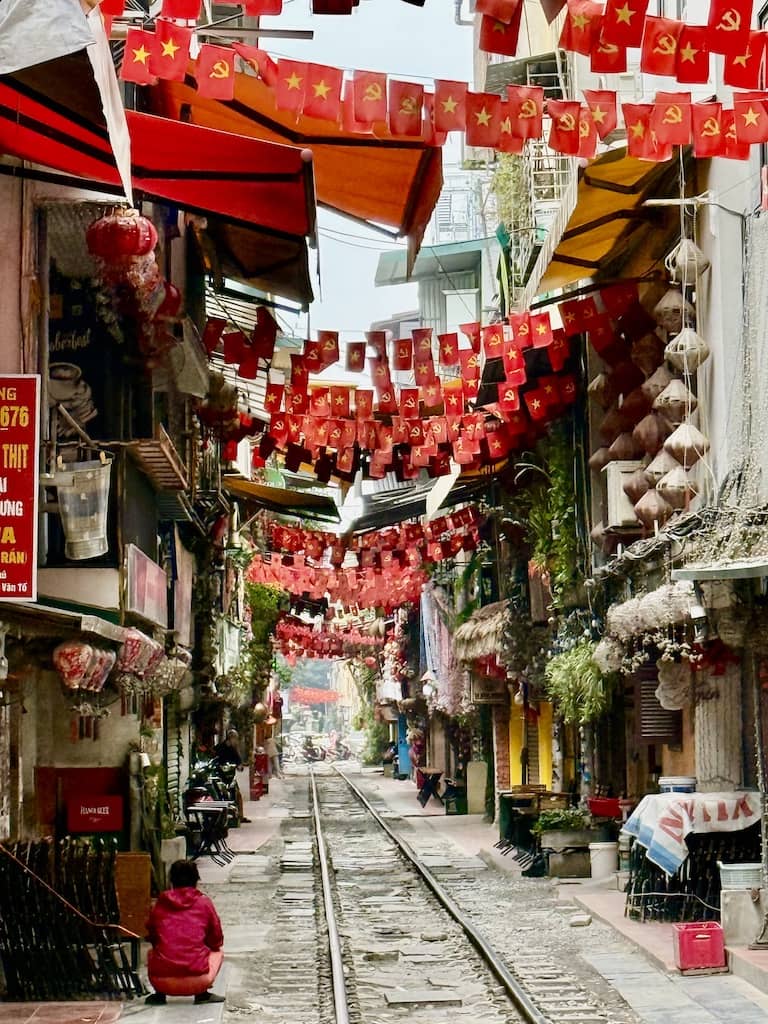
Train Street
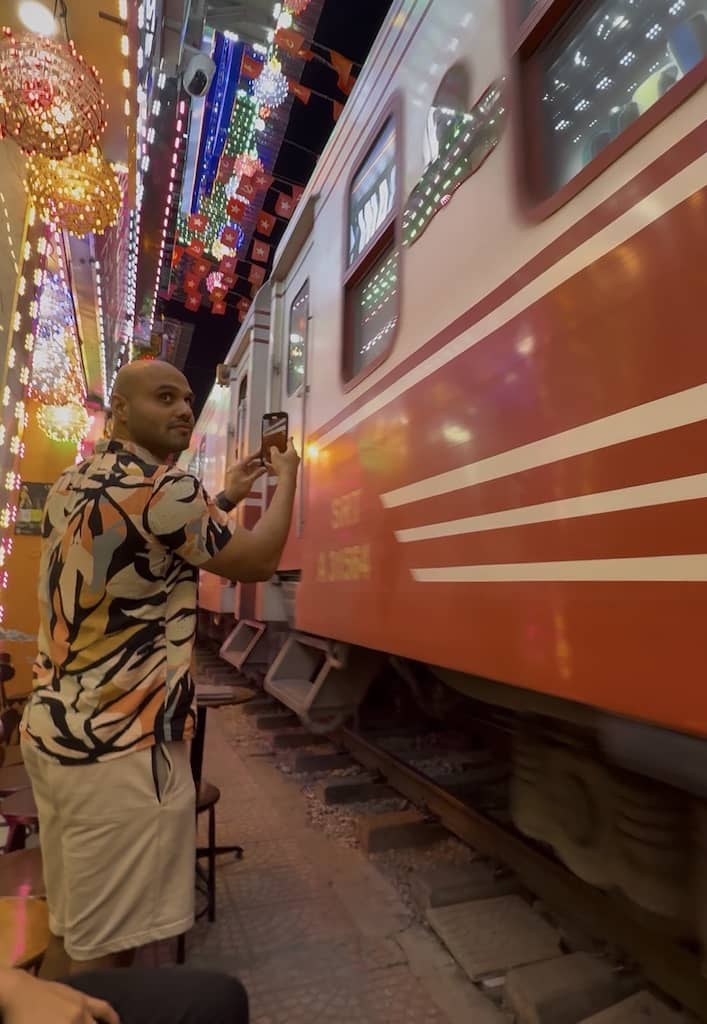
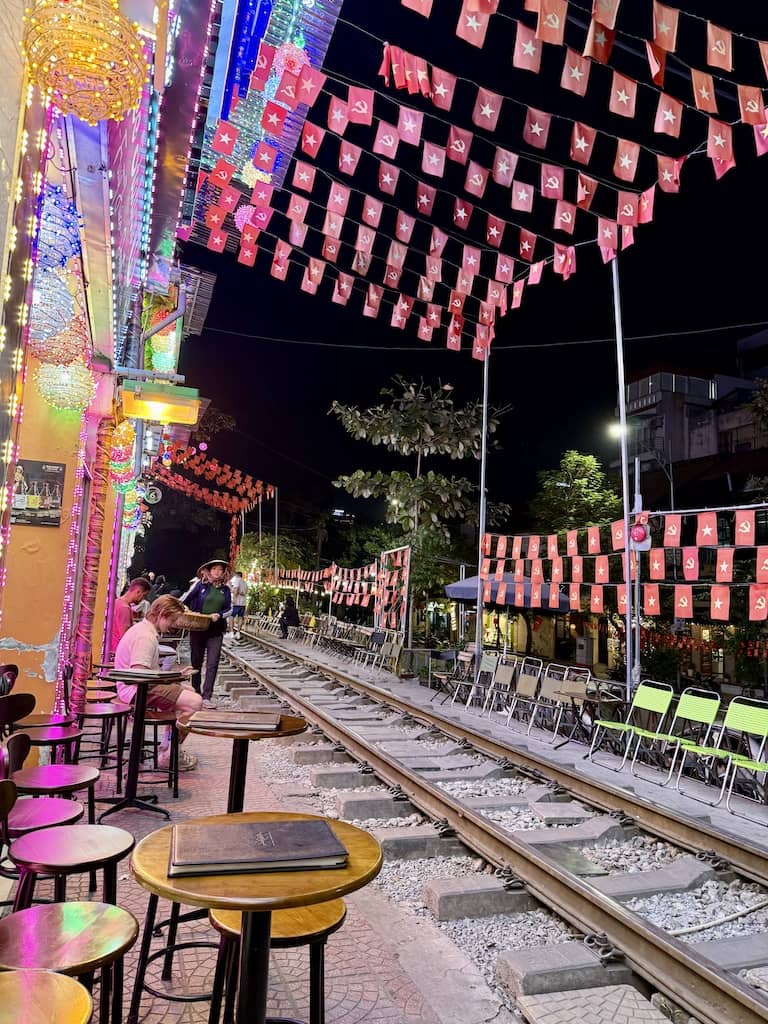
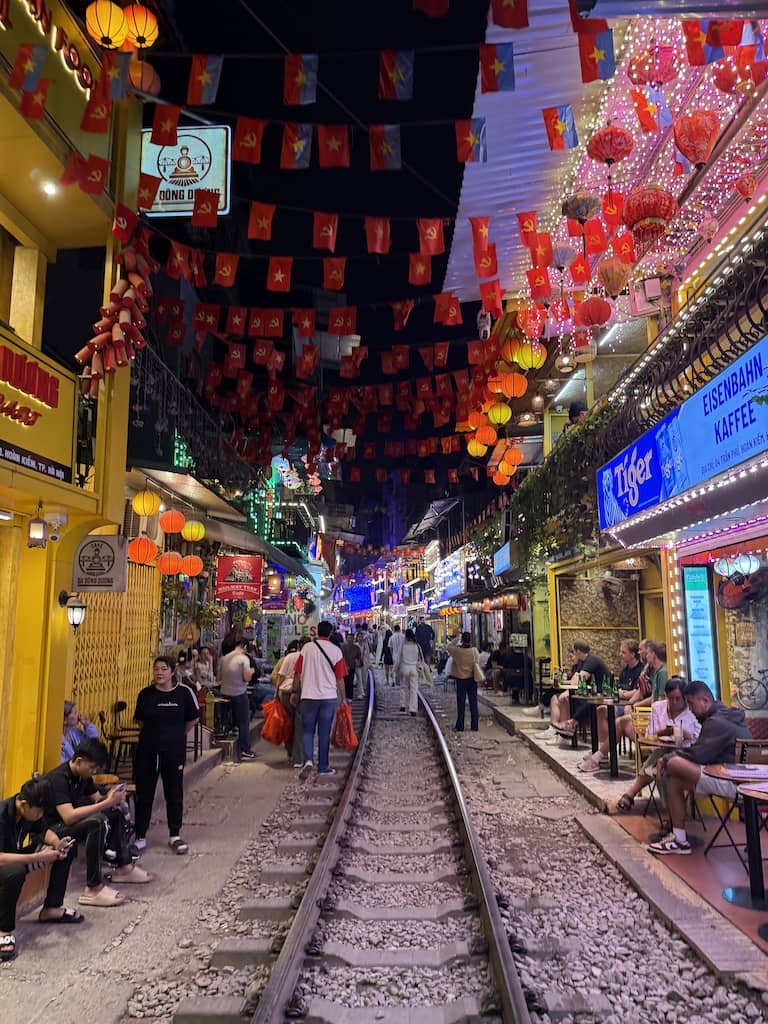
Train Street is a super touristy activity, and they have, in more recent times, restricted access in some areas. But is it a weird and fun thing to spend 30 minutes doing? Yes!
We had spoken to our hotel and they gave us the train for that day. We had walked past Train Street earlier in the day to suss out areas, and knew that the end nearer to the main road would be super busy (and we were right). So the cafe we chose at the other end was ideal, as it was much quieter.
TIP: Here’s how it works – it’s all done by commission. So, train street is shut off to the public, and hawkers will try to get your business and escort you to the cafe they are getting commission from. We had sussed out a cafe (Mincolin), and we charged on through the hawkers to the raised tracks, and we had people run after us trying to stop us. I lied and said we already had a booking – so they eventually let us past. We arrived 30 minutes early for the train, so the cafe was empty and it was all fine. It was a rebellious way to do it, but it all worked out.
We had a cocktail and watched as the street filled up, and just 1 minute before the train, a group piled into the cafe next to us, stood up and blocked the view we had so carefully researched. Thankfully, the cafe owner told them off and they sat down. But it was all a bit chaotic. The seats are literally barely a foot from the train!
The drinks are a little more expensive than other parts of town, but for a short excursion to experience something fun, why not? And the best part is that once the first train has passed by, you can walk down the train tracks without the hawkers hassling you. Although, you will have to put up with instagrammers trying to take model shots on the tracks instead.
You can also visit Train Street as part of a guided food tour.


Old Quarter Night Markets
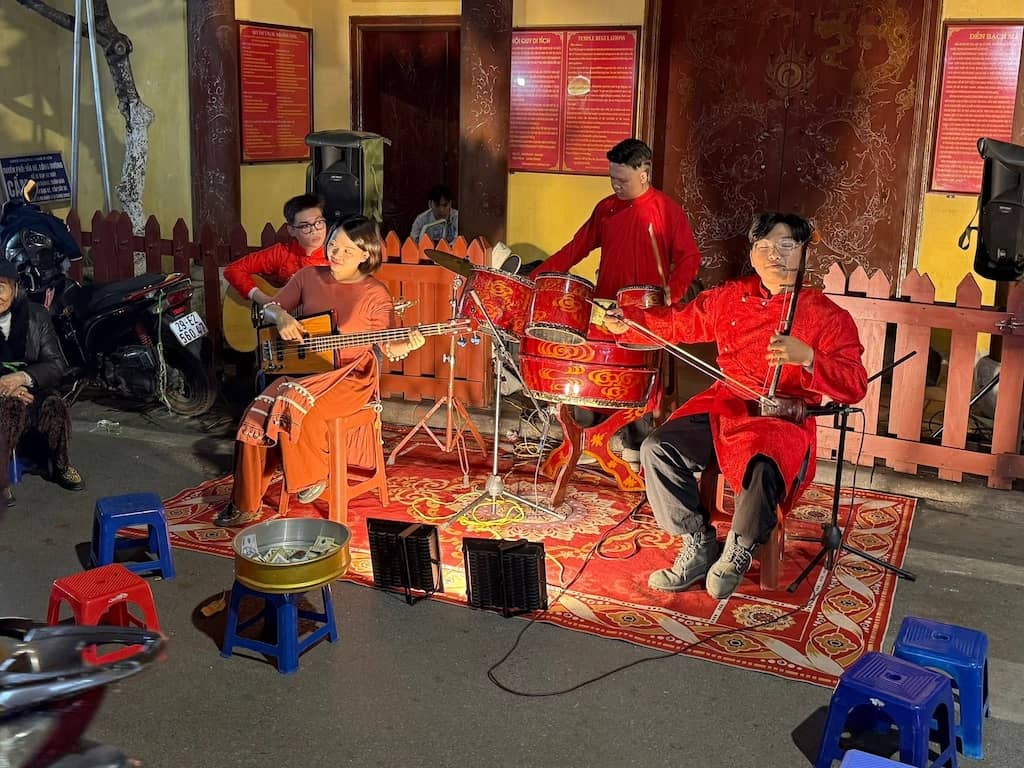
I love the buzz of night markets, and the Old Quarter night markets in Hanoi have a great vibe. Yes, it’s the same old stuff for sale, but the atmosphere is great. We also saw some fantastic traditional bands playing.
You’ll find it between Hang Dao Street (near Hoan Kiem Lake), to the edge of the Dong Xuan Market gate, every Friday, Saturday, and Sunday from 6pm to 11pm.
Beer Street
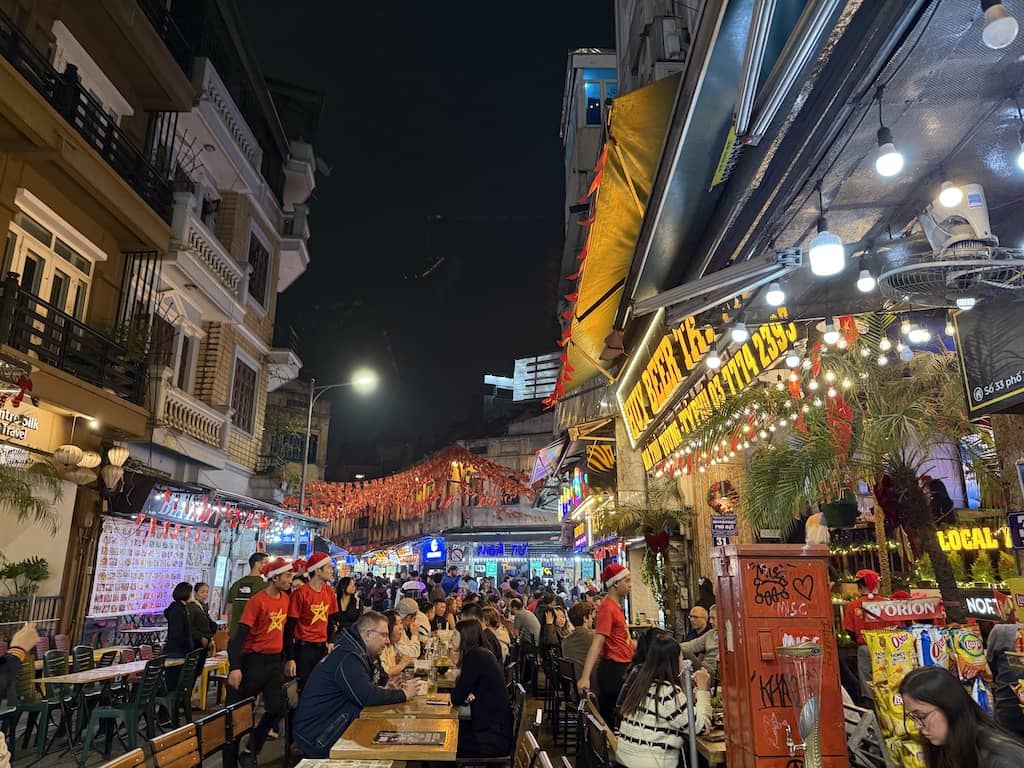
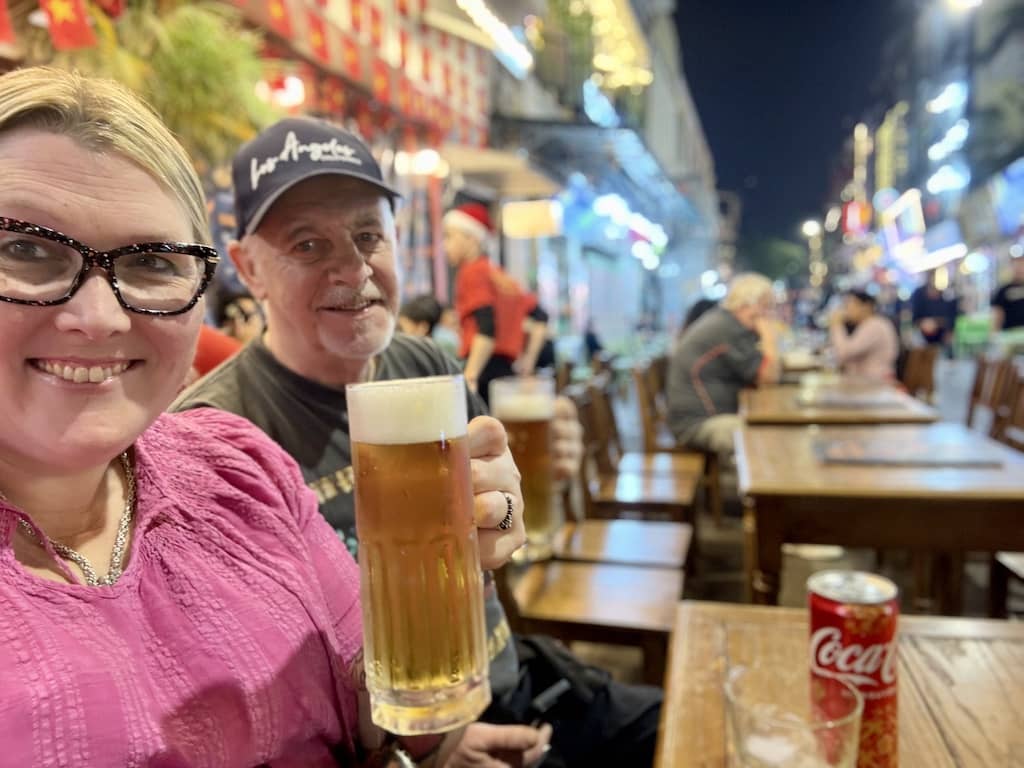
Looking for loud music, crowds, and buckets of beer? Beer Street (around Tạ Hiện) is the place to be. We are more cafe-people-watching kinda folk, but we were interested to see what the vibe was like on Beer Street.
At the top end it is jam packed and so so loud. Huge speakers pump out clashing music and tables of tourists cram together on tables all along the street. It is an assault on the senses to be sure. We chose a table a little further towards Hoan Kiem lake, sort of on the edge of the busiest section of Beer Street, so that we could see the action, but not necessarily be right in it.
You’ll also find hawkers of ALL kinds along here. As we sat there watching the world go by, we saw people selling all kinds of things, and turning these chancers away became a bit of a sport. It’s not somewhere I’d rush back to, as there are much nicer places to have a drink in Hanoi (like all the cool rooftop bars)!
Sky bar options: I recommend the Luxe Bar, Le Ciel Bar and Sol Bar, all near Ng. Báo Khánh for chill rooftop vibes.

What to Eat in Hanoi
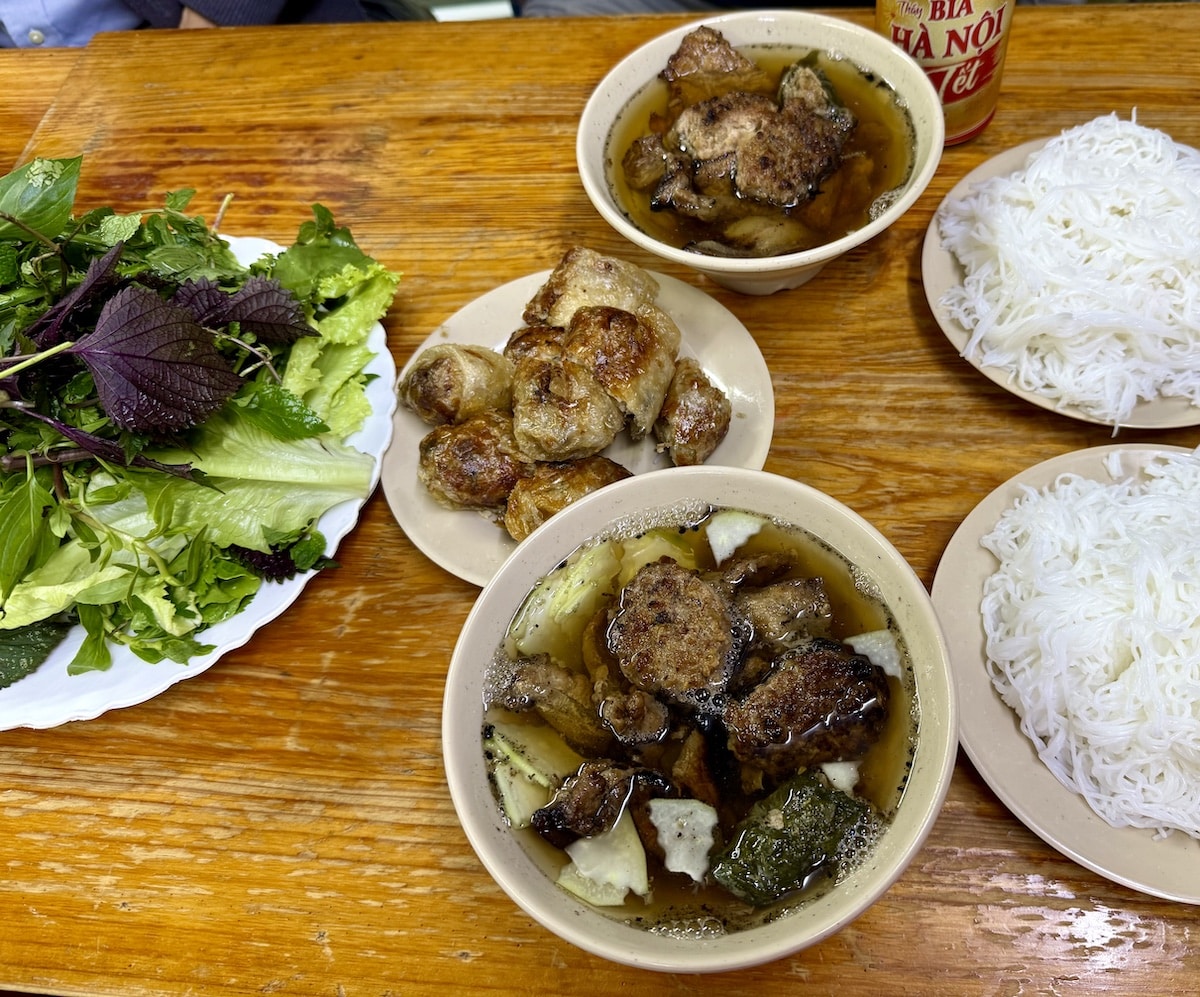
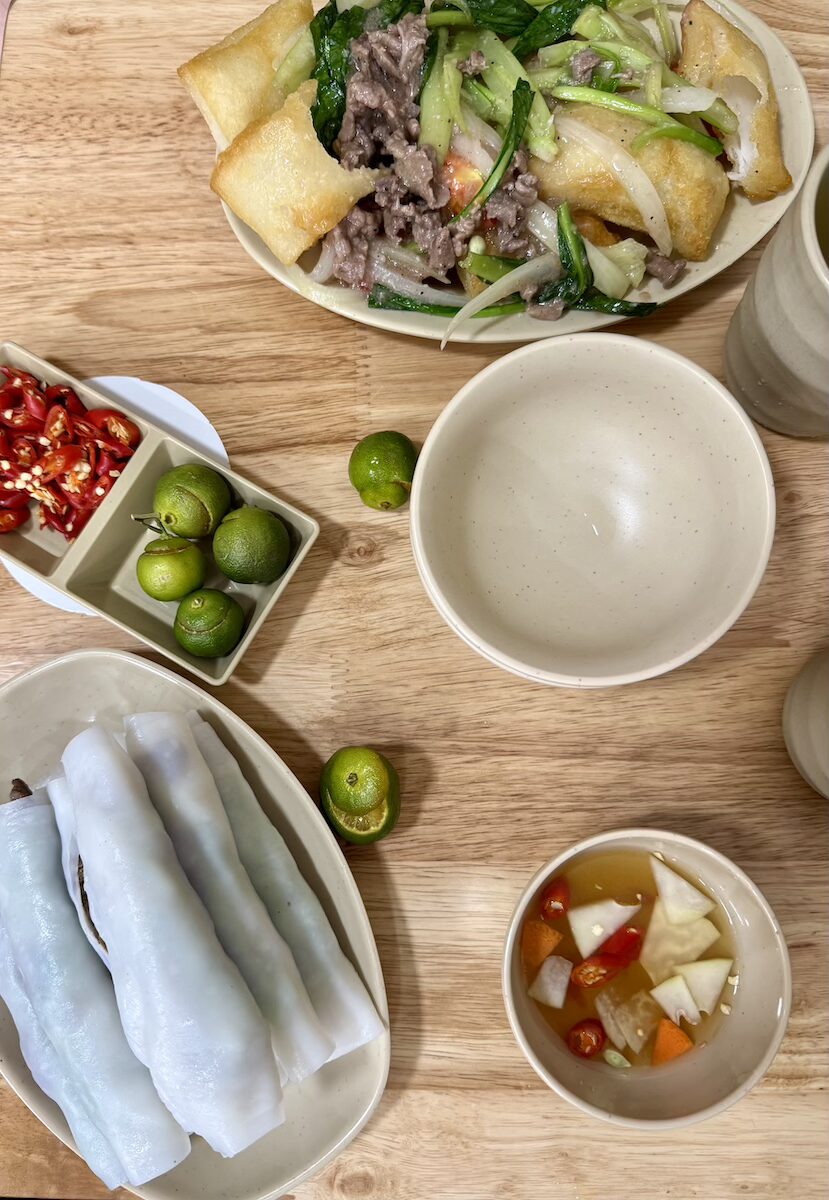
I have covered Vietnam’s amazing food options, but here were my Hanoi highlights:
- Bun Cha from Bun Cha Dac Kim
- Banh Cuon from Bánh Cuốn Gia Truyền Thanh Vân
- Red Wine Pho (Phở Bò Sốt Vang)
- Pho Cuon from Phở Cuốn Chinh Thắng in Ngũ Xã


Where to stay in Hanoi
We stayed in a few different hotels, across multiple visits. I would definitely recommend your first hotel in Hanoi to be in the historic old quarter / near Hoan Kiem Lake. The idea is that on your first days in the city, you’ll want to be in the centre of the action, within walking distance of all the tourist sites. My only tip is that you don’t stay at a hotel near the night markets or Beer Street – it’s very loud!
Our first hotel was the basic, but clean and central, Hanoi Sena Boutique hotel, right in the middle of the old quarter. The rooms were simple, but large, and the breakfast Pho was excellent too.
Our second hotel was Sheraton Hanoi Hotel on Westlake. It’s a much quieter area, so if you want an oasis to escape to every evening, this one is for you. Their Executive Lounge is fantastic too.
Other options we considered were: For central mid-level comfort, the Anatole Hotel is a good option. For historic luxury, the Sofitel Legend Metropole Hanoi or Hotel de l’Opera – MGallery Hanoi are gorgeous hotels in the French Quarter.

Hanoi FAQ
Don’t miss my other Vietnam guides here!
All photos & content © Hannah Henderson and may not be used without permission (sharing this blog post is fine, though!). Images shot with a Canon DSLR T3i Rebel + Canon EF-S 18-135mm f/3.5-5.6 IS STM; and an iPhone.