Have you thought about taking a Death Valley road trip? The vast plains, the mesmerisingly straight roads, and the old mining history, make it a fascinating destination. I would recommend 1-2 days in the national park, at a minimum. You can do a day trip into or through the park on your way to Las Vegas, but it’s a huge area to cover, so add 1 or 2 overnight stays into the mix to make the most of your time in the park.
Combine a weekend in Death Valley National Park with 2 days in Yosemite, and 2 days in Joshua Tree, for the perfect California road trip.


How to Spend a Weekend in Death Valley
Where to stay in Death Valley
West Entrance
There are limited accommodation options within Death Valley, so many choose to stay outside the park where possible. A good option is Lone Pine, not too far from the west entrance to the park, with plenty of restaurants and hotels. We stayed our first night at the Quality Inn Lone Pine near Mount Whitney, which had amazing views of the Alabama Hills and Mount Whitney. The timing worked well to drive Tioga Pass from Yosemite and down to Lone Pine in one day, then into Death Valley the next day.
For options within the park, you can choose the tiny and cute Panamint Springs Motel & Tents, next to the Panamint Springs gas station, an hour from Lone Pine.
Inside the park
Otherwise you can be more central at the Inn at Death Valley or Ranch at Death Valley. Both are oasis-style hotels in the desert, and both are on the expensive side for what they are. The Inn is nicer, and the price tag matches, and the Ranch is laid back and a little cheaper. Skip the motel at Stovepipe Wells, and just enjoy the village store.
East Entrance
If you aren’t staying the night in the park (either hotel or camping), then stay your second night in either Beatty or Death Valley Junction. Beatty is a kitsch gateway town, with lots of cheap and cheerful motel options, including Exchange Club Motel, Death Valley Inn & RV Park, and El Portal Motel.
Southeast Entrance
Death Valley Junction is home to the amazing Amargosa Opera House & Hotel, an historic motel and opera house from the 1920s. Once part of the town associated with the Pacific Coast Borax Company, it was opened to the public after mining left the area. It’s a simple and super cute place to stay on your way out of Death Valley National Park.

1-2 Days in Death Valley : Itinerary ideas
Here are some of the top things to do on your weekend in Death Valley National Park, based on the assumption you’ll be entering from Lone Pine and the west.


Winding & Dead straight roads
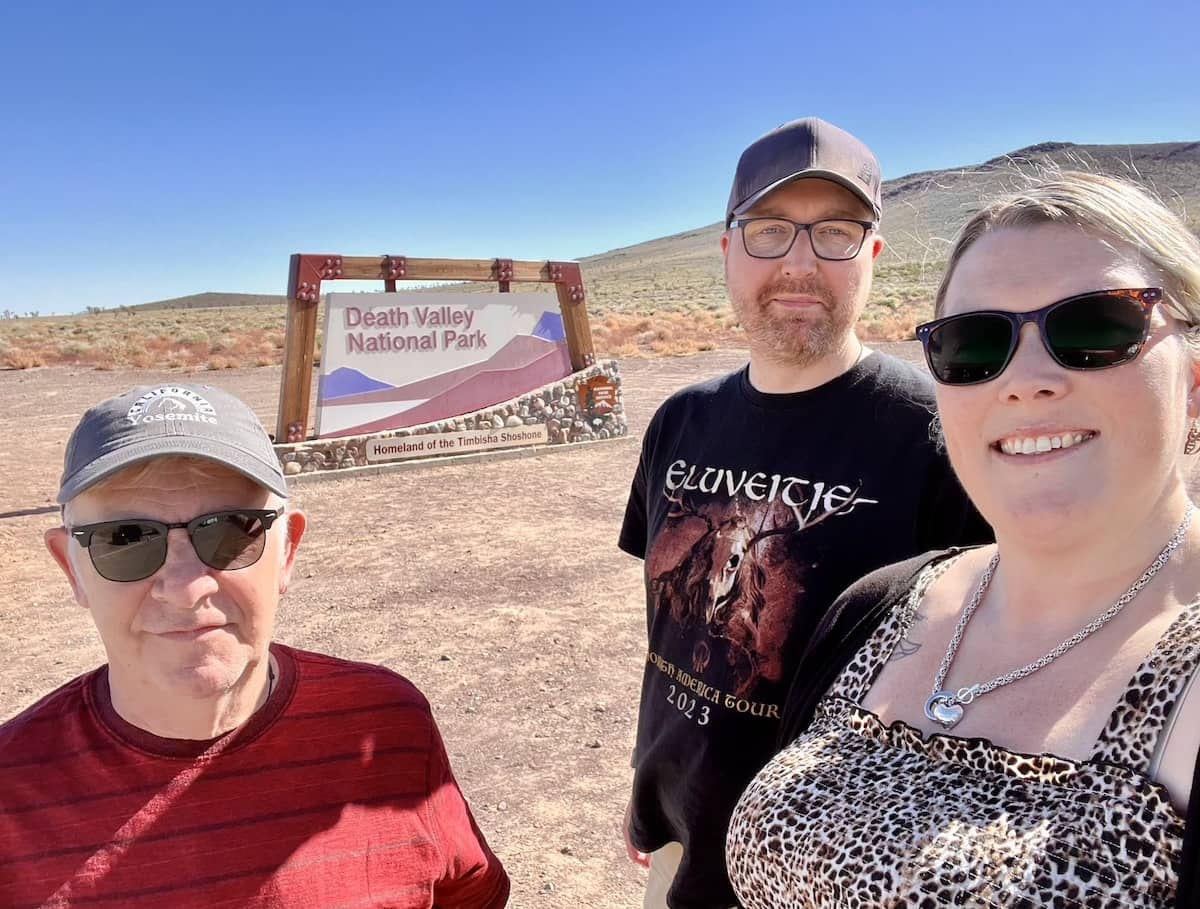
Between the Death Valley National Park welcome sign and the Panamint Springs Motel is the most amazing winding road. This weaving section of the CA-190 route brings you down into the valley, and the twists and turns are incredible. With these bends come great views out over Death Valley. Stop at some of the pull-outs to marvel at the landscapes.
After this crazy winding section, you’ll reach Panamint Springs, where there is a motel and campsite, and a gas station and convenience store. Get your gas here if you are running low, you’ll need it. We stopped here for ice-cream and water, and ended up having an impromptu dance party with the staff!
You’ll then take one more corner on the Nadeau Trail, and before you will be the most mesmerising straight road that drops down into the valley and up the other side. It is so dead straight that you will want to pull over to take photos. The elevation change means that the length of the road is visible instead of being lost on the horizon line. As the road heads back up the other side of the valley, it starts to wind again to navigate over Towne Pass.



Stovepipe Wells & Mesquite Flat Sand Dunes
You can stop for refreshments at Stovepipe Wells if you need. They have a general store, and a Ranger Station to pay your park entrance fee (the other place is at the Furness Creek Visitor Centre).
Mesquite Flat Sand Dunes is a very popular stop. There is a big car park to accommodate visitors, and the sand dunes are not far from the road.
One tip for this stop – don’t stay too long here! It’s easy to get carried away with the fun of playing in the dunes, but there is SO much more to see.

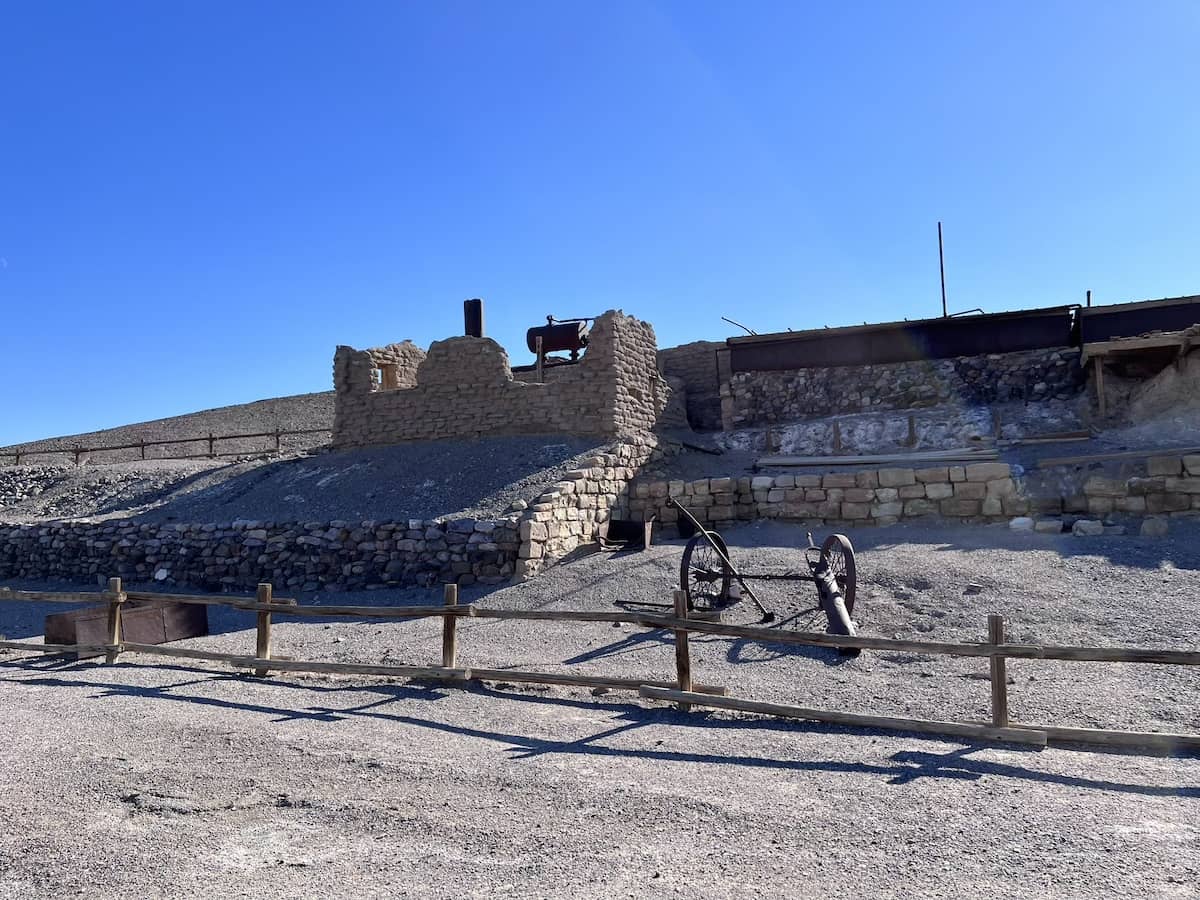
Harmony Borax Works
What is borax you ask? Sodium Borate, or Borax, is a naturally occurring mineral and a salt of boric acid. It’s used as a cleaning agent, laundry booster, and ingredient in glass and ceramics manufacturing. The Harmony works only ran for 5 years, and was famous for its 20-mule wagons to transport the Borax out of the valley.
Can you imagine working in this heat? Even just walking around this historic site in October was hot enough!




Next stop: Furness Creek is home to a visitor centre (don’t forget to pay your National Park entry fees), the Ranch at Death Valley, and a few other amenities. Stock up here if you need anything.
Golden Canyon Trail
Golden Canyon Trail was one of my favourite stops in Death Valley. An unassuming carpark and a rocky trail in through narrow canyons lets you explore the layers of rock formations up close. The steep rock faces also offer a little more protection from the harsh sun than the salt flats do.
You can do a variety of hikes here (if the temperatures allow) to Red Cathedral, and even up to the Zabriskie Point trailhead. It was so hot on the day we visited that, that we only walked about 1km into the canyon before the heat got the better of us. Seeing the layers of rocks, the birds, and the flood trails (flash floods are quick and scary), was fascinating.


Artists Palette
Time to detour off the main road, and take the loop up into the hills to the Artists Palette. This road allows you to see the rock formations from an elevated point. The layers of minerals in the hills creates so many colours and different lights bring out different hues. Truly fitting of the name, it is a nice little detour.
Note: Artists Drive is a one-way route from the southern end of the loop detour.
If you are staying inside the park, stop after seeing artists palette, and do the rest of the activities on day two. If you are staying at Death Valley Junction, do Badwater Basin and the loop road to your accommodation for the night, finish with Zabriskie Point the following day.
Badwater Basin
Head south to Badwater Basin. These incredible salt flats are 282 feet BELOW sea level. It’s crazy to see the signs around the park, indicating how far below sea level you are.
Badwater Basin is essentially the flood plain for the surrounding hills. When it rains, water settles in this low salt flat, deposits the sodium (and other minerals), and then dries up. Leaving behind salt crystals behind.
The crystals are very delicate, so it’s important to stick to the boardwalk and paths. Birds gather in the leftover puddles and mudflats, and plants survive on the outskirts. The white horizon is like a mirror mirage on the horizon – it is immensely beautiful.


Loop Road To Shoshone & Death Valley Junction
Conveniently, you can stay on the Badwater road around to Shoshone before turning north to Death Valley Junction. If your final destination is Las Vegas, you can loop round to Zabriskie Point before taking the Beatty road out of the park (for Area 51 vibes too). If your final destination is LA or Joshua Tree, you can loop back around and leave via Panamint Springs and the Ballarat road.
Whether you choose to stay at Death Valley Junction or not, stop and admire the historic Amargosa Opera House & Hotel. Tours of the Opera house run every day at 9am and 6pm.
Zabriskie Point

Zabriskie Point offers you 360-degree views out over Death Valley, and there are so many layers of hills, colour changes, and perspectives. The rugged, eroded badlands that stretch across the valley have a distinctive golden hue that can look different in different lights. The area is named after Christian Zabriskie, a figurehead in the Pacific Coast Borax Company.
The viewpoint can be reached by a short, paved path from the parking area, making it easily reachable for visitors of all ages and abilities. The best times to visit are during the early morning or late afternoon.
Other things to do in the Death Valley area
- 20 Mule Canyon Drive (one-way off-roading)
- Rhyolite Ghost Town + Goldwell Open Air Museum (Nevada)
- Ubehebe Crater
- Titus Canyon
- Dante’s View (above Badwater Basin)
- Watch for wildflower years – sometimes conditions allow for spectacular blooming seasons (which is a contrast for these desert conditions).
If you want to leave the driving to someone else, you can take tours from Las Vegas with ease. From day trips to Death Valley and Rhyolite, to Sunrise and starry night tours, and combo tours to Death Valley and Red Rock Canyon.


Death valley Road trip tips
- Visit in Cooler Months – Plan your trip between October and April to avoid extreme summer heat.
- Stay Hydrated – Bring plenty of water, at least one gallon per person per day.
- Fuel Up – Fill your gas tank before entering the park; gas stations are sparse.
- Check Vehicle – Ensure your vehicle is in good condition, especially tires and cooling systems. Turn your air conditioning off for periods on really hot days; the extreme heat can overwork your cooling system.
- Emergency Kit – Carry an emergency kit with food, water, tools, and a first-aid kit.
- Navigation Tools – Use maps and GPS, but note that cell service is limited in many areas.
- Dress Appropriately – Wear light, breathable clothing and sturdy shoes for hiking.
- Sun Protection – Bring sunscreen, hats, and sunglasses to protect from the intense sun.
- Timing – Start early on your second day, so you can hike before 10am. Temperatures can be very dangerous here.
- Respect the Environment – Stay on marked trails and avoid disturbing natural features.
- Stay Informed – Check weather conditions and road closures before your trip.
- Carry Cash – Some remote areas may not accept credit cards for fuel or services.
Interesting Facts About Death Valley
- Hottest Place on Earth – Death Valley holds the record for the highest air temperature ever recorded on Earth, reaching 134°F (56.7°C) at Furnace Creek in 1913.
- Lowest Point in North America – Badwater Basin in Death Valley is 282 feet (86 meters) below sea level, making it the lowest point in North America.
- Rare Superblooms – Despite its harsh conditions, Death Valley experiences rare ‘superblooms’ where wildflowers blanket the desert floor after heavy rainfall.
- Sailing Stones Mystery – The Racetrack Playa is famous for its “sailing stones,” which mysteriously move across the dry lakebed, leaving tracks behind. The phenomenon is now attributed to ice sheets forming under the rocks.
- Largest National Park in the Lower 48 – Death Valley is the largest national park in the contiguous United States, covering over 3.4 million acres.
- Extreme Temperature Swings – Temperatures in Death Valley can swing drastically in a single day, with searing heat during the day and much cooler temperatures at night.
- Home to the Timbisha Shoshone Tribe – The Timbisha Shoshone people have lived in Death Valley for centuries, adapting to its extreme environment.
- Dante’s View – From Dante’s View, 5,475 feet (1,669 meters) above sea level, you can see both the highest and lowest points in the contiguous United States: Mount Whitney and Badwater Basin.


Death Valley FAQ
If you love travel, and love road trips? Get your inspiration here!
All photos & content © Hannah Henderson and may not be used without permission (sharing this blog post is fine, though!). Images shot with a Canon DSLR T3i Rebel + Canon EF-S 18-135mm f/3.5-5.6 IS STM; and an iPhone.